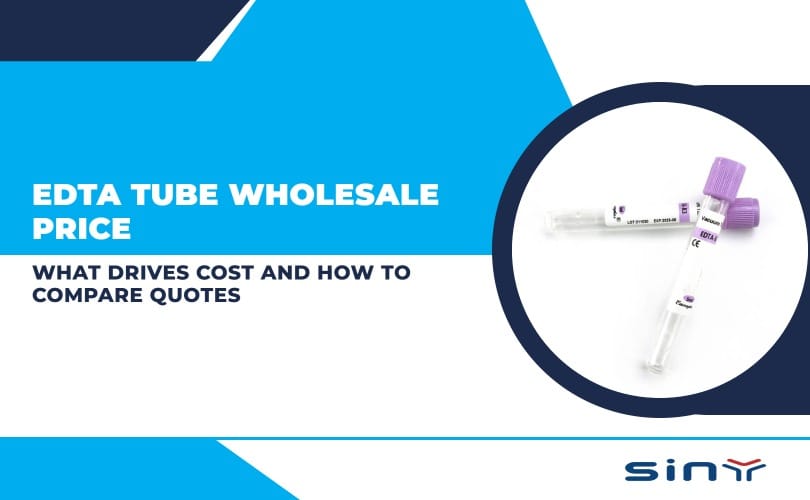
In the world of laboratory diagnostics and transfusion medicine, one tiny detail can make a world of difference—how blood samples are collected and preserved. K3 EDTA Blood Collection Tubes, often recognized by their purple tops, are widely used for hematology and transfusion testing because of their ability to prevent blood coagulation effectively.
These tubes are preloaded with Tripotassium Ethylenediaminetetraacetic Acid (K3 EDTA), a powerful anticoagulant that binds calcium ions in the blood. Since calcium is essential for the coagulation cascade, its removal prevents the blood from clotting, maintaining its integrity for accurate laboratory analysis.
You can explore a wide range of high-quality EDTA tubes for blood collection at EDTATube.com — a trusted manufacturer and supplier of clinical-grade tubes used globally.
What Are K3 EDTA Blood Collection Tubes?
K3 EDTA (Ethylenediaminetetraacetic acid) is an anticoagulant that binds calcium ions in the blood, preventing coagulation and preserving the integrity of blood cells. K3 EDTA blood collection tubes are pre-coated with this anticoagulant, ensuring that blood samples remain suitable for analysis. These tubes are particularly favored for their ability to maintain cell morphology and prevent clotting, making them ideal for complete blood count (CBC) tests and other hematological studies.
For a detailed overview of EDTA tubes, visit our comprehensive guide.
What is K3 EDTA and How Does It Work?
K3 EDTA is a tripotassium salt of EDTA, a chelating agent that forms complexes with metal ions like calcium and magnesium. In blood collection, its main function is to bind calcium, thereby halting the natural coagulation process.
Here’s how it works step by step:
-
Blood Collection – When blood enters the K3 EDTA tube, the anticoagulant dissolves instantly.
-
Calcium Binding – EDTA molecules chelate the calcium ions required for clotting.
-
Preservation of Cell Morphology – The chelation stabilizes red and white blood cells, preventing lysis or shrinkage.
-
Sample Stability – The preserved sample remains viable for extended periods, allowing for reliable CBC (Complete Blood Count), cross-matching, and other hematological tests.
The Role of K3 EDTA Tubes in Transfusion Medicine
Transfusion medicine relies heavily on accurate blood typing, crossmatching, and compatibility testing. K3 EDTA tubes are indispensable in these processes for several reasons:
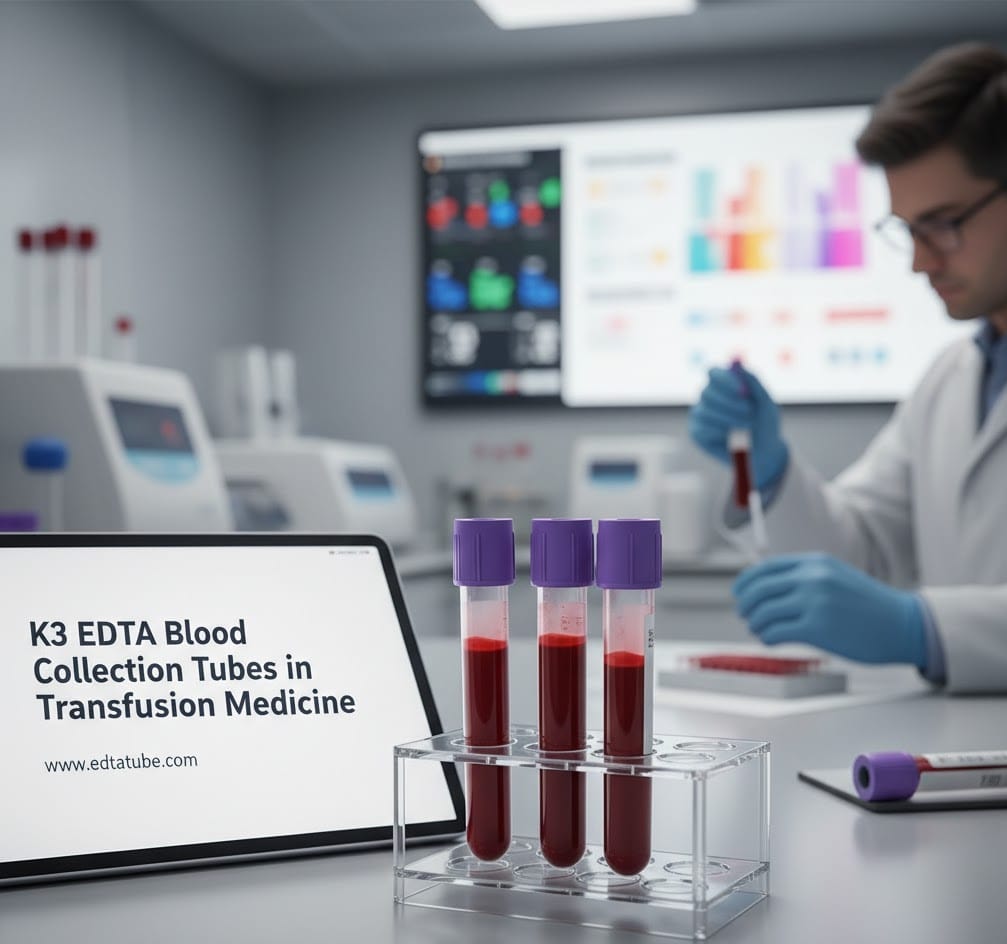
- Preservation of Blood Samples: By preventing coagulation, K3 EDTA tubes ensure that blood samples remain viable for testing, even during storage and transportation.
- Accurate Blood Typing: These tubes maintain the integrity of red blood cells, enabling precise determination of blood groups and Rh factors.
- Compatibility Testing: K3 EDTA tubes are used in crossmatching procedures to ensure donor-recipient compatibility, reducing the risk of transfusion reactions.
- Quality Control: In blood banks, these tubes are essential for monitoring the quality of stored blood products.
Explore our range of EDTA tubes for blood collection.
Composition and Design of K3 EDTA Tubes
The construction and design of K3 EDTA Blood Collection Tubes play a significant role in their effectiveness. These tubes, available from trusted brands like Siny Medical, are made using medical-grade polyethylene terephthalate (PET) or glass, ensuring sample integrity and preventing gas exchange.
| Component | Description |
|---|---|
| Tube Material | Medical-grade PET or Glass |
| Additive | Tripotassium EDTA (K3) |
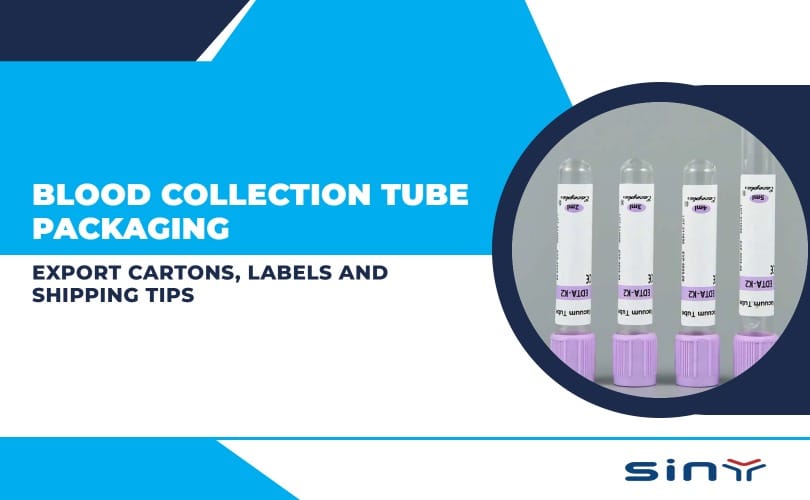
| Color Code | Purple or Lavender Cap |
| Volume Range | 2 ml – 10 ml |
| Applications | Hematology, Transfusion Testing, DNA/RNA Analysis |
The use of vacuum technology ensures a precise volume of blood collection, maintaining the ideal blood-to-anticoagulant ratio, which is critical for accurate results.
For a detailed look at available products, visit EDTA Tube Product Category or check similar solutions at Siny Medical EDTA Tube Collection.
Why K3 EDTA Tubes Are Preferred in Transfusion Medicine
Transfusion medicine requires precise blood typing, cross-matching, and compatibility testing—procedures that demand uncompromised sample quality. K3 EDTA tubes have emerged as the preferred choice due to several key reasons:
-
Prevents Blood Clotting: By chelating calcium, K3 EDTA ensures that blood remains unclotted and usable for multiple tests.
-
Preserves Cellular Integrity: The tube maintains the morphology of blood cells, which is crucial for accurate typing and compatibility testing.
-
Ensures Accurate Results: Since the sample remains stable, there is less chance of false results caused by coagulation or hemolysis.
-
Suitable for Automated Analyzers: These tubes are widely compatible with modern hematology analyzers and blood screening devices.
To explore how these tubes are utilized in COVID-19 testing and transfusion safety, visit EDTA Tubes in COVID-19 Testing.
Applications of K3 EDTA Blood Collection Tubes in Transfusion Medicine
K3 EDTA Blood Collection Tubes are indispensable in the following areas of transfusion medicine:
Blood Typing and Cross-Matching
Accurate blood grouping and compatibility checks depend on intact red cell morphology. EDTA prevents clumping, ensuring precise antigen and antibody reactions.
Complete Blood Count (CBC) Analysis
A CBC test is one of the most requested blood tests in transfusion preparation. EDTA preserves WBC, RBC, and platelet structures for accurate automated counting.
Hematology and Hemoglobin Testing
The EDTA additive prevents artifacts that can lead to false hemoglobin readings, making it ideal for hematology profiles in transfusion labs.
Molecular Diagnostics
Interestingly, EDTA tubes are now used in DNA and RNA testing because they preserve nucleic acids effectively. Learn more about this in EDTA Tubes and Molecular Diagnostics.
Blood Storage and Quality Assurance
Before transfusion, samples are screened for infections like HIV, Hepatitis B, and C. The K3 EDTA tubes maintain sample integrity for these serological and nucleic acid tests.
Role in COVID-19 and Molecular Testing
During the COVID-19 pandemic, the need for high-quality EDTA tubes skyrocketed. K3 EDTA tubes became essential for PCR testing and plasma separation, ensuring accurate viral RNA detection. Their superior preservation ability also supported large-scale antibody and antigen testing campaigns.
Visit EDTA Blood Collection Tubes in COVID-19 Testing to understand how these tubes played a crucial role in diagnostic accuracy during the pandemic.
Industry Partners and Trusted Manufacturers
Reliable suppliers play a critical role in ensuring consistent lab performance. Siny Medical’s official YouTube channel and their Made-in-China profile provide more insight into product innovation and manufacturing standards.
Summary
K3 EDTA blood collection tubes are an indispensable tool in transfusion medicine, offering unmatched reliability and accuracy in blood sample preservation. From blood typing to COVID-19 testing, these tubes have revolutionized diagnostic processes, ensuring patient safety and improving healthcare outcomes. For high-quality EDTA tubes, explore our product range here and discover why Siny Medical is a trusted name in the industry.
Watch our latest video on EDTA tubes on YouTube or explore our products on Made-in-China.
FAQs
1. What is the primary function of K3 EDTA in blood collection?
K3 EDTA acts as an anticoagulant by binding calcium ions, preventing blood from clotting, and preserving the cellular composition of the sample.
2. Can K3 EDTA tubes be used for plasma collection?
Yes, they are suitable for plasma-based tests, though not ideal for coagulation studies since EDTA removes calcium.
3. How do I identify a K3 EDTA tube?
They’re typically purple or lavender-capped and clearly labeled with the additive type (K3 EDTA).
4. What’s the difference between K2 and K3 EDTA tubes in practical use?
While both prevent clotting, K2 EDTA is spray-dried and minimizes cell shrinkage, while K3 EDTA offers faster anticoagulation due to its liquid form.
5. Can K3 EDTA tubes be reused?
No, these are single-use medical products to prevent contamination and ensure accuracy.
6. How long can blood remain stable in K3 EDTA tubes?
Under proper storage, samples can remain stable for up to 24 hours, though testing within 6 hours is recommended.