Not every blood draw suits a vacuum tube. Small veins, children, animals and finger-prick samples often need a gentler approach. That is where a non vacuum blood collection tube comes in. For clinics and distributors, choosing the right one affects sample quality, staff time and repeat orders.
This buyer guide explains how non-vacuum tubes work, where they fit, what to check in the specification and how to source them in bulk. It is written for lab managers, clinic buyers, veterinary distributors and importers. As an EDTA tube manufacturer, SINY supplies non-vacuum EDTA tubes to customers worldwide, so we share the questions buyers ask us most.
What Is a Non Vacuum Blood Collection Tube?
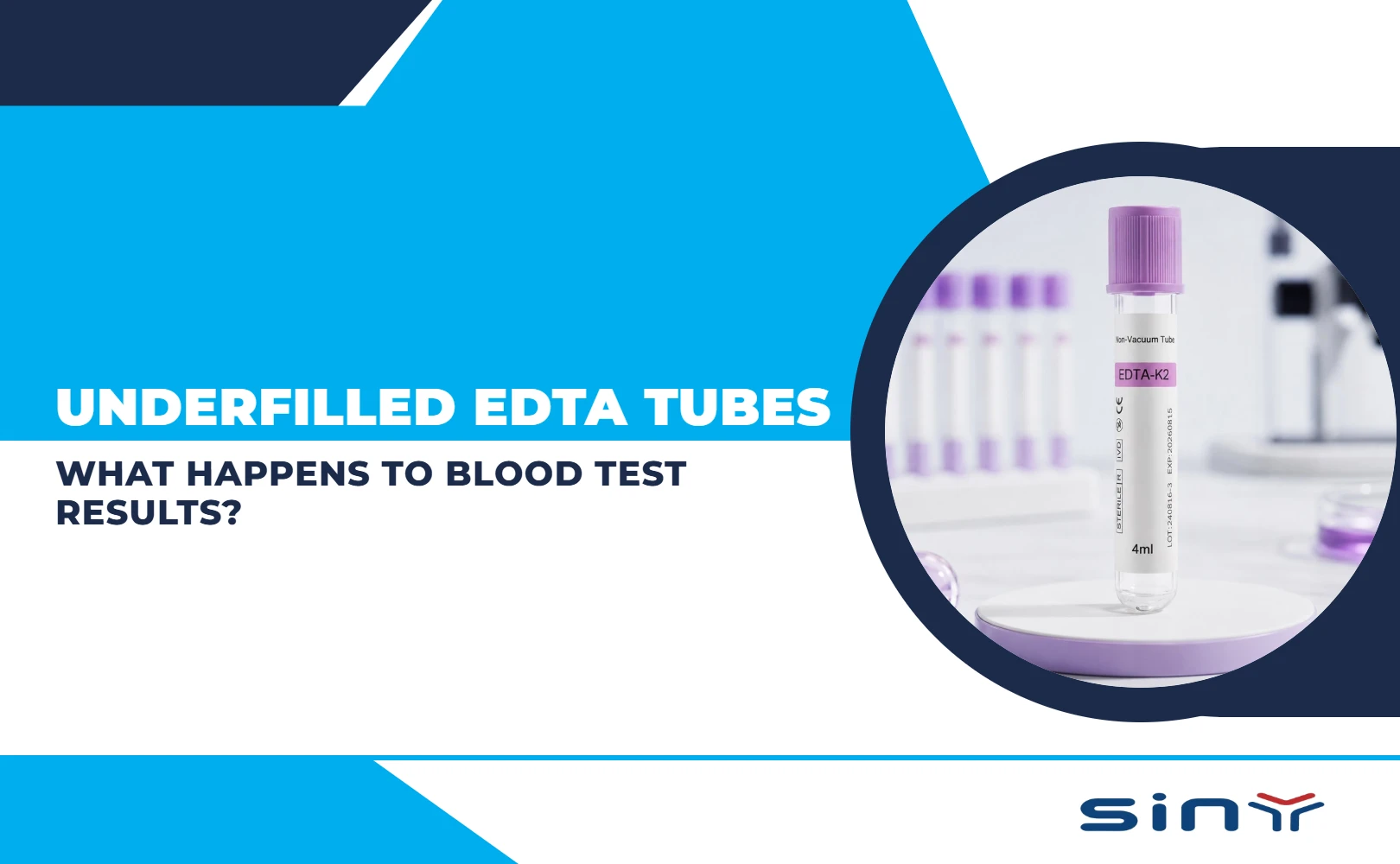
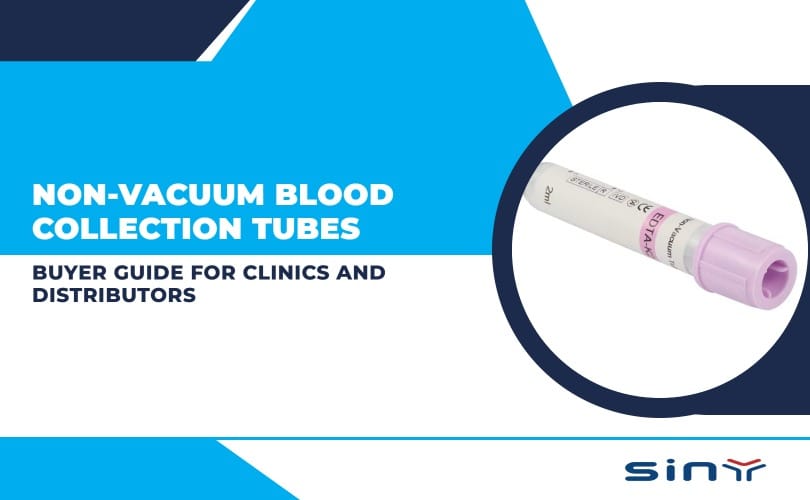
A non vacuum blood collection tube has no pre-set vacuum inside. Instead, the user fills it by syringe transfer, by drops from a capillary puncture, or by gravity. The tube still contains an additive, such as K2 EDTA, so the blood does not clot.
By contrast, an evacuated tube pulls a fixed volume of blood through a needle and holder. Both types are covered by ISO 6710, the standard for single-use venous blood specimen containers, which sets requirements for evacuated and non-evacuated containers.
If you want a full side-by-side explanation, our article on the difference between a vacuum tube and a non-vacuum tube covers the basics. This guide focuses on buying and stocking.
Where Non-Vacuum Tubes Make Sense
Non-vacuum tubes suit settings where control matters more than speed. For example, paediatric wards often collect small volumes from fragile veins. A strong vacuum can collapse those veins, so staff prefer to draw gently with a syringe and transfer the blood.
Veterinary clinics face similar needs. Cats, small dogs and exotic animals give small samples, and many vets collect by syringe. In addition, research labs and field programmes sometimes work without needle holders, which makes non-vacuum tubes the practical choice.
Finger-prick and heel-prick collections also rely on non-vacuum formats, usually smaller micro tubes. Meanwhile, standard adult venipuncture in hospitals usually stays with vacuum tubes, because they are faster and fill to a fixed volume.
Non vacuum blood collection tube vs vacuum tube for buyers
| Point | Non-vacuum tube | Vacuum tube |
|---|---|---|
| How it fills | Syringe transfer, drops or gravity | Pre-set vacuum draws blood through a needle |
| Fill control | Depends on the user and fill marks | Fixed nominal volume |
| Best for | Children, animals, small or fragile veins | Routine adult venipuncture |
| Equipment | Syringe or lancet | Needle and holder |
| Shelf life driver | Additive stability | Additive stability and vacuum retention |
| Typical volumes | Often small, such as 0.5 to 2 mL | Commonly 2 to 10 mL |
Technical Details to Check
Because there is no vacuum to control the fill, the tube design must help the user fill correctly. Therefore, clear fill lines or graduations matter more than on vacuum tubes. Ask suppliers how the marks are printed and how accurate they are.
Next, check the additive. Most buyers choose K2 EDTA for haematology. SINY, for example, offers 2 mL non-vacuum EDTA K2 tubes made from medical-grade PP or PET, with graduations for measurement. The additive amount should match the stated fill volume, because an underfilled EDTA tube can change cell measurements.
Then check the cap. Non-vacuum tubes often use screw caps or push caps. The cap must seal well for transport, yet open easily for testing. In addition, confirm the cap color follows the standard code, so staff and analysers recognise the additive.
Finally, confirm dimensions. Small tubes may need adaptors in analyser racks. Ask your customers which racks they use before you order large volumes.
Handling a Non Vacuum Blood Collection Tube Correctly
Good handling protects the sample. After filling, staff should mix the tube gently by inversion, following the maker’s instructions. Shaking can damage cells, so avoid it.
Syringe transfer needs extra care. Staff should transfer blood promptly, before it starts to clot in the syringe. They should also avoid forcing blood through a fine needle, because pressure can damage cells. Many labs remove the needle and transfer gently down the tube wall.
Temperature also plays a part. Keep filled tubes at the temperature your lab specifies until they are tested, and never leave them in direct sunlight on a ward trolley.
Labelling and timing matter too. Write patient details on the tube immediately, and send samples to the lab within the time your lab specifies. Our guide on how to mix an EDTA tube after a blood draw explains the mixing step in more detail.
Quality Checks for a Non Vacuum Blood Collection Tube
A tube without vacuum looks simple, yet small defects cause real problems. Therefore, run a short quality check when samples arrive and again on the first bulk delivery.
First, check the additive. Look at several tubes against the light. Spray-dried K2 EDTA should appear as a fine, even coating, while liquid additive should sit as a small, clear volume. Uneven coating can mean uneven mixing with blood.
Second, check fill marks. Fill a few tubes with water to the line using a calibrated pipette. Then compare the result with the stated volume. If the marks are far off, the EDTA ratio will be wrong in daily use.
Third, check the cap. Close each tube, turn it upside down and shake it gently over paper. Any drop on the paper means a weak seal. In addition, open and close the cap several times, because staff will do this in real use.
Finally, check labels and documents. Every non vacuum blood collection tube should show the additive, volume, lot number and expiry date. Match these against the certificate of analysis and the packing list. As a result, you catch problems before the tubes reach your customers.
Storage of non-vacuum tubes
Non-vacuum tubes do not lose vacuum, but the additive still has a shelf life. Store cartons away from heat, sunlight and moisture, and rotate stock so the earliest expiry leaves first. For more detail, see our guide to EDTA tube shelf life and expiry.
Who Buys Non-Vacuum Tubes
Paediatric hospitals and children’s clinics are steady buyers, because they collect small samples every day. Veterinary distributors form another large group, supplying clinics that treat small animals. In addition, primary care clinics in some regions prefer syringe collection for cost or training reasons.
Research institutions and public health programmes also order a non vacuum blood collection tube for field studies, especially where needle holders are not available. In these settings, simple equipment and easy transport matter more than collection speed.
For distributors, this mix of customers means steady, repeat demand. However, each group needs slightly different sizes and pack quantities, so plan your range carefully.
Buying Guide: What Changes the Price
Before comparing quotes, agree on one written specification for every size you plan to buy. That way, each supplier prices the same product, and you can compare offers line by line instead of guessing what each quote includes.
The price of a non vacuum blood collection tube depends on material, size, additive, cap type and packaging. Non-vacuum tubes skip the evacuation step, which can simplify production. However, small sizes, special caps and graduations add cost.
Order volume matters most. Larger runs spread set-up costs, so unit prices fall at higher quantities. Custom labels and private label packaging add set-up costs but help distributors build their own brand.
Questions to ask a non-vacuum tube supplier
- Which volumes and additives do you make in non-vacuum format?
- How are fill lines or graduations printed, and how accurate are they?
- Which cap types do you offer, and do they seal for transport?
- What is the MOQ per size, and can sizes be mixed in one order?
- Can you supply CE and ISO 13485 documents and ISO 6710 test reports?
- Can you print our brand and language on labels and boxes?
Common Mistakes When Buying Non-Vacuum Tubes
The most common mistake is choosing a non vacuum blood collection tube that is too large. A 2 mL tube filled with 0.5 mL of blood has too much EDTA for the sample. As a result, results can drift. Instead, match tube size to the typical sample volume of each customer group.
Another mistake is ignoring the cap. A loose cap can leak during transport, especially when samples travel to an outside lab. Therefore, test caps with real transport conditions before you approve a supplier.
Finally, some buyers forget training. Staff used to vacuum tubes may not know how to fill a non-vacuum tube to the right mark. A short laminated guide at each collection point solves this quickly.
Stocking Non-Vacuum Tubes as a Distributor
Start with demand data. List your customers by type, such as paediatric, veterinary and primary care. Then estimate monthly use per size. Most distributors find that two or three sizes cover most demand.
Next, think about pack sizes for each non vacuum blood collection tube you stock. Clinics often prefer smaller boxes, because they use fewer tubes and want to avoid expiry. Ask your supplier whether smaller inner boxes are possible without a large price increase.
Finally, keep a clear product sheet for each size. Include the additive, volume, dimensions, cap type, shelf life and storage conditions. In practice, a good product sheet answers most customer questions before they reach your sales team.
Why Source Non-Vacuum Tubes from SINY
SINY was established in 2003 in Ningbo, China. The company manufactures EDTA blood collection tubes in a 12,000 square metre factory with a capacity of up to 500,000 tubes per day. SINY offers OEM manufacturing and custom design, and lists CE and ISO 13485 certification for its EDTA tubes.
For syringe collection, SINY also makes the 2 mL EDTA K2 non-vacuum tube, used for CBC, blood typing and other routine tests.
You can compare every format in the SINY EDTA tube range.
To see how tubes are produced and packed, watch the SINY Medical YouTube channel.
FAQ: Non Vacuum Blood Collection Tube
What is a non vacuum blood collection tube used for?
A non vacuum blood collection tube is used when staff fill the tube by syringe, by drops or by gravity instead of a vacuum draw. It suits children, animals and patients with small or fragile veins. The tube still contains an additive such as K2 EDTA, so the blood stays liquid for testing in the laboratory.
Is a non-vacuum tube better than a vacuum tube?
Neither is better in every case. Vacuum tubes are faster and fill to a fixed volume, so they suit routine adult venipuncture. A non vacuum blood collection tube gives more control for small or fragile veins. Many clinics stock both types and choose based on the patient and the collection method.
How do I fill a non-vacuum EDTA tube correctly?
Fill the tube to the marked line using gentle syringe transfer or drops, then mix it by gentle inversion according to the maker instructions. Avoid shaking and avoid forcing blood through a fine needle. Correct filling keeps the EDTA-to-blood ratio right, which matters for any non vacuum blood collection tube.
What sizes do non-vacuum EDTA tubes come in?
Common sizes range from micro tubes below 1 mL up to about 2 mL, although some makers offer larger versions. The right non vacuum blood collection tube size depends on typical sample volume. Choose small tubes for children and small animals, and confirm the dimensions fit your customers racks and analysers.
Can I buy non-vacuum tubes in bulk with my own brand?
Yes. Many manufacturers, including SINY, offer private label printing on labels and boxes. Ask for the MOQ per size and design, and whether sizes can be mixed. Approve real samples before production, so you can check fill marks, caps and labels on every non vacuum blood collection tube you plan to sell.
Summary
A non vacuum blood collection tube gives staff control when veins are small, patients are young or animals are involved. Buyers should check fill marks, additive amount, cap seal, dimensions and documents, and match tube size to real sample volumes.
For distributors, non-vacuum tubes bring steady repeat demand from paediatric, veterinary and primary care customers. To request samples, sizes and a quote, contact the SINY team.