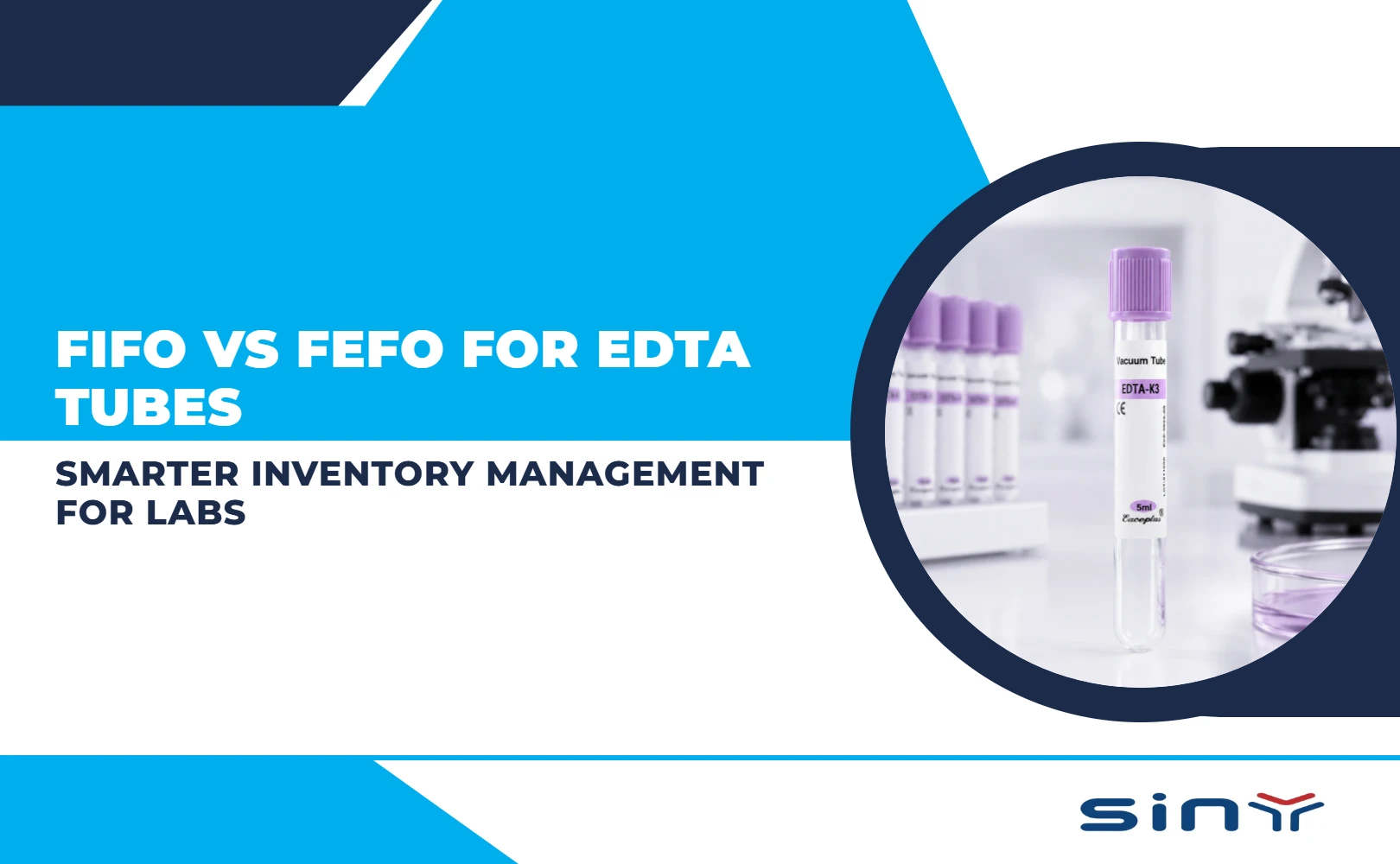
Expired tubes are a quiet cost. They get thrown away, or worse, used by mistake and underfill. How you rotate stock decides how often that happens. The choice between FIFO vs FEFO for EDTA tubes sounds technical, but it is one of the easiest ways to cut waste in a lab or warehouse.
This guide explains both methods, why FEFO usually wins for blood collection tubes, and how to set it up. It is written for lab managers, hospital store keepers and distributors. As an EDTA tube manufacturer, SINY prints lot and expiry on every tube and carton, so buyers can run either method easily.
Short answer: FIFO (first in, first out) uses the oldest delivery first. FEFO (first expired, first out) uses the stock with the nearest expiry date first. For EDTA tubes, FEFO is the better choice, because lots from different deliveries or suppliers can have different expiry dates, and vacuum and additive performance are only guaranteed until expiry.
Key Takeaways
- EDTA tubes have a set shelf life because vacuum slowly falls over time.
- FIFO assumes the oldest delivery expires first, which is not always true.
- FEFO picks by expiry date, so it protects against short-dated lots that arrive late.
- FEFO needs clear lot and expiry labels on cartons, boxes and tubes.
- Most hospital and lab quality systems expect expiry-based rotation for consumables.
Why Stock Rotation Matters for EDTA Tubes
An EDTA tube is not just plastic. It holds a vacuum and an additive, and both have a shelf life. Over time the vacuum slowly falls, so old tubes may draw less blood. Less blood means too much EDTA for the sample, which can shrink cells and distort results. See underfilled EDTA tubes for the details.
Most EDTA tubes carry an expiry date between one and two years from production. Check the label for the exact date. Our guide to EDTA tube shelf life explains what affects it.
What Is FIFO?
FIFO means first in, first out. The stock that arrived first is used first. It is simple: new deliveries go to the back of the shelf, older stock moves to the front. FIFO works well when every delivery has a later expiry than the one before.
What Is FEFO?
FEFO means first expired, first out. The stock with the nearest expiry date is used first, no matter when it arrived. Staff check the expiry on each box or carton, not the delivery date.
FIFO vs FEFO for EDTA Tubes: Comparison
| Factor | FIFO | FEFO |
|---|---|---|
| Picks by | Arrival date | Expiry date |
| Ease of use | Very simple | Needs expiry checks |
| Handles mixed expiry lots | Poorly | Well |
| Risk of expired stock | Higher when lots vary | Lower |
| Fits multiple suppliers | Weak | Strong |
| Fits audits and quality systems | Acceptable | Preferred for dated items |
When FIFO Fails
FIFO breaks down in common situations:
- A distributor sends an older lot after a newer one.
- Two suppliers deliver tubes with different shelf lives.
- Stock is moved between sites, mixing lots.
- Returned stock goes back on the shelf with a shorter expiry.
- Emergency orders arrive from a different warehouse.
In each case, the oldest delivery is not the first to expire. FIFO would leave short-dated tubes at the back until they expire.
Why FEFO Suits EDTA Tubes
- Protects sample quality: tubes are used while vacuum and additive are within spec.
- Cuts waste: short-dated lots are used, not thrown away.
- Works with many suppliers: expiry is the common reference.
- Supports audits: it shows a clear, date-based control.
- Helps recalls: lot records are already part of the process.
How to Set Up FEFO for EDTA Tubes
In the central store or warehouse
- Record lot number and expiry for every carton on receipt.
- Mark the expiry in large print on the carton side facing the aisle.
- Store each lot in its own location, not mixed in one bin.
- Set your stock system to pick the earliest expiry first.
- Run a monthly report of lots expiring in the next three to six months.
In the lab or ward
- Keep only a few weeks of stock at each collection point.
- Place the nearest expiry at the front of drawers and trays.
- Check expiry during weekly restocking.
- Remove expired tubes at once and record them.
- Do not open a new box until the previous box of that model is used.
Across multiple sites
Share a short-dated stock list each month. A site that uses more tubes can take short-dated lots from a quieter site. This simple swap often removes most expiry waste in a hospital network.
Storage Conditions Still Matter
FEFO only works if tubes reach their expiry in good condition. Store EDTA tubes at room temperature, away from heat, sunlight and moisture. Keep cartons off the floor and avoid crushing. Heat speeds up vacuum loss, so do not store tubes near windows, heaters or in hot containers. See EDTA tube storage and handling.
Order Planning to Support FEFO
Good ordering makes FEFO easier. Order in sizes your sites can use well before expiry. Ask your supplier for the remaining shelf life at shipment, and set a minimum in your contract, for example at least 12 months remaining on arrival. For lead time planning, see our EDTA tube supplier checklist.
How SINY Labels Support FEFO
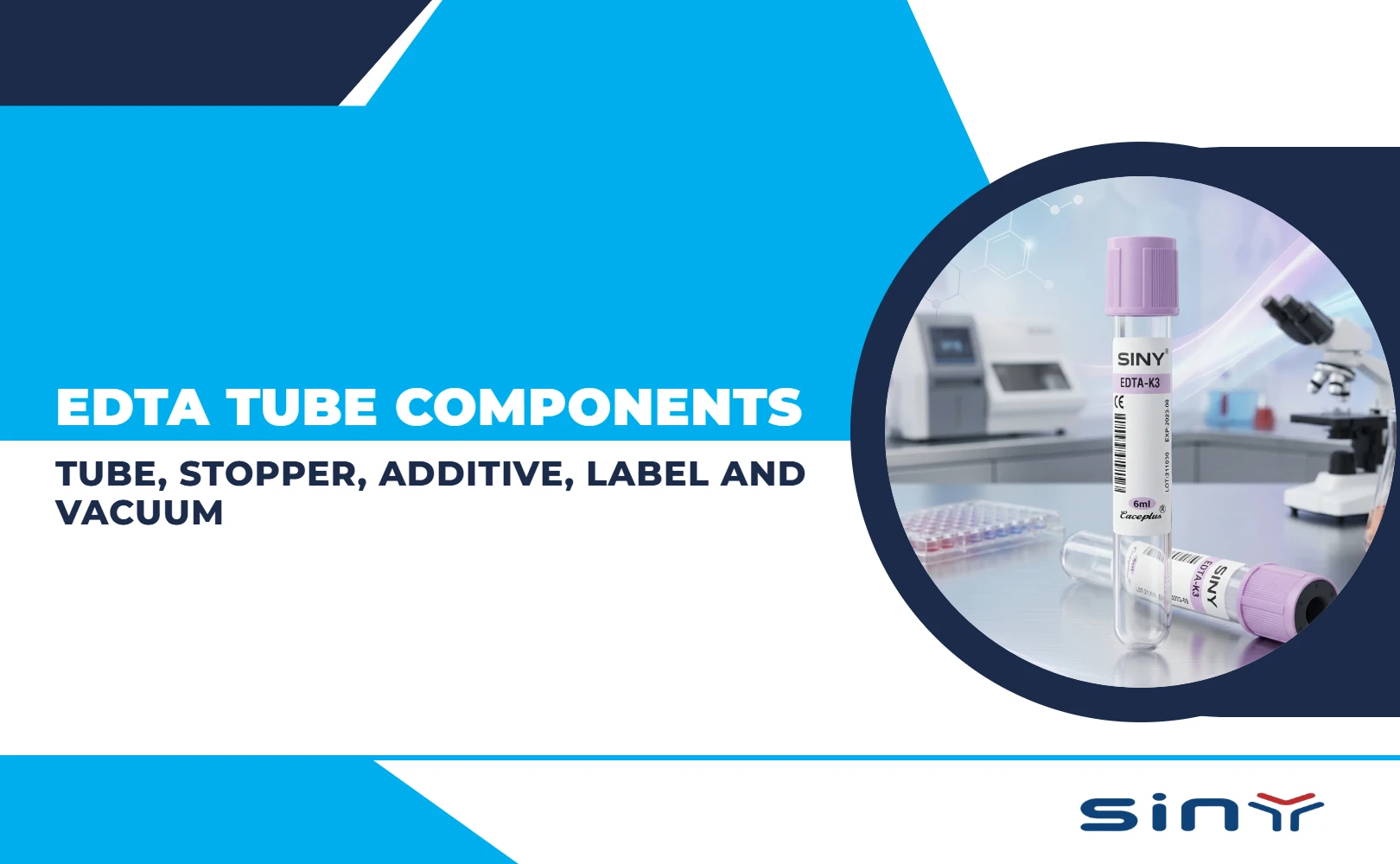
SINY prints lot number and expiry date on every tube, inner box and master carton, so stores and labs can pick by expiry at every level. We can also add your own codes or barcodes for private label orders. Browse the EDTA tube range.
FAQ: FIFO vs FEFO for EDTA Tubes
Should labs use FIFO or FEFO for EDTA tubes?
FEFO is better for EDTA tubes. It uses stock by expiry date, so tubes are used while vacuum and additive are within spec. FIFO only works if every delivery has a later expiry than the last, which is often not true.
What is the shelf life of EDTA tubes?
Most EDTA vacuum tubes carry an expiry date between about one and two years from production. The exact date is printed on the label and depends on the maker, materials and storage conditions.
Can expired EDTA tubes still be used?
They should not be used. Vacuum may have fallen, so tubes can underfill, and the maker no longer guarantees performance. Remove expired tubes and record them.
How do I reduce expired EDTA tube stock?
Use FEFO, keep small stocks at collection points, run monthly short-dated reports, swap short-dated lots between sites, and order in volumes your sites can use well before expiry.
What shelf life should I require on delivery?
Many buyers set a minimum remaining shelf life in contracts, such as 12 months on arrival. Choose a figure that fits your usage rate and order size.
Summary
In the FIFO vs FEFO for EDTA tubes question, FEFO is the better method. It rotates stock by expiry date, protects sample quality, and cuts waste across suppliers and sites. Clear lot labels, good storage and sensible order sizes make it easy to run.
For EDTA tubes with clear lot and expiry labelling at every packing level, contact the SINY team.