A well-handled blood sample is the foundation of accurate laboratory testing, and one of the most overlooked yet critical steps is gentle EDTA blood sample mixing. EDTA (Ethylenediaminetetraacetic acid) is a widely used anticoagulant that prevents clotting by binding calcium ions. However, its effectiveness depends entirely on how the sample is mixed immediately after collection. Gentle inversion ensures that EDTA is evenly distributed throughout the blood, preserving cell morphology and preventing microclots that can distort test results. Vigorous shaking, on the other hand, can damage red blood cells, cause hemolysis, and compromise the reliability of hematology tests.
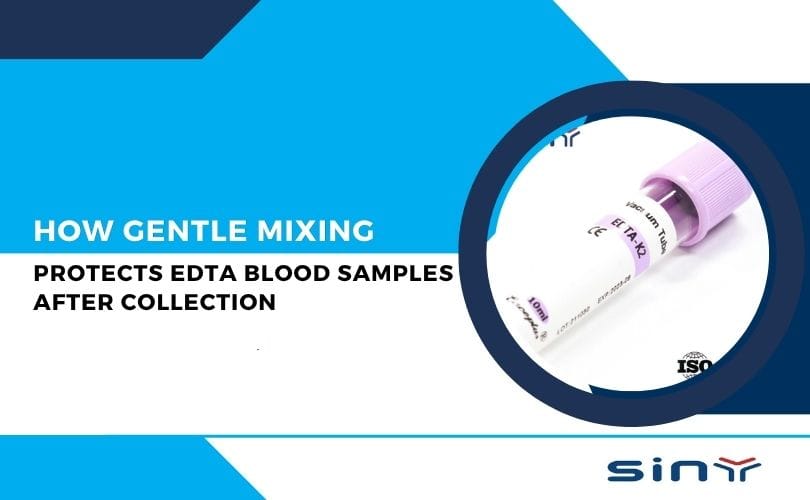
Healthcare professionals often rely on specialized tubes such as the K2 EDTA vacuum blood collection tube to maintain sample integrity. Proper mixing—typically 8 to 10 gentle inversions—ensures that these tubes deliver consistent results across a wide range of diagnostic applications. Whether using 2ml EDTA tubes for pediatric samples or larger 10ml EDTA tubes for routine testing, the principle remains the same: gentle mixing protects accuracy. By following best practices, laboratories can reduce errors, improve efficiency, and safeguard patient outcomes.
What is EDTA and Why Mixing Matters
EDTA, short for ethylenediaminetetraacetic acid, is one of the most widely used anticoagulants in clinical laboratories. Its primary role is to bind calcium ions in the blood, effectively halting the clotting process. This makes EDTA tubes indispensable for hematology tests such as complete blood counts (CBC), blood smears, and molecular diagnostics. However, the effectiveness of EDTA depends not only on its chemical properties but also on how the blood sample is handled after collection.
Gentle EDTA blood sample mixing is essential because it ensures the anticoagulant is evenly distributed throughout the sample. Without proper mixing, microclots can form, leading to inaccurate platelet counts or compromised cell morphology. On the other hand, vigorous shaking can damage red blood cells, causing hemolysis and unreliable results. That is why healthcare professionals are trained to invert EDTA tubes gently 8–10 times immediately after collection.
Different tube sizes, such as 2ml EDTA tubes for smaller samples or 7ml EDTA tubes for routine testing, all require careful mixing to maintain sample integrity. For specialized applications, laboratories may also use EDTA plasma separator tubes, where uniform mixing is critical for plasma quality. By following these practices, laboratories safeguard accuracy and patient outcomes.
The Science Behind Gentle Mixing
Preventing Clot Formation
Without proper mixing, EDTA may not reach all parts of the sample, allowing clotting to occur. Even small clots can skew results in tests like CBC (Complete Blood Count).
Preserving Cell Morphology
Excessive shaking damages fragile cells. Gentle mixing maintains the natural shape of red and white blood cells, ensuring accurate morphology analysis.
Ensuring Plasma Quality
For plasma separation, uniform anticoagulation is essential. Studies show that improper mixing increases fibrin strand formation, complicating downstream analysis.
Best Practices for EDTA Blood Sample Mixing
Step-by-Step Guidelines
Immediate Inversion – The most important practice is to invert the tube gently right after collection. Delaying this step allows clotting to begin before EDTA can act. Healthcare professionals using EDTA tubes should always perform this step without hesitation.
Gentle Handling – Vigorous shaking damages red blood cells and leads to hemolysis. Instead, gentle inversion distributes EDTA evenly throughout the sample. Whether using 2ml EDTA tubes for pediatric samples or larger 7ml EDTA tubes for routine testing, gentle handling is essential to preserve cell morphology.
Correct Inversions – Most guidelines recommend 8–10 gentle inversions. This ensures uniform anticoagulation without stressing the cells. Larger tubes, such as 10ml EDTA tubes, may require slightly more inversions compared to smaller ones. Following manufacturer instructions, such as those from Siny Medical, helps maintain accuracy and consistency in laboratory results.
Comparing EDTA Tubes with Other Collection Methods
| Tube Type | Anticoagulant | Mixing Requirement | Risk if Improperly Mixed |
|---|---|---|---|
| EDTA Tubes | EDTA | 8–10 gentle inversions | Clotting, hemolysis |
| Serum Separator Tubes | None (clot activator) | No mixing required | Delayed clotting |
| Heparin Tubes | Heparin | Gentle inversion | Platelet clumping |
Mistakes in EDTA Blood Sample Mixing
Even though EDTA blood sample mixing seems straightforward, many laboratories encounter errors that compromise test accuracy. Understanding these mistakes is essential for maintaining reliable results and protecting patient outcomes.
One of the most common mistakes is vigorous shaking instead of gentle inversion. Shaking causes hemolysis, damaging red blood cells and leading to falsely low counts. Gentle inversion, typically 8–10 times, ensures EDTA is evenly distributed without harming cells. Healthcare professionals using EDTA tubes must remember that mixing is about precision, not force.
Another frequent error is delayed mixing. If the tube is not inverted immediately after collection, clotting can begin before EDTA acts. Even small clots can interfere with platelet counts and morphology studies. For example, when using 2ml EDTA tubes for pediatric samples, immediate inversion is critical to prevent microclot formation.
Over-mixing is also problematic. Excessive inversion stresses cells, altering morphology and affecting diagnostic accuracy. Larger tubes, such as 10ml EDTA tubes, may require slightly more inversions, but overdoing it can still damage fragile cells.
Finally, ignoring tube size differences leads to inconsistent results. Smaller tubes need fewer inversions, while larger ones require more. Following the EDTA tube size guide ensures proper handling across all sizes.
By avoiding these mistakes and adhering to manufacturer recommendations, such as those from Siny Medical, laboratories can safeguard accuracy, reduce errors, and improve efficiency in hematology testing.
Summary
Gentle EDTA blood sample mixing is a crucial step that directly impacts the accuracy of laboratory diagnostics. By inverting tubes immediately after collection, healthcare professionals ensure that EDTA is evenly distributed, preventing clotting and preserving cell morphology. Whether using 2ml EDTA tubes for pediatric samples or larger 10ml EDTA tubes for routine testing, proper mixing safeguards reliable results. Products such as the K2 EDTA vacuum blood collection tube and EDTA plasma separator tubes are designed to maintain sample integrity when handled correctly.
At EDTA Tube, laboratories can explore a full range of products tailored to different testing needs, from small-volume tubes to advanced plasma separators. By following best practices in mixing, professionals reduce errors, improve efficiency, and protect patient outcomes. For more details, guidance, or to place an order, visit the Contact Us page today and ensure your laboratory benefits from the highest standards in blood collection technology.
FAQs
Why is gentle EDTA blood sample mixing important?
Gentle EDTA blood sample mixing ensures the anticoagulant is evenly distributed throughout the sample. This prevents clotting and preserves cell morphology, which is vital for accurate hematology tests. Using proper tubes such as the K2 EDTA vacuum blood collection tube helps maintain consistency in results.
How many times should an EDTA blood sample be inverted?
Most laboratory guidelines recommend 8–10 gentle inversions immediately after collection. This practice ensures uniform anticoagulation without damaging cells. Larger tubes, like 10ml EDTA tubes, may require slightly more inversions compared to smaller 2ml EDTA tubes.
What happens if EDTA blood samples are shaken vigorously?
Vigorous shaking causes hemolysis, damaging red blood cells and leading to unreliable test results. Gentle inversion is always preferred. For specialized applications, laboratories often use EDTA plasma separator tubes where careful mixing is critical for plasma quality.
Can improper EDTA blood sample mixing affect platelet counts?
Yes. Insufficient mixing can lead to microclot formation, which interferes with platelet counts and other hematology parameters. To avoid this, healthcare professionals should follow best practices outlined by manufacturers such as Siny Medical.
Do different EDTA tube sizes require different mixing techniques?
Absolutely. Smaller tubes like 2ml EDTA tubes require fewer inversions, while larger tubes such as 7ml EDTA tubes or 10ml EDTA tubes may need more. Following the EDTA tube size guide ensures proper handling across all tube types.