EDTA vs Citrate Tubes:Blood testing is a fundamental aspect of modern medical diagnostics, and the choice of anticoagulant used in blood collection tubes plays a significant role in ensuring accurate results. Among the most widely used anticoagulants are EDTA (Ethylenediaminetetraacetic acid) and Citrate. This blog will explore the differences between EDTA and Citrate tubes, their applications, advantages, and limitations, providing a comprehensive guide to help healthcare professionals choose the right anticoagulant for specific blood tests.
What Are Anticoagulants?
Anticoagulants are chemical substances that prevent blood from clotting by inhibiting the coagulation process. They are essential in blood collection tubes to ensure that blood remains in a liquid state, allowing for precise laboratory analysis.
There are several types of anticoagulants, including EDTA, Citrate, Heparin, and Oxalate, each with unique properties and applications. For example, EDTA is commonly used for hematology tests, while Citrate is preferred for coagulation studies.
Learn more about the different types of anticoagulant and their uses.

EDTA Tubes: Overview and Applications
EDTA is a chelating agent that binds calcium ions, which are essential for the blood clotting process. By removing calcium, EDTA effectively prevents coagulation.
Key Uses of EDTA Tubes
- Complete Blood Count (CBC): EDTA is the anticoagulant of choice for CBC tests, as it preserves the integrity of blood cells.
- Platelet Count: EDTA tubes are commonly used for platelet count tests, although they can sometimes cause platelet clumping, leading to inaccurate results.
- Molecular Diagnostics: EDTA is preferred for DNA and RNA extraction due to its ability to preserve nucleic acids.
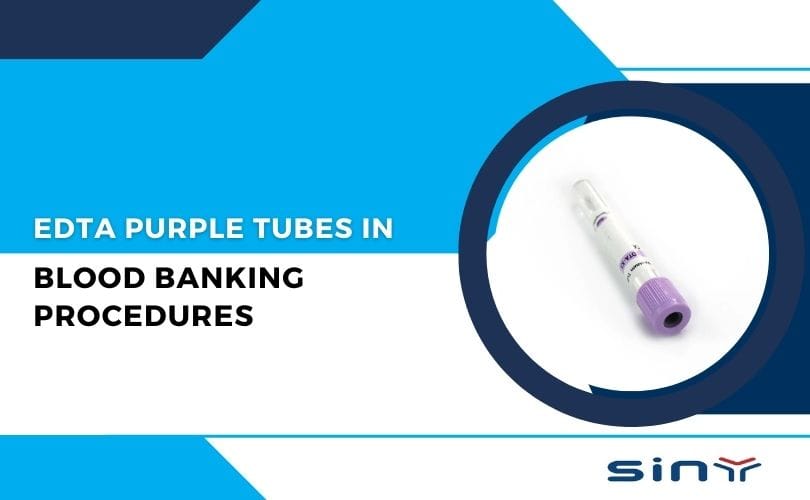
EDTA tubes are available in lavender-top (K2 EDTA) and pink-top (K3 EDTA) variants.
For more details, explore our EDTA Tube products.
Citrate Tubes: Overview and Applications
Citrate works by chelating calcium ions, similar to EDTA, but it is primarily used for coagulation studies. The most common type of citrate tube contains 3.2% sodium citrate.
Key Uses of Citrate Tubes
- Coagulation Tests: Citrate tubes are essential for tests like Prothrombin Time (PT) and Activated Partial Thromboplastin Time (APTT).
- Platelet Function Studies: Citrate is preferred for platelet function tests, as it does not cause platelet clumping.
- Blood Bank Testing: Citrate tubes are used in blood banks for compatibility testing.
Citrate tubes are easily identifiable by their light blue tops.
Discover the differences between EDTA Tubes vs Citrate Tubes.
Platelet Count EDTA vs Citrate: A Detailed Comparison
Platelet count EDTA vs citrate comparison reveals significant differences in testing approaches. EDTA tubes serve as the first choice for routine platelet enumeration because they prevent platelet aggregation while preserving individual platelet structure. Automated hematology analyzers are calibrated and validated using EDTA samples, making this anticoagulant the reference standard.
However, EDTA-dependent antibodies in some patients cause platelet clumping, resulting in pseudothrombocytopenia. When this occurs, laboratories must confirm platelet counts using citrate tubes. The comparison between EDTA and citrate platelet counts helps identify this preanalytical issue.
Citrate-collected samples yield slightly different platelet counts due to the dilution effect from the anticoagulant solution. Laboratories apply a correction factor (multiplying by 1.1) to account for this dilution when reporting platelet counts from citrate tubes.
When to Choose Each Anticoagulant for Platelet Testing
Laboratory protocols recommend EDTA for all routine platelet counts unless contraindications exist. The stability of platelets in EDTA, combined with standardized analyzer settings, produces the most reliable results for clinical decision-making.
Citrate tubes become necessary when EDTA-dependent platelet clumping is suspected or confirmed. Signs include unexpectedly low platelet counts with normal patient presentation, platelet clumps visible on blood smears, or flags from automated analyzers indicating platelet aggregation.
Some specialized platelet function tests specifically require citrate anticoagulation. Platelet aggregation studies and certain flow cytometry panels for platelet activation markers perform better with citrate samples. You can learn more about EDTA tubes compared to other blood collection methods.
Technical Considerations for Accurate Results
Sample timing affects platelet counts differently in EDTA versus citrate. EDTA samples remain stable for platelet counting up to 24 hours when stored at room temperature. Citrate samples should be analyzed within four hours for optimal accuracy, as platelets may undergo morphological changes or activation with longer storage.
Mixing technique influences results in both tube types. Gentle inversion (8-10 times) immediately after collection ensures complete anticoagulation without causing mechanical platelet damage. Vigorous shaking can activate platelets or cause hemolysis, affecting multiple test parameters.
Patient factors, including platelet count abnormalities and underlying conditions, may influence which anticoagulant performs better. Thrombocytopenic patients require careful evaluation, and confirmation testing with alternative anticoagulants may be warranted when clinical presentation doesn’t match laboratory results.
Comparison of EDTA and Citrate in Clinical Practice
The practical application of EDTA versus citrate tubes depends heavily on the clinical question being addressed. Hematology laboratories prefer EDTA for its superior cell preservation and standardization across automated analyzers. Complete blood counts, blood typing, and immunohematology studies overwhelmingly use EDTA tubes.
Coagulation laboratories exclusively use citrate tubes for hemostasis testing. The reversible calcium chelation allows controlled activation of the coagulation cascade during testing. This property makes citrate indispensable for PT, aPTT, and specialized coagulation factor assays.
When both hematological and coagulation testing are ordered, phlebotomists must collect both tube types. The venipuncture procedure follows a specific order of draw to minimize cross-contamination between different additives. Citrate tubes typically come after any coagulation tube collected for serum studies but before EDTA tubes.
Storage and Stability Differences
EDTA samples demonstrate excellent stability for hematological parameters. Complete blood counts remain accurate for 24 hours at room temperature, and even longer when refrigerated. White blood cell differential counts are reliable for several hours, though cell morphology may deteriorate with extended storage.
Citrate samples have stricter stability requirements. Most coagulation tests should be performed within four hours of collection. Some labile factors, particularly factor VIII, decrease rapidly in stored samples. Plasma separated from citrate tubes can be frozen for later specialized testing, but this requires proper protocols.
Temperature control affects both sample types differently. EDTA samples generally tolerate room temperature storage well, while citrate samples for some specialized tests may require immediate centrifugation and plasma separation. Freezing EDTA samples is inappropriate for cell counts but may be acceptable for molecular testing.
For a deeper understanding, check out our EDTA Tubes vs Other Blood Collection Tubes comparison.
Summary
Choosing the right anticoagulant for blood testing is essential for obtaining accurate and reliable results. EDTA tubes are ideal for hematology and molecular diagnostics, while Citrate tubes are the go-to option for coagulation studies and platelet function tests. Understanding the differences between these anticoagulants helps healthcare professionals make informed decisions, ensuring optimal patient care.
For more information on EDTA tubes and their applications, visit EDTA Tube.
If you have any questions or need assistance, feel free to Contact Us.
FAQs
1. Is EDTA an anticoagulant?
Yes, EDTA is an anticoagulant that prevents blood clotting by chelating calcium ions.
2. What is the difference between anticoagulant and antiplatelet drugs?
Anticoagulants prevent blood clotting by inhibiting coagulation factors, while antiplatelet drugs prevent platelet aggregation.
3. Which anticoagulant is best for platelet count?
Citrate tubes are generally preferred for platelet count tests, as they do not cause platelet clumping.
4. What are the common side effects of anticoagulant drugs?
Common side effects include bleeding, bruising, and gastrointestinal issues.
5. Can EDTA tubes be used for coagulation studies?
No, EDTA tubes are not suitable for coagulation studies. Citrate tubes are the preferred choice.