How EDTA Chelates Calcium:EDTA (Ethylenediaminetetraacetic Acid) is a cornerstone of modern medical diagnostics, playing a vital role in blood collection and laboratory testing. Its ability to chelate calcium ions makes it an indispensable anticoagulant, ensuring blood samples remain stable for accurate analysis. This article explores the science behind EDTA’s calcium chelation, its structure, clinical applications, and potential drawbacks.
EDTA Structure: The Key to Its Function
The molecular structure of EDTA is what enables its powerful chelating ability:
- Hexadentate Ligand: EDTA has six binding sites—four carboxylate groups and two amine groups—that form strong bonds with metal ions.
- Central Ethylene Backbone: This structure allows EDTA to wrap around metal ions, particularly calcium (Ca²⁺), forming a stable complex.
This structural design ensures that EDTA effectively sequesters calcium, disrupting the coagulation cascade and preventing blood clotting.
For a deeper understanding of calcium’s role in the body, refer to this external resource.
How EDTA Chelates Calcium: The Science of Anticoagulation in Labs
Chelation is the process by which a molecule binds tightly to a metal ion through multiple coordination bonds. In the case of blood collection:
EDTA molecules approach free calcium ions in plasma.
The carboxylate and amine groups coordinate with calcium, forming a stable, ring-like complex.
Calcium is effectively removed from the coagulation cascade, preventing the conversion of fibrinogen to fibrin.
The blood remains fluid, suitable for testing hematology parameters or molecular diagnostics.
This property makes EDTA ideal for complete blood count (CBC) tests, HbA1c measurement, and PCR-based diagnostics.
For more about EDTA in molecular diagnostics, see:EDTA Tubes and Molecular Diagnostics
Understanding Calcium in Blood Clotting
Calcium ions (Ca²⁺) are crucial for blood coagulation. They participate in several steps of the coagulation cascade, including the activation of clotting factors. Without calcium, the formation of a stable fibrin clot is impossible.
Learn more about calcium here: Wikipedia: Calcium
When EDTA is added to blood, it binds free calcium ions, forming a stable EDTA-calcium complex, which prevents the cascade from progressing. This chelation ensures that blood remains in a fluid state suitable for analysis.
How EDTA Chelates Calcium: The Mechanism
The process of calcium chelation by EDTA involves several key steps:
Binding to Calcium Ions: EDTA’s six binding sites surround a calcium ion, neutralizing its charge.
- Inhibition of Clotting Factors: Calcium is essential for activating clotting enzymes (e.g., thrombin). By removing free calcium, EDTA prevents clot formation.
- Preservation of Blood Integrity: The chelation process keeps blood in a liquid state, allowing for accurate hematological analysis.
This mechanism is why EDTA is the preferred anticoagulant for tests like Complete Blood Count (CBC) and blood smears.
For more on EDTA’s role in diagnostics, explore our guide on EDTA Tubes for Hematology Testing.
EDTA Uses in Medical Laboratories
EDTA’s ability to chelate calcium makes it invaluable in several diagnostic applications:
1. Hematology Testing
- Complete Blood Count (CBC): Measures red blood cells, white blood cells, hemoglobin, and platelets.
- Blood Smear Examination: Analyzes cell morphology for disorders like anemia or leukemia.
2. Molecular Diagnostics
- Used in PCR testing and genetic analysis due to its ability to preserve DNA.
3. Blood Banking
- Essential for blood typing and crossmatching before transfusions.
For specialized applications, see our article on EDTA Tubes in COVID-19 Testing.
EDTA Dosage for Chelation Therapy
EDTA dosage in medical chelation therapy depends on the patient’s weight, type of metal poisoning, and route of administration. Typically:
Intravenous EDTA: 1 g/m² per day for heavy metal detoxification.
Oral EDTA: Lower bioavailability; used as supportive therapy.
It is critical to administer EDTA under medical supervision, as improper dosing can cause hypocalcemia, kidney strain, or electrolyte imbalance.
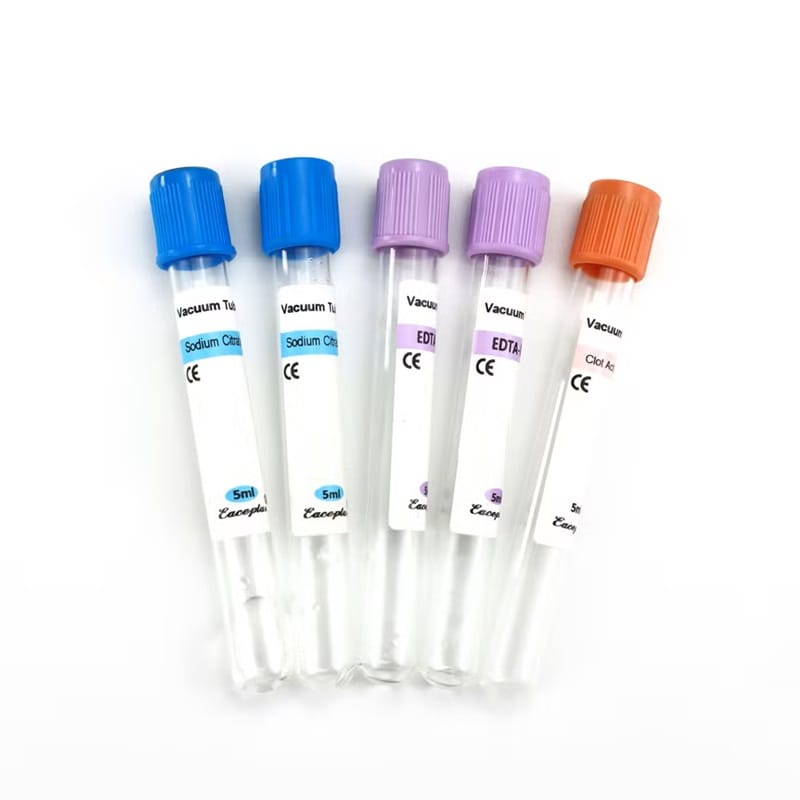
For tube-based anticoagulation, EDTA is pre-measured in tubes to ensure accurate anticoagulant action without risk to the patient.
EDTA as a Chelating Agent
EDTA is considered a strong chelating agent. Its high affinity for calcium and other divalent cations allows it to:
Prevent coagulation in collected blood.
Stabilize metal ions in biochemical assays.
Protect sensitive analytes in molecular biology.
EDTA’s chelation is reversible under certain conditions, making it flexible for research and clinical applications.
Advantages of EDTA as an Anticoagulant
Maintains cellular morphology for hematology analysis.
Preserves DNA and RNA in molecular tests.
Compatible with automated analyzers.
Chemically stable and non-toxic in tube concentrations.
For details about quality standards of EDTA tubes:
Siny EDTA Tubes Quality Certifications
Disadvantages of EDTA as an Anticoagulant
Despite its benefits, EDTA has certain limitations:
Can chelate other essential metal ions, affecting some biochemical assays.
Excess EDTA may alter cell morphology, causing artifacts in hematology tests.
Not suitable for calcium-dependent assays like coagulation factor analysis.
Understanding these disadvantages ensures correct tube selection for different laboratory tests.
EDTA Tube Handling and Best Practices
Proper handling of EDTA tubes ensures accuracy:
Gently invert tubes 8–10 times after collection.
Avoid shaking, which can cause hemolysis.
Do not use EDTA tubes for calcium or coagulation studies.
Store samples at recommended temperatures to preserve analyte stability.
For detailed EDTA tube handling guidelines, see:EDTA Tube Products
Summary
EDTA’s ability to chelate calcium is the foundation of its role as an anticoagulant in blood collection. Its unique structure, clinical versatility, and standardized use make it indispensable in diagnostics. While it has some limitations, its benefits in ensuring accurate test results are unmatched.
For more information, explore our EDTA Tube Category or Contact Us with questions.
FAQs
Q1: What does EDTA stand for?
A: Ethylenediaminetetraacetic Acid.
Q2: Why does EDTA prevent blood clotting?
A: It binds calcium ions, which are essential for the coagulation cascade.
Q3: What tests require EDTA tubes?
A: CBC, blood smears, hemoglobin electrophoresis, and molecular diagnostics.
Q4: Can EDTA affect lab results?
A: Yes, it can interfere with calcium, magnesium, and potassium tests.
Q5: How long can EDTA blood samples be stored?
A: Typically 24–48 hours at room temperature; longer storage requires refrigeration.