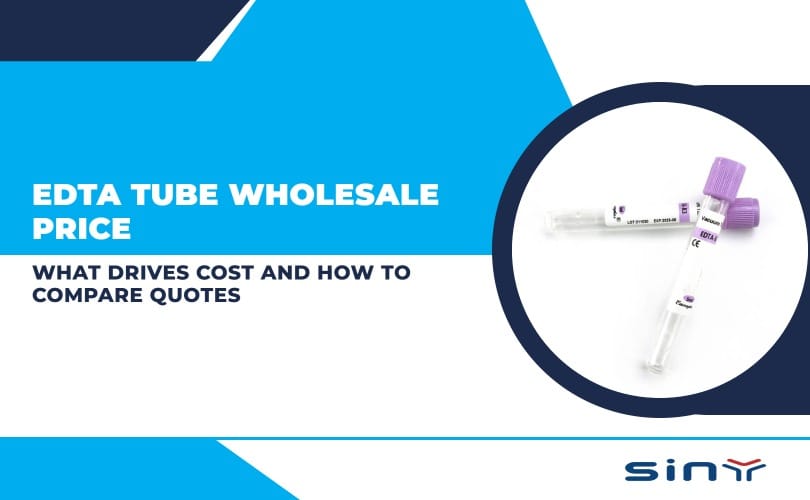
The EDTA Anticoagulant Tube is an indispensable tool in modern medical diagnostics, serving as the gold standard for hematology testing, including the Complete Blood Count (CBC). Among the different types, the purple-capped tube, signifying the presence of Ethylenediaminetetraacetic acid (EDTA), is a common sight in laboratories and hospitals globally. For healthcare providers, supply reliability for such a critical component—especially from trusted manufacturers like Siny Medical—is not just a matter of convenience; it is directly linked to continuity of patient care and the integrity of diagnostic results.
This comprehensive guide delves into the crucial factors that underpin the consistent and reliable supply of the SINY EDTA Anticoagulant Tube Purple Cap, exploring the manufacturing excellence, the importance of global distribution channels, and the commitment to quality that ensures healthcare facilities can always access this vital diagnostic product.
What is an EDTA Anticoagulant Tube?
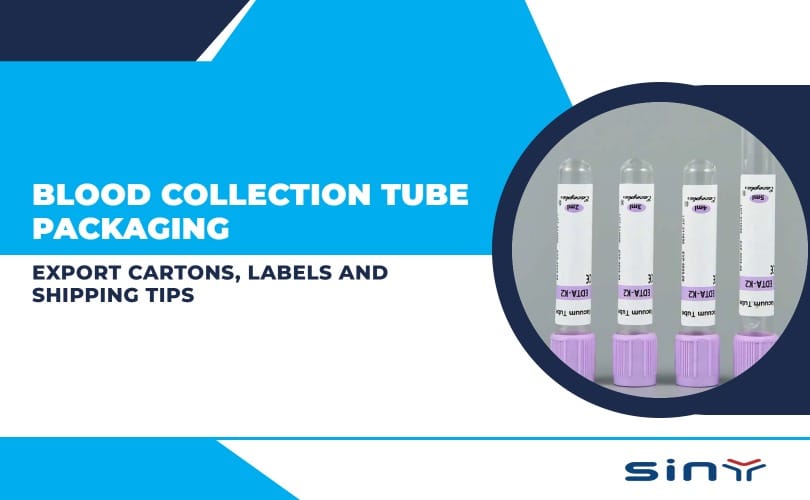
The EDTA Anticoagulant Tube, often recognized by its distinctive purple (or lavender) cap, is a specialized blood collection tube coated internally with Ethylenediaminetetraacetic Acid (EDTA).
EDTA acts as an anticoagulant by binding calcium ions in the blood, which are necessary for clot formation. By effectively removing calcium, EDTA preserves blood in its natural, unclotted state, allowing for accurate cell morphology and hematological analyses.
Learn more about EDTA tube varieties here:
👉 EDTA Tubes for Blood Collection
👉 EDTA K2 and EDTA K3 Vacuum Blood Collection Tubes
Key properties of EDTA tubes:
-
Prevents coagulation by chelating calcium ions.
-
Preserves cellular components of blood.
-
Ideal for complete blood count (CBC), hemoglobin tests, and blood typing.
Supply Reliability: A Critical Factor
In the healthcare industry, supply chain reliability is paramount. SINY Medical has established itself as a dependable supplier of EDTA Anticoagulant Tubes, ensuring consistent availability and timely delivery. Their robust manufacturing processes and stringent quality control measures guarantee that every tube meets international standards.
SINY’s commitment to reliability extends beyond production. They offer flexible ordering options, bulk purchasing discounts, and efficient logistics to meet the demands of healthcare facilities worldwide. Explore their EDTA Tube collection protocols.
The Science Behind the Purple Cap
That distinctive purple cap isn’t just for color-coding convenience—it represents a carefully engineered design. Each SINY EDTA tube is labeled and capped according to global phlebotomy color codes, helping technicians instantly identify the correct tube for hematological procedures.
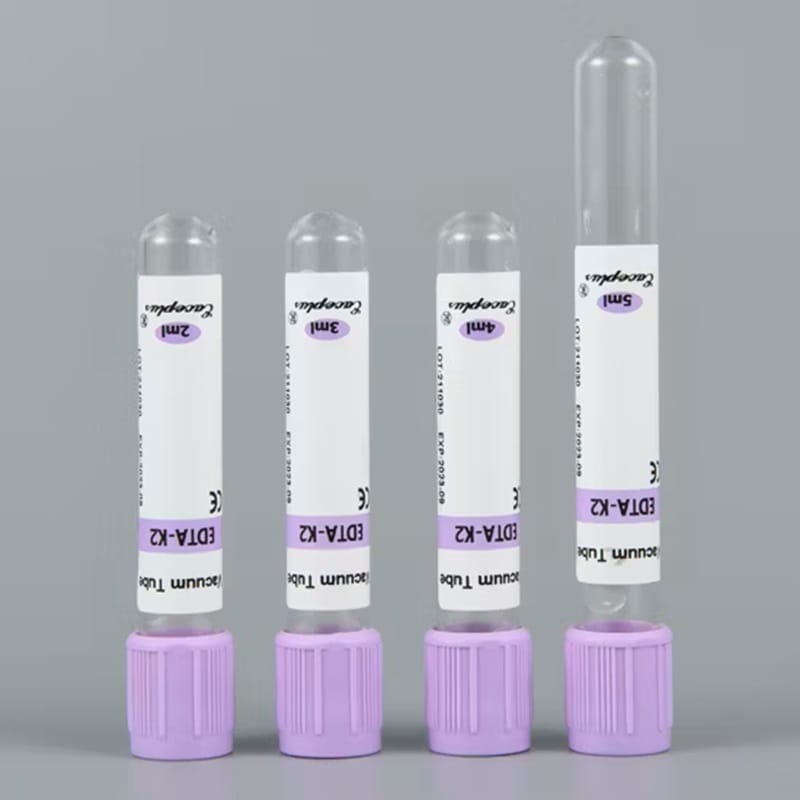
According to EDTA Tube Collection Order Guide, the EDTA tube is typically filled after serum and heparin tubes to prevent cross-contamination of additives.
The EDTA K2 and EDTA K3 versions differ slightly in composition:
-
EDTA K2: Offers less osmotic shrinkage, ideal for flow cytometry.
-
EDTA K3: Commonly used in automated hematology analyzers.
SINY Medical’s range includes both variants, ensuring compatibility across multiple lab protocols and equipment types.
SINY Medical: Pioneering Precision in Blood Collection
SINY Medical is one of the leading manufacturers of EDTA blood collection tubes, trusted globally for its commitment to precision, innovation, and dependable supply.
Their EDTA tubes are meticulously produced under ISO 13485 and CE certifications, ensuring international compliance and unmatched performance. The Purple Cap EDTA Tube from SINY Medical is designed to guarantee that every sample remains stable, uncontaminated, and ready for diagnostic evaluation.
Manufacturing standards include:
-
High-grade polypropylene material for clarity and strength.
-
Uniform EDTA coating for consistent anticoagulant performance.
-
Vacuum-sealed system to ensure precise blood volume collection.
-
Non-toxic and pyrogen-free components for safe handling.
More details available at:
🌐 https://www.sinymedical.com/product-category/edta-tube/
The Manufacturing Excellence Behind SINY Medical Products
SINY Medical has established its reputation through rigorous adherence to international manufacturing standards and comprehensive quality control systems. The production of EDTA tubes for blood collection involves multiple precision-controlled steps, each monitored for consistency and quality. Understanding these manufacturing processes provides insight into why some suppliers demonstrate superior reliability compared to others.
The manufacturing journey begins with the selection of medical-grade PET (polyethylene terephthalate) or glass materials that meet strict biocompatibility standards. These materials undergo rigorous testing for chemical purity, ensuring no substances leach into blood samples that could compromise test results. The tube walls must maintain specific thickness tolerances to withstand vacuum pressure while allowing proper sample visualization, and even minor deviations can result in batch rejection.
EDTA coating application represents one of the most critical manufacturing stages. The anticoagulant must be spray-dried onto tube walls in precise quantities, with uniform distribution ensuring consistent performance across every tube in every production run. SINY Medical employs automated spray-drying systems with real-time monitoring that maintains coating uniformity within extremely tight tolerances. This precision prevents the dreaded scenario of sample clotting due to insufficient anticoagulant or test interference from excessive EDTA.
The vacuum technology employed in tube production determines draw volume accuracy and shelf stability. SINY utilizes advanced vacuum filling systems that create consistent negative pressure across production batches, ensuring that tubes draw the exact volume specified on their labels. This precision matters tremendously in clinical settings where test results depend on maintaining proper blood-to-anticoagulant ratios. The EDTA K2 and EDTA K3 vacuum blood collection tubes from SINY undergo vacuum testing on every production lot to verify performance specifications.
Quality control checkpoints occur at multiple stages throughout production. Raw materials receive incoming inspection with certificate of analysis verification. In-process controls monitor wall thickness, vacuum levels, and anticoagulant concentration. Finished product testing includes vacuum retention studies, anticoagulant effectiveness verification, sterility confirmation, and compatibility testing with major laboratory analyzer brands. This multi-layered approach to quality assurance creates the foundation for supply reliability that healthcare facilities can trust.
Why Supply Reliability Matters in Medical Diagnostics
In today’s fast-paced healthcare environment, reliable supply chains are as vital as accurate results. Disruptions in laboratory consumable supplies can delay diagnoses and compromise patient care.
SINY Medical’s EDTA tube supply reliability stands out due to:
-
Global distribution channels supported by strong logistics networks.
-
Steady manufacturing output, even during high-demand periods.
-
Quality assurance checks at every production stage.
-
Partnership with healthcare institutions across continents.
Explore their complete product line:
🔗 EDTA Tube Product Category
🔗 All Products on EDTA Tube Official Website
In the post-pandemic world, maintaining a consistent and secure supply of diagnostic materials is essential. SINY’s robust manufacturing facilities and partnerships have positioned them as a dependable ally to laboratories and hospitals worldwide.
EDTA K2 vs. EDTA K3: Choosing the Right Anticoagulant
The EDTA in the purple cap tube comes in two primary forms: dipotassium EDTA (K2 EDTA) and tripotassium EDTA (K3 EDTA). The choice between the two is a key factor in manufacturing and quality control, as it can subtly impact test results.
| Feature | K2 EDTA (Dipotassium) | K3 EDTA (Tripotassium) |
| Form | Typically spray-dried or dry-coated | Typically liquid additive (historically) or spray-dried |
| ICSH Recommendation | Recommended by the International Council for Standardization in Hematology | Less preferred by some organizations |
| Impact on Cell Volume (MCV) | Minimal impact on Mean Corpuscular Volume | May cause slight red blood cell shrinkage (decrease in MCV) due to greater osmotic effect |
| Dilution Effect | Minimal, as it’s a dry coating | Liquid form causes slight dilution, which can affect results |
| Modern Usage | Most commonly preferred for automated hematology analyzers | Still widely used, particularly in some regions |
Manufacturers like Siny Medical offer both options to meet diverse international protocols. You can find detailed product specifications for EDTA K2 and EDTA K3 Vacuum Blood Collection Tubes to ensure the right product is chosen for your laboratory’s specific requirements.
Manufacturing Excellence: The SINY Medical Commitment to Consistency
The reliability of the EDTA Anticoagulant Tube supply chain begins with a commitment to stringent manufacturing quality. A dependable supply is only valuable if the product itself is consistently high-quality, ensuring accurate diagnostic results. Siny Medical, through its focus on advanced production, guarantees this reliability.
The Precise Manufacturing Process
Producing a high-quality vacuum blood collection tube is a complex, multi-stage process that demands precision engineering and a sterile environment. Siny Medical ensures all tubes, including the Purple Top Blood Collection Tube, meet the highest global standards.
- High-Grade Material Selection: Tubes are made from medical-grade PET plastic or glass, ensuring durability, clarity, and compatibility with sensitive biological samples.
- Precision Molding: Tubes are molded to exact specifications, with uniform wall thickness and a smooth interior to prevent hemolysis (the breakdown of red blood cells).
- EDTA Coating Dosing (The Critical Step): This is where reliability is built. A precise, pre-determined quantity of EDTA (K2 or K3) is applied to the inner wall of the tube.
- Accuracy is Key: The concentration of EDTA must be exact. Too little, and the blood will clot; too much, and it can cause red cell shrinkage, thus compromising the Mean Corpuscular Volume (MCV) result.
- Siny Medical’s Advantage: Siny Medical employs state-of-the-art, automated spray-drying technology to ensure the EDTA is uniformly coated and precisely dosed in every single tube, minimizing batch-to-batch variation.
- Creating the Vacuum: A critical step for vacuum blood collection tubes is creating and sealing a precise vacuum. This ensures the correct, pre-measured volume of blood is drawn from the patient, adhering to the internationally mandated fill ratio for anticoagulants. Consistent vacuum retention is paramount to avoiding under-filled tubes, which can lead to sample dilution and inaccurate results.
- Capping and Sealing: The signature purple cap is securely fitted to maintain the vacuum and prevent any leakage or contamination during transport and handling.
- Sterilization and Quality Control: Every batch undergoes rigorous quality control checks for sterility, vacuum retention, and anticoagulant efficacy, ensuring compliance with ISO and CE standards.
Learn more about the meticulous process at EDTA Tubes Manufacturing Process: What Makes a Quality Product?.
Summary
The SINY EDTA Anticoagulant Tube Purple Cap is a reliable and essential tool in modern healthcare. SINY Medical’s commitment to quality, supply chain resilience, and customer satisfaction makes them a trusted partner for laboratories worldwide. Their EDTA Tubes ensure accurate test results, supporting critical diagnostic processes. Explore their product offerings here and experience the SINY difference today.
For more insights, visit their YouTube channel or their Made-in-China profile.
FAQs
Q1: What does EDTA stand for in EDTA tubes?
EDTA stands for Ethylenediaminetetraacetic Acid, a chelating agent used to prevent blood coagulation by binding calcium ions.
Q2: What are the differences between EDTA K2 and K3 tubes?
K2 EDTA minimizes cell shrinkage, making it suitable for flow cytometry, while K3 EDTA is widely used in hematology analyzers.
Q3: How long can blood samples be stored in EDTA tubes?
Typically, blood samples can remain stable for up to 48 hours at 2–8°C, depending on testing protocols.
Q4: Can EDTA tubes be reused?
No. All EDTA blood collection tubes are single-use only to prevent contamination and ensure accurate results.
Q5: Where can I purchase genuine SINY EDTA tubes?
Visit edtatube.com or sinymedical.com to view certified products and place secure orders.