Modern diagnostic laboratories, accuracy and sample integrity define the quality of results. One of the most widely used tools in hematology is Vacuum Blood Collection edta tubes. These tubes play a critical role in ensuring blood samples remain stable from collection to analysis.
When doctors order a Complete Blood Count (CBC), laboratories often rely on Vacuum Blood Collection edta tubes because they preserve blood cell morphology and prevent clotting. This makes them essential in hospitals, diagnostic centers, and research labs worldwide.
The demand for Vacuum Blood Collection edta tubes continues to grow due to their reliability, ease of use, and consistency in clinical testing. In this article, we will explore how these tubes work, why labs prefer them, and what makes them a gold standard in hematology.
You can also explore related products and categories here EDTA Tube Product Category All EDTA Tube Products
What are Vacuum Blood Collection EDTA Tubes?
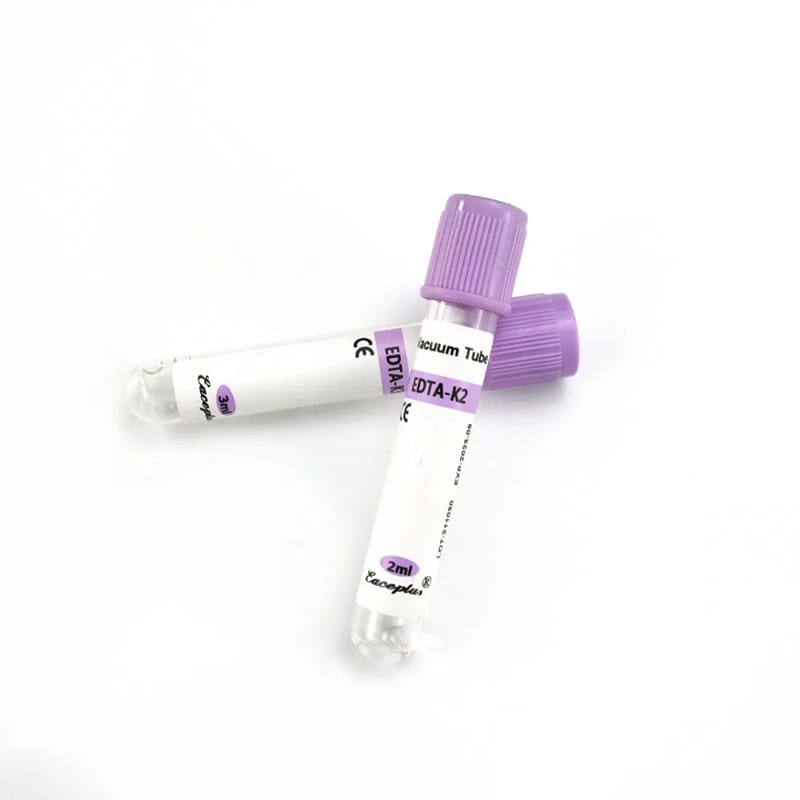
Vacuum Blood Collection edta tubes are sterile blood collection tubes that contain EDTA (Ethylenediaminetetraacetic acid) as an anticoagulant. Their primary purpose is to prevent blood clotting immediately after collection.
EDTA works by binding calciu
m ions in the blood. Since calcium is essential for the clotting process, removing it keeps blood in a liquid state. This ensures that blood cells remain intact for accurate laboratory testing.
Unlike manual collection methods, Vacuum Blood Collection edta tubes use a pre-set vacuum system. This allows blood to flow directly into the tube without contamination or exposure to air, improving sample quality and reducing human error.
For deeper understanding, you can read What is K2 EDTA Vacuum Blood Tube
How Vacuum Blood Collection EDTA Tubes Work
The working mechanism of Vacuum Blood Collection edta tubes is simple but highly effective.
When a healthcare professional inserts a needle into a vein, the vacuum inside the tube automatically draws blood. This controlled suction ensures the correct blood-to-additive ratio.
Once blood enters the tube, EDTA immediately begins its anticoagulant action. It binds calcium ions, preventing clot formation. As a result, the sample remains stable for hematological analysis.
The vacuum system also ensures consistent volume collection, which is crucial for standardized test results.
In laboratory environments, consistency is everything. That is why Vacuum Blood Collection edta tubes are widely trusted for CBC and other hematology tests.
More details on CBC usage EDTA Tubes in Hematology CBC Tests External reference Complete Blood Count Overview
Why Labs Prefer Vacuum Blood Collection EDTA Tubes
There are several reasons why laboratories prefer Vacuum Blood Collection edta tubes over traditional collection methods.
First, they ensure high sample integrity. Since blood is drawn directly into a sealed environment, there is minimal risk of contamination.
Second, they provide accurate anticoagulation. EDTA ensures that blood does not clot, which is essential for hematology analysis.
Third, they reduce human error. The vacuum system ensures correct blood volume automatically.
Fourth, they improve patient comfort and safety, as the collection process is faster and more efficient.
Finally, Vacuum Blood Collection edta tubes are compatible with automated analyzers, making them ideal for high-throughput laboratories.
This is why most diagnostic labs consider them a gold standard for CBC testing Gold Standard for Complete Blood Counts
Role of Vacuum Blood Collection EDTA Tubes in CBC Testing
Complete Blood Count (CBC) is one of the most common blood tests in the world. It helps diagnose infections, anemia, leukemia, and many other conditions.
Vacuum Blood Collection edta tubes are essential in CBC testing because they preserve red blood cells, white blood cells, and platelets in their natural state.
If blood clots, CBC results become unreliable. EDTA prevents this by maintaining cell structure and preventing platelet aggregation.
This is why laboratories depend heavily on Vacuum Blood Collection edta tubes for routine hematology analysis.
Learn more EDTA Tubes for CBC Testing Another detailed resource CBC Testing with EDTA Tubes Guide
Types and Sizes of Vacuum Blood Collection EDTA Tubes
Vacuum Blood Collection edta tubes come in various sizes depending on laboratory needs. Common volumes include 2ml, 3ml, 4ml, 5ml, 6ml, and 10ml.
Each size serves a different purpose. For example, smaller tubes are ideal for pediatric testing, while larger tubes are used in advanced diagnostics.
Choosing the right size ensures optimal test accuracy and prevents sample wastage.
You can explore detailed size guides here EDTA Tube Size Guide Choosing Right EDTA Tube Size 3ml EDTA Vacuum Tube Product
Proper selection of Vacuum Blood Collection edta tubes ensures test reliability and reduces pre-analytical errors.
Advantages of Vacuum Blood Collection EDTA Tubes
One of the biggest advantages of Vacuum Blood Collection edta tubes is their ability to maintain blood stability for extended periods.
They also reduce hemolysis risk, ensuring that red blood cells remain intact. This improves the accuracy of hematology parameters.
Another advantage is efficiency. Laboratories can process large sample volumes quickly due to standardized collection.
Additionally, Vacuum Blood Collection edta tubes support automation in modern labs, reducing manual workload.
Compared to non-vacuum systems, these tubes significantly improve workflow consistency Non-Vacuum EDTA Tubes Explanation
Applications of Vacuum Blood Collection EDTA Tubes
The applications of Vacuum Blood Collection edta tubes extend beyond CBC testing.
They are widely used in hematology, immunology, and molecular diagnostics. Flow cytometry, blood typing, and parasite detection also rely on EDTA-preserved samples.
Modern diagnostic laboratories depend on Vacuum Blood Collection edta tubes for consistent performance across multiple test types. Explore test applications EDTA Tube Test List
Quality Standards and Future of EDTA Tubes
Manufacturing quality plays a major role in the performance of Vacuum Blood Collection edta tubes. High-quality tubes ensure precise anticoagulant concentration and vacuum consistency.
As laboratories evolve, the demand for improved materials and automation-compatible tubes is increasing.
The future of Vacuum Blood Collection edta tubes includes smarter labeling, better vacuum stability, and enhanced compatibility with AI-based analyzers.
Read more about future trends Future of EDTA Blood Collection Tubes 2026 manufacturers Siny Medical EDTA Tube Overview
Mistakes in Using Vacuum Blood Collection EDTA Tubes
Even though Vacuum Blood Collection edta tubes are reliable, improper handling can affect results.
Incorrect filling volume, improper mixing, or delayed processing can lead to inaccurate CBC results.
Laboratory professionals must gently invert tubes after collection to ensure proper EDTA distribution.
Training and standard procedures are essential to maintain accuracy when working with Vacuum Blood Collection edta tubes.
Summary
Vacuum Blood Collection edta tubes are a critical component of modern diagnostic laboratories. They ensure accuracy, stability, and efficiency in blood sample collection.
From CBC testing to advanced hematology applications, these tubes provide unmatched reliability. Their vacuum-based system minimizes contamination and improves workflow consistency.
As healthcare technology advances, Vacuum Blood Collection edta tubes will continue to play a vital role in ensuring precise diagnostic outcomes. For more information and products, visit EDTA Tube Official Website
FAQs
Q: What is the main purpose of Vacuum Blood Collection EDTA Tubes?
A: The main purpose of Vacuum Blood Collection edta tubes is to prevent blood clotting and preserve sample integrity for laboratory testing.
Q: Why is EDTA used in blood collection tubes?
A: EDTA binds calcium ions, which stops clot formation. This makes Vacuum Blood Collection edta tubes ideal for hematology tests.
Q: Can EDTA tubes be used for all blood tests?
A: No, Vacuum Blood Collection edta tubes are mainly used for CBC and hematology-related tests, not biochemical tests.
Q: What happens if EDTA tubes are underfilled?
A: Underfilling Vacuum Blood Collection edta tubes can affect anticoagulant ratio and lead to inaccurate results.
Q: How should EDTA tubes be stored?
A: They should be stored at room temperature and used within recommended time to maintain stability in Vacuum Blood Collection edta tubes.
Q: Are vacuum EDTA tubes better than non-vacuum tubes?
A: Yes, Vacuum Blood Collection edta tubes provide more accurate volume control and reduce contamination risk compared to non-vacuum types.