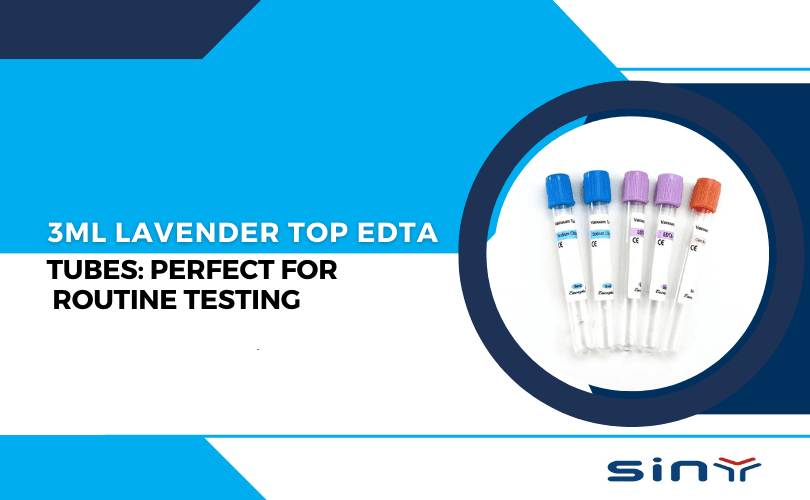
The modern diagnostic laboratory is a place of precision. Every step, from the moment a needle punctures a vein to the final result on a computer screen, relies on stability. Among the most critical tools in this chain is the 3ml Lavender Top EDTA Tubes, a staple in clinical settings worldwide. Whether you are running a simple complete blood count or complex genetic screening, choosing the right volume and anticoagulant is paramount to patient safety and diagnostic accuracy.
In the fast-paced world of hematology, the 3ml volume has emerged as a “Goldilocks” solution. It is large enough to provide sufficient plasma for multiple tests yet small enough to be practical for pediatric and geriatric patients where blood volume is a concern. Understanding the nuances of these tubes helps laboratory managers and clinicians optimize their workflows and ensure the highest quality of care.
The Role of EDTA in Blood Preservation
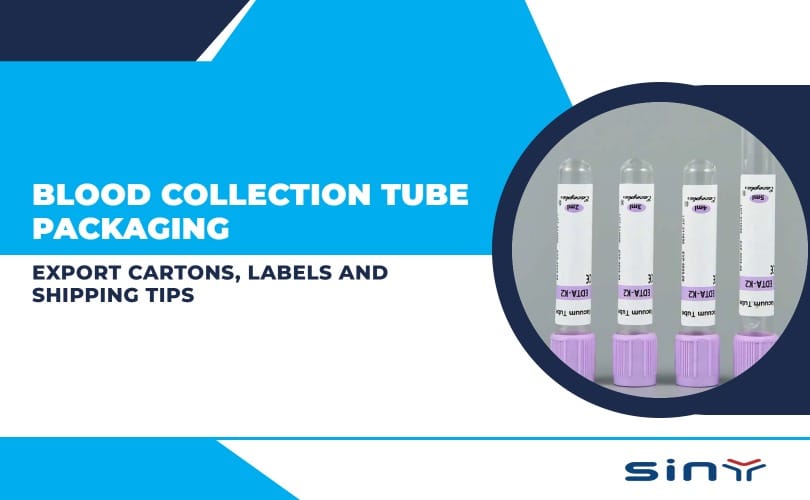
The lavender cap is more than just a color-coding convention; it signifies the presence of Ethylenediaminetetraacetic acid (EDTA). This powerful anticoagulant works by a process called chelation. It essentially “grabs” calcium ions in the blood, which are necessary for the coagulation cascade to proceed. By removing available calcium, the blood remains in a liquid state, allowing for the detailed analysis of cellular components.
When you utilize 3ml Lavender Top EDTA Tubes, you are ensuring that the morphology of red and white blood cells remains intact. This is vital because many diagnostic machines rely on the physical shape and size of cells to categorize them. If a tube fails to prevent clotting or alters the cell shape, the resulting data could lead to a misdiagnosis. Many professionals refer to the complete guide to EDTA tubes to understand the specific chemical interactions at play during the collection process.
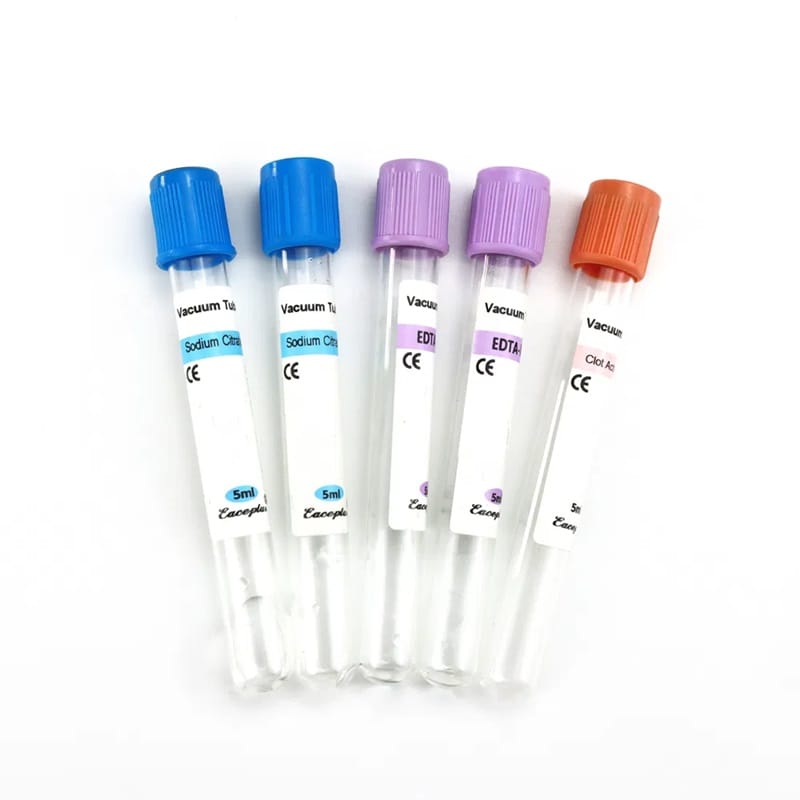
Why the 3ml Volume is Ideal for Routine Testing
Standardization is the backbone of efficiency. While tubes come in various sizes, the 3ml capacity offers a unique balance. For most routine hematology panels, a laboratory requires approximately 1ml to 2ml of whole blood. Choosing 3ml Lavender Top EDTA Tubes provides a slight buffer, ensuring that even if a sample needs to be re-run, there is enough material left without needing to draw more blood from the patient.
Smaller tubes, like the 2ml variants, are excellent but sometimes lack the “dead space” required for efficient mixing. Larger tubes, such as 10ml options, can lead to an improper additive-to-blood ratio if not filled completely. This makes the 3ml size a versatile workhorse for the majority of adult patients. If you are unsure which capacity fits your specific equipment, reviewing an EDTA tube size guide can help clarify the requirements for your laboratory’s instrumentation.
Technical Specifications and Additives
Most 3ml Lavender Top EDTA Tubes contain either K2 EDTA(dipotassium) or K3 EDTA (tripotassium). While both are effective, K2 EDTA is often preferred in modern hematology because it is spray-dried onto the walls of the tube. This allows for rapid dissolution into the blood sample without diluting it.
The vacuum technology within these tubes is calibrated to draw exactly 3ml of blood. This precision is necessary because the amount of EDTA inside is calculated specifically for that volume. If the tube is underfilled, the high concentration of EDTA can cause red blood cells to shrink, which creates errors in Mean Cell Volume (MCV) measurements. Conversely, overfilling (though difficult with vacuum tubes) could lead to micro-clots. You can find high-quality options like the Lavender Cap K2 EDTA Tube which strictly adhere to these international manufacturing standards.
Comparing 3ml to Other tube Sizes
Laboratories often debate the merits of different volumes. When looking at 3ml Lavender Top EDTA Tubes vs. other sizes, the decision usually comes down to the specific patient demographic and the breadth of the test menu.
| Tube Size | Primary Use Case | Advantage |
| 2ml | Pediatrics / Geriatrics | Minimizes blood loss |
| 3ml | Standard Adult Routine | Best balance for CBC + Reticulocytes |
| 5ml | Specialized Research | Provides excess plasma for storage |
| 10ml | Blood Banking / Large Panels | High volume for multiple extractions |
For a deeper dive into these comparisons, articles like 10ml EDTA tubes vs 5ml tubes provide a framework for decision-making. However, for the average clinic, the 3ml remains the most cost-effective and clinically sound choice. It integrates seamlessly into most automated rack systems used by major diagnostic manufacturers.
Clinical Applications of the 3ml EDTA Tube
The primary application for 3ml Lavender Top EDTA Tubes is the Complete Blood Count (CBC). This test is the cornerstone of diagnostic medicine, providing insights into anemia, infection, and leukemia. Because the EDTA preserves the “natural” state of the blood, it allows for accurate platelet counts, which are notoriously difficult to measure if any clotting begins to occur.
Beyond the CBC, these tubes are frequently used for:
-
HbA1c monitoring for diabetic patients.
-
Cyclosporin and Tacrolimus levels in transplant patients.
-
Molecular diagnostic testing and PCR.
-
Blood film preparation for manual differential counts.
The versatility is unmatched. By sourcing a reliable Lavender Top EDTA Blood Collection Tube, healthcare providers ensure that these sensitive tests are conducted on the highest quality specimens possible.
Best Practices for Collection and Handling
Even the best 3ml Lavender Top EDTA Tubes cannot overcome poor phlebotomy technique. To get the most out of these tubes, certain protocols must be followed. First, the order of draw is vital. EDTA tubes should always come after serum tubes and heparin tubes to prevent cross-contamination of additives, which could lead to false potassium elevations.
Once the blood is drawn into the 3ml Lavender Top EDTA Tubes, immediate and gentle inversion is required. Most manufacturers recommend 8 to 10 inversions. Shaking the tube can cause hemolysis—the rupturing of red blood cells—while failing to mix it at all will result in clots. Proper handling ensures that the EDTA is distributed evenly, maintaining the sample’s integrity from the clinic to the lab.
Why Quality Manufacturing Matters
Not all blood collection tubes are created equal. The consistency of the vacuum, the purity of the EDTA additive, and the integrity of the PET plastic or glass are all factors. Inferior tubes may lose their vacuum over time, leading to under-filled samples that must be rejected.
Siny Medical, a leader in this field, produces tubes that meet rigorous international certifications. Their Lavender Top EDTA Vacuum Blood Collection Tube is designed to withstand the pressures of centrifugation and transportation. For facilities looking to purchase in bulk, exploring the products page or checking out the Siny Medical EDTA tube line on authoritative industry sites is a wise move for long-term reliability.
The Evolution of the “Lavender” Standard
Historically, there has been some confusion between “purple” and “lavender” tops. While the terms are often used interchangeably in common parlance, some systems use them to distinguish between K2 and K3 additives. It is essential for lab staff to be educated on the specific purple top vs lavender top differences relevant to their specific equipment.
As diagnostic technology advances, the demand for 3ml Lavender Top EDTA Tubes continues to grow. New genetic tests and liquid biopsy techniques often require the stabilizing properties of EDTA. This makes the 3ml tube not just a tool of the past, but a critical component of the future of personalized medicine.
Environmental and Economic Considerations
In a high-volume laboratory, the environmental impact of disposables is significant. The transition from glass to high-clarity PET plastic for 3ml Lavender Top EDTA Tubes has reduced the risk of breakage and biohazard exposure while also making the tubes lighter and more fuel-efficient to ship.
Economically, the 3ml size is often the most competitively priced due to its high production volume. Labs that standardize on this size can often negotiate better rates from wholesalers. For those looking to optimize their supply chain, consulting an EDTA tube size explanation can reveal where consolidation is possible to save costs.
How to Choose the Right Supplier
Choosing a supplier for your 3ml Lavender Top EDTA Tubes involves more than just looking at the price tag. You must consider lead times, consistency of the vacuum, and the clarity of the tube walls. A clear tube allows the phlebotomist to see the blood flow and confirm the fill volume instantly.
Websites like edtatube provide a centralized hub for sourcing these essentials. Whether you need a Lavender Cap EDTA K2 Vacuum Tube or a specialized volume, having a direct line to a manufacturer or specialized distributor ensures that you are never caught without stock. Furthermore, checking out their YouTube channel can provide visual insights into the manufacturing process and quality control measures.
Summary
In summary, the 3ml Lavender Top EDTA Tubes represent the ideal balance of volume and efficacy for modern clinical laboratories. Their ability to preserve blood morphology through high-quality EDTA chelation makes them indispensable for CBCs and other hematological assessments. By selecting the right size and ensuring proper collection techniques, healthcare providers can guarantee accurate results and better patient outcomes. Whether you are looking for wholesale options or trying to decide which size EDTA tube you should use, prioritizing quality and standardization is the key to a successful laboratory operation. If you have further questions about bulk orders or technical specs, don’t hesitate to contact us for expert guidance.
FAQs
Can I use 3ml Lavender Top EDTA Tubes for blood chemistry tests?
No, 3ml Lavender Top EDTA Tubes are specifically designed for hematology and molecular testing. The EDTA additive chelates calcium and contains potassium, which would interfere with chemistry results like calcium levels or electrolyte panels. For chemistry, you typically use red or green top tubes.
What happens if I underfill a 3ml Lavender Top EDTA Tube?
Underfilling 3ml Lavender Top EDTA Tubes leads to an excess concentration of the anticoagulant relative to the blood. This can cause the red blood cells to shrink (crenation), which artificially lowers the hematocrit and Mean Cell Volume (MCV) results, potentially leading to incorrect clinical interpretations.
Is there a difference between K2 and K3 EDTA in 3ml tubes?
Yes, $K_{2}EDTA$ is a di-potassium salt that is usually spray-dried onto the tube wall, while K3 EDTA is a tri-potassium liquid. For most routine tests in 3ml Lavender Top EDTA Tubes, K2 EDTA is preferred by international standards (CLSI) because it has less impact on cell volume and morphology.
How long can blood stay stable in 3ml Lavender Top EDTA Tubes?
For a standard CBC, blood in 3ml Lavender Top EDTA Tubes is typically stable for up to 24 hours at room temperature and up to 48 hours if refrigerated. However, for blood smears, it is best to prepare the slide within 2 to 4 hours of collection to ensure the best cellular detail.
Why is the 3ml size better than a 5ml tube for routine draws?
The 3ml Lavender Top EDTA Tubes are often preferred because they require less blood from the patient while still providing more than enough sample for modern automated analyzers. It reduces the risk of “iatrogenic anemia” in patients who require frequent blood draws, making it a safer choice for routine monitoring.