When a laboratory needs more whole blood than a routine small-volume tube can provide, 7 mL EDTA Tubes can offer a practical solution. Their larger draw volume can support workflows that require sufficient specimen for multiple hematology tests, repeat analysis, or specialized applications.
However, choosing a larger EDTA tube is not simply a matter of collecting more blood. The tube must contain the correct anticoagulant concentration, achieve the intended blood-to-additive ratio, and fit the laboratory’s validated testing procedures. Proper collection and handling also matter because preanalytical errors can affect laboratory accuracy.
EDTA is widely used for whole-blood testing because it binds calcium and prevents coagulation. The Clinical and Laboratory Standards Institute (CLSI) recognizes EDTA as a common additive used in blood collection devices and provides standards covering tube materials, construction, labeling, and additives.
This guide explains when 7 mL EDTA Tubes make sense, how they compare with smaller volumes, what tests may benefit from a larger specimen, and what laboratories should consider before selecting them.
What Are 7 mL EDTA Tubes?
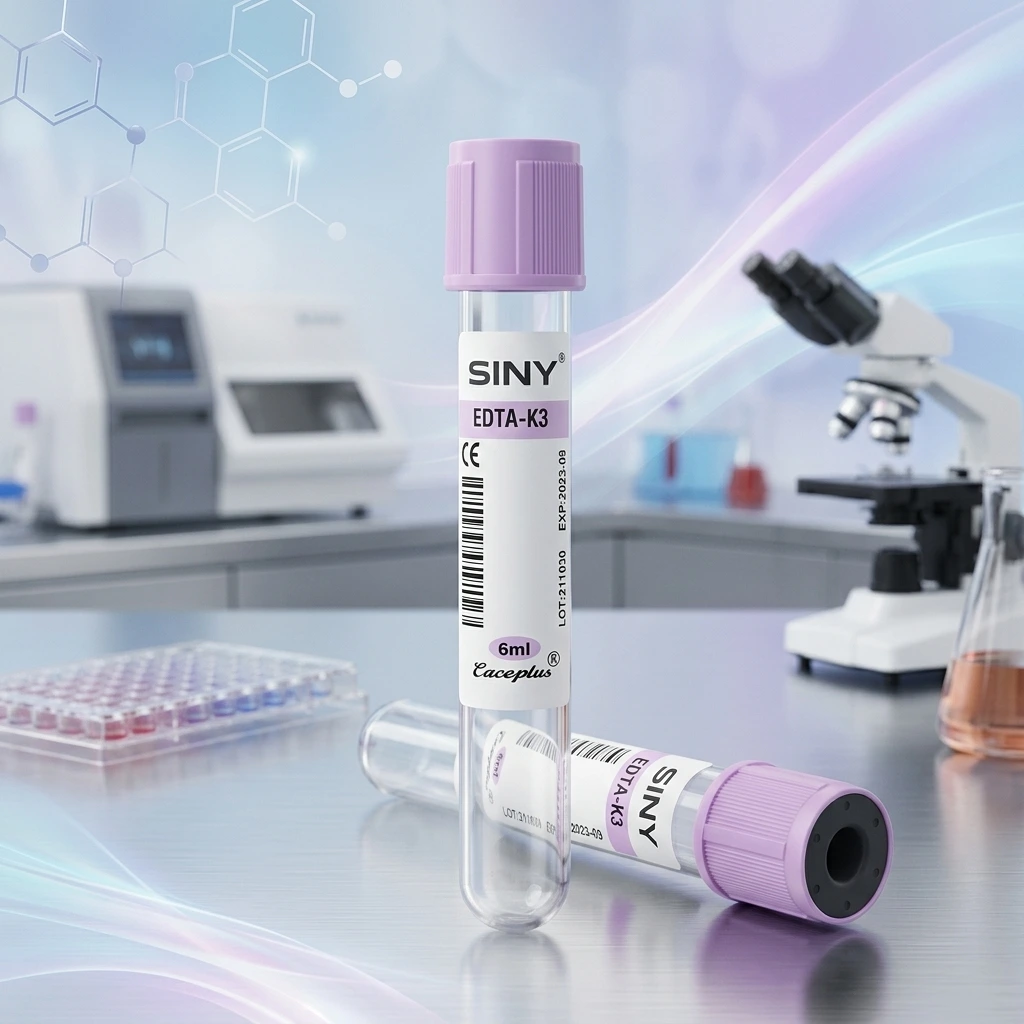
7 mL EDTA Tubes are blood collection tubes designed to collect approximately 7 mL of venous blood while maintaining the sample in an anticoagulated state.
EDTA stands for ethylenediaminetetraacetic acid. It prevents clotting by binding calcium ions that participate in the coagulation process. As a result, the collected blood remains available as whole blood for suitable laboratory investigations.
The exact design varies by manufacturer. According to the current product specifications published by EDTA Tube, 7 mL versions are available with either K2 EDTA or K3 EDTA, use a 13 × 100 mm format in the listed configuration, and may be manufactured from PET or glass. The same product range includes volumes from 2 mL through 10 mL.
Laboratories can explore the manufacturer’s broader EDTA tube product range when comparing tube volumes, materials, additives, and configurations.
The important point is that 7 mL is a collection volume, not a universal testing requirement. The correct tube depends on the laboratory method, analyzer requirements, specimen volume, and manufacturer’s instructions.
Why Use 7 mL EDTA Tubes Instead of Smaller Tubes?
Most routine hematology tests do not automatically require 7 mL of blood. In fact, many CBC procedures can work with considerably less specimen when the laboratory’s validated requirements allow it.
For example, Labcorp specifies a lavender-top EDTA tube for its CBC with differential and states that the tube should be filled to capacity. Its listed minimum volume for the pediatric microtainer configuration is 0.5 mL, although that amount does not allow repeat testing.
So why would a laboratory select a larger tube?
The answer is workflow flexibility.
A larger specimen can be useful when one collection needs to support several compatible tests. It can also provide additional material when repeat analysis, reflex testing, confirmation, or research procedures may be necessary.
The goal should not be to collect the largest possible amount. Instead, laboratories should select a tube that provides enough specimen for the intended testing while preserving the correct blood-to-anticoagulant relationship.
7 mL EDTA Tubes and the Blood-to-Anticoagulant Ratio
The relationship between blood volume and anticoagulant is one of the most important considerations when choosing an EDTA tube.
An EDTA tube is manufactured with a specified amount of anticoagulant. In a vacuum tube, the vacuum also determines the intended blood draw volume. If the tube receives substantially less blood than intended, the relative amount of anticoagulant can become too high for some applications.
That is why a larger tube should never be treated as a simple empty container.
The CLSI explains that blood collection tubes and additives have defined material, manufacturing, and performance requirements. Laboratories and manufacturers must consider these characteristics when selecting collection systems.
A practical example makes the concept easier to understand.
Imagine a laboratory needs enough specimen for a CBC and an additional validated hematology procedure. A 2 mL tube may provide enough blood for the first test but leave little material for repeat analysis. A 5 mL or 7 mL EDTA Tube may provide more operational flexibility.
However, the laboratory must still follow the manufacturer’s specified fill volume and its own validated procedure.
More blood is useful only when the tube is designed and validated for that volume.
When Are 7 mL EDTA Tubes Useful?
There are several situations in which 7 mL EDTA Tubes may be considered.
1. Multiple Hematology Tests From One Collection
A single blood draw may need to support several compatible tests. Instead of collecting multiple small tubes, a laboratory may choose a larger EDTA tube when its procedures permit it.
This can simplify specimen management and reduce the number of collection containers.
The approach is particularly useful in centralized laboratories where samples may pass through several analytical stages.
2. Repeat or Reflex Testing
Sometimes the first test produces a result that requires additional analysis.
If the original specimen contains enough suitable blood, the laboratory may perform the additional procedure without requesting another collection.
This can be valuable in hospital and diagnostic workflows where recollection can delay results or create additional inconvenience.
The larger tube does not guarantee that every test can be added later. Test-specific specimen requirements still apply.
3. Research and Specialized Laboratory Work
Research laboratories may need additional whole blood for cell studies, molecular workflows, validation work, or other procedures.
WHO guidance documents describe the use of K2/K3 EDTA whole blood for applications including CD4 enumeration and molecular testing workflows.
The precise tube type and volume, however, should always follow the protocol being used.
4. High-Throughput Laboratory Workflows
Large laboratories process thousands of specimens. Consistency becomes extremely important.
A standardized tube volume can simplify purchasing, specimen routing, automation, and inventory management.
In such environments, 7 mL EDTA Tubes may be useful when the laboratory’s workflow has been designed around a higher specimen volume.
5. Situations Where Specimen Availability Is Limited
Some patients may require careful blood collection planning. Pediatric and difficult-access collections are obvious examples, although a 7 mL tube is not automatically appropriate for these patients.
The tube should always match the actual clinical need and approved collection procedure.
CLSI’s current venous blood collection guidance specifically addresses special considerations for children and challenging collections, emphasizing the importance of appropriate specimen collection procedures.
7 mL EDTA Tubes vs. 2 mL, 3 mL, 4 mL, 5 mL, and 6 mL Tubes
Tube volume should be selected according to the intended workflow rather than according to size alone.
| Tube volume | Typical role | Main consideration |
|---|---|---|
| 2 mL | Small-volume routine testing | Useful when specimen requirements are low |
| 3 mL | Routine hematology | More specimen capacity without a large collection volume |
| 4 mL | Routine and multi-test workflows | Useful where additional volume is desirable |
| 5 mL | Broader laboratory workflows | Provides greater reserve for repeat or additional testing |
| 6 mL | Higher-volume workflows | Useful when laboratory requirements exceed smaller tubes |
| 7 mL | Higher-volume specimen collection | Provides additional specimen for suitable validated workflows |
| 8–10 mL | Large-volume applications | Selected when the procedure specifically requires greater volume |
EDTA Tube currently lists 2 mL, 3 mL, 4 mL, 5 mL, 6 mL, 7 mL, 8 mL, 9 mL, and 10 mL configurations within its EDTA collection range. The listed 7 mL configuration uses a 13 × 100 mm tube format.
Laboratories can also compare the manufacturer’s 2 mL EDTA tubes, 3 mL EDTA tubes, 4 mL EDTA tubes, 5 mL EDTA tubes, and 6 mL EDTA tubes before deciding which capacity fits the workflow.
The difference is therefore not simply “small versus large.” It is about matching specimen volume, additive, test requirements, analyzer compatibility, and collection practice.
What Tests Can Use EDTA Blood?
EDTA is strongly associated with hematology because it helps preserve cellular components in whole blood.
Common applications include complete blood counts, differential blood counts, platelet measurements, and blood-cell morphology procedures when the laboratory method specifies EDTA blood.
For example, Labcorp identifies a lavender-top EDTA tube as the specimen container for CBC testing. Its instructions also require immediate mixing after collection and specify rejection criteria that include clotted or unsuitable specimens.
Other applications may include certain molecular and immunological workflows.
WHO documentation notes that K2/K3 EDTA whole blood can be used in specific HIV testing applications, including CD4 enumeration and DNA/RNA-related workflows.
That does not mean every EDTA tube is suitable for every molecular or hematology test. The laboratory should follow the individual test method, analyzer instructions, and tube manufacturer’s instructions.
K2 EDTA vs. K3 EDTA in 7 mL Tubes
The anticoagulant type is another important selection factor.
K2 EDTA and K3 EDTA both belong to the EDTA family, but they are not identical formulations.
K2 EDTA is commonly used in modern evacuated blood collection systems. K3 EDTA is another established form used in certain collection systems and applications.
The difference matters because additive formulation can influence specimen characteristics and analytical performance.
EDTA Tube’s product range includes both K2 and K3 configurations. Its published specifications identify K2 EDTA or K3 EDTA as the available additives for its vacuum EDTA tubes.
If you want to understand the practical difference in more detail, see the guide to K2 EDTA vs. heparin tubes.
For a specific laboratory test, however, the test manufacturer or laboratory protocol should determine the acceptable additive.
How Should 7 mL EDTA Tubes Be Handled?
Correct collection is just as important as selecting the right tube.
After collecting blood into an EDTA tube, the sample needs gentle mixing so the anticoagulant distributes through the blood.
For example, Labcorp instructs users to invert its CBC EDTA tube 8 to 10 times immediately after filling.
WHO guidance for a K3 EDTA tube similarly recommends gentle inversion after collection to mix blood and anticoagulant.
The laboratory should follow the instructions supplied with the specific collection system. Excessive shaking can damage cells and contribute to hemolysis, while insufficient mixing can allow microclots to develop.
The specimen also needs correct labeling, transportation, storage, and processing.
CLSI’s PRE04 guideline emphasizes that specimen handling, transport, processing, and storage can affect the accuracy and precision of laboratory testing.
For a broader explanation of the tube itself, see why EDTA tubes are purple.
Common Problems With Underfilled EDTA Tubes
One of the biggest mistakes is assuming that an underfilled tube is always acceptable.
The correct response depends on the test.
A CBC may tolerate a particular minimum volume under a specific laboratory method, while another procedure may require a fuller specimen.
For example, Labcorp’s ESR requirements list a minimum volume of 2 mL and identify underfilled tubes as a cause for specimen rejection.
This illustrates an important principle:
The acceptable volume is test-specific.
A 7 mL tube that receives only a small amount of blood may not provide the intended blood-to-additive relationship or the required specimen volume.
Therefore, laboratories should not select a tube solely because its label says 7 mL. They should verify the required draw volume for the intended test.
7 mL EDTA Tubes for Automated Laboratory Systems
Modern laboratories often use automated hematology analyzers and specimen-processing systems.
Tube dimensions, cap design, labeling, material, and fill volume can influence compatibility with automation.
EDTA Tube lists PET and glass as material options and describes its EDTA tubes as compatible with automated analyzers.
Still, “compatible with automated analyzers” should not replace laboratory validation.
Before purchasing a new tube format, laboratories should confirm that the tube works with their existing racks, carriers, instruments, barcode systems, and sample-processing equipment.
This becomes particularly important when moving from a smaller 13 × 75 mm tube to a larger 13 × 100 mm format.
Why Tube Size and Tube Material Matter
A 7 mL tube can occupy more physical space than a smaller tube. That difference can affect storage, transport, centrifuge loading, and automation.
PET tubes offer a lightweight alternative to glass, while glass may provide different physical and chemical characteristics.
The appropriate choice depends on the laboratory’s equipment and workflow.
EDTA Tube states that its collection tubes are available in PET or crystal glass and provides different dimensions across its volume range.
Laboratories considering procurement can review the available EDTA blood collection products to compare configurations.
How to Choose the Right EDTA Tube Volume
Choosing between 2 mL and 7 mL EDTA Tubes should begin with the laboratory’s actual specimen requirement.
First, identify the tests that will be performed. Then determine the minimum specimen volume required by each method.
Next, consider whether repeat or reflex testing is common.
After that, check whether the analyzer or automated system has restrictions related to tube dimensions or container type.
Finally, confirm the additive, material, cap, vacuum, and required fill volume.
A larger tube is justified when it solves a real workflow problem. It is not automatically a better choice.
For laboratories that need a broader selection, the manufacturer’s EDTA tube products include multiple sizes and configurations.
The manufacturer also offers EDTA tubes specifically designed for blood collection, including different volumes and K2/K3 formulations.
Quality and Procurement Considerations
For hospitals, diagnostic laboratories, distributors, and medical suppliers, tube quality extends beyond the printed volume.
Important procurement questions include whether the tubes are sterile, whether the vacuum is consistent, which anticoagulant is used, what material is available, and whether documentation supports the intended application.
EDTA Tube currently lists CE, ISO 13485, and ISO 9001 certifications for several of its products, while specific products may have additional certifications or documentation.
Buyers should always request current certificates, product specifications, samples, and validation information before making large procurement decisions.
For direct supplier inquiries, you can use the EDTA Tube contact page.
For additional manufacturer information, buyers can also review Siny Medical’s EDTA tube information, its YouTube channel, or its Made-in-China supplier profile.
These sources can provide useful product and manufacturing context, but laboratories should still verify technical claims against their own specifications and regulatory requirements.
7 mL EDTA Tubes: A Practical Choice, Not a Universal Requirement
The main advantage of 7 mL EDTA Tubes is straightforward: they provide more specimen capacity than smaller EDTA tubes.
That extra capacity can support multi-test workflows, repeat testing, research procedures, and laboratories that prefer a larger standardized collection volume.
But there is an important limitation.
A larger tube does not automatically produce better laboratory results.
The specimen must still meet the requirements of the test. The tube needs the correct additive. The blood volume needs to match the intended collection system. Mixing must be appropriate. Storage and transport must follow validated procedures.
The entire preanalytical process matters.
EDTA works by binding calcium, and its role is to prevent coagulation while maintaining a suitable specimen for the intended analysis.
For a deeper scientific overview of the compound itself, see the Wikipedia overview of ethylenediaminetetraacetic acid.
Frequently Asked Questions About 7 mL EDTA Tubes
Are 7 mL EDTA Tubes suitable for CBC testing?
Yes, 7 mL EDTA Tubes can be suitable for CBC testing when the tube configuration and additive meet the laboratory’s validated requirements. CBC testing commonly uses EDTA whole blood, but the required specimen volume varies by laboratory and analyzer. Labcorp, for example, specifies a lavender-top EDTA tube and requires the tube to be filled to capacity for its CBC procedure.
What is the main advantage of 7 mL EDTA Tubes?
The main advantage of 7 mL EDTA Tubes is additional specimen capacity. A larger collection volume can provide more material for multiple compatible tests, repeat analysis, or selected research workflows. However, laboratories should only use the volume specified by their test method and collection system.
Are 7 mL EDTA Tubes better than 5 mL tubes?
Not necessarily. 7 mL EDTA Tubes are not inherently better than 5 mL tubes. The appropriate choice depends on the required specimen volume, test protocol, analyzer, additive, and laboratory workflow. If a 5 mL tube provides sufficient specimen, a larger tube may offer little practical benefit.
Can K2 and K3 EDTA be used in 7 mL EDTA Tubes?
Yes, 7 mL EDTA Tubes can be manufactured with K2 EDTA or K3 EDTA. EDTA Tube’s published product specifications list both K2 and K3 configurations across its EDTA tube volume range. However, the correct formulation depends on the laboratory’s validated test requirements.
How should 7 mL EDTA Tubes be mixed after collection?
7 mL EDTA Tubes should be mixed according to the manufacturer’s instructions and the laboratory’s validated procedure. Many EDTA blood collection protocols use gentle inversion rather than vigorous shaking. Labcorp, for example, specifies 8 to 10 inversions for its CBC EDTA specimens.
Where can laboratories source 7 mL EDTA Tubes?
Laboratories and distributors can review available 7 mL EDTA Tubes through the EDTA Tube product range. The current product specifications list 7 mL K2/K3 configurations and identify a 13 × 100 mm format for the 7 mL option. Buyers should request current specifications, certificates, samples, and compatibility information before placing a bulk order.
Summary
7 mL EDTA Tubes can be a useful option when a laboratory needs more whole blood than smaller EDTA tubes provide.
They may support multiple compatible tests, repeat analysis, research workflows, and standardized high-volume laboratory processes. Their larger capacity can reduce the need for multiple collections when the laboratory protocol permits a single larger specimen.
Still, tube volume should never be selected in isolation.
The correct decision depends on test requirements, blood-to-anticoagulant ratio, K2 or K3 EDTA formulation, tube dimensions, material, analyzer compatibility, fill volume, specimen handling, and laboratory validation.
For routine work, a smaller tube may be more appropriate. For higher-volume workflows, 7 mL EDTA Tubes can provide useful additional capacity.
The best tube is therefore not the largest one. It is the tube that delivers the right specimen volume, correct anticoagulation, reliable handling, and compatibility with the laboratory’s validated testing process.
For laboratories comparing available sizes and configurations, explore the EDTA Tube collection or review the complete EDTA tube category for additional options.