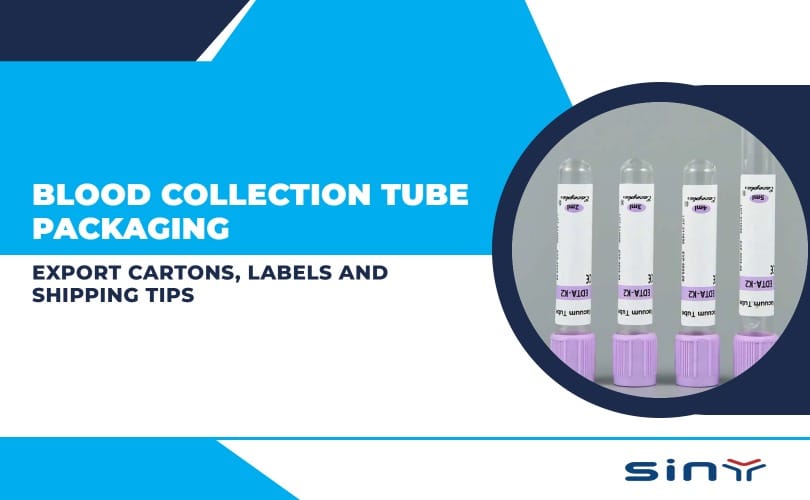
Good tubes can still arrive in poor condition. Crushed cartons, damp boxes and missing lot labels cause rejected deliveries every year. That is why blood collection tube packaging deserves as much attention as the tube itself, especially when you import by sea.
This guide explains how EDTA tubes are packed for export, what each layer protects, and what to agree with your supplier before shipping. It is written for importers, distributors and hospital buyers who handle large volumes. At SINY, we pack EDTA tubes for international customers, so we share the details that make deliveries go smoothly.
[Image: stacked export cartons of EDTA tubes on a pallet with corner protectors]
Why Blood Collection Tube Packaging Matters
Blood collection tubes are light, but they are not tough. Caps can loosen, labels can scuff, and glass tubes can break. In addition, vacuum tubes rely on an intact seal to keep their draw volume. Rough handling or heat during transit can affect product quality.
Packaging also carries information. Lot numbers, expiry dates and product codes on cartons let warehouses rotate stock and trace any problem. If that information is missing or unclear, your receiving team loses time and may reject the delivery.
Finally, packaging affects cost. Carton size decides how many tubes fit on a pallet and in a container. As a result, a small change in pack design can change your freight cost per tube.
The Layers of Blood Collection Tube Packaging
Most export packaging for EDTA tubes has four layers. Each layer has a job, and each one should appear in your purchase specification.
| Layer | Typical form | Main job | What to check |
|---|---|---|---|
| Primary | The tube with cap and label | Holds the additive and keeps vacuum | Label content, cap fit, fill line |
| Tray or rack | Foam or plastic tray, often 50 or 100 tubes | Keeps tubes upright and separate | Fit, stability, easy unloading |
| Inner box | Printed carton holding one or more trays | Protects trays and carries product data | Lot, expiry, quantity, product name |
| Outer carton | Corrugated shipping carton | Protects during transport | Strength, size, shipping marks |
| Pallet | Wrapped pallet with corner protection | Moves cartons safely as one unit | Height, pattern, wrapping, labels |
Pack counts vary by tube size and maker. Therefore, ask for a packing list showing tubes per tray, trays per box, boxes per carton and cartons per pallet for every product line.
Tube trays and racks
In blood collection tube packaging, trays keep tubes upright, which protects caps and labels. They also make counting and unloading faster. For labs, a tray that doubles as a working rack can save handling time.
Ask whether trays are recyclable and how they stack. Some hospitals have waste rules for foam. In that case, a plastic or card tray may suit them better.
Labelling on Cartons and Inner Boxes
Every inner box and carton should show the product name, additive, draw volume, quantity, lot number and expiry date. Many buyers also want the manufacturer name and country of origin on the outer carton. In regulated markets, additional labelling rules may apply, so check them early.
Shipping marks are just as important. Your forwarder needs carton numbers, gross weight and dimensions. Meanwhile, your warehouse needs clear lot and expiry data for stock rotation. A single carton label can serve both needs if you plan it in advance.
If you sell under your own brand, agree on artwork before production. Changes after printing cause delays. Our guide to proper handling and storage of EDTA tubes also explains which storage instructions labs expect to see.
Protecting Vacuum and Shelf Life in Transit
Vacuum tubes keep their draw volume only within the labelled shelf life and storage conditions. Long exposure to heat can shorten useful life. Therefore, plan routes and storage to avoid extreme temperatures where possible.
Sea freight is cheaper but slower. Air freight is faster but costs more per tube. For most importers, sea freight works well when orders are planned early. However, keep a buffer stock so a delayed container does not leave hospitals short.
Shelf life on arrival matters too. Hospitals and tenders often require a minimum remaining shelf life. As a result, agree with your supplier on the production date window for each order. Our article on EDTA tube shelf life and expiry explains the factors involved.
[Image: container interior loaded with palletised tube cartons]
Choosing Trade Terms for Tube Shipments
Trade terms decide who pays for each stage and when risk moves from seller to buyer. The Incoterms rules published by the International Chamber of Commerce define these terms.
FOB is common when the buyer controls ocean freight. CIF shifts more of the shipping arrangement to the seller. DDP means the seller delivers to the buyer’s door, including import duties. Each option changes how you compare quotes, so always compare offers on the same basis.
Whatever term you choose, write it into the contract with the named port or place. In practice, vague terms cause more disputes than any other shipping detail.
Blood Collection Tube Packaging for Different Buyers
Distributors usually want strong outer cartons and clear lot labels, because they store stock and break it down for customers. Hospitals often prefer smaller inner boxes that fit ward cupboards. Meanwhile, lab chains may want trays that fit straight into their racks.
Private label buyers need their own branding on boxes and sometimes on tubes. In that case, blood collection tube packaging becomes part of the product design. Plan artwork, languages and regulatory text together, so one approval covers everything.
Veterinary distributors may want smaller pack sizes, since clinics use fewer tubes. Ask whether the supplier can offer mixed or reduced packs without a large price increase.
Common Packaging Problems and How to Prevent Them
The most frequent problem is weak outer cartons. Cartons that collapse under stacking damage the trays below. Ask for carton strength details and a stacking limit.
Another problem is missing information. When lot or expiry data is only on the inner box, warehouse staff must open cartons to check it. As a result, receiving takes longer and packaging gets damaged. Putting key data on the outer carton solves this.
Glass tubes need extra care. They are heavier and can break if trays allow movement. If you still buy glass, ask how the trays hold each tube and whether the blood collection tube packaging was drop-tested. Many buyers now choose PET tubes partly to reduce breakage in transit, and you can read about the trade-offs in our article on how EDTA tubes are manufactured.
Moisture is a third risk on long sea routes. Damp cartons lose strength and labels may peel. Pallet wrapping and good container practice help. In addition, avoid storing pallets directly on wet floors at the destination.
Blood Collection Tube Packaging Specification for Your Purchase Order
Many packaging problems start with a vague purchase order. “Standard export packing” means different things to different factories. Therefore, write a short packaging section into every order, even for repeat products.
Start with the pack hierarchy: tubes per tray, trays per inner box, boxes per carton and cartons per pallet. Next, list the information each layer must carry. Then add carton strength, pallet height and wrapping requirements. Finally, attach the approved artwork for any printed boxes.
This specification protects both sides. The supplier knows exactly what to produce, and your receiving team knows exactly what to check. If a delivery does not match, you have a clear reference for a claim.
Receiving checks for blood collection tube packaging
When a shipment arrives, check pallets before you sign the delivery note. Look for crushed corners, wet cartons and broken wrapping. Then open a sample of cartons from different pallets and check trays, caps and labels.
Next, compare lot numbers and expiry dates with the packing list. In addition, record any damage with photos and carton numbers. Most suppliers and insurers need this evidence for a claim. A simple receiving form makes the process consistent across your team.
After receiving, store cartons off the floor, away from heat and direct sunlight. Rotate stock so the earliest expiry leaves first. Good storage completes what good blood collection tube packaging starts at the factory.
Sustainability and Waste
Hospitals increasingly ask about packaging waste. Foam trays, plastic wrap and mixed materials can be hard to recycle. As a result, some buyers now score packaging in tenders.
Ask your supplier which materials it uses and whether alternatives exist. For example, card inner boxes and recyclable trays may suit hospitals with strict waste rules. Even small changes to blood collection tube packaging can help your customers meet their own targets.
Cost and Buying Guide
Blood collection tube packaging adds to the unit price, but poor packaging costs more in damage and rejections. Standard export packaging is usually included in the quote. Custom printing, private label boxes and special trays add set-up costs.
When comparing suppliers, look at the cost per tube delivered in good condition. A slightly higher price with stronger cartons can be the cheaper option overall. Also compare how many tubes fit per pallet, because that changes freight cost.
Questions to ask about blood collection tube packaging
- How many tubes per tray, box, carton and pallet for each product?
- What information appears on inner boxes and outer cartons?
- Can you print our brand and language on the boxes?
- What carton strength and stacking limit do you use?
- How do you protect pallets during sea freight?
- What production date window can you guarantee for each order?
Why Choose a Manufacturer That Packs for Export
A manufacturer that ships worldwide already knows the common problems and the paperwork. It can adjust trays, cartons and labels to your market. By contrast, a trading company may repack goods, which adds handling and risk.
SINY manufactures EDTA tubes in a 12,000 square metre factory with a capacity of up to 500,000 tubes per day. The company offers OEM manufacturing and custom design, ships internationally and lists CE and ISO 13485 certification for its EDTA tubes. For example, SINY supplies lavender top EDTA blood collection tubes in export packaging for distributors.
You can see the production and packing process on the SINY Medical YouTube channel.
To check sizes and formats, browse the SINY EDTA tube range.
FAQ: Blood Collection Tube Packaging
How are blood collection tubes packed for export?
Most suppliers pack tubes in trays, then inner boxes, then corrugated outer cartons, which are stacked and wrapped on pallets. Each layer has a purpose, from keeping tubes upright to protecting them in transit. Good blood collection tube packaging also shows the product name, lot number, expiry date and quantity on boxes and cartons.
What information should be on tube cartons?
Cartons should show the product name, additive, draw volume, quantity, lot number and expiry date. Many importers also want the manufacturer name, country of origin and shipping marks such as carton number and weight. Clear data on blood collection tube packaging helps warehouses rotate stock and lets labs trace any problem quickly.
Is sea freight safe for EDTA tubes?
Sea freight is widely used for EDTA tubes and works well when orders are planned early. Use strong cartons, wrapped pallets and good container practice to limit moisture and damage. Plan blood collection tube packaging and routes together, and keep buffer stock in case a container is delayed or held at the port.
Can I get private label packaging for EDTA tubes?
Yes. Many manufacturers, including SINY, offer OEM and private label options for boxes and labels. Agree on artwork, languages and any regulatory text before production starts. Treat private label blood collection tube packaging as part of the product design, so a single approval covers tubes, inner boxes and cartons together.
How can I reduce damage during shipping?
Ask for carton strength details and stacking limits, and make sure pallets are wrapped and protected at the corners. Put lot and expiry data on outer cartons, so staff do not need to open them on arrival. Reviewing blood collection tube packaging with your supplier before the first order prevents most transport damage.
Summary
Blood collection tube packaging protects the product, carries traceability data and shapes your freight cost. Plan each layer, from tray to pallet, and agree on labels, carton strength and production date windows before the order is confirmed.
When packaging is right, deliveries arrive ready to use, and your warehouse runs faster. To discuss packing options, private label boxes or export shipping, contact the SINY team.