Genetic and molecular labs need samples that keep their DNA intact from the ward to the extraction bench. For most routine work, that starts with a purple-cap EDTA tube. Buyers often search for a DNA preservation tube, yet the right choice depends on the test, the storage time and the lab’s validated workflow.
This buyer guide explains how EDTA tubes protect DNA, when a standard tube is enough, when labs choose specialised options, and what to check before ordering in bulk. It is written for molecular lab managers, biobank buyers and distributors. SINY manufactures EDTA tubes used for molecular work, so we share the practical points buyers ask us about.
What Is a DNA Preservation Tube?
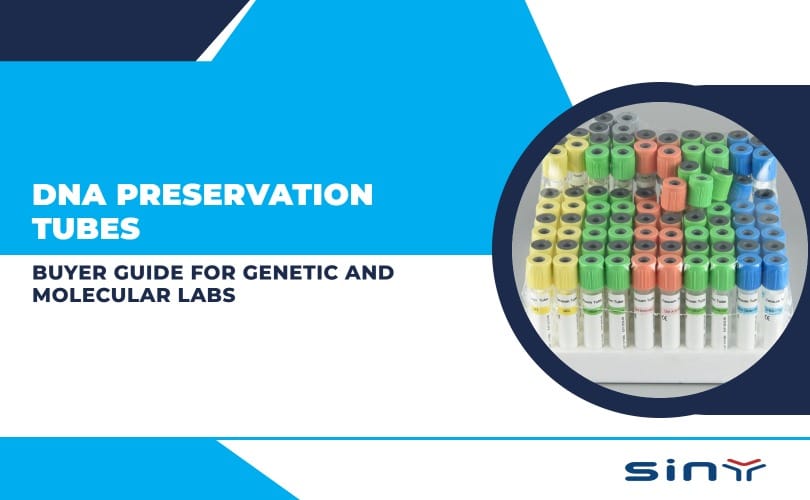
In everyday purchasing, a DNA preservation tube usually means an EDTA blood collection tube used for genetic testing, often with a lavender or purple cap. EDTA prevents clotting and also helps protect DNA, so whole blood stays suitable for extraction.
Some suppliers also sell specialised tubes with extra stabilisers, mainly for cell-free DNA in plasma. These form a separate product class with their own validation. Therefore, always ask your customer which type their test requires before you quote.
For the science behind EDTA and DNA, our article on what EDTA does in DNA extraction explains the chemistry. This guide focuses on choosing and buying tubes.
How EDTA Helps Protect DNA
Enzymes called nucleases can break DNA into fragments. Many of these enzymes need metal ions such as magnesium to work. EDTA binds these metal ions, so nuclease activity slows down. As a result, DNA in an EDTA sample stays in better condition than it would without a chelating agent.
EDTA also stops clotting, which keeps white blood cells, the main source of genomic DNA in blood, evenly mixed in the sample. That makes extraction more consistent. For these reasons, molecular labs commonly specify EDTA tubes for genomic DNA from whole blood.
However, EDTA is not a freezer. Time and temperature still affect sample quality. Labs set their own limits on how long blood can wait before extraction or freezing.
Standard EDTA Tube or Specialised DNA Preservation Tube?
The choice depends on what the lab extracts and how long samples wait. For genomic DNA from white cells, many labs use standard K2 EDTA tubes and process or freeze samples within their validated time. For cell-free DNA in plasma, some labs prefer tubes with stabilisers that limit release of DNA from cells during transport.
| Need | Common tube choice | Main consideration |
|---|---|---|
| Genomic DNA from whole blood | K2 EDTA tube (lavender / purple cap) | Lab’s validated storage time and temperature |
| Plasma for molecular or viral tests | K2 EDTA tube with gel separator | Centrifugation per maker’s instructions |
| Cell-free DNA with long transport | Specialised stabiliser tube | Separate validation; different supplier claims |
| Biobanking of whole blood | K2 EDTA tube,then freezing | Labelling and traceability over years |
SINY makes an EDTA K2 gel vacuum tube for plasma separation, which SINY describes for molecular diagnostics, virology and genetic studies. For whole-blood DNA, standard K2 EDTA tubes are the usual base product.
Technical Details to Check in a DNA Preservation Tube
Start with the additive. K2 EDTA is the common choice for molecular work. Confirm the form, spray-dried or liquid, and the amount per tube. Spray-dried K2 EDTA avoids diluting the sample.
Next, check cleanliness. Molecular labs care about contamination, so ask how the factory controls cleanliness in production and whether tubes are sterile. In addition, ask whether the supplier has test data relevant to molecular use, such as freedom from interfering substances. Only rely on claims the supplier can document.
Then check size and volume. Genetic tests often need a few millilitres of blood. Common choices range from 2 mL to 6 mL, while biobanks may prefer larger volumes. Also confirm the tube fits automated extraction or storage racks.
Finally, check labels. Molecular samples may be stored for years, so labels must survive freezing and thawing. Ask suppliers whether their labels are tested for low temperatures, or plan to use your own freezer-safe barcode labels.
Handling Points That Protect DNA Quality
After collection, staff mix the tube gently by inversion according to the maker’s instructions. This spreads the EDTA through the sample. Shaking can damage cells, so it is avoided.
Next, labs follow their own rules for time and temperature. Many keep samples cool and extract or freeze them within a validated period. Our guide on how long blood can be stored in EDTA tubes covers storage in more detail.
Hospitals that send samples to an outside genetics lab should agree on packing, temperature and maximum transit time in writing, so both sides know what a valid sample looks like on arrival.
Transport matters too. Samples travelling between sites should be packed to avoid heat and freezing, unless the lab requires frozen transport. Clear chain-of-custody records help when samples support clinical or legal decisions.
Biobanks: Special Needs for Long-Term Storage
Biobanks keep samples for years, sometimes decades. That changes what they need from a DNA preservation tube. First, every tube must carry a unique, durable identifier. Most biobanks print their own freezer-safe barcodes, so they need a clear label area on the tube.
Second, consistency matters more than price. A biobank wants every sample collected the same way, in the same tube type, so results stay comparable across years. Therefore, biobanks often sign long supply agreements and ask suppliers to notify them before any change in materials.
Third, volume planning is critical. Large cohort studies may collect thousands of samples in a few months. As a result, the supplier must confirm capacity and hold buffer stock during recruitment peaks.
For distributors, biobank contracts are attractive but demanding. Prepare full documentation, offer samples early and agree on change notification in writing.
How Labs Validate a New DNA Preservation Tube
Molecular labs rarely switch tubes without a check. Typically, they collect paired samples in the current and new tubes, then extract DNA from both. Next, they compare DNA yield and quality using their usual methods. Finally, they run the downstream test, such as PCR or sequencing, to confirm the results match.
Suppliers can make this easier. Send enough samples for the full comparison, a product sheet with additive details, and copies of certificates. In addition, answer technical questions quickly. In practice, a smooth validation often decides the contract.
Validation also protects the buyer. If a later problem appears, the lab has a documented baseline for comparison. That is why distributors should keep a record of which lots each customer validated.
Who Buys DNA Preservation Tubes
Hospital genetics labs, molecular diagnostics companies and research institutes are the main buyers. Biobanks order large volumes for long-term studies. In addition, paternity and forensic labs use EDTA tubes for DNA testing, often with strict labelling rules.
Distributors serving these customers need reliable supply and good documentation. Molecular customers ask more technical questions than general hospital buyers. Therefore, prepare clear product sheets and keep certificates up to date.
Buying Guide: What Changes the Price
The price of a DNA preservation tube depends on the additive, volume, material, gel or no gel, and packaging. Gel tubes cost more than plain EDTA tubes. Specialised stabiliser tubes usually cost much more, because they contain extra reagents and carry separate validation.
Volume and customisation matter as well. Larger orders earn better prices, while private labels and special packaging add set-up costs. In addition, freezer-safe labels may add cost but save trouble later.
Questions to ask a DNA preservation tube supplier
- Which additive and amount does the tube contain?
- Is the tube sterile, and how is cleanliness controlled in production?
- Do you have documented data supporting molecular use?
- Which volumes and sizes do you offer, with or without gel?
- Are labels suitable for freezing, or should we use our own?
- Can you share CE, ISO 13485 and ISO 6710 documents?
Common Mistakes When Buying DNA Tubes
The first mistake is assuming every purple tube suits every DNA test. Cell-free DNA work may need a specialised tube, while genomic DNA usually does not. Ask the lab which tube it validated.
The second mistake is ignoring labels. A label that peels in the freezer can make a sample useless. Test labels at the temperatures your customers use.
Finally, some buyers switch suppliers without telling the lab. Molecular labs often validate tubes as part of their method. Therefore, plan any change together with the lab, and provide samples early.
Stocking Plan for Distributors
Molecular demand is less predictable than routine haematology. A single research grant or new genetic test can double a customer’s orders. Therefore, talk to key accounts every quarter about upcoming projects.
Keep one or two standard volumes in stock, usually the sizes your customers validated. Add gel tubes only when a customer commits to regular use. Meanwhile, avoid stocking specialised stabiliser tubes unless you have a confirmed buyer, because they cost more and may have shorter shelf lives.
Finally, track lot numbers by customer. When a lab asks which lot it received, you can answer at once. That level of service sets a good DNA preservation tube supplier apart.
Standards and Documents
Blood collection tubes are covered by ISO 6710 for single-use venous blood specimen containers. In addition, buyers usually ask for the factory’s ISO 13485 certificate and, for Europe, CE documentation. Keep these documents on file, because molecular customers often request them during audits.
Why Source from SINY
SINY was established in 2003 in Ningbo, China, and manufactures EDTA blood collection tubes in a 12,000 square metre factory with a capacity of up to 500,000 tubes per day. The company offers OEM manufacturing and custom design, and lists CE and ISO 13485 certification for its EDTA tubes.
Molecular and genetic customers can choose standard K2 EDTA blood collection tubes or gel versions from the same factory.
Browse the full SINY EDTA tube range.
You can also see the factory on the SINY Medical YouTube channel.
FAQ: DNA Preservation Tube
What is a DNA preservation tube?
In most purchasing, a DNA preservation tube means a K2 EDTA blood collection tube used for genetic testing, usually with a lavender or purple cap. EDTA prevents clotting and slows nuclease activity, which helps keep DNA intact. Specialised stabiliser tubes also exist for cell-free DNA, but they are a separate product class.
Why is EDTA used for DNA testing?
EDTA binds metal ions such as magnesium that many nucleases need, so DNA breaks down more slowly. It also keeps blood from clotting, which keeps white cells evenly mixed for extraction. That is why labs commonly specify an EDTA DNA preservation tube for genomic DNA from whole blood.
How long can blood stay in an EDTA tube before DNA extraction?
There is no single answer, because each laboratory validates its own limits for time and temperature. Many labs keep samples cool and extract or freeze them within a set period. Check your customer protocol before choosing a DNA preservation tube or planning transport times.
Do I need a special tube for cell-free DNA?
Some laboratories use specialised stabiliser tubes for cell-free DNA, especially when samples travel for a long time. These tubes limit the release of DNA from cells. A standard EDTA DNA preservation tube may still suit tests processed quickly. The lab method decides which tube is required.
Can SINY supply DNA preservation tubes in bulk?
SINY manufactures K2 EDTA tubes and EDTA K2 gel tubes used in molecular work, with OEM and private label options. Share the volume, quantity and labelling needs with the team. Request samples so your lab customers can test the DNA preservation tube in their own workflow before a full order.
Summary
For most genomic DNA work, a K2 EDTA tube serves as the DNA preservation tube, because EDTA prevents clotting and slows nuclease activity. Specialised stabiliser tubes suit some cell-free DNA tests, but they form a separate product class.
Buyers should check the additive, cleanliness, volume, labels and documents, and plan any change with the lab. To request samples or a quote, contact the SINY team.