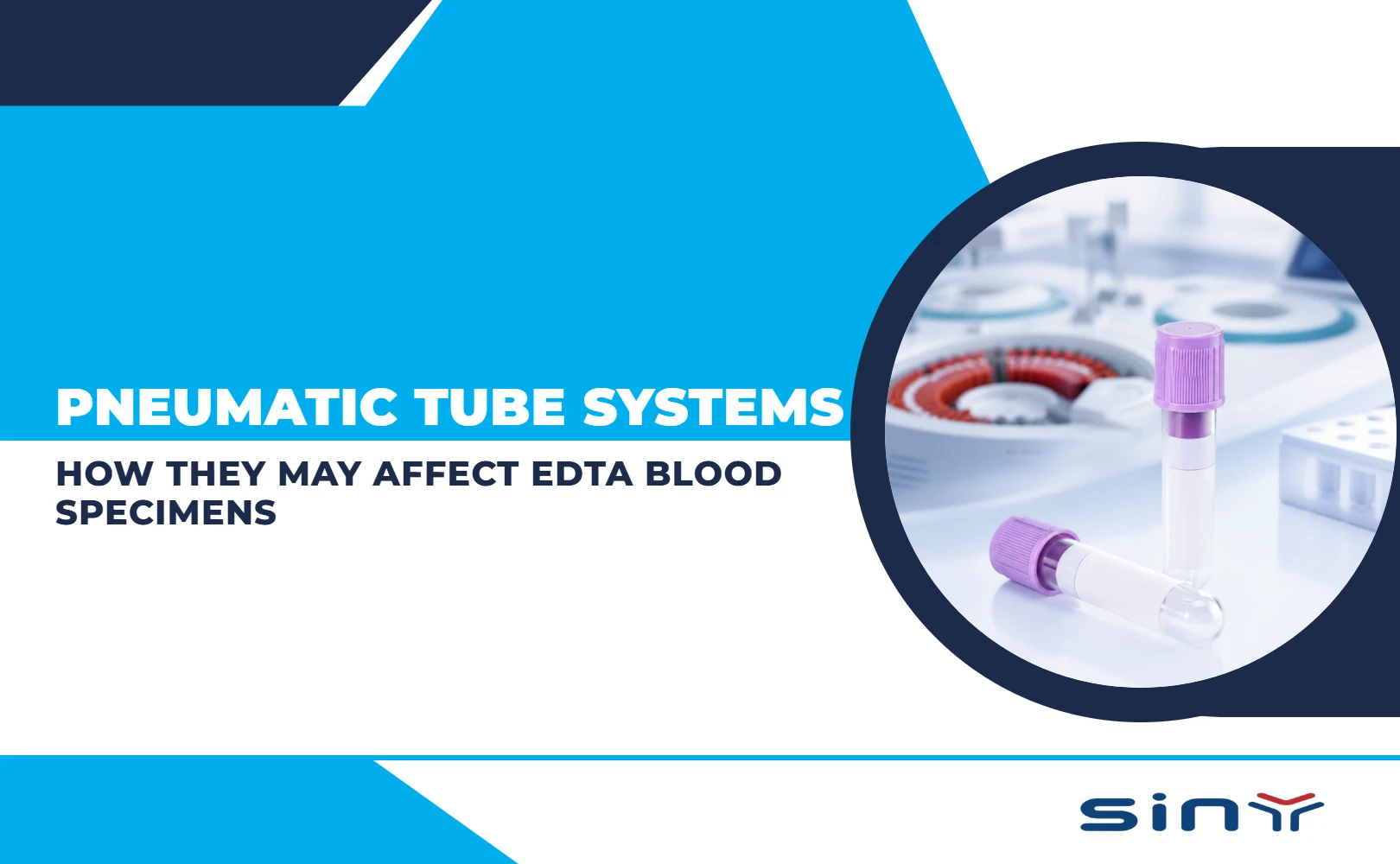
Pneumatic tube systems move thousands of samples a day from wards to the lab in minutes. They save staff time and speed up results. But the journey is rough: samples speed up, slow down and turn corners at high speed. For pneumatic tube EDTA samples, the question is simple: does the ride change the result?
This guide explains how tube systems can affect EDTA blood, which tests are most sensitive, and how to validate and pack samples safely. It is written for lab managers, quality staff and hospital engineers. As an EDTA tube manufacturer, SINY designs tubes to hold vacuum and seal during transport, so we often help hospitals plan sample transport checks.
Short answer: For most routine CBC parameters, EDTA samples sent through a well-designed pneumatic tube system give results comparable with hand-carried samples. The main risks are haemolysis, leaks and cap damage from strong acceleration and sudden stops. Labs should validate their own system with paired samples, use leak-proof bags and padding, and send properly filled, capped tubes.
Key Takeaways
- Pneumatic systems expose tubes to acceleration, vibration and sudden deceleration.
- Routine CBC values are often robust, but each system must be validated locally.
- Haemolysis matters more for chemistry tests than for most CBC parameters.
- Poorly filled or loose-capped tubes are more likely to leak or foam.
- Speed settings, carrier padding and leak-proof bags reduce risk.
How Pneumatic Tube Systems Work
A pneumatic tube system moves sealed carriers through pipes using air pressure. Carriers can travel several metres per second and pass through bends, diverters and drop stations. At the end, they slow down or land in a receiver. Each of these steps creates forces on the tubes inside.
Some modern systems record g-forces and let hospitals set slower speeds or soft landing for lab carriers. Older systems may give harsher rides.
What Can Happen to EDTA Samples in Transit
| Effect | Cause | Impact |
|---|---|---|
| Haemolysis | Shear and impact forces on red cells | Mainly affects chemistry tests; can affect some haematology measurements |
| Foam and bubbles | Strong shaking in a part-filled tube | Can interfere with aspiration |
| Leaks | Loose caps, cracked tubes, pressure changes | Lost sample, contamination, system downtime |
| Cap loosening | Repeated impacts | Spill risk and exposure |
| Platelet activation | Mechanical stress | More relevant to platelet function tests than to EDTA counts |
Which EDTA Tests Are Most Sensitive?
Many studies have found that routine CBC values, such as haemoglobin, red cell count and white cell count, are generally stable after pneumatic transport in validated systems. Results can differ between systems, routes and speeds, so no published study can replace your own check. Tests that may need extra attention include:
- Platelet counts and indices, in systems with harsh landings.
- Blood smears and morphology, if cells are damaged.
- Samples for blood bank, where haemolysis can interfere with reading reactions.
- Molecular samples sent in EDTA tubes, mainly for leak and contamination risk.
For other ways handling changes results, read preanalytical errors in EDTA samples and can vigorous shaking damage an EDTA blood sample.
How to Validate Your Pneumatic Tube System
- Map routes: list the main stations sending samples to the lab and their distances.
- Collect paired samples: draw two EDTA tubes from the same patients. Hand-carry one and send one by pneumatic tube.
- Cover a range: include low, normal and high values, and several routes.
- Test promptly: analyse both tubes on the same analyser within a short window.
- Compare: calculate the mean difference for each parameter and check against your allowable limits.
- Check physical effects: look for leaks, foam and haemolysis.
- Record forces: if possible, run a data logger to record g-forces on each route.
- Repeat: revalidate after system changes, new routes or new tube types.
Packing EDTA Tubes for Pneumatic Transport
- Fill tubes to the line. Underfilled tubes have more air and foam more.
- Check caps are fully seated before sending.
- Invert gently 8 to 10 times before sending, so EDTA is mixed in. See EDTA tube inversion.
- Place tubes in a sealed, leak-proof specimen bag with absorbent material.
- Use foam inserts or racks in carriers so tubes cannot rattle.
- Do not overload carriers.
- Keep request forms in a separate pocket of the bag.
When Not to Use the Pneumatic Tube
Many hospitals hand-carry some samples, for example:
- Irreplaceable samples, such as bone marrow aspirates or difficult paediatric draws.
- Samples from patients with known high-risk infections, if local policy says so.
- Tests your validation shows are affected.
- Large volumes that would overload a carrier.
Tube Quality and Pneumatic Transport
The tube itself also matters. A strong PET tube, a well-seated cap and a stopper that keeps its seal reduce leaks and breakage. Accurate vacuum ensures the correct fill and less empty space. When you change tube suppliers, include pneumatic transport in your trial. Our guides to EDTA tube components and EDTA tube sample orders explain what to test.
EDTA Tubes from SINY
SINY supplies PET EDTA vacuum tubes with secure caps for hospital and lab use. We can send samples for your pneumatic transport validation. Browse the EDTA tube range.
FAQ: Pneumatic Tube EDTA Samples
Can EDTA blood samples be sent by pneumatic tube?
Yes, most hospitals send EDTA samples by pneumatic tube. Routine CBC values are often comparable with hand-carried samples, but each hospital should validate its own system and routes.
Does pneumatic tube transport cause haemolysis?
It can, especially in systems with high speeds or hard landings. Haemolysis mainly affects chemistry tests, but labs should check for it during validation.
How do you validate a pneumatic tube system for blood samples?
Send paired samples from the same patients, one by pneumatic tube and one hand-carried, test both promptly on the same analyser, and compare results against allowable limits. Also check for leaks, foam and haemolysis.
How should EDTA tubes be packed for pneumatic transport?
Fill tubes to the line, check caps, mix gently, then place them in a sealed leak-proof bag with absorbent material and padding in the carrier.
Which samples should not go through the pneumatic tube?
Irreplaceable samples such as bone marrow, difficult paediatric draws, and any tests your validation shows are affected are usually hand-carried.
Summary
Pneumatic tube EDTA samples usually give reliable CBC results in a validated system, but haemolysis, foam and leaks are real risks. Validate with paired samples, control speed and landing, fill and cap tubes properly, and pack them in leak-proof bags.
For EDTA tube samples to include in your transport validation, contact the SINY team.