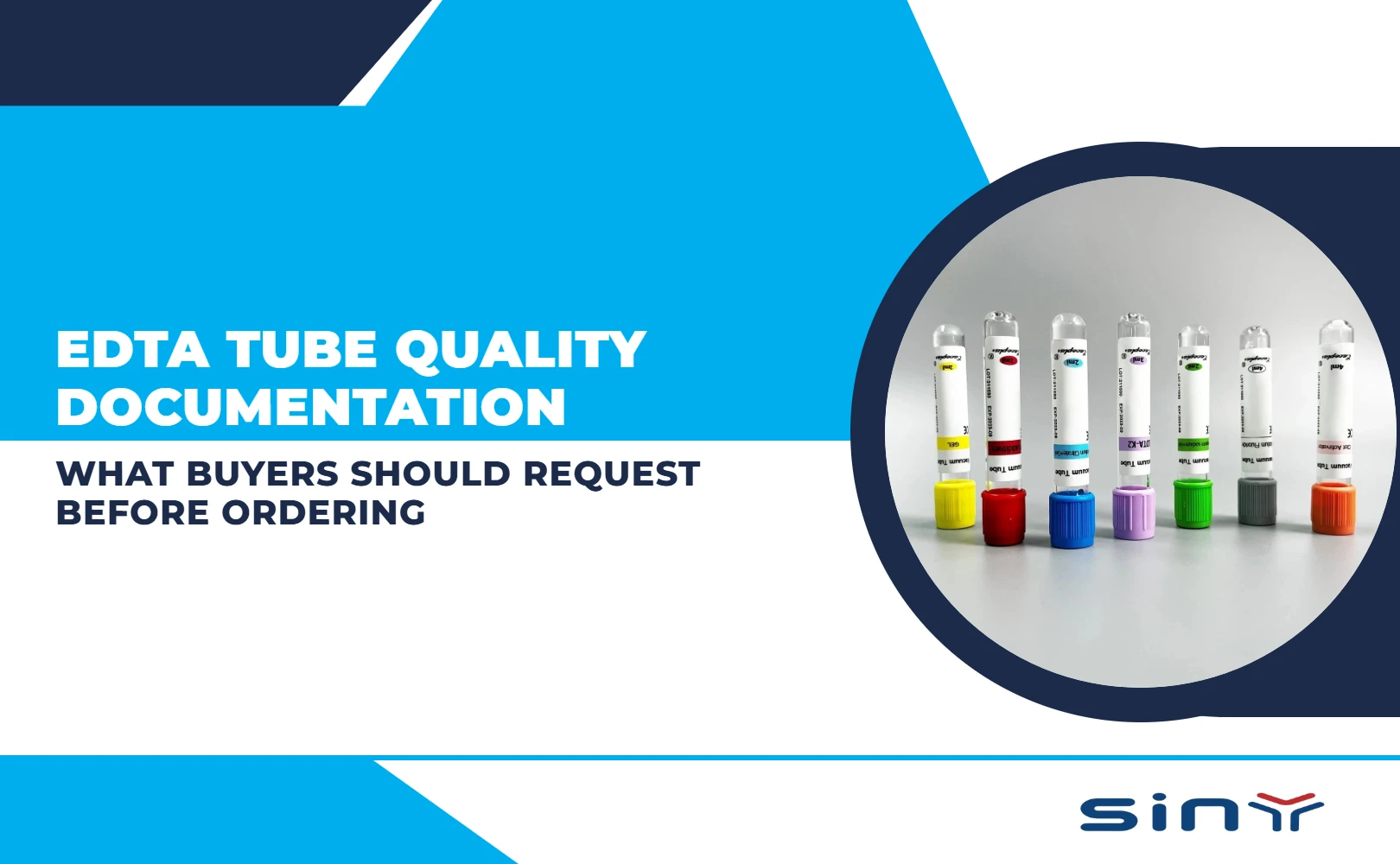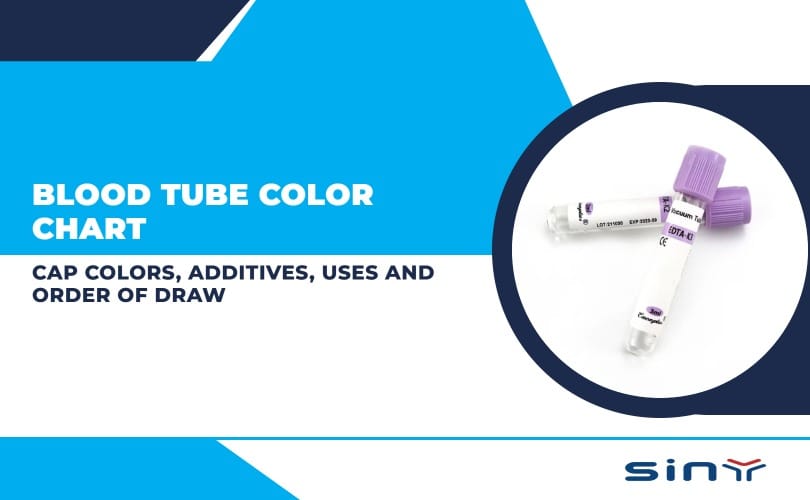
A clear blood tube color chart saves time at every collection point. Phlebotomists use it to pick the right tube, lab staff use it to sort samples, and buyers use it to plan stock. Yet many charts on the wall are old, copied from another brand, or missing tubes the lab now uses.
This guide gives you a practical blood tube color chart with additives, typical uses and draw order. We also explain why colors differ between brands and what buyers should check before ordering. As an EDTA tube manufacturer, SINY sees these questions from labs and distributors every week.
Why Every Lab Needs a Blood Tube Color Chart
Each cap color signals the additive inside the tube. That additive decides which tests the sample can support. For example, an EDTA tube keeps cells intact for counts, while a clot activator tube produces serum for chemistry.
When the wrong tube is used, the lab may reject the sample. As a result, the patient needs another draw and the result arrives late. A simple chart at each station reduces these errors, especially for new staff and night shifts.
A blood tube color chart also helps purchasing teams. When you can see every tube type in one table, you can spot gaps in stock before they cause problems. In addition, a shared chart keeps wards, labs and suppliers speaking the same language.
The Blood Tube Color Chart: Additives and Common Uses
The table below follows a typical hospital laboratory guide. We based it on the OSF HealthCare specimen collection guide, which lists each cap with its additive and use. Your own lab catalogue always takes priority, because practice varies.
| Cap color | Additive | Sample type | Common use |
|---|---|---|---|
| Light blue | Sodium citrate | Plasma | Coagulation tests |
| Red | Clot activator or none | Serum | Chemistry and serology |
| Gold (SST) | Clot activator and gel | Serum | Chemistry |
| Mint / light green | Lithium heparin (often with gel) | Plasma | Chemistry |
| Dark green | Sodium or lithium heparin | Plasma / whole blood | Special tests such as chromosome studies |
| Lavender / purple | K2 or K3 EDTA | Whole blood | Haematology |
| Pink | K2 EDTA | Whole blood | Blood bank: type and crossmatch |
| Royal / navy blue | K2 EDTA or none | Whole blood or serum | Trace elements and heavy metals |
| Tan | K2 EDTA | Whole blood | Lead testing |
| Grey | Sodium fluoride / potassium oxalate | Plasma | Glucose |
| Yellow | ACD | Whole blood | Special tests |
How to read this blood tube color chart
Start with the additive column, not the cap. Two caps that look similar can hold different additives, and the same additive can sit under different caps. For instance, lavender, pink and tan tubes may all contain K2 EDTA, yet each serves a different department.
Next, check the sample type. Serum tubes let blood clot, while plasma and whole blood tubes stop clotting. Finally, check the use column against your test menu. If a test is missing, ask the lab which tube it needs before you add it to the chart.
Where EDTA Tubes Sit in the Chart
EDTA tubes are the workhorses of most labs. The lavender top supports complete blood counts, blood films and many other haematology tests. Our list of lab tests that require EDTA tubes shows how widely they are used.
Within the EDTA family, labs choose between K2 and K3 EDTA. K2 EDTA is usually spray-dried onto the tube wall, while K3 EDTA is usually a liquid. Many labs prefer K2 for cell counts. Meanwhile, the pink and royal blue versions serve the blood bank and trace element testing.
For a closer look at cap names, see our guide to purple top vs lavender top blood tubes. It explains why the two names often describe the same tube.
Order of Draw: Turning the Color Chart into a Sequence
A blood tube color chart tells you what each tube does. The order of draw tells you which tube to fill first. Labs follow a set sequence so additives from one tube do not affect the next.
In the OSF guide, the sequence starts with blood culture bottles, then light blue citrate tubes. Serum tubes follow, then heparin tubes, then EDTA tubes, and finally grey fluoride tubes. Your lab may use a slightly different version, so always follow its written procedure.
Many labs print the order of draw directly on the blood tube color chart. As a result, staff can check both details in one glance. If you design your own chart, number each row in draw order and keep the additive column visible.
Why Tube Colors Differ Between Brands
Color coding is widely shared, but not every brand uses identical shades or names. Some call a cap purple, while others call it lavender. Likewise, gel tubes may use gold, tiger or mottled caps depending on the maker.
Standards help here. ISO 6710, the standard for single-use venous blood specimen containers, sets requirements for the tubes themselves, including how additives are identified. Even so, labs should check each new brand against their chart before switching.
For buyers, this matters during tenders. If a hospital changes suppliers, staff must still recognise each tube at once. Therefore, ask for color samples and product sheets, and compare them with the chart on the ward wall.
Technical Details Behind Each Color
The cap is only the visible part. Behind it sit the tube material, size, vacuum level and additive amount. Each of these affects how the sample behaves.
Most modern tubes use PET plastic because it is light and resists breakage. Glass remains in some specialty uses. Common sizes include 13×75 mm, 13×100 mm and 16×100 mm, with draw volumes from about 2 mL to 10 mL. Vacuum tubes fill to a set volume, which keeps the blood-to-additive ratio correct.
For EDTA tubes, that ratio matters a lot. An underfilled tube has too much EDTA for the blood volume, which can change cell measurements. That is why labs train staff to fill tubes to the marked line.
How to Use a Blood Tube Color Chart in Training
A chart works best when people actually use it. Place one at every collection point, at eye level, and keep it clean. Replace it whenever your tube supplier or test menu changes.
During training, ask new staff to match real tubes to the chart rather than read it. Then test them with mixed racks. This hands-on method sticks far better than a printed sheet alone. In addition, review rejected samples each month and update the chart if a pattern appears.
Distributors can support training too. For example, a supplier can provide a branded blood tube color chart with every first order. It costs little and helps the hospital avoid mistakes during the switch.
How to Make Your Own Blood Tube Color Chart
Generic charts from the internet are a good start, but they rarely match your lab exactly. A custom blood tube color chart reflects the tubes you really stock and the tests you really run. Building one takes an afternoon, and it pays back quickly.
First, collect one of every tube from your store room. Line them up and photograph them together under good light. Next, list the additive, draw volume and size printed on each label. Then add the tests your lab runs on each tube, taken from your test catalogue rather than memory.
After that, arrange the rows in your order of draw. Add a column for the number of gentle inversions each tube needs, using the maker’s instructions. Finally, ask a senior phlebotomist and a lab scientist to review the draft before you print it.
Design tips that make a chart easier to use
Use real tube photos instead of colored circles, because staff match what they see. Keep the text large enough to read from an arm’s length away. In addition, print the date and version number in a corner, so everyone knows which blood tube color chart is current.
Laminate the chart or place it in a wipe-clean sleeve. Collection areas need regular cleaning, and paper charts fade fast. Meanwhile, keep a digital copy on your intranet, so ward staff can check it on a phone or tablet.
Two comparisons cause most questions on any chart. The first is citrate against EDTA, which our guide to EDTA vs citrate tubes explains in detail. The second is serum against plasma, which decides whether a tube should clot or not.
Review the chart whenever you change suppliers or add new tests. A blood tube color chart that is two years out of date can do more harm than no chart at all. Therefore, give one person clear ownership of updates.
Buying Guide: Stocking Tubes by Color
Lavender, gold and light blue tubes usually move fastest. Specialty colors such as pink, tan and royal blue move more slowly. As a result, buyers should forecast each color on its own usage, not on an average.
Price depends on material, size, additive and volume. Gel tubes and specialty tubes often cost more than plain EDTA tubes. Custom labels and packaging add cost but help hospitals with local language rules.
Questions to ask your supplier
- Which cap colors and additives do you manufacture yourselves?
- Do your colors match the chart our hospitals already use?
- What is the MOQ per color and per size?
- Can you supply CE and ISO 13485 documents?
- Can you print a branded color chart for our customers?
Why Work with an EDTA Tube Specialist
SINY focuses on EDTA blood collection tubes, including K2 and K3 versions, gel tubes and specialty additives such as sodium fluoride EDTA K2 tubes. The factory covers 12,000 square metres and can produce up to 500,000 tubes per day.
SINY offers OEM manufacturing and custom design, and lists CE and ISO 13485 certification for its EDTA tubes. You can review the full SINY EDTA tube range to see the sizes and caps available.
If you want to see how the tubes are made, visit the SINY Medical YouTube channel.
FAQ: Blood Tube Color Chart
What do the colors on blood collection tubes mean?
Each cap color tells staff which additive is inside the tube. For example, lavender usually means EDTA, light blue means sodium citrate, and grey means sodium fluoride. A blood tube color chart links each color to its additive and typical tests. Because shades vary between brands, always check new tubes against the chart your laboratory uses before collecting samples.
What color tube is used for a CBC?
Most laboratories use a lavender or purple top tube with EDTA for a complete blood count. EDTA keeps blood from clotting and preserves cell shape for counting. On a typical blood tube color chart, the lavender tube appears in the haematology row. Confirm the exact tube with your own laboratory test catalogue, since some sites use specific sizes.
What is the order of draw for blood tubes?
A common sequence is blood culture bottles first, then light blue citrate tubes, serum tubes, heparin tubes, EDTA tubes and finally grey fluoride tubes. Many labs print this sequence on their blood tube color chart. Local procedures can differ slightly, so staff should always follow the written order of draw used by their own laboratory.
Are tube colors the same for every brand?
Color coding is broadly similar across brands, but shades and names can differ. One maker may call a cap purple while another calls it lavender, and gel tubes vary more. When a hospital changes supplier, staff should compare new tubes with the existing blood tube color chart. Ask suppliers for color samples and product sheets before switching.
Can a supplier provide a branded tube color chart?
Yes, many manufacturers and distributors provide a printed chart with first orders. A branded blood tube color chart helps hospitals train staff when they switch to new tubes. When you order from SINY, ask about chart and label options together, so the chart matches the exact caps, additives and sizes you receive.
Summary
A good blood tube color chart links each cap to its additive, sample type, use and draw order. It reduces rejected samples, speeds up sorting and makes training easier. However, every chart should match the tubes your lab actually stocks.
For buyers, the chart doubles as a stocking plan. Forecast each color separately, check new brands against the chart, and ask suppliers for clear product sheets. To discuss EDTA tubes, colors and OEM options, contact the SINY team.