clinical diagnostics and laboratory practices, choosing the right blood collection tube isn’t just a matter of preference — it’s crucial for accurate results. Among the most commonly used tubes are EDTA K2 Vacuum Blood Collection Tube and EDTA K3 Vacuum Blood Collection Tube, both designed to support essential tests like complete blood counts and many hematological analyses.
In this detailed guide, we’ll explore what these tubes are, how they differ, when to use each, and why modern labs rely on them. Whether you’re a medical student, lab technician, physician, or healthcare professional, this article will help you understand these collection tubes inside and out.
EDTA in Blood Collection
When blood is drawn for laboratory analysis, preventing clotting is essential for many tests. This is where EDTA, short for ethylenediaminetetraacetic acid, plays a vital role. It acts as an anticoagulant by binding calcium, which is necessary for blood clot formation.
EDTA tubes are widely used for hematology testing because they preserve the shape and structure of blood cells exceptionally well. For example, an important diagnostic assay like a Complete Blood Count (CBC) requires EDTA to ensure accurate enumeration of cells.
To explore how EDTA compares with other anticoagulants, see this EDTA vs. Citrate Tubes Comparison.
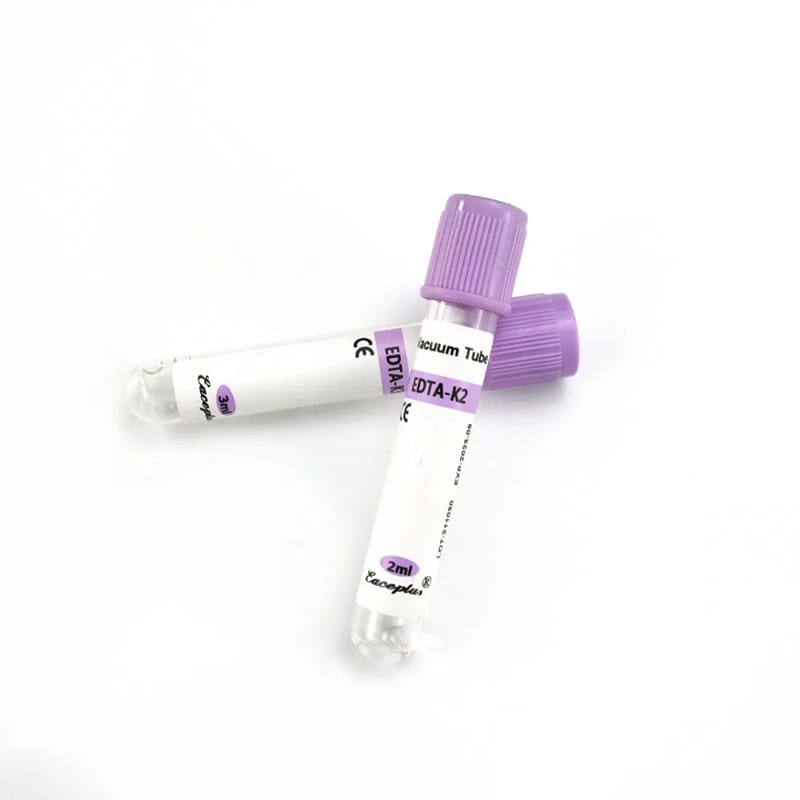
What Is an EDTA K2 Vacuum Blood Collection Tube?
The EDTA K2 Vacuum Blood Collection Tube uses a spray‑dried dipotassium salt of EDTA. This design ensures very even contact with the incoming blood sample. The K2 salt formulation works rapidly to prevent coagulation and stabilizes the cellular components of blood.
Laboratories prefer EDTA K2 tubes when precise hematological analysis is needed. Many automated analyzers are optimized for K2 EDTA because it provides good reproducibility and cellular preservation.
For details on this specific tube and its benefits, take a look at the article What Is an EDTA K2 Tube?.
What Is an EDTA K3 Vacuum Blood Collection Tube?
Similarly, an EDTA K3 Vacuum Blood Collection Tube uses tripotassium EDTA as its anticoagulant. Unlike the spray‑dried K2 form, K3 EDTA is often liquid or in a formulated mixture.
K3 EDTA also prevents coagulation effectively, but it behaves differently during mixing and cell interaction. Historically, K3 formulations were among the first used in hematology, but labs increasingly prefer K2 for modern automated analysis.
If you’re curious about the difference between these two, this external resource (EDTA K2 vs. EDTA K3 Blood Tubes) explains both types scientifically.
Key Differences: EDTA K2 vs. EDTA K3 Vacuum Blood Collection Tube
Though both serve as anticoagulants, there are subtle differences between EDTA K2 and K3 that influence their use in clinical labs.
Chemical Formulation and Behavior
EDTA K2 exists as a thorough, spray‑dried coating inside the tube. It mixes quickly when blood enters the tube and maintains more consistent anticoagulation.
EDTA K3 is often added as a liquid or wet component. This can slightly dilute the blood and affect cell morphology if mixing isn’t uniform.
Laboratory Application
Most automated hematology analyzers are calibrated to work with EDTA K2 tubes, making them the preferred choice for routine CBC.
EDTA K3, while historically important, is less common for high throughput labs due to potential variability in results.
A detailed comparison is available in EDTA K2 vs K3 Differences, Uses, and Benefits.
Why does the Choice Between K2 and K3 Matter?
At first glance, both types might seem nearly identical. However, even small variations in anticoagulant chemistry can translate into different laboratory outcomes.
Precision in blood cell measurement is not just important — it’s essential. Misclassification of cell size or count can lead to misdiagnosis or delayed treatment.
Studies show that spray‑dried EDTA (K2) often yields more stable results over time compared to liquid anticoagulants like K3.
When Should You Use an EDTA K2 Vacuum Blood Collection Tube?
The undeniable strength of the EDTA K2 Vacuum Blood Collection Tube is its performance in routine hematology. It is ideal for tests like:
- Complete Blood Count (CBC)
- White blood cell differential
- Reticulocyte counts
- Erythrocyte indices
- Platelet counts
Labs performing high volumes of CBC tests often stock K2 tubes because they optimize both analyzer compatibility and result reliability.
For a product example, see the 2ml Sterile EDTA K2 Vacuum Tube.
When is an EDTA K3 Vacuum Tube Still Used?
Though less common in modern automated labs, EDTA K3 Vacuum Blood Collection Tube still finds use in specific settings:
- Manual hematology
- Field labs with simpler equipment
- Situations where cost constraints prioritize liquid EDTA
Additionally, some legacy analyzers or older protocols were designed around K3 tubes — so they remain relevant in certain contexts.
If you’re interested in products that include both K2 and K3 options, review the SINY Manufacturer Medical Supplies EDTA K2/K3 Tube.
Chemical Impact: Dipotassium vs. Tripotassium EDTA
Though both EDTA K2 and K3 function as anticoagulants, their impact varies based on how the potassium ions interact with blood components.
EDTA works by binding calcium ions, which are essential for clotting. Potassium that’s part of the EDTA molecule helps maintain electrical balance. However, too much potassium exposure can slightly affect the red blood cell membrane and electrolyte balance.
In everyday lab practice, this means that EDTA K2’s dry formulation generally provides better cell stability and fewer artifacts than K3’s liquid medium — particularly in high‑throughput, automated equipment.
How to Select the Right EDTA Tube Size
Whether you choose K2 or K3, tube volume also matters. Common sizes include 2ml, 3ml, 4ml, 5ml, 6ml, and 10ml.
Choosing the correct size can reduce waste and improve patient comfort. Smaller tubes work well for tests requiring minimal blood. Larger tubes are preferred for multiple assays or when sample volume is critical.
For guidance, see EDTA Tube Sizes Explained or How to Select the Right EDTA Tube Size for Your Lab.
Step‑by‑Step: Using a Vacuum Blood Collection Tube Safely
Using vacuum tubes correctly ensures accurate results and reduces pre‑analytical errors.
First, confirm the tube type and label. Shield the needle and take standard safety precautions. Draw the blood sample, and immediately invert the tube several times to mix the anticoagulant.
Proper mixing prevents clotting, which can invalidate hematology results. For detailed instructions, visit How to Use an EDTA Tube.
Errors in EDTA K2 & K3 Blood Collection
Even experienced phlebotomists make mistakes. Some common errors include failing to invert the tube after drawing blood or using expired tubes.
When using K3 tubes, improper handling can lead to clumping or subtle cellular changes. This makes consistent mixing essential.
Always check storage conditions and expiration dates. The right handling ensures reliable outcomes, whether you choose K2 or K3.
EDTA K2 & K3 Tubes in Modern Laboratory Practice
As technology evolves, labs are adopting systems that optimize accuracy and throughput. EDTA tubes remain a central part of hematology, and improvements in manufacturing have increased reliability.
According to laboratories worldwide, spray‑dried EDTA K2 tubes show stronger performance for automated CBC workflows — which explains their increased preference in modern lab settings.
Learn more about the future of these technologies in the article Future of EDTA Blood Collection Tubes in 2026.
EDTA K2 Vacuum Blood Collection Tube: Clinical Relevance in Hematology
Given the extensive use of automated analyzers in hospitals and reference labs, K2 EDTA tubes have become the go‑to choice for routine complete blood counts and other hematology assays.
The best overall performance in terms of cell stability, repeatability, and analyzer compatibility places K2 tubes ahead of alternatives for routine clinical use.
If you’d like a deeper comparison of why many labs choose K2 over alternatives, check EDTA K2 Tube: Preferred Choice for Hematology.
Summary
The difference between the EDTA K3 Vacuum Blood Collection Tube and its K2 counterpart helps laboratories make informed decisions that enhance accuracy and workflow efficiency.
While both tubes serve essential functions, K2 EDTA tubes have become the preferred choice in modern hematology due to their compatibility, reproducibility, and improved stability for automated CBC analyzers.
Selecting the right tube type and size, combined with correct handling practices, ensures dependable results and enhances patient care across diagnostic services.
Get more about products and solutions at product category page or ask for support via contact us.
FAQs
Q. What makes an EDTA K3 Vacuum Blood Collection Tube different from EDTA K2?
A. The main difference lies in chemical presentation. K2 is spray‑dried inside the tube, while K3 is usually liquid. Both work as anticoagulants, but the EDTA K3 Vacuum Blood Collection Tube may show slight variability in automated analyzers.
Q. Can all automated hematology analyzers use EDTA K3 tubes?
A. Not all. Many modern analyzers are designed for spray‑dried EDTA K2 tubes. This makes the EDTA K3 Vacuum Blood Collection Tube less compatible in high‑throughput settings.
Q. Are EDTA K2 tubes preferred for CBC testing?
A. Yes. Most laboratories prefer EDTA K2 Vacuum Blood Collection Tubes for consistent CBC results, as they preserve cellular morphology very well.
Q. Do EDTA K3 tubes work for other hematological tests?
A. Yes. The EDTA K3 Vacuum Blood Collection Tube works for a range of blood tests, though performance varies with analyzer type.
Q. Which tube size is best for pediatrics?
A. Smaller volumes like 2ml or 3ml are often best when using an EDTA K3 Vacuum Blood Collection Tube for pediatric testing to reduce waste and discomfort.