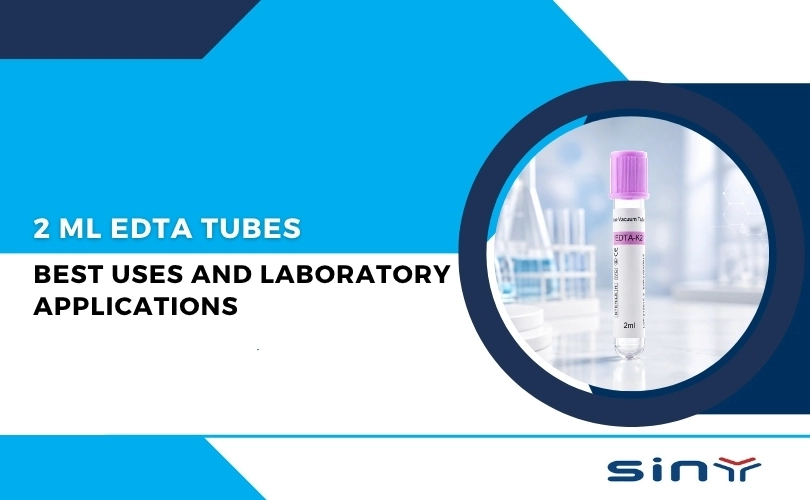
Laboratory diagnostics rely on accuracy from the very first step of blood collection. Among the various blood collection solutions available today, 5ml EDTA tubes hold a strong position in clinical laboratories due to their balanced volume, anticoagulant efficiency, and compatibility with standard blood tests. These tubes are widely used across hospitals, diagnostic centers, and research laboratories because they support consistent test outcomes while maintaining sample integrity.
Manufacturers and laboratory professionals continue to prefer 5ml EDTA tubes for routine hematology and blood banking work. Their structure, internal coating, and additive ratio support reliable cell preservation, making them a practical choice for everyday testing environments.
What Is a 5ml EDTA Tube?
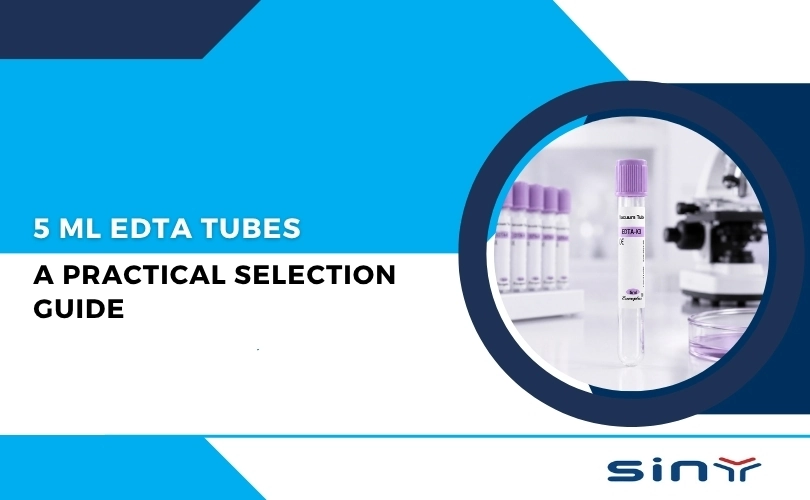
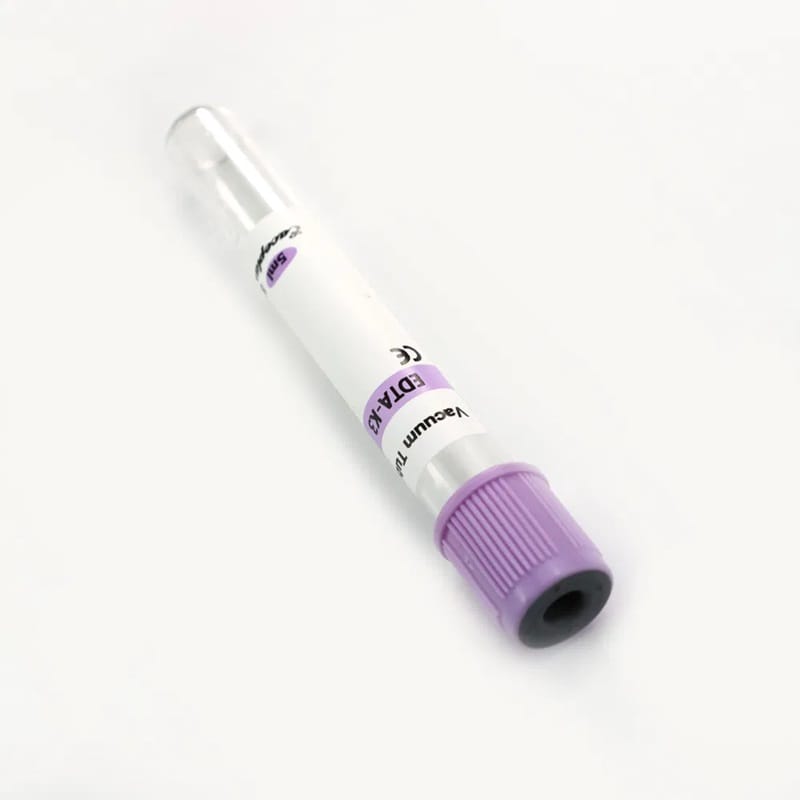
A 5ml EDTA tube is a vacuum blood collection tube designed to hold five milliliters of whole blood while containing ethylenediaminetetraacetic acid as an anticoagulant. EDTA works by binding calcium ions in the blood, preventing clot formation and preserving cellular morphology.
These tubes are commonly manufactured using medical-grade PET or glass and are internally coated with either K2 EDTA or K3 EDTA, both accepted in routine hematology analysis. The controlled internal vacuum ensures the correct blood-to-additive ratio, which is necessary for consistent laboratory results.
Diagnostic laboratories frequently source these tubes from specialized suppliers such as EDTA Tube, where product specifications meet international medical standards and quality compliance.
Manufacturing of 5ml EDTA Tubes
The manufacturing process of 5ml EDTA tubes follows regulated medical production protocols that prioritize sterility, precision, and consistency. Production begins with the selection of high-purity plastic or glass materials that resist chemical interaction with blood samples.
During tube formation, manufacturers apply a measured EDTA coating inside the tube wall using automated spraying or deposition systems. This step ensures uniform anticoagulant distribution. The tubes then undergo vacuum sealing, where exact negative pressure levels allow the tube to draw precisely five milliliters of blood during venipuncture.
After vacuum calibration, tubes pass through sterilization processes and quality inspection lines. Leak testing, vacuum retention testing, and additive verification confirm readiness for clinical use. Suppliers like Siny Medical’s EDTA tube manufacturing line demonstrate how controlled production directly influences test reliability.
Benefits of 5ml EDTA Tubes
The popularity of 5ml EDTA tubes in standard blood tests comes from their balance between sample volume and patient comfort. Five milliliters provides enough blood for multiple hematology parameters while avoiding unnecessary blood loss.
These tubes preserve red blood cells, white blood cells, and platelets in their natural state for extended periods. Laboratories benefit from reduced sample rejection and stable test readings. Research shared through Siny Medical’s hematology testing guide highlights how 5ml EDTA tubes maintain cell count accuracy even during delayed testing.
Another advantage is workflow compatibility. Automated analyzers calibrate easily with 5ml EDTA samples, reducing preparation time and improving lab efficiency.
Application of 5ml EDTA Tubes
5ml EDTA tubes support a wide range of clinical and diagnostic applications. In routine hematology, these tubes serve as the primary container for complete blood count testing, differential analysis, and hemoglobin evaluation.
Blood banks rely on EDTA tubes for blood typing, cross-matching, and antibody screening due to their ability to preserve antigen structure. Diagnostic centers performing chronic disease monitoring also use these tubes to track hematological changes over time.
Healthcare providers sourcing from EDTA Tube product collections gain access to standardized tubes suitable for hospitals, laboratories, and research facilities.
Why Choosing 5ml EDTA Tubes Makes Sense
Choosing 5ml EDTA tubes for standard blood tests supports diagnostic consistency and operational efficiency. Their size allows adequate sampling for repeat testing without additional venipuncture. Laboratories experience smoother workflows because these tubes align with international analyzer calibration standards.
Educational content published in this complete EDTA tube guide explains how volume precision improves repeatability and reduces reporting errors.
Healthcare institutions also value these tubes for their reduced waste, manageable storage requirements, and compatibility with automated handling systems.
Comparison With Other Blood Collection Tubes
Different blood collection tubes serve distinct diagnostic purposes. EDTA tubes differ significantly from serum separator tubes, citrate tubes, and heparin tubes in additive composition and application.
| Tube Type | Additive | Primary Use |
|---|---|---|
| EDTA Tube | EDTA | Hematology |
| Citrate Tube | Sodium Citrate | Coagulation tests |
| Heparin Tube | Lithium/ Sodium Heparin | Chemistry analysis |
| Serum Tube | Clot activator | Biochemistry |
A detailed evaluation provided in EDTA tubes vs other blood collection tubes explains why EDTA tubes remain preferred for cellular analysis, while other tubes serve different laboratory needs.
Volume also plays a role. Compared with smaller or larger options, 5ml tubes strike a balance between sufficient sample quantity and patient comfort. A deeper breakdown appears in EDTA tube size comparisons and EDTA tube sizes explained.
Industry Standards and Global Supply Insight
International diagnostic markets demand consistent tube quality and traceability. Manufacturers featured on Made-in-China platforms showcase large-scale production capabilities that align with global laboratory requirements.
Educational demonstrations and production insights are also shared through Siny Medical’s YouTube channel, helping laboratories understand manufacturing transparency and quality assurance practices.
Summary
5ml EDTA tubes continue to serve as a dependable solution for standard blood tests across clinical laboratories, hospitals, and diagnostic centers. Their optimized volume, controlled anticoagulant concentration, and compatibility with modern analyzers support accurate hematology results.
From manufacturing precision to laboratory application, these tubes contribute to reliable diagnostics while maintaining patient comfort and workflow efficiency. Suppliers such as EDTA Tube provide structured product categories like EDTA tube collections, helping laboratories select suitable solutions with confidence.
For procurement guidance or technical consultation, professionals can connect through EDTA Tube contact services.
FAQs
Why are 5ml EDTA tubes widely used in standard blood tests?
They provide adequate sample volume while preserving blood cell structure for hematology analysis.
Are 5ml EDTA tubes suitable for automated analyzers?
Yes, most modern analyzers calibrate accurately with 5ml EDTA samples.
What type of EDTA is commonly used in 5ml tubes?
Manufacturers typically use K2 EDTA or K3 EDTA depending on laboratory preference.
Can 5ml EDTA tubes be used for blood banking?
Yes, they support blood grouping and antibody testing procedures.
Where can certified 5ml EDTA tubes be sourced?
Medical suppliers like EDTA Tube and Siny Medical offer internationally compliant products.