Blood collection is the first and one of the most important steps in laboratory diagnostics. The quality of a blood sample directly affects the accuracy of test results. Even advanced laboratory instruments cannot provide reliable outcomes if the collected specimen is damaged, contaminated, or incorrectly stored.
Among the different blood collection containers used worldwide, 9 mL EDTA Tubes have become an important choice for laboratories that require larger blood volumes for hematology testing, research applications, and multiple diagnostic procedures from a single sample.
EDTA tubes are designed to preserve whole blood by preventing clot formation. They contain ethylenediaminetetraacetic acid (EDTA), an anticoagulant that binds calcium ions required for the coagulation process. This allows laboratories to analyze blood cells while maintaining their natural structure.
According to laboratory guidelines, EDTA is considered the preferred anticoagulant for complete blood count (CBC) testing because it provides excellent preservation of cellular morphology. More information about EDTA chemistry can be found through scientific resources such as the explanation of Ethylenediaminetetraacetic acid (EDTA) chemistry.
While smaller EDTA tubes are commonly used for routine blood testing, 9 mL EDTA Tubes provide additional capacity when laboratories need a higher sample volume, multiple analyses, or extended testing workflows.
What Are 9 mL EDTA Tubes?
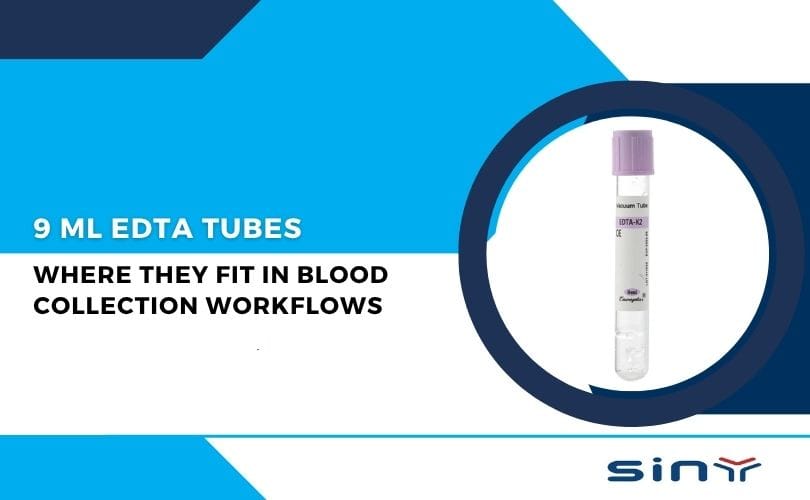
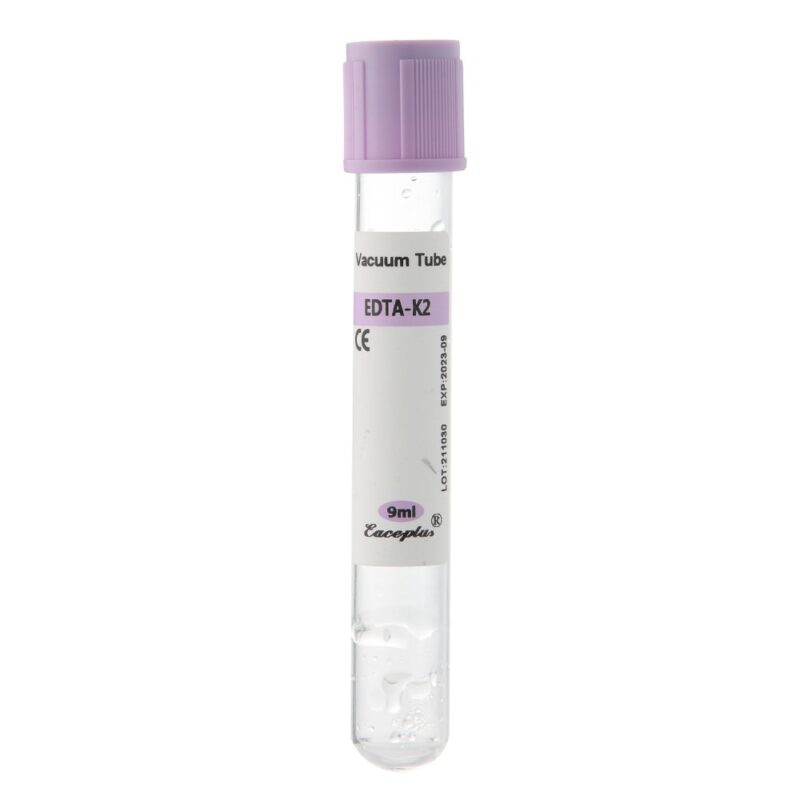
9 mL EDTA Tubes are vacuum blood collection tubes designed to collect approximately 9 milliliters of whole blood while maintaining sample stability for laboratory analysis.
These tubes usually contain either:
- K2 EDTA
- K3 EDTA
Both types work as anticoagulants, but K2 EDTA is widely preferred because it provides better blood cell preservation and avoids excessive dilution effects.
The tubes normally feature a purple or lavender-colored cap, which helps healthcare professionals quickly identify EDTA-containing tubes during sample collection.
EDTA tubes are mainly used for:
- Complete blood count (CBC)
- Hemoglobin testing
- Platelet analysis
- White blood cell differential counts
- Blood cell morphology examination
- Immunohematology research
- Molecular diagnostic preparation
For laboratories handling high testing volumes, selecting the correct tube size is essential. The right tube ensures sufficient sample availability without unnecessary blood collection.
Why Sample Volume Matters in Blood Collection Workflows
Laboratories today perform more tests from fewer patient samples. This approach reduces patient discomfort and improves workflow efficiency.
A small EDTA tube may be enough for a basic CBC test. However, complex workflows may require additional volume for repeated analysis, quality control testing, or specialized examinations.
This is where 9 mL EDTA Tubes provide practical advantages.
A larger blood volume allows laboratories to:
- Perform multiple hematology tests from one collection
- Reduce the need for repeat blood draws
- Maintain backup sample availability
- Support research and validation processes
- Improve workflow efficiency
For hospitals, diagnostic centers, and research facilities, having different tube sizes available allows better management of various testing requirements.
How 9 mL EDTA Tubes Work Inside the Laboratory
The working principle of 9 mL EDTA Tubes is simple but highly effective.
During blood collection, the tube receives a predetermined amount of EDTA additive. Once blood enters the tube, EDTA immediately binds calcium ions in the sample.
Without calcium, the coagulation cascade cannot continue. As a result, the blood remains in a liquid state instead of forming a clot.
After collection, laboratory staff gently mix the tube several times to distribute the anticoagulant evenly.
Proper mixing is important because:
- Insufficient mixing can cause micro-clots
- Excessive shaking can damage blood cells
- Incorrect handling may affect test accuracy
Modern vacuum blood collection systems are designed to maintain a controlled ratio between blood volume and anticoagulant concentration.
K2 EDTA vs K3 EDTA in 9 mL EDTA Tubes
When choosing 9 mL EDTA Tubes, laboratories often compare K2 EDTA and K3 EDTA options.
| Feature | K2 EDTA Tube | K3 EDTA Tube |
|---|---|---|
| Additive form | Dipotassium EDTA | Tripotassium EDTA |
| Common usage | CBC and hematology testing | General hematology applications |
| Sample dilution | Lower | Slightly higher |
| Cell preservation | Excellent | Good |
| International preference | Widely preferred | Less commonly used |
K2 EDTA is commonly selected because it is spray-coated inside the tube, allowing rapid mixing with blood. Many modern hematology laboratories prefer K2 EDTA because it maintains better cellular characteristics.
You can learn more about the difference between EDTA and other anticoagulants through this detailed comparison of K2 EDTA and heparin tubes.
Where Do 9 mL EDTA Tubes Fit in Clinical Blood Collection?
Every laboratory has different testing requirements. Tube selection depends on the amount of blood needed, the analyzer system, and the type of diagnostic procedure.
9 mL EDTA Tubes are especially useful in settings where larger specimen volumes are required.
Hospitals and Large Diagnostic Centers
Large healthcare facilities often process thousands of blood samples daily.
A 9 mL tube can support situations where:
- Multiple hematology parameters are required
- Additional confirmation tests may be needed
- Samples need to be stored temporarily
- Research protocols require extra specimen volume
This reduces unnecessary patient recollection and improves laboratory efficiency.
Research Laboratories
Research environments frequently require more sample volume compared with routine clinical testing.
Researchers may need additional blood for:
- Repeated measurements
- Experimental procedures
- Validation studies
- Method comparison research
Because EDTA preserves cellular components effectively, 9 mL EDTA Tubes are commonly suitable for these applications.
Blood Banks and Specialized Testing
Some specialized blood investigations require larger sample amounts.
Examples include:
- Extended hematological analysis
- Cell-based research
- Immunological studies
In these workflows, having a larger EDTA tube can improve flexibility.
Comparing 9 mL EDTA Tubes With Other EDTA Tube Sizes
Different laboratories use different EDTA tube capacities depending on their workflow.
| Tube Size | Typical Application |
|---|---|
| 2 mL EDTA Tube | Pediatric testing and small-volume samples |
| 3 mL EDTA Tube | Routine CBC testing |
| 4 mL EDTA Tube | General hematology workflows |
| 5 mL EDTA Tube | Medium-volume testing |
| 6–8 mL EDTA Tube | Multiple analysis requirements |
| 9 mL EDTA Tube | Larger sample requirements and extended workflows |
EDTA tube manufacturers often provide different sizes to support various laboratory needs. You can explore different tube options through the available EDTA tube range at EDTA Tube Products Collection.
Advantages of Using 9 mL EDTA Tubes in Laboratory Workflows
Choosing the correct blood collection tube is not only about capacity. It also affects sample quality, laboratory efficiency, and patient experience. 9 mL EDTA Tubes offer several practical benefits for laboratories that need additional specimen volume without compromising sample integrity.
1. Supports Multiple Tests From a Single Blood Draw
One major advantage of 9 mL EDTA Tubes is their ability to provide enough sample volume for multiple analyses.
In modern healthcare facilities, a single blood sample may support several investigations. Instead of collecting separate tubes repeatedly, laboratories can use a larger EDTA tube when appropriate.
This approach helps:
- Reduce patient discomfort
- Lower sample rejection rates
- Improve laboratory workflow
- Save technician time
For hospitals managing large patient numbers, efficient sample collection is essential for maintaining fast turnaround times.
2. Better Flexibility for Complex Testing Requirements
Routine CBC testing usually requires only a small amount of blood. However, some laboratory workflows require additional specimen volume.
For example, laboratories may need extra blood for:
- Repeat testing after questionable results
- Manual blood smear preparation
- Quality control verification
- Additional hematology parameters
A larger tube provides flexibility when unexpected testing requirements appear.
This is especially valuable in tertiary hospitals, reference laboratories, and research centers.
3. Helps Reduce Repeat Sample Collection
Sample recollection creates additional workload for healthcare workers and discomfort for patients.
Common reasons for recollection include:
- Insufficient blood volume
- Incorrect tube selection
- Clotted samples
- Testing errors
Using the appropriate size of EDTA tube can reduce these problems.
However, laboratories should always follow analyzer requirements and validated protocols. A larger tube does not automatically mean better results. The blood-to-anticoagulant ratio must remain accurate.
Proper Handling Guidelines for 9 mL EDTA Tubes
Even high-quality tubes require proper handling to maintain sample quality.
The performance of 9 mL EDTA Tubes depends on several important steps.
Correct Blood Collection Procedure
During collection, healthcare professionals should:
- Select the correct vein and collection site.
- Use a compatible needle and vacuum system.
- Allow the tube to fill according to manufacturer specifications.
- Immediately mix the sample gently after collection.
The tube should not be shaken aggressively because excessive mechanical force may damage red blood cells.
Mixing Requirements
After blood collection, EDTA tubes should be gently inverted several times.
Proper mixing allows:
- Even distribution of EDTA
- Prevention of clot formation
- Reliable hematology results
Most manufacturers recommend gentle inversion rather than vigorous shaking.
Incorrect mixing can create micro-clots that may interfere with automated cell counters.
Storage and Transportation
The stability of EDTA blood samples depends on the test requirements and storage conditions.
Generally:
- Samples should be tested as soon as possible.
- Extreme temperatures should be avoided.
- Tubes should remain properly sealed.
- Transportation should minimize vibration.
Laboratories should always follow validated guidelines from instrument manufacturers and recognized laboratory organizations.
Common Mistakes When Using 9 mL EDTA Tubes
Although EDTA tubes are simple to use, mistakes during collection and handling can affect laboratory results.
Underfilling the Tube
One common problem is collecting less blood than required.
An incorrect blood-to-EDTA ratio may lead to:
- Abnormal cell measurements
- Changes in morphology
- Unreliable results
This is why vacuum tubes are manufactured with a specific additive amount based on their designed blood volume.
Overfilling the Tube
Overfilling can also create problems because the anticoagulant concentration may become insufficient.
Proper filling ensures that the EDTA concentration remains within the recommended range.
Incorrect Mixing
Poor mixing can result in clot formation.
Even tiny clots can affect:
- Platelet counting
- White blood cell analysis
- Automated hematology testing
Delayed Processing
Although EDTA preserves blood cells, samples are not permanently stable.
Long delays may cause:
- Cellular degeneration
- Morphological changes
- Inaccurate analysis
Laboratories should establish clear sample transportation and processing timelines.
9 mL EDTA Tubes in Automated Hematology Systems
Modern laboratories depend heavily on automated hematology analyzers. These instruments require properly prepared whole blood samples.
9 mL EDTA Tubes are compatible with many laboratory workflows because they provide sufficient volume for repeated analyzer testing.
Automated hematology systems measure parameters such as:
- Red blood cell count
- White blood cell count
- Platelet count
- Hemoglobin concentration
- Mean corpuscular volume
- Differential leukocyte count
The accuracy of these measurements depends heavily on sample quality.
A properly collected EDTA sample helps analyzers produce consistent results.
Why Purple Cap EDTA Tubes Are Widely Recognized
Healthcare professionals often identify EDTA tubes by their purple or lavender caps.
The color coding system helps prevent collection errors by allowing quick identification of additives.
Purple cap tubes usually indicate that the tube contains EDTA anticoagulant.
You can read more about the reason behind this color identification system in this guide about Why EDTA Tubes Are Purple.
Choosing Between 9 mL EDTA Tubes and Smaller Sizes
The choice between tube sizes depends on the laboratory purpose.
A smaller EDTA tube may be ideal for:
- Routine outpatient CBC tests
- Pediatric samples
- Limited testing requirements
A 9 mL EDTA Tube may be more suitable for:
- Large hospitals
- Research laboratories
- Multiple hematology procedures
- Situations requiring additional sample volume
For laboratories that process different patient groups, maintaining multiple tube sizes is often the most practical approach.
Available options may include:
- 2 mL EDTA Tubes
- 3 mL EDTA Tubes
- 4 mL EDTA Tubes
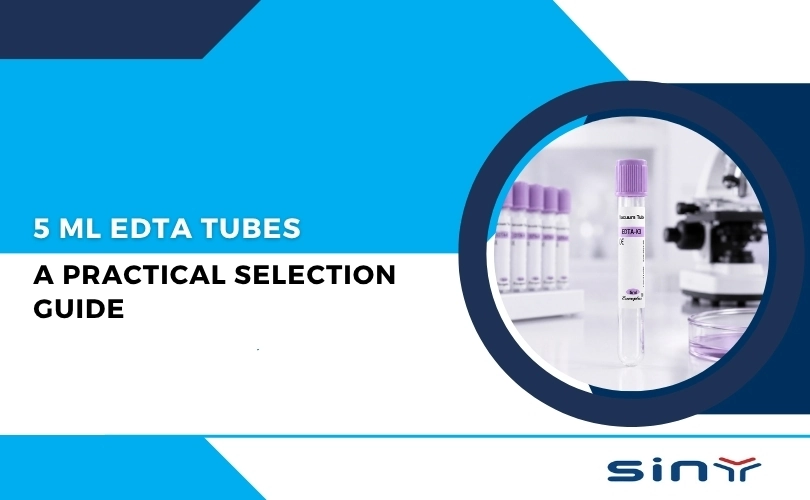
- 5 mL EDTA Tubes
- 6 mL EDTA Tubes
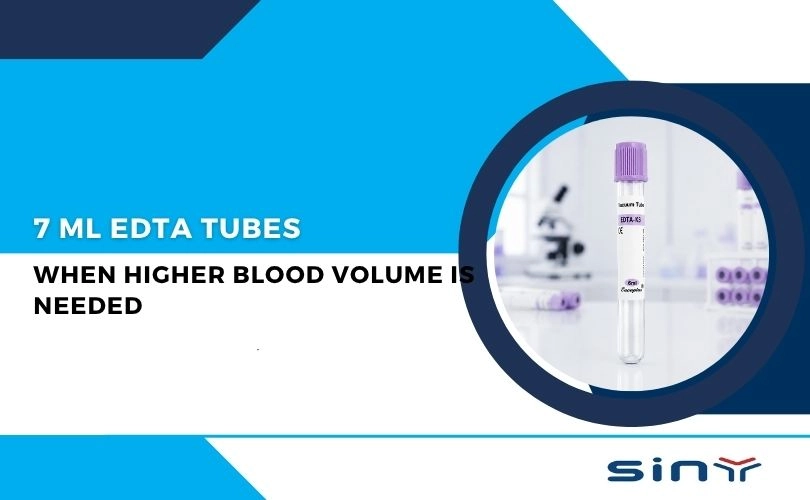
- 7 mL EDTA Tubes
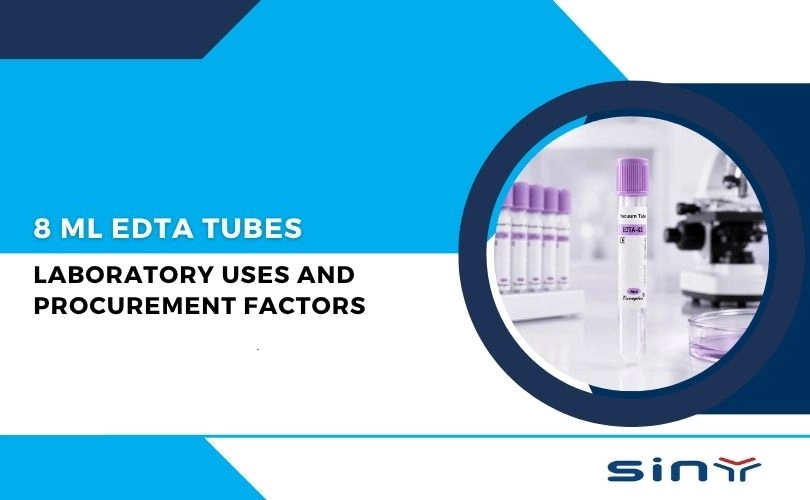
- 8 mL EDTA Tubes
Quality Features to Consider When Buying 9 mL EDTA Tubes
Not all blood collection tubes provide the same performance. Laboratories should evaluate several factors before selecting a supplier.
Tube Material Quality
High-quality medical-grade plastic or glass helps maintain:
- Sample protection
- Chemical stability
- Transportation safety
Anticoagulant Accuracy
The amount of EDTA inside the tube must match the recommended blood volume.
Incorrect additive concentration can affect test reliability.
Vacuum Performance
Reliable vacuum pressure ensures accurate blood collection.
Poor vacuum quality may result in:
- Underfilling
- Inconsistent sample volume
- Collection difficulties
Sterility Assurance
Blood collection tubes must meet strict manufacturing standards.
Sterile production reduces contamination risks and supports patient safety.
Selecting Reliable EDTA Tube Manufacturers
Healthcare organizations should select suppliers that maintain consistent manufacturing quality.
Important considerations include:
- International quality certifications
- Production capacity
- Product consistency
- Packaging standards
- Technical support
Manufacturers such as SINY Medical EDTA Tube Solutions provide different blood collection tube options for laboratories and healthcare facilities.
For international sourcing information, suppliers may also be available through platforms such as SINY Medical Made-in-China profile.
Product Applications of 9 mL EDTA Tubes in Medical Laboratories
Different laboratories have different sample requirements. A tube that works well for one workflow may not be suitable for another. This is why manufacturers produce multiple EDTA tube sizes and configurations.
9 mL EDTA Tubes are designed for applications where laboratories need a higher volume of anticoagulated whole blood.
Common product variations include:
- K2 EDTA vacuum blood collection tubes
- K3 EDTA blood collection tubes
- Purple cap EDTA tubes
- Laboratory-grade EDTA sample tubes
For laboratories looking specifically for larger-volume EDTA solutions, options such as the 9 mL EDTA K2 Vacuum Blood Collection Tube can support routine and specialized testing workflows.
Another option is the 9 mL EDTA Vacuum Blood Collection Tube for Laboratory Use, which is designed for professional laboratory environments requiring consistent sample collection.
For facilities that prefer K3 EDTA formulations, the 9 mL K3 EDTA Tube Blood Collection Solution provides another choice.
How 9 mL EDTA Tubes Improve Laboratory Workflow Efficiency
Laboratory efficiency depends on more than testing instruments. Every stage, from collection to reporting, affects turnaround time and accuracy.
A properly selected tube can improve workflow by reducing unnecessary steps.
With 9 mL EDTA Tubes, laboratories can benefit from:
Reduced sample shortage:
A larger specimen volume provides additional flexibility when multiple tests are required.
Improved operational planning:
Laboratory staff can process more testing requirements from a single collection.
Lower risk of recollection:
Adequate sample volume reduces situations where another blood draw becomes necessary.
Better support for advanced testing:
Research and specialized diagnostic procedures often require more sample material.
However, laboratories should always select tube volume based on validated testing requirements rather than simply choosing the largest available option.
The Role of EDTA Tubes in Accurate Hematology Testing
Hematology testing depends on maintaining the original condition of blood cells.
Red blood cells, white blood cells, and platelets can change if samples are collected incorrectly or stored improperly.
EDTA works because it prevents clotting while preserving cellular components.
For CBC analysis, laboratories examine important parameters such as:
| Parameter | Importance |
|---|---|
| Hemoglobin | Measures oxygen-carrying capacity |
| RBC Count | Evaluates red blood cell quantity |
| WBC Count | Helps assess immune activity |
| Platelet Count | Supports bleeding and clotting evaluation |
| MCV | Provides information about red cell size |
A high-quality 9 mL EDTA Tube helps maintain sample integrity throughout these analytical processes.
9 mL EDTA Tubes vs Other Blood Collection Tubes
EDTA tubes are not the only blood collection tubes available. Different additives are used depending on the laboratory test.
| Tube Type | Additive | Common Application |
|---|---|---|
| EDTA Tube | EDTA anticoagulant | Hematology testing |
| Heparin Tube | Lithium/Sodium Heparin | Plasma chemistry testing |
| Citrate Tube | Sodium citrate | Coagulation testing |
| Serum Tube | Clot activator | Biochemistry testing |
The main advantage of EDTA is its ability to preserve whole blood cells.
For this reason, laboratories typically select EDTA tubes when cellular analysis is required.
Future Trends in Blood Collection Technology
Medical laboratories continue to move toward safer, faster, and more efficient sample management.
Future developments in blood collection may include:
- Improved tube materials
- Better additive stability
- Digital sample tracking systems
- More environmentally friendly manufacturing
- Advanced automation compatibility
As diagnostic testing expands, reliable blood collection products will remain essential.
Manufacturers are continuously improving tube designs to support modern laboratory requirements.
Frequently Asked Questions
1. What are 9 mL EDTA Tubes mainly used for?
9 mL EDTA Tubes are mainly used for collecting and preserving whole blood samples required for hematology testing, research procedures, and workflows that require a larger specimen volume. They contain EDTA anticoagulant, which prevents clot formation by binding calcium ions.
2. Why are 9 mL EDTA Tubes preferred for some laboratory workflows?
9 mL EDTA Tubes are preferred when laboratories need extra sample volume for multiple analyses, repeated testing, or specialized procedures. They reduce the possibility of insufficient sample availability while maintaining proper anticoagulant balance.
3. Are 9 mL EDTA Tubes suitable for CBC testing?
Yes, 9 mL EDTA Tubes can be used for CBC testing when the laboratory workflow requires a larger blood volume. EDTA is widely accepted as the preferred anticoagulant for complete blood count analysis because it preserves blood cell morphology.
4. What is the difference between K2 and K3 versions of 9 mL EDTA Tubes?
9 mL EDTA Tubes may contain either K2 EDTA or K3 EDTA. K2 EDTA is commonly preferred because it provides excellent cell preservation with minimal dilution effects. K3 EDTA is also effective but is less commonly selected in many modern hematology workflows.
5. How should 9 mL EDTA Tubes be stored after collection?
9 mL EDTA Tubes should be stored and transported according to laboratory guidelines. Samples should avoid extreme temperatures, remain properly sealed, and be processed within the recommended timeframe to maintain reliable results.
6. Where can laboratories purchase quality 9 mL EDTA Tubes?
Laboratories can explore different 9 mL EDTA Tubes and related blood collection products through professional suppliers. Available options include K2 EDTA, K3 EDTA, and purple cap tube designs.
You can explore product categories at EDTA Tube Product Collection or contact the supplier through EDTA Tube Contact Page.
Summary
Selecting the correct blood collection tube plays a major role in laboratory accuracy and efficiency.
9 mL EDTA Tubes provide a practical solution for laboratories that require larger whole blood volumes while maintaining reliable sample preservation.
Their ability to prevent clot formation, support hematology testing, and provide additional workflow flexibility makes them valuable in hospitals, diagnostic centers, and research laboratories.
Although tube size is important, successful laboratory performance depends on the complete process: correct collection, proper mixing, appropriate storage, and accurate testing procedures.
For organizations searching for dependable blood collection solutions, choosing high-quality 9 mL EDTA Tubes from a trusted supplier can support better laboratory outcomes and improved diagnostic workflows.