Blood collection is one of the most important pre-analytical steps in laboratory medicine. A well-designed collection tube helps protect the specimen from clotting, contamination, and unnecessary handling. Among the many available options, 8 mL EDTA tubes can be useful when a laboratory needs a larger whole-blood specimen for hematology, molecular testing, research, or multiple related assays.
However, choosing an EDTA tube should not depend on volume alone. The anticoagulant type, blood-to-additive ratio, tube dimensions, vacuum accuracy, material, closure, sterility, analyzer compatibility, and supplier quality all matter. A larger tube is not automatically a better tube.
This guide explains how 8 mL EDTA tubes work, where laboratories may use them, how they compare with smaller and larger EDTA tubes, and what procurement teams should evaluate before placing a bulk order.
What Are 8 mL EDTA Tubes?
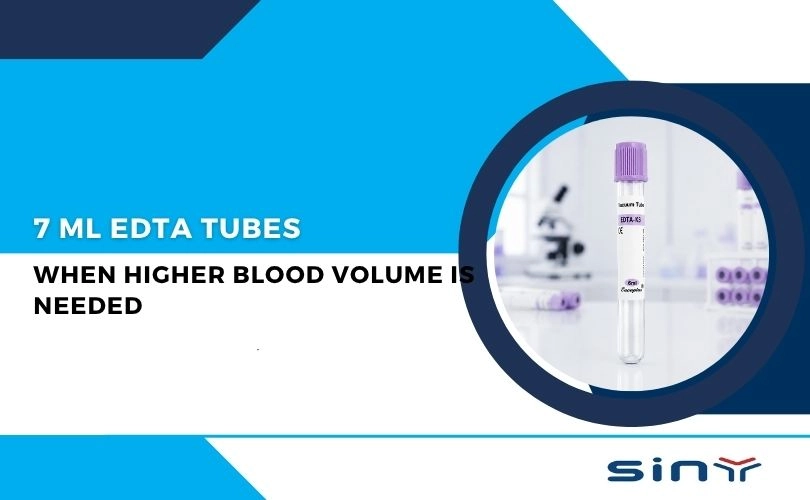
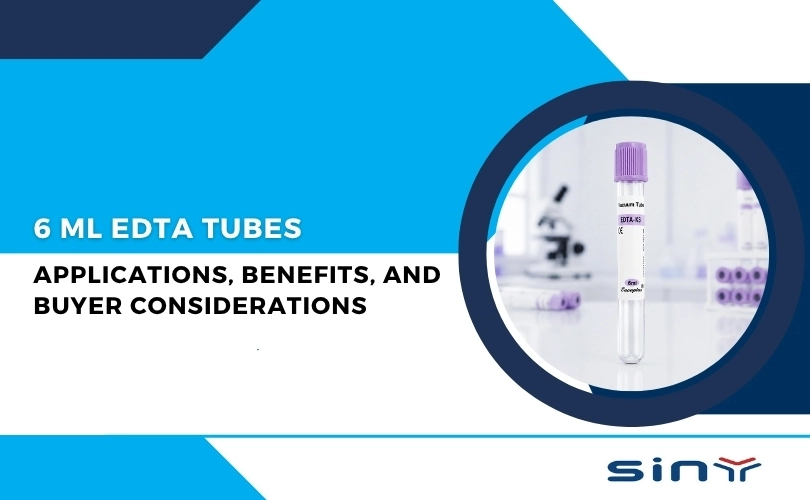
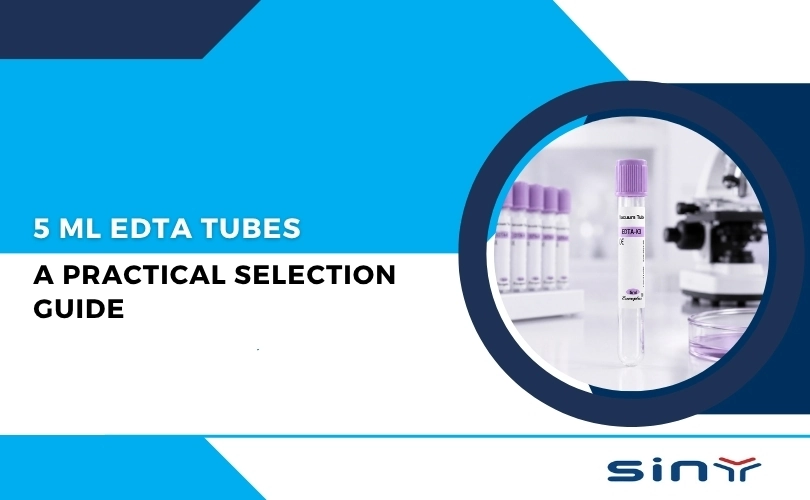
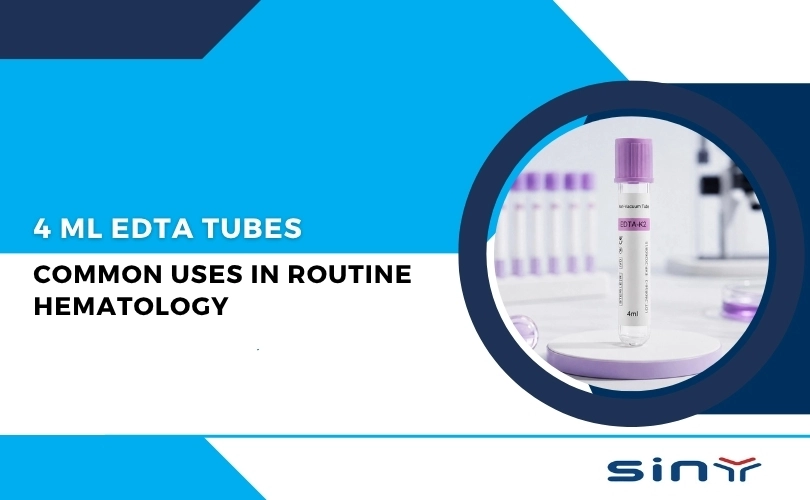
8 mL EDTA tubes are blood collection tubes designed to collect and preserve a relatively large volume of whole blood while EDTA prevents coagulation. EDTA stands for ethylenediaminetetraacetic acid. It binds calcium ions that are necessary for the blood-clotting process.
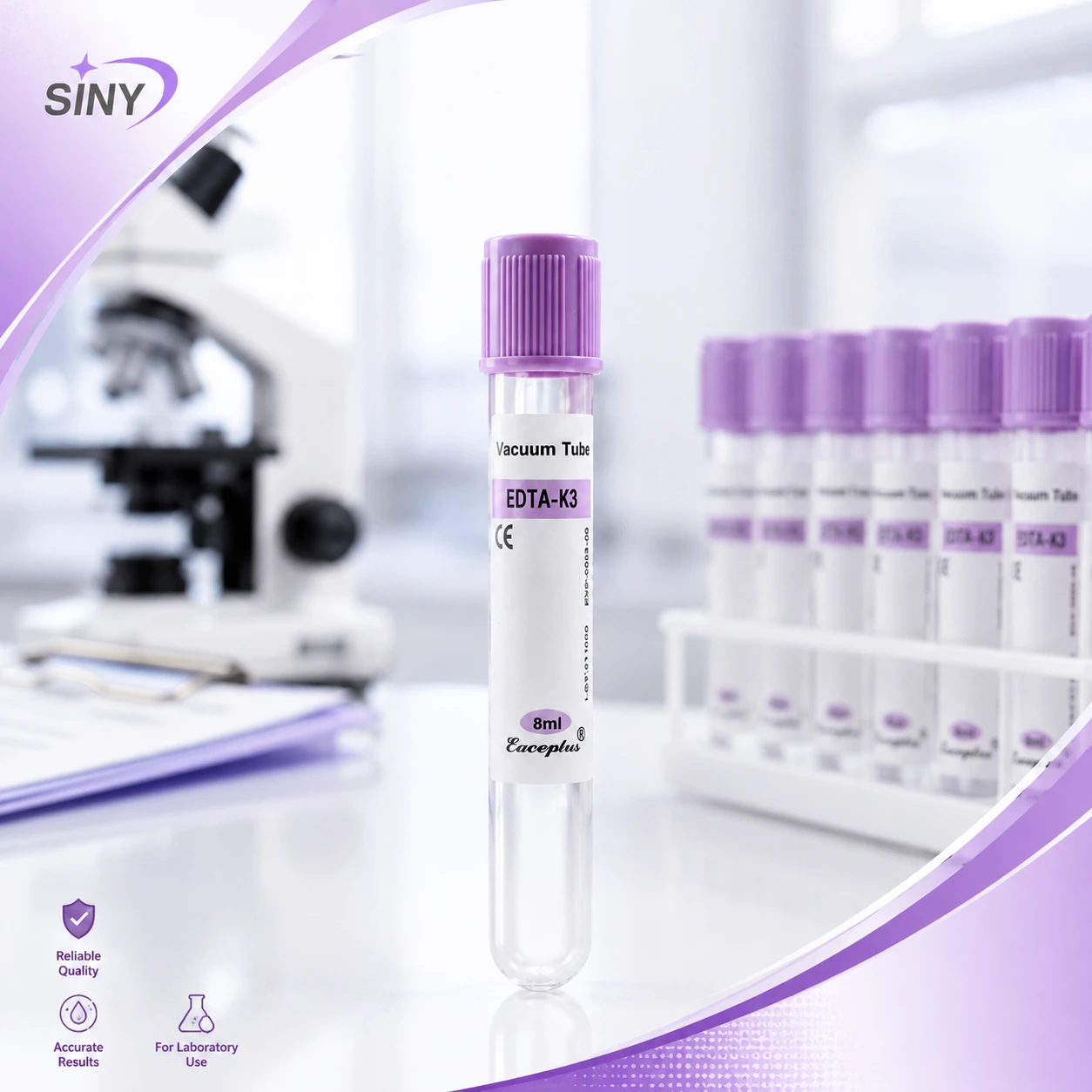
EDTA tubes are commonly associated with lavender or purple caps. The World Health Organization identifies EDTA tubes as specimens used for hematology and blood-bank applications, while also emphasizing correct filling and mixing procedures.
The exact configuration of an 8 mL tube can vary by manufacturer. For example, EDTA Tube lists an 8 mL configuration at approximately 16 × 100 mm, with K2EDTA or K3EDTA options and PET or glass construction depending on the product specification.
That distinction matters. 8 mL describes the intended collection capacity, not a universal laboratory testing requirement. A laboratory should always select the tube volume specified by its validated test procedure.
For laboratories comparing available sizes, the EDTA Tube product collection provides examples ranging from small-volume tubes to higher-capacity configurations.
How Do 8 mL EDTA Tubes Work?
The principle behind 8 mL EDTA tubes is straightforward. Blood enters the tube and comes into contact with a measured quantity of EDTA. The EDTA binds calcium and prevents the coagulation cascade from proceeding normally.
This leaves the specimen in a whole-blood state. That makes EDTA particularly useful when the laboratory needs intact blood cells rather than serum.
The tube itself also plays an important role. Vacuum tubes are manufactured with a predetermined vacuum designed to draw a specified volume. If the tube does not collect the intended amount of blood, the relationship between blood and anticoagulant changes.
This is why tube capacity and actual fill volume must be considered together.
The WHO notes that underfilling can increase the anticoagulant-to-blood ratio and contribute to specimen problems. It also warns that vigorous mixing can contribute to hemolysis.
After collection, EDTA specimens should therefore be mixed gently according to the tube manufacturer’s instructions and the laboratory’s validated procedure.
Why Is EDTA Used for Whole-Blood Testing?
EDTA is widely used because it helps preserve cellular characteristics needed for many laboratory investigations.
A hematology analyzer may measure red blood cells, white blood cells, platelets, hemoglobin, and several calculated indices from an EDTA-anticoagulated specimen. The same specimen may also support blood-smear preparation or other specialized investigations.
The major advantage is that EDTA prevents clot formation while maintaining the blood cells in suspension.
That makes EDTA different from anticoagulants such as sodium citrate and heparin. Each additive has a different purpose, so laboratories should not substitute one tube type for another simply because the tube has a similar appearance.
The Clinical and Laboratory Standards Institute places EDTA tubes after serum and heparin tubes in the recommended order of draw because additive carryover can affect subsequent specimens.
For background information about the chemical itself, readers can consult this overview of ethylenediaminetetraacetic acid.
Laboratory Uses of 8 mL EDTA Tubes
The appropriate application for 8 mL EDTA tubes depends on the laboratory’s test menu and validated collection requirements. The larger capacity can become useful when a single blood draw needs to provide enough specimen for several analyses.
Hematology Testing
Hematology remains one of the most important applications for EDTA blood.
Complete blood count testing, platelet evaluation, white-cell analysis, red-cell measurements, and blood-smear preparation commonly use EDTA-anticoagulated whole blood.
However, this does not mean every CBC requires an 8 mL tube. Many routine adult CBC procedures use considerably smaller collection volumes.
An 8 mL configuration may make more sense when a laboratory needs additional specimen for several hematology-related procedures, repeat analysis, research protocols, or a larger specimen volume specified by its workflow.
Laboratories should therefore follow their analyzer instructions and validated standard operating procedures rather than selecting a tube solely because it offers more capacity.
Molecular Diagnostics
EDTA whole blood can also support certain molecular diagnostic workflows.
Depending on the assay, laboratories may extract DNA or RNA from blood cells or plasma-derived material. The required specimen volume varies significantly between methods.
For this reason, 8 mL EDTA tubes may be considered when a molecular laboratory needs more starting material from a single venipuncture.
Still, the assay protocol should determine the required volume. More blood does not automatically produce a better molecular result.
Genetic and Research Applications
Research laboratories often require enough specimen for repeated extraction, archiving, cell-based analysis, or several downstream assays.
In these environments, a larger EDTA tube can simplify specimen collection because one properly collected tube may provide enough material for multiple planned procedures.
The decision should account for the research protocol, storage requirements, sample stability, and available processing equipment.
Blood Cell Morphology
EDTA is also valuable when laboratories need to examine blood-cell morphology.
A properly collected EDTA specimen can support preparation of peripheral blood smears and microscopic evaluation. Correct collection and timely processing remain important because prolonged storage can alter cellular characteristics.
The tube volume does not remove the need for good specimen handling.
Blood-Bank and Immunohematology Workflows
EDTA specimens can be used in certain blood-bank and immunohematology procedures. The exact collection tube and volume depend on the institution, test, and applicable regulatory requirements.
The WHO identifies EDTA tubes among blood collection systems used for hematology and blood-bank applications.
For this reason, procurement teams should confirm the exact specification with the laboratory department before standardizing a large-volume EDTA tube.
8 mL EDTA Tubes vs. Smaller EDTA Tubes
One of the most important procurement questions is whether an 8 mL tube is actually necessary.
Smaller tubes can be more efficient when the laboratory only needs a small quantity of blood. Larger tubes can become useful when multiple tests require a shared specimen.
| Tube volume | General role | Main consideration |
|---|---|---|
| 2 mL | Low-volume collection | Useful when specimen volume must be minimized |
| 3 mL | Routine smaller-volume testing | Common choice for selected hematology workflows |
| 4–5 mL | General laboratory use | Practical balance between volume and flexibility |
| 6–7 mL | Larger specimen requirements | Useful for selected multi-test workflows |
| 8 mL | Higher-volume whole-blood collection | Appropriate when validated procedures require additional specimen |
| 9–10 mL | High-volume collection | More useful for selected specialized or research workflows |
The table provides a general procurement framework rather than a universal clinical rule. Actual tube selection should follow the laboratory’s validated procedures.
EDTA Tube’s current product information lists configurations including 2, 3, 4, 5, 6, 7, 8, 9, and 10 mL, demonstrating that manufacturers can provide multiple capacities for different collection requirements.
Laboratories can also compare 2 mL EDTA tubes, 3 mL EDTA tubes, 4 mL EDTA tubes, 5 mL EDTA tubes, 6 mL EDTA tubes, and 7 mL EDTA tubes before selecting a standard inventory size.
K2 EDTA or K3 EDTA: Which Should You Choose?
The choice between K2EDTA and K3EDTA deserves careful consideration.
Both are forms of EDTA that prevent coagulation by binding calcium. However, their physical formulation and potential effects on specimen characteristics differ.
K2EDTA is commonly supplied as a spray-dried additive on the tube’s inner surface. K3EDTA is commonly supplied in a liquid form. A spray-dried additive can reduce the amount of liquid introduced into the blood specimen.
The WHO has specifically noted a preference for K2 over K3 in certain whole-blood applications, including lymphocyte counting.
That does not mean K3EDTA is universally unsuitable. Instead, the correct choice depends on the intended test, analyzer, regulatory requirements, and laboratory validation.
For laboratories considering K2 specifically, the K2 EDTA blood collection tube provides a useful product reference.
You can also compare K2 EDTA and heparin tubes because these additives serve different laboratory purposes.
Why Tube Fill Volume Matters
Buying 8 mL EDTA tubes does not mean that every specimen should simply contain any amount of blood below 8 mL.
The tube is designed around a particular draw volume and additive concentration. Underfilling changes the blood-to-additive relationship.
For example, if a tube designed for a relatively large draw collects substantially less blood, the EDTA becomes more concentrated relative to the specimen. Excess EDTA can affect cell measurements and morphology.
WHO guidance specifically identifies underfilling as a factor that can affect specimen quality.
This creates an important procurement lesson: the largest available tube is not necessarily the most versatile tube.
A laboratory should select the smallest tube that comfortably satisfies the validated specimen requirement. This approach can reduce unnecessary blood collection and improve inventory efficiency.
Tube Material: PET vs. Glass
Material is another factor to evaluate when purchasing 8 mL EDTA tubes.
PET plastic offers several practical advantages. It is lightweight and resistant to breakage. These properties can be valuable in high-volume laboratories and during specimen transportation.
Glass offers different characteristics and may still be preferred for particular laboratory workflows.
EDTA Tube lists PET and glass options across its EDTA collection range.
The best choice depends on the laboratory’s equipment, transport conditions, centrifuge compatibility, storage system, and internal quality requirements.
Procurement teams should not judge material only by purchase price. A slightly higher unit cost may be justified if it reduces breakage, handling problems, or transport losses.
Tube Dimensions and Analyzer Compatibility
Capacity is only one specification.
An 8 mL EDTA tube may have a different diameter and length from a smaller tube. Those physical dimensions can affect compatibility with tube racks, automated transport systems, centrifuges, barcode readers, and laboratory analyzers.
EDTA Tube’s product specifications list an 8 mL configuration at approximately 16 × 100 mm for certain product lines.
Before ordering, laboratories should confirm:
- Tube diameter and height
- Rack compatibility
- Analyzer compatibility
- Centrifuge compatibility
- Label area
- Barcode readability
- Stopper design
- Needle and holder compatibility
- Vacuum specification
This becomes particularly important when a facility is replacing an existing supplier.
A tube can meet the biological requirements yet still create operational problems if its physical dimensions do not fit the laboratory’s automated system.
Sterility, Closure and Vacuum Quality
For 8 mL EDTA tubes, quality control should extend beyond the anticoagulant.
The tube must maintain its seal during transportation and storage. A compromised stopper can lead to vacuum loss, contamination, leakage, or inconsistent specimen collection.
ISO 6710:2017 establishes requirements and test methods for evacuated and non-evacuated single-use containers used for human venous blood specimen collection. The standard covers areas such as draw volume, design, construction, sterility, additives, marking, leakage, robustness, and additive concentration.
This makes ISO 6710 a useful reference when evaluating blood collection tube specifications.
The ISO 6710:2017 standard is especially relevant for procurement teams that need a structured technical benchmark.
How to Procure 8 mL EDTA Tubes for a Laboratory
Procurement should begin with the laboratory requirement, not the supplier catalogue.
First, identify the tests that require EDTA whole blood. Then determine the required specimen volume for each validated method.
Next, check whether one tube can support several tests without compromising specimen quality.
After that, evaluate the tube specification. Important factors include EDTA type, nominal draw volume, tube dimensions, material, closure system, vacuum accuracy, sterility, packaging, shelf life, and applicable certifications.
Supplier consistency is equally important. A low-cost tube has little value if the vacuum varies between production batches or the additive distribution is inconsistent.
For larger purchases, ask for technical documentation and representative samples before committing to a full shipment.
The EDTA Tube product catalogue can be used to review available configurations, while the EDTA tube category provides a broader overview of available products.
External supplier information can also be reviewed through SINY Medical’s EDTA tube resources and its Made-in-China supplier profile.
For additional product information and manufacturing content, the SINY Medical YouTube channel is another available resource.
Common Procurement Mistakes to Avoid
A frequent mistake is choosing a tube based only on capacity.
A second mistake is assuming that every EDTA tube works for every laboratory test. Test methods can have specific specimen requirements.
Another problem occurs when purchasing teams focus heavily on unit price. A cheaper tube can become expensive if it produces rejected specimens, inconsistent draws, leakage, or analyzer compatibility issues.
Stocking too many different sizes can also create unnecessary inventory complexity. On the other hand, stocking only one size can make it difficult to handle specialized workflows.
A better strategy is to establish a primary tube size and maintain additional sizes only where the laboratory has a documented need.
The WHO emphasizes that specimen collection, labeling, handling, and transportation directly influence laboratory quality.
8 mL EDTA Tubes: Practical Selection Checklist
Before purchasing 8 mL EDTA tubes, procurement teams should confirm the following:
Test requirement: Does the laboratory actually require an 8 mL specimen?
Anticoagulant: Does the validated procedure specify K2EDTA or K3EDTA?
Draw volume: Is the nominal vacuum appropriate for the required specimen volume?
Tube material: Is PET or glass more suitable for the facility?
Dimensions: Will the tube fit existing racks, centrifuges, analyzers, and automation?
Closure: Does the stopper provide reliable sealing and needle penetration?
Quality system: Can the supplier provide appropriate technical and quality documentation?
Sterility: Does the product meet the facility’s sterility requirements?
Packaging: Are cartons, inner packs, labeling, and transport conditions suitable?
Shelf life: Is sufficient remaining shelf life available when the shipment arrives?
Batch consistency: Can the supplier maintain consistent performance across production batches?
Customization: If required, can the supplier provide OEM labeling, packaging, or other documented specifications?
These questions help turn procurement from a simple price comparison into a quality-based purchasing decision.
Are 8 mL EDTA Tubes Right for Your Laboratory?
There is no universal answer.
For routine CBC testing, a smaller EDTA tube may be more practical. For a workflow involving several assays or a larger validated specimen requirement, an 8 mL EDTA tube may provide useful additional capacity.
The key is to match the tube to the procedure.
A larger tube should not be selected simply because it appears more flexible. If the laboratory routinely collects only a small amount of blood, using an unnecessarily large tube may increase the chance of underfilling and waste.
Conversely, if multiple validated procedures require additional whole blood from the same venipuncture, a larger configuration may simplify collection and reduce repeat draws.
The best procurement decision balances specimen integrity, clinical requirements, patient considerations, equipment compatibility, supplier quality, and total cost.
Where to Find EDTA Blood Collection Tubes
Laboratories, distributors, hospitals, and diagnostic centers can explore the full EDTA Tube range for different capacities and configurations.
For a broader product search, visit the EDTA Tube products page. Buyers looking for larger-volume options can also review the 1–10 mL EDTA K2 vacuum blood collection tube range.
Specific product options include EDTA tubes for blood collection, as well as 5 mL K2 EDTA tubes with blood testing applications.
For laboratories comparing volume requirements, the EDTA tube size guide provides additional context.
If your facility needs a particular volume, material, additive, labeling format, or OEM configuration, you can contact the EDTA Tube team to discuss the required specification.
Frequently Asked Questions About 8 mL EDTA Tubes
What are 8 mL EDTA tubes mainly used for?
8 mL EDTA tubes are designed for collecting relatively larger volumes of anticoagulated whole blood. Depending on the validated laboratory procedure, they may support hematology, molecular diagnostics, genetic testing, research, or multiple related assays from one specimen. The exact application should always follow the laboratory’s test instructions.
Are 8 mL EDTA tubes suitable for CBC testing?
8 mL EDTA tubes can contain whole blood suitable for CBC analysis when the tube and specimen meet the analyzer and laboratory requirements. However, a CBC does not automatically require 8 mL of blood. Many routine CBC workflows use smaller tubes, so the laboratory should select the volume specified by its validated procedure.
Should I choose K2EDTA or K3EDTA for 8 mL EDTA tubes?
The choice depends on the laboratory method and manufacturer specification. 8 mL EDTA tubes may be manufactured with either K2EDTA or K3EDTA. K2EDTA is widely used and is preferred over K3EDTA in certain applications described by WHO guidance. The laboratory should confirm the additive type required by its testing system.
Why is correct filling important for 8 mL EDTA tubes?
Correct filling maintains the intended relationship between blood and anticoagulant. If 8 mL EDTA tubes are significantly underfilled, the relative concentration of EDTA increases. That can affect cellular measurements and specimen quality. Therefore, the tube should be filled according to the manufacturer’s intended draw volume and the laboratory’s procedure.
Are 8 mL EDTA tubes available in PET and glass?
Yes. 8 mL EDTA tubes can be offered in different materials, including PET and glass, depending on the manufacturer and product configuration. PET is lightweight and resistant to breakage, while glass may suit particular laboratory workflows. Buyers should verify material and compatibility before procurement.
How should laboratories choose between 8 mL and 10 mL EDTA tubes?
The decision should be based on the actual specimen requirement. 8 mL EDTA tubes may provide enough capacity for a laboratory workflow without moving to a larger 9 or 10 mL configuration. The smallest validated tube that reliably supplies the required specimen is generally the more rational choice.
Summary
8 mL EDTA tubes can be a useful option for laboratories that need a larger whole-blood specimen for validated hematology, molecular, research, or multi-assay workflows.
Their value, however, does not come from capacity alone. Correct anticoagulant selection, proper fill volume, reliable vacuum performance, tube dimensions, material, closure quality, sterility, and analyzer compatibility all influence specimen quality.
For routine testing, smaller EDTA tubes may be more efficient. For larger specimen requirements, an 8 mL configuration can provide additional flexibility.
The most effective procurement strategy is therefore simple: define the test requirement first, select the appropriate tube specification second, and compare suppliers third.
That approach helps laboratories protect specimen integrity while controlling inventory, reducing waste, and maintaining consistent testing performance.