EDTA in a lavender top tube is one of the most commonly used anticoagulants in clinical laboratories worldwide. These tubes are used primarily for collecting whole blood samples for hematology testing, including complete blood counts (CBC), blood typing, and more.
EDTA, short for Ethylenediaminetetraacetic acid, is a chelating agent that binds calcium ions in blood. Since calcium is essential for the blood clotting process, removing it effectively prevents the blood from clotting after it’s drawn. This helps keep the sample as close as possible to its in-body state, giving lab professionals accurate, reliable results.
Understanding Lavender Top Tubes
Lavender top tubes, also known as EDTA tubes, are a type of blood collection tube used primarily for hematology tests. The purple or lavender color of the cap indicates the presence of EDTA, an anticoagulant that prevents blood from clotting. These tubes are essential for tests like complete blood count (CBC), blood typing, and other hematological analyses.
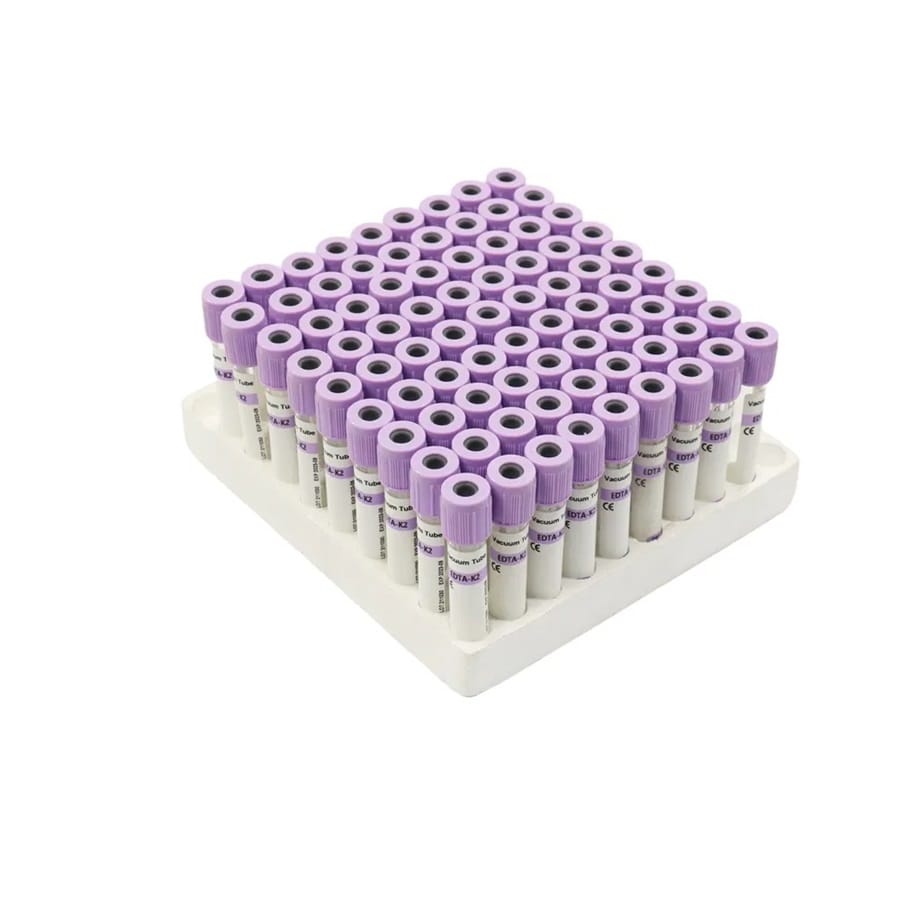
For more information on the types of EDTA tubes available, visit our EDTA Tube Product Category.
What is EDTA?
EDTA, or Ethylenediaminetetraacetic acid, is a synthetic compound that binds to calcium ions in the blood. Calcium is a crucial element in the blood clotting process, and by chelating (binding) these ions, EDTA effectively prevents coagulation. This ensures that the blood remains in its liquid state, preserving the integrity of the sample for accurate testing.
To learn more about how EDTA prevents blood clotting, check out our detailed guide on K3 EDTA Tubes and Blood Clotting Prevention.
The Role of EDTA in Lavender Top Tubes
The primary purpose of EDTA in lavender top tubes is to prevent blood clotting. Here’s how it works:
- Chelation of Calcium Ions: EDTA binds to calcium ions, which are essential for the coagulation cascade. Without calcium, the blood cannot clot, ensuring the sample remains liquid.
- Preservation of Cell Morphology: EDTA helps maintain the shape and structure of blood cells, which is critical for accurate hematological analysis.
- Prevention of Platelet Clumping: By inhibiting clotting, EDTA ensures that platelets remain separate, allowing for precise platelet counts.
For tips on using EDTA tubes effectively, read our article on Top Quality Control Tips for Using EDTA Tubes.
Applications of Lavender Top Tubes
Lavender top tubes are used in a variety of medical and laboratory settings. Some of the most common applications include:
- Complete Blood Count (CBC): This test measures red blood cells, white blood cells, hemoglobin, hematocrit, and platelets.
- Blood Typing: EDTA tubes are used to determine blood groups and Rh factors.
- Molecular Diagnostics: These tubes are also used in genetic testing and DNA analysis.
For more details on the applications of EDTA tubes, visit EDTA Tubes for Blood Collection..
Advantages of Using EDTA in Lavender Top Tubes
The use of EDTA in lavender top tubes offers several benefits:
-
Complete Blood Count (CBC): Accurate counting and evaluation of red cells, white cells, and platelets depend on the EDTA’s anticoagulant effect maintaining cell morphology.
-
Blood Smear Microscopy: Preparation of blood smears for microscopic examination, e.g., for anemia diagnosis or detecting blood parasites.
-
Hemoglobin A1c (HbA1c): Measurement for diabetes monitoring uses blood preserved in EDTA tubes for stability and accuracy.
-
Blood Typing and Crossmatching: EDTA tubes are suitable as they prevent clotting, ensuring antigen and antibody testing is accurate.
-
Molecular and Genetic Testing: EDTA preserves nucleated cells intact, essential for DNA and RNA extraction.
To explore our range of high-quality EDTA tubes, visit EDTA Tubes for Blood Collection.
Functions of EDTA in Lavender Top Tubes
1. Prevention of Blood Clotting
The primary function of EDTA in the lavender top tube is to act as an anticoagulant. It binds free calcium ions, thus inhibiting the coagulation cascade and fibrin formation. The absence of clotting prevents sample loss and ensures that plasma or whole blood is available in a state suitable for testing.
2. Preservation of Cellular Integrity
EDTA preserves the shape, size, and count of red blood cells, white blood cells, and platelets by preventing clot formation and cell aggregation. This is vital because many hematological tests depend on the precise enumeration and morphology of these cells for diagnostic purposes.
3. Stabilization of the Sample for Extended Analysis
With EDTA’s ability to stabilize blood cells, laboratory technicians can perform analyses over a window of time without compromising test accuracy. Proper mixing and timely processing help maintain sample quality, allowing for workflow flexibility in laboratories.
4. Facilitation of Molecular and Genetic Tests
By maintaining cell integrity and preventing clotting, EDTA tubes are also suitable for molecular biology applications, such as DNA or RNA extraction, which require high-quality blood components free from coagulation artifacts.
Summary
The lavender top tube, with its key component EDTA, plays a vital role in modern medical diagnostics. By preventing blood clotting and preserving cell morphology, EDTA ensures accurate and reliable test results. Whether you’re performing a CBC, blood typing, or genetic testing, these tubes are indispensable tools in the laboratory.
For more information or to purchase high-quality EDTA tubes, visit EDTA Tube or Contact Us for assistance.
For additional resources, check out Sinymedical’s YouTube Channel and their Made-in-China Profile.
FAQs
What is the difference between K2 and K3 EDTA in tubes?
K2 EDTA is dipotassium salt, usually dried inside tubes, and K3 EDTA is tripotassium in liquid form. Both anticoagulate blood by binding calcium but differ slightly in application and interaction with blood samples.
Can EDTA in lavender top tubes interfere with certain tests?
EDTA may chelate metal ions beyond calcium, potentially interfering with some trace element or metal analysis, so alternative tubes are recommended for those purposes.
How should lavender top tubes be handled after blood collection?
Gentle inversion 8-10 times immediately after draw, correct filling, and timely processing are essential for sample preservation and accuracy. Avoid vigorous shaking to prevent hemolysis.
Are lavender top tubes suitable for all blood tests?
No, they are ideal for hematology and molecular tests but not suitable for coagulation studies or clinical chemistry panels that require serum or different anticoagulants.