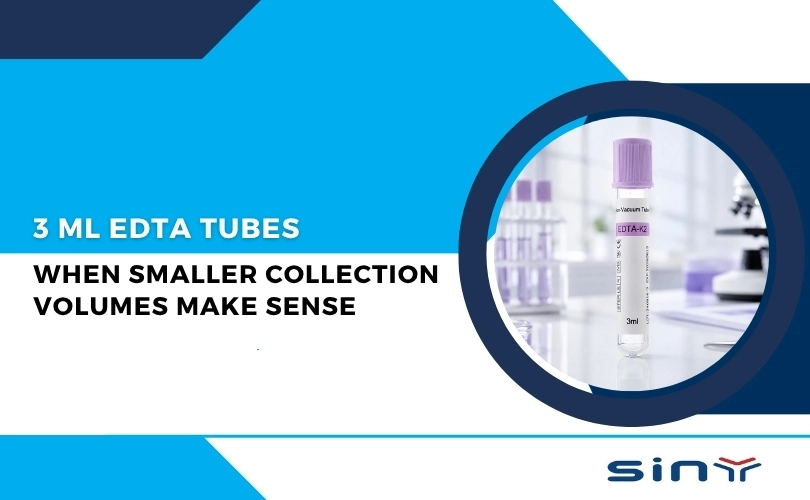
Modern clinical diagnostics, accurate blood testing is essential for reliable medical decision-making. Among the various blood collection methods, the K2 EDTA tube test plays a pivotal role. But what exactly is this test, and why is it so widely used in laboratories worldwide? This guide explores everything you need to know about the K2 EDTA tube test — its applications, advantages, best practices, and future trends.
Whether you are a medical professional, lab technician, or patient seeking clarity, understanding the K2 EDTA tube test ensures accurate results and safer testing procedures.
The K2 EDTA Tube Test
A K2 EDTA tube test uses blood collected in a tube containing dipotassium ethylenediaminetetraacetic acid (K2 EDTA). This chemical acts as an anticoagulant, preventing blood clotting and preserving cellular integrity. Proper use of this tube ensures accurate hematology results, making it the preferred choice in many clinical and research settings.
Learn more about the product range at EDTATube Products and explore tube categories via EDTA Tube Product Category.
What is a K2 EDTA Tube?
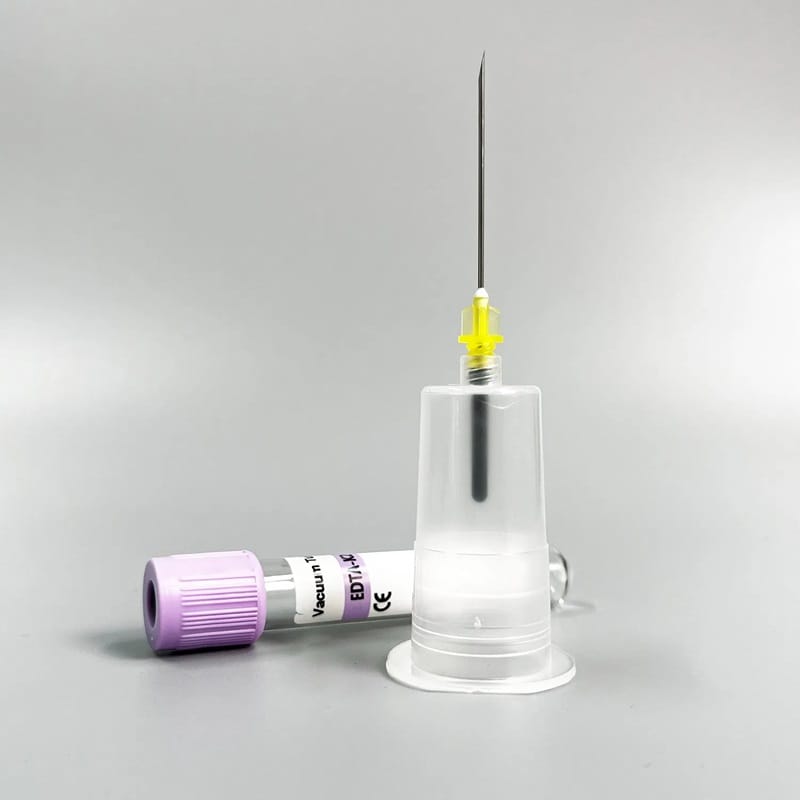
A K2 EDTA tube is a specialized blood collection tube designed for hematology testing. Unlike serum tubes, K2 EDTA tubes maintain the blood in its whole state. This preservation is crucial for tests analyzing cellular components rather than serum chemistry.
For a detailed overview, see What is an EDTA K2 Tube?.
How the K2 EDTA Tube Works
EDTA works by binding calcium ions in blood. Calcium is essential for the clotting cascade, so its removal prevents clot formation. The benefits of this process include:
- Stable cellular morphology – EDTA maintains the size and shape of blood cells.
- Clot prevention – Ensures accurate red blood cell, white blood cell, and platelet counts.
- Preservation of analytes – Protects vital cellular elements for reliable diagnostics.
Compare with other anticoagulants in EDTA vs Citrate Tubes: Best Anticoagulant.
Primary Uses of the K2 EDTA Tube Test
Complete Blood Count (CBC)
The most common use of the K2 EDTA tube test is for a Complete Blood Count (CBC). A CBC evaluates red blood cells, white blood cells, hemoglobin, hematocrit, and platelets. This test is often the first step in diagnosing infections, anemia, and blood disorders.
For more scientific details, refer to Complete Blood Count – Wikipedia.
White Blood Cell Differential
The WBC differential counts various white blood cell types. By using a K2 EDTA tube, labs ensure accurate counts and morphology, which are crucial in diagnosing infections, immune disorders, and leukemia.
Platelet Count and Morphology
Platelets are prone to clumping. The K2 EDTA tube test prevents aggregation, allowing accurate platelet counts and evaluations, vital for patients with bleeding disorders.
Blood Film Preparation
Manual blood film analysis requires intact cells. EDTA preserves morphology, enabling precise examination for hematologic disorders such as sickle cell disease.
Special Hematology Tests
Beyond routine CBCs, the K2 EDTA tube test is used in reticulocyte counts, hemoglobin electrophoresis, and other specialized analyses. Learn why labs prefer K2 tubes via EDTA K2 Tube Preferred Choice for Hematology.
K2 EDTA Tube vs Other Anticoagulants
| Anticoagulant | Primary Use | Advantages | Limitations |
|---|---|---|---|
| K2 EDTA | Hematology tests, CBC, platelet count | Maintains cell morphology | Not suitable for coagulation tests |
| Sodium Citrate | Coagulation (PT, aPTT) | Preserves clotting factors | Alters cell counts |
| Heparin | Chemistry panels | Rapid sample processing | Can distort cellular morphology |
For more in-depth comparisons, visit EDTA K2 vs K3 Differences, Uses, and Benefits.
Choosing the Right K2 EDTA Tube
Tube Sizes
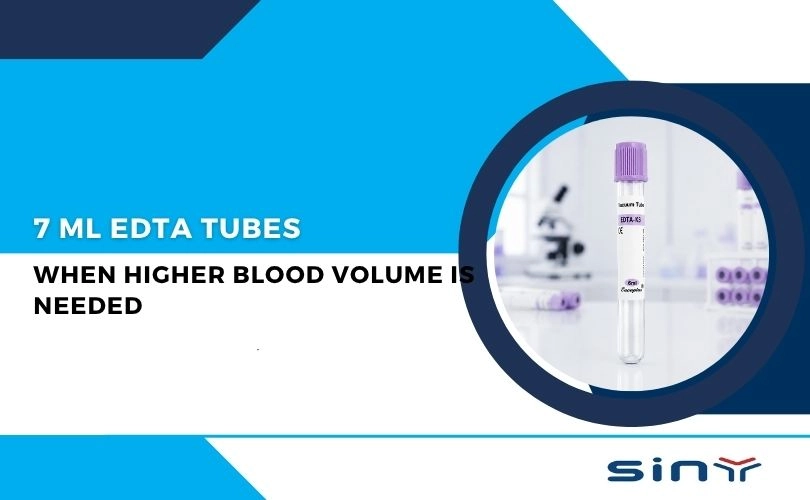
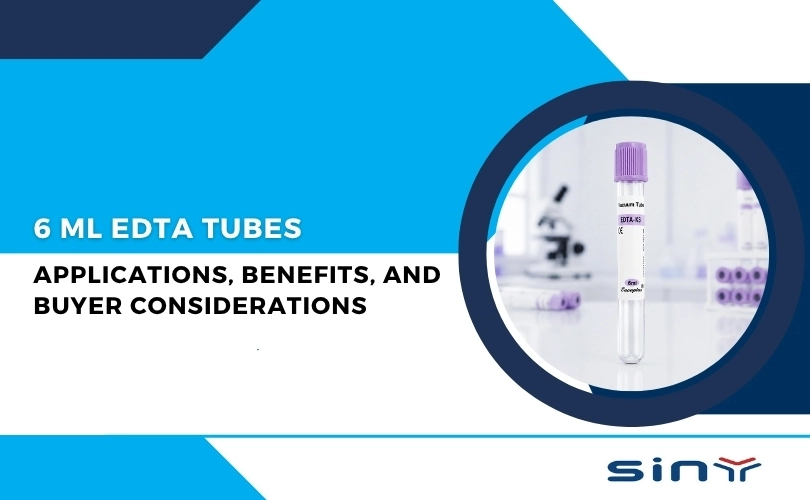
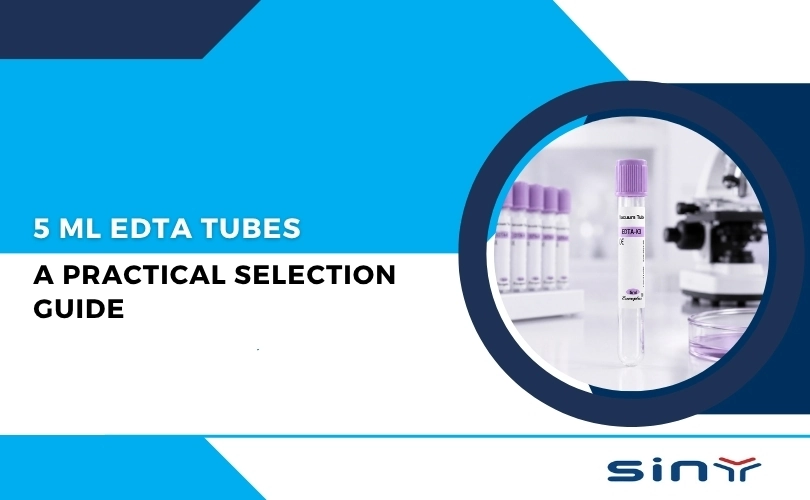
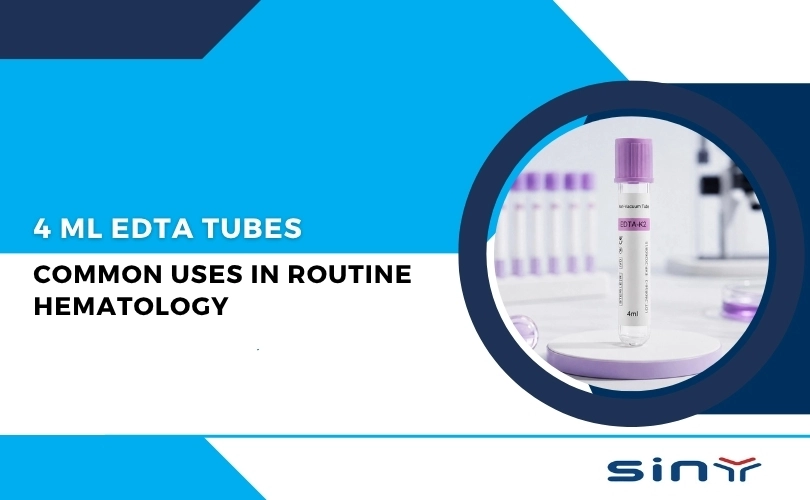
EDTA tubes come in 2 mL, 3 mL, 4 mL, 5 mL, 6 mL, and 10 mL sizes. The choice depends on sample volume and test requirements.
- 2–3 mL: Pediatric or minimal draw
- 4–5 mL: Standard hematology tests
- 6–10 mL: Research, storage, or multiple assays
Learn more at EDTA Tube Sizes Explained and Choosing Between 2ml, 3ml, 4ml and 5ml EDTA.
Tube Selection Tips
- Avoid overfilling or underfilling to maintain the correct blood-to-anticoagulant ratio.
- Sterile tubes prevent contamination and hemolysis.
See How to Choose the Right EDTA Tube for Your Lab for guidance.
How to Perform a K2 EDTA Tube Test
- Patient Identification – Confirm identity and test requirements.
- Venipuncture – Use proper technique to avoid hemolysis.
- Tube Filling – Fill to the designated volume.
- Mixing – Gently invert 8–10 times.
- Labeling – Include patient details, date, and time.
- Transport – Analyze within 4–6 hours.
For step-by-step instructions, see How to Use an EDTA Tube.
Misconceptions About K2 EDTA Tube Testing
- All anticoagulants are interchangeable – False. Using the wrong tube invalidates results.
- Larger tubes are always better – Over- or under-filling disrupts ratios.
- EDTA causes hemolysis – Proper technique prevents this.
Error Prevention in K2 EDTA Tube Testing
- Order of Draw: Follow recommended sequences to prevent cross-contamination.
- Proper Filling: Maintain correct blood-to-anticoagulant ratio.
- Timely Analysis: Delays over 6 hours can affect results.
High-Quality K2 EDTA Tubes for Purchase
Reliable tubes improve accuracy. Popular options include:
- Sterile 2ml Vacuum Tube with EDTA K2
- Siny Manufacturer Medical Supplies EDTA K2/K3 Tube
- 10ml K2 EDTA Vacutainer Tubes Specifications
Explore the full range: EDTATube Products.
Future of EDTA Tube Testing
EDTA tubes continue to evolve. Upcoming trends include microfluidic sampling, automated slide imaging, and digital analysis. Learn more at Future of EDTA Blood Collection Tubes 2026.
Summary
The K2 EDTA tube test is indispensable in hematology and diagnostic labs. It preserves cellular morphology, prevents clotting, and ensures reliable results for CBCs, platelet counts, WBC differentials, and blood films. By choosing the correct tube size, handling it properly, and understanding its applications, laboratories can maximize test accuracy and patient care.
For more information or to order high-quality tubes, visit EDTATube Contact Us.
FAQs
Q. What is a K2 EDTA tube test used for?
A. The K2 EDTA tube test is primarily used for hematology analysis, including CBCs, platelet counts, and white blood cell differentials.
Q. Can a K2 EDTA tube test detect infections?
A. Indirectly. Abnormal white blood cell patterns detected in the K2 EDTA tube test can indicate infection.
Q. Is the K2 EDTA tube test safe?
A. Yes. Risks are minimal, and the K2 EDTA tube test is widely used in hospitals and labs.
Q. How long is blood stable in a K2 EDTA tube?
A. Blood should be analyzed within 4–6 hours for accurate K2 EDTA tube test results.
Q. Can I use K2 EDTA tubes for coagulation tests?
A. No. EDTA chelates calcium, which interferes with clotting assays. See EDTA vs Citrate Tubes for alternatives.