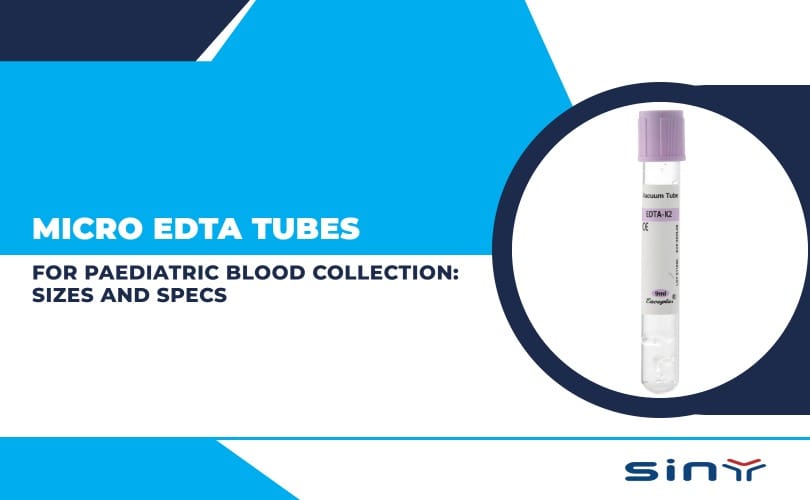
Children are not small adults, and their blood samples should not be treated like adult samples. A newborn or toddler has far less blood to spare, and every extra millilitre matters. That is why paediatric wards rely on the micro EDTA tube for routine blood counts and other haematology tests.
This guide explains what micro EDTA tubes are, how they are used, what to check in the specification and how to source them for hospitals, clinics and veterinary practices. It is written for paediatric lab managers, hospital buyers and distributors. SINY manufactures EDTA tubes and supports custom formats, so we share what buyers usually ask us.
What Is a Micro EDTA Tube?
A micro EDTA tube is a small blood collections tube designed for low volumes, often well under 1 mL. It contains K2 EDTA, which binds calcium and keeps the blood liquid. Most versions are non-vacuum and are filled from a capillary puncture, such as a finger or heel prick, or by careful syringe transfer.
The key difference from standard tubes is the amount of additive. A micro EDTA tube holds only enough EDTA for its small fill volume. As a result, the ratio of blood to anticoagulant stays correct even when the sample is tiny.
Capillary collection follows its own procedures. Many labs use the Clinical and Laboratory Standards Institute document CLSI GP42 on collection of capillary blood specimens as the basis for their training and policies.
Why Micro EDTA Tubes Matter in Paediatrics
Hospitals limit how much blood they take from children, especially newborns and sick infants. Repeated large draws can contribute to blood loss over a hospital stay. Therefore, paediatric teams choose the smallest tube that still meets the lab’s needs.
Small tubes also protect sample quality. If a nurse puts a few drops of blood into a large EDTA tube, the sample has too much EDTA for its volume. Because EDTA is hypertonic, red cells can shrink and some measurements can change. A micro EDTA tube avoids this problem by matching additive to volume.
Finally, small tubes suit capillary collection. Heel and finger pricks yield limited blood, and a narrow tube with a collection scoop or funnel makes filling easier.
Micro EDTA tube vs standard EDTA tube
| Point | Micro EDTA tube | Standard EDTA tube |
|---|---|---|
| Typical fill volume | Often well under 1 mL | About 2 to 10 mL |
| Collection method | Capillary puncture or syringe transfer | Vacuum draw with needle and holder |
| Vacuum | Usually non-vacuum | Usually evacuated |
| Main users | Neonatal, paediatric, veterinary, point of care | Adult inpatients and outpatients |
| Rack fit | Often needs adaptors | Fits standard racks |
Who Uses Micro EDTA Tubes
Neonatal intensive care units and paediatric wards are the core users. They run blood counts often, sometimes daily, on very small patients. In addition, paediatric outpatient clinics use micro tubes for routine checks.
Veterinary clinics are another major group. Cats, small dogs, birds and exotic pets give small samples, and veterinary guidance prefers microtainer tubes for small volumes. For example, the eClinpath sample collection guide from Cornell recommends a microtainer tube with EDTA when only a small sample is available.
Mobile health teams and rural clinics form a growing group too. They often collect finger-prick samples far from the lab, so sturdy tubes and secure caps matter.
Point-of-care settings and research studies also use micro tubes, because finger-prick collection is quick and needs little equipment.
Technical Details to Check
Start with the fill volume and fill marks. A micro EDTA tube should show clear minimum and maximum marks, since staff fill it by eye. Ask how accurate the marks are and test a few samples yourself.
Next, check the additive. K2 EDTA is the usual choice for haematology. Confirm whether it is spray-dried or liquid, and ask for the amount per tube. In addition, check that the additive is evenly distributed, because uneven coating can cause small clots.
Then look at the design. Many micro tubes include a collection scoop, funnel or wide mouth for capillary blood. The cap should seal firmly for transport but open easily in the lab. Moreover, the cap color should follow the standard lavender code.
Finally, check fit. Micro tubes often need adaptors in analyser racks. Ask your customers which systems they use, and test samples on them before a large order. Our guide to EDTA tube sizes explains how larger formats compare.
Handling a Micro EDTA Tube Correctly
Capillary blood starts to clot quickly, so speed matters. Staff should collect the sample promptly and mix it with the EDTA straight away, following the maker’s instructions. Gentle inversion or rolling works well; shaking does not.
Squeezing the finger or heel too hard can dilute the sample with tissue fluid or damage cells. Therefore, trained staff use a proper lancet, warm the site when needed and let blood flow freely. These steps follow standard capillary collection practice.
Labelling is just as important. Micro tubes are small, so labels must be compact but readable. Write patient details immediately, before the next sample is collected.
A Practical Workflow for Neonatal and Paediatric Units
Good tubes work best inside a clear routine. Many paediatric units follow a simple sequence that staff can repeat on every shift. First, they check the request and choose the smallest tube that meets the lab’s minimum volume. Next, they prepare the site, the lancet and the labels before touching the child.
Then they collect the blood, fill each tube to its mark and mix it at once. After that, they label every tube at the bedside, never at the nurses’ station. Finally, they send the samples to the lab within the agreed time and record the collection in the notes.
This routine reduces repeat collections, which matters greatly for small patients. In addition, it gives new staff a clear model to follow. Labs can support it by publishing a short table of minimum volumes per test, so wards know exactly which tube to use.
Why the blood-to-EDTA ratio matters
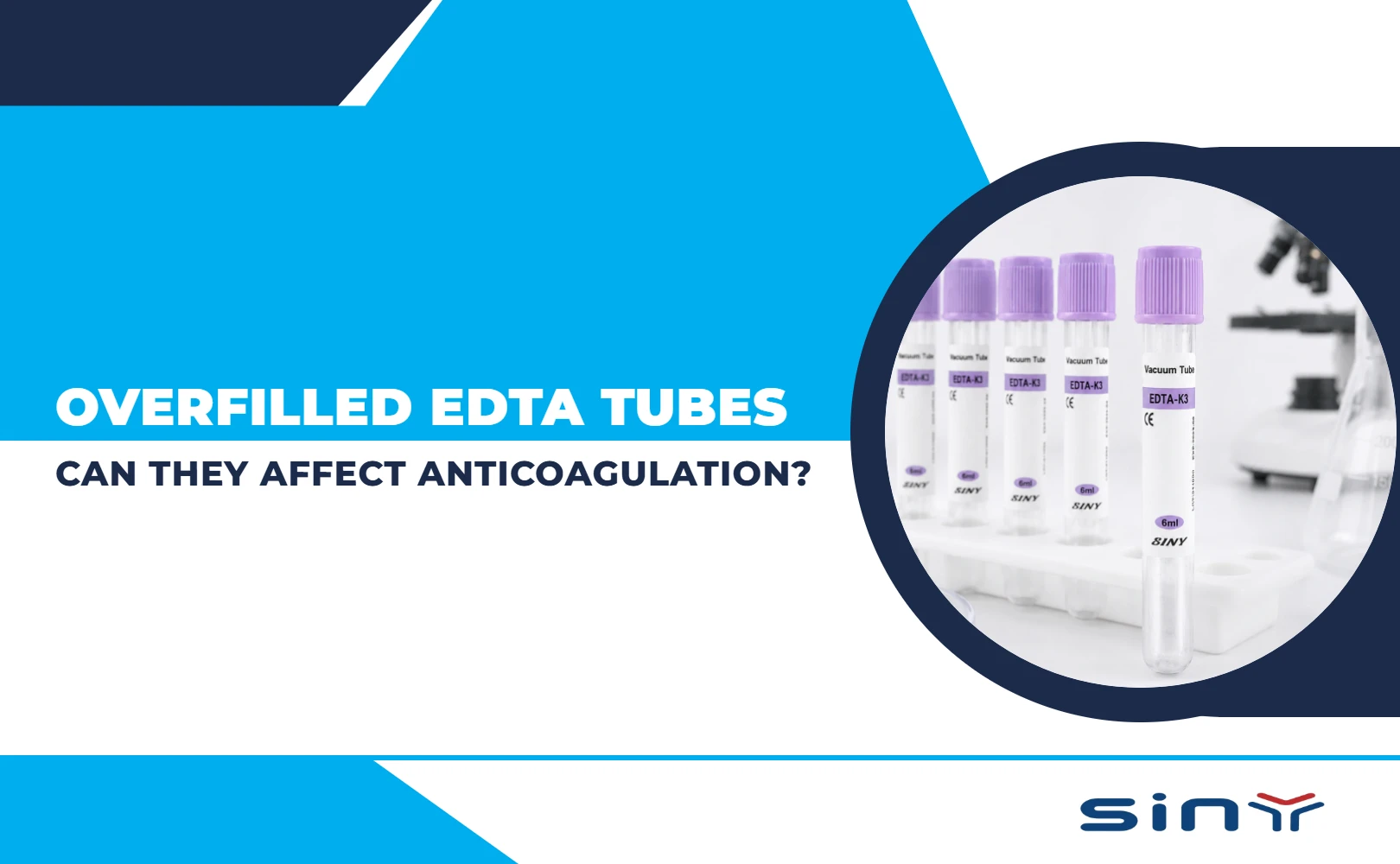
Every EDTA tube is designed for a specific fill volume. When the fill is far below that volume, the EDTA becomes too concentrated. Our article on the blood-to-anticoagulant ratio in EDTA tubes explains the effect on results in more detail. For micro tubes, the same rule applies on a smaller scale, so accurate fill marks are essential.
Packaging and Labels for Small Tubes
Small tubes create small problems that add up. Labels must fit a narrow surface yet stay readable. Therefore, ask suppliers for label artwork at actual size, and test it with your hospital’s barcode printers.
Packaging also differs. Micro tubes are light and easy to lose, so trays or bags that keep them organised save time on busy wards. Meanwhile, clinics prefer smaller boxes, since they use fewer tubes per month and want to avoid expiry.
Finally, store tubes away from heat and moisture, and rotate stock by expiry date. Even without vacuum, the additive has a limited shelf life.
Buying Guide: What Changes the Price
The price of a micro EDTA tube depends on design, material, additive, cap type and packaging. Tubes with scoops, special caps or printed graduations cost more to make. Small sizes also need precise filling of the additive, which adds care in production.
Volume matters most. Larger orders earn better price breaks. Custom labels and private label packaging add set-up costs. In addition, smaller pack sizes for clinics cost a little more per tube to pack.
Questions to ask a micro EDTA tube supplier
- Which micro volumes and designs do you produce?
- Is the K2 EDTA spray-dried or liquid, and how much is in each tube?
- How accurate are the fill marks?
- Do your tubes need adaptors for common analyser racks?
- What is the MOQ per size, and can sizes be mixed?
- Can you share CE and ISO 13485 documents?
Common Mistakes with Micro Tubes
The most common mistake is overfilling. Staff sometimes add extra drops “to be safe”, which changes the ratio the other way. Clear marks and training prevent this.
Another mistake is delayed mixing. Capillary samples clot faster than venous samples, so even a short delay can cause small clots. Mix immediately, then label.
Finally, some buyers choose a micro tube that does not fit the lab’s racks. This forces staff to transfer samples, which adds time and risk. Always test fit before you switch.
Evaluating Samples Before You Switch
Before a hospital changes its micro tube, it usually runs a short trial. Nurses fill sample tubes on real patients, and the lab checks clotting, fill accuracy and analyser fit. In addition, staff give feedback on the scoop, the cap and the label.
Suppliers can help by sending enough samples for a fair trial and a clear product sheet. Moreover, a quick answer to technical questions builds trust during this stage. In practice, the trial often decides the contract more than the price does.
Stocking Micro EDTA Tubes as a Distributor
Micro tubes sell steadily to paediatric hospitals and veterinary clinics. However, each customer uses fewer tubes than an adult hospital. Therefore, offer smaller boxes and keep reorder points low to avoid expiry.
Keep one or two micro sizes in stock rather than many. Most demand clusters around the sizes that local labs have validated. Ask your key customers which sizes they use before you order.
Why Work with SINY
SINY was established in 2003 in Ningbo, China, and manufactures EDTA blood collection tubes in a 12,000 square metre factory with a capacity of up to 500,000 tubes per day. The company offers OEM manufacturing and custom design, and lists CE and ISO 13485 certification for its EDTA tubes.
For low-volume collection, SINY makes 2 mL non-vacuum EDTA K2 tubes suitable for paediatric and finger-prick use. If you need a smaller micro format or a special design, ask the SINY team about custom production.
You can review the full SINY EDTA tube range.
To see how tubes are made, watch the production lines on the SINY Medical YouTube channel.
FAQ: Micro EDTA Tube
What is a micro EDTA tube?
A micro EDTA tube is a small blood collection tube for low volumes, often well under 1 mL. It contains K2 EDTA to prevent clotting and is usually filled from a finger or heel prick. Because the additive matches the small volume, the sample keeps the right blood-to-EDTA ratio for haematology tests.
Why do children need micro blood collection tubes?
Children, especially newborns, have little blood to spare, so hospitals keep sample volumes as small as possible. A micro EDTA tube collects only what the lab needs. It also avoids the problem of a few drops sitting in a large tube with too much EDTA, which can change cell measurements.
How do you fill a micro EDTA tube?
Staff collect capillary blood from a finger or heel prick and let it flow into the tube up to the marked line. They mix the tube immediately by gentle inversion or rolling, following the maker instructions. Fast mixing matters, because capillary blood clots quickly in a micro EDTA tube.
Are micro EDTA tubes used in veterinary practice?
Yes. Veterinary guidance, such as the eClinpath collection guide from Cornell, prefers microtainer tubes with EDTA for small samples. Cats, small dogs, birds and exotic animals often give limited blood. A micro EDTA tube keeps the ratio correct and helps avoid red cell shrinkage caused by excess EDTA.
Can SINY make custom micro EDTA tubes?
SINY offers custom design and OEM manufacturing for EDTA tubes. If you need a specific micro EDTA tube volume, cap or label, share your specification with the team. Ask for samples, MOQ and lead time, and test fit and filling with your customers before placing a full order.
Summary
A micro EDTA tube protects small patients by reducing blood volume and keeping the EDTA-to-blood ratio correct. Buyers should check fill marks, additive, design, cap seal and rack fit, and test samples with real users.
For distributors, micro tubes bring steady demand from paediatric and veterinary customers. To request samples or discuss custom micro formats, contact the SINY team.