Clinical laboratories handle hundreds or even thousands of blood specimens every day. Each specimen must reach the correct testing process with the right additive, volume, and handling conditions. A simple mistake during collection can affect the entire testing workflow.
This is where Color-Coded Caps become especially useful. Different cap colors help laboratory professionals quickly recognize blood collection tubes and understand their intended use. Although color alone should never replace proper labeling or laboratory procedures, it provides an important visual cue during busy collection and processing tasks.
For laboratories, hospitals, clinics, and diagnostic centers, consistent tube identification can support faster specimen handling and reduce avoidable confusion. The World Health Organization emphasizes that every stage of blood collection can affect specimen quality and diagnosis.
Understanding Color-Coded Caps is therefore more than memorizing colors. It means understanding how tube additives, specimen types, testing requirements, and workflow procedures work together.
What Are Color-Coded Caps?
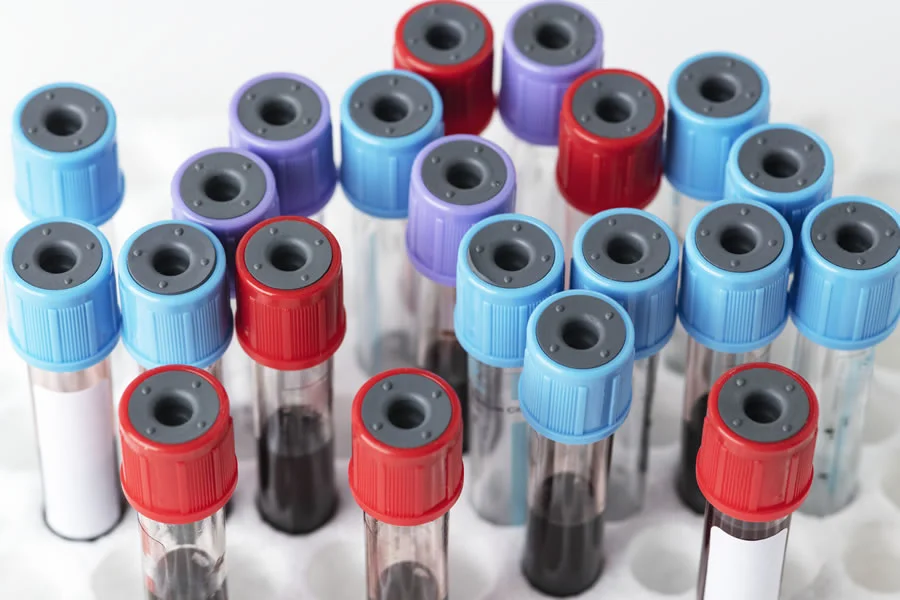
Color-Coded Caps are colored closures used on blood collection tubes to provide a quick visual indication of the tube type, additive, or intended testing application. For example, a lavender or purple cap commonly indicates an EDTA tube. Light blue commonly identifies a sodium citrate tube used for coagulation testing. Green tubes generally contain heparin, while gray tubes commonly contain additives used for glucose-related testing.
However, the exact color system can vary by manufacturer, laboratory, and region. The WHO specifically advises laboratories to verify local recommendations because tube colors and additives are not completely universal.
That distinction matters. A laboratory worker should never identify a specimen solely by cap color. The tube label, additive, manufacturer’s specifications, laboratory procedure, and requested test should all support correct identification. The main value of color coding is rapid visual recognition. In a busy clinical environment, that small advantage can make specimen collection and sorting more organized.
Why Color-Coded Caps Matter in Clinical Laboratory Workflow
A modern laboratory workflow depends on accuracy and consistency. Blood collection is only the beginning. After collection, specimens may move through labeling, transportation, centrifugation, aliquoting, analysis, storage, and disposal. At every stage, staff need to know what type of specimen they are handling.
Color-Coded Caps Improve Tube Identification
One of the most obvious advantages of Color-Coded Caps is faster tube recognition. Imagine a phlebotomist collecting several specimens from one patient. The tubes may look similar in size and shape, especially when multiple tests are requested. A distinctive cap provides an immediate visual signal.
A lavender cap can indicate an EDTA specimen. A light blue cap can signal a citrate tube. A green cap can point toward a heparin-based specimen. This visual system reduces the need to read every tube from scratch during routine handling.
Still, the color should act as a secondary identification aid, not the primary patient-identification method.
Color-Coded Caps and the Order of Draw
The order of draw is one of the most important reasons tube recognition matters. When several blood collection tubes are required, tubes must be filled in an appropriate sequence. The purpose is to reduce the risk of additive carryover from one tube into another.
The Clinical and Laboratory Standards Institute identifies a commonly used sequence that begins with blood culture specimens, followed by sodium citrate, serum, heparin, EDTA, and glycolytic inhibitor tubes.
A simplified sequence is:
| General Tube Category | Common Cap Color | Common Additive | Typical Application |
|---|---|---|---|
| Blood culture | Often yellow or culture-specific | Culture medium/SPS depending on system | Microbiology |
| Sodium citrate | Light blue | Sodium citrate | Coagulation |
| Serum | Red | None or clot activator | Chemistry/serology |
| Serum separator | Gold or similar | Clot activator + gel | Chemistry/serology |
| Heparin | Green | Lithium or sodium heparin | Plasma chemistry |
| EDTA | Lavender/purple | EDTA | Hematology |
| Glycolytic inhibitor | Gray | Fluoride/oxalate or other formulation | Glucose-related testing |
This table is a general reference rather than a universal laboratory protocol. Manufacturers use different cap colors and tube configurations, so local procedures should always take priority.
The CLSI notes that the purpose of the order of draw is to reduce contamination of specimens by additives from other tubes. Therefore, Color-Coded Caps support the order-of-draw process by giving staff an immediate visual reference.
How Color-Coded Caps Relate to EDTA Tubes

EDTA tubes are particularly important in hematology. EDTA acts as an anticoagulant by binding calcium and preventing blood from clotting. This allows laboratories to examine whole blood for tests such as complete blood counts and other hematological applications.
Lavender or purple is a widely recognized cap color for EDTA blood collection tubes. CLSI includes lavender, pearl, and pink closures among EDTA tube examples in its order-of-draw guidance.
For laboratories that regularly use EDTA tubes, consistent cap identification can simplify specimen sorting. You can learn more about EDTA collection technology through the EDTA Tube technical resources from EDTA Tube.
The correct tube size also matters. A tube must contain an appropriate blood-to-additive ratio for the intended application. For a practical overview, see this EDTA tube size guide covering 2 mL to 10 mL tubes.
Color-Coded Caps Help Separate Serum, Plasma, and Whole Blood
Not every blood specimen is handled in the same way. Some tests require serum. Others require plasma. Certain hematology tests use whole blood.
The tube’s additive determines how the specimen behaves after collection. For example, serum tubes allow blood to clot before serum separation. Plasma tubes contain an anticoagulant, so the blood remains unclotted. EDTA tubes generally preserve whole blood for hematological testing.
This distinction makes proper tube selection essential. For laboratories comparing different specimen types, the Serum Separator Tubes vs. EDTA Tubes comparison provides additional information about their different purposes.
Likewise, laboratories working with plasma can review Plasma vs. Whole Blood: What an EDTA Plasma Tube Does for a more detailed explanation.
The cap color provides a fast visual clue, but the additive and intended specimen type remain the technical foundation.
Color-Coded Caps and Specimen Processing
After collection, tubes often move through several processing stages. A laboratory may need to sort specimens by department, testing method, processing requirement, or urgency. Color-Coded Caps can make this sorting process easier to manage, especially when many tube types are present.
For example, staff may quickly separate EDTA specimens for hematology from serum specimens headed to clinical chemistry.
This visual organization becomes even more useful in larger laboratories where specimens move between collection stations and specialized departments. However, color coding should work alongside barcode systems, patient identifiers, laboratory information systems, and written procedures. It should never replace them.
Color-Coded Caps and Specimen Quality
Specimen quality depends on more than selecting the correct tube. The tube must also be filled correctly, handled properly, mixed according to the manufacturer’s instructions, and transported under appropriate conditions.
For additive-containing tubes, proper mixing is particularly important. WHO guidance recommends inverting additive tubes the number of times specified by the local laboratory.
The same guidance also emphasizes checking labels and documentation before specimens leave the collection area.
This highlights an important point: Color-Coded Caps support good workflow, but they cannot correct poor collection technique.
A correctly colored tube can still produce an unsuitable specimen if it is underfilled, overfilled, improperly mixed, mislabeled, contaminated, or handled incorrectly.
Color-Coded Caps vs. Written Labels
A useful way to understand cap colors is to compare them with traditional labeling.
| Feature | Color-Coded Caps | Written/Barcode Labels |
|---|---|---|
| Quick visual recognition | Excellent | Moderate |
| Patient identification | Not sufficient | Essential |
| Identifies tube category | Often useful | Usually specific |
| Supports workflow sorting | Yes | Yes |
| Replaces laboratory documentation | No | No |
| Helps recognize additives | Often | Yes, when information is included |
| Main purpose | Visual classification | Positive identification |
The two systems work best together. A cap color can tell a laboratory professional, “This appears to be an EDTA tube.”
The patient label and laboratory information then answer the more important question: “Whose specimen is this, and what test was ordered?” That layered approach improves workflow without depending on a single visual feature.
Why Laboratories Should Not Rely on Color Alone
Although Color-Coded Caps are useful, they have limitations. Different manufacturers may use different colors. Special-purpose tubes can also have colors that are unfamiliar to staff. Some colors may appear similar under different lighting conditions.
The WHO specifically states that color coding and tube additives may vary, which means laboratory staff should verify local requirements.
This is particularly important for international laboratories and organizations that purchase collection tubes from multiple suppliers.
Before introducing a new tube, laboratory managers should verify:
- The additive inside the tube
- The intended specimen type
- The recommended blood volume
- The manufacturer’s instructions
- The laboratory’s approved test applications
- The correct order of draw
- Required mixing and processing procedures
For a broader selection of EDTA collection products, laboratories can explore the EDTA Tube product range.
Choosing the Right Tube Size
Tube size is another important part of specimen collection. A larger tube is not automatically better. The correct size depends on the required specimen volume and the test method.
Using the correct tube-to-blood ratio can be particularly important for tests where additive concentration affects specimen quality.
Laboratories can review the guide on what size EDTA tube to use: 3 mL, 5 mL, or 10 mL before selecting a tube for a particular application. For a more detailed comparison, see 10 mL EDTA tubes vs. 5 mL EDTA tubes. Another useful resource is this guide covering EDTA tube sizes from 2 mL through 10 mL.
The key lesson is simple: cap color identifies a category, while tube specifications determine whether the collection system is suitable for the test.
How Color-Coded Caps Support Laboratory Efficiency
Efficiency does not always come from expensive technology. Sometimes, small design features can improve everyday workflow.
When staff can recognize tube categories quickly, they can sort specimens with less hesitation. This can be useful during high-volume collection periods, emergency testing, outpatient blood draws, and centralized laboratory processing.
A well-organized color system can also support staff training. New employees can learn common tube categories more easily when cap colors provide consistent visual cues. However, training should always teach the additive and testing purpose alongside the color.
That approach creates understanding rather than simple memorization. For example, instead of teaching only “lavender equals EDTA,” staff should understand that lavender commonly represents an EDTA tube and that EDTA specimens are frequently associated with hematology testing. That small difference improves practical knowledge.
Color-Coded Caps and Error Prevention
Laboratory errors can occur before a specimen ever reaches an analyzer. Pre-analytical problems include incorrect patient identification, inappropriate tube selection, insufficient volume, incorrect order of draw, improper handling, and transportation issues.
The WHO notes that each step in blood collection can influence specimen quality and diagnosis. It also highlights the importance of correct labeling and documentation.
Color-Coded Caps can help address one part of this pre-analytical workflow: rapid tube recognition.
They do not eliminate errors. Instead, they provide another visual checkpoint. When combined with barcode identification, clear procedures, staff training, and quality-control practices, color coding becomes more valuable.
Manufacturer Consistency Matters
For healthcare facilities, consistency is important. If a laboratory changes suppliers, the cap colors, tube dimensions, additives, fill volumes, or labeling systems may change. Staff should therefore review the new manufacturer’s documentation before using unfamiliar tubes.
Laboratories researching EDTA collection products can review the EDTA tube information from Siny Medical as one example of manufacturer-provided product information.
Additional manufacturer resources are also available through the Siny Medical YouTube channel and its Made-in-China supplier profile.
These resources should be used to understand product specifications rather than assuming that a cap color has exactly the same meaning across every product line.
Best Practices for Using Color-Coded Caps
A strong laboratory workflow treats color coding as one part of a larger identification system. Staff should first confirm the patient’s identity and requested test. Next, they should select the appropriate tube based on laboratory requirements and manufacturer instructions.
During collection, the correct order of draw should be followed. After collection, tubes containing additives should be mixed according to the specified procedure. Labels should then be checked carefully before specimens move to the next stage.
This approach follows the broader principles described by WHO, which emphasizes correct collection, labeling, handling, and specimen transport. In other words, Color-Coded Caps work best when they are integrated into a standardized workflow.
How to Improve Color-Coded Cap Management in a Laboratory
Laboratory managers can improve the value of cap color systems by standardizing procedures. First, create a clear tube reference chart based on the exact products used in the facility. Avoid relying on generic internet charts because colors and additives can vary.
Second, train staff to identify tubes by both color and additive. This makes employees less dependent on color alone. Third, keep tube storage organized. Similar-looking tubes should be easy to distinguish.
Finally, review procedures whenever a supplier, tube model, additive, or laboratory test changes. This approach can prevent confusion during transitions and help maintain consistent specimen handling.
The Future of Color-Coded Caps in Laboratory Workflow
Laboratories are becoming increasingly automated. Barcode scanners, automated specimen processors, laboratory information systems, and robotic sorting systems are changing how specimens move through diagnostic facilities.
Even so, physical tube design remains important. A specimen still needs to be collected in an appropriate container before automated systems can process it. Visual features such as Color-Coded Caps can continue to support human recognition while digital systems provide electronic identification.
The future is therefore unlikely to be about color coding versus automation. Instead, the strongest workflow combines both.
A cap provides immediate visual information. A barcode provides digital identification. The laboratory information system provides test and patient information. Standard operating procedures provide the framework for safe handling. Together, these systems create multiple layers of verification.
Why Color-Coded Caps Are Important for EDTA Tube Manufacturers
For manufacturers, cap color is more than a cosmetic feature. The closure must work reliably with the tube and additive system. It should provide secure sealing while supporting the intended collection and handling process. Manufacturers also need to maintain consistency across production batches.
For laboratories purchasing large quantities, consistency helps staff recognize products and maintain established workflows.
Quality should therefore cover the complete collection tube system, including the tube material, cap, stopper, additive, vacuum characteristics where applicable, labeling, packaging, and storage requirements.
This is especially important for facilities that depend on predictable specimen collection across large numbers of patients.
Summary
Color-coded caps play a vital role in clinical laboratory workflow, ensuring accuracy, efficiency, and patient safety. Each cap color represents a specific additive and testing purpose, helping technicians quickly identify and process samples without confusion. For example, lavender EDTA tubes are essential for hematology, while yellow serum separator tubes are used in biochemistry. This standardized system reduces errors, improves turnaround times, and supports global consistency in diagnostic testing.
At EDTA Tube, we provide in-depth resources and technical insights to help laboratories choose the right tubes for their needs. Explore our detailed Product Catalog to find EDTA plasma separator tubes, serum separator tubes, and size guides ranging from 2ml to 10ml. For professionals seeking clarity on tube selection, our posts such as EDTA Tube Size Guide offer practical comparisons.
FAQs
What are Color-Coded Caps used for in blood collection tubes?
Color-Coded Caps provide a quick visual indication of a blood collection tube’s general category, additive, or intended application. For example, lavender commonly indicates EDTA tubes, while light blue commonly indicates sodium citrate tubes. However, color systems can vary, so laboratory staff should always verify the manufacturer’s specifications and local procedures.
Do Color-Coded Caps replace tube labels?
No. Color-Coded Caps do not replace patient identification, specimen labels, or barcodes. Cap colors provide visual guidance, while labels provide the information required to identify the patient and specimen. WHO guidance emphasizes accurate labeling and documentation as important parts of blood collection.
Why are Color-Coded Caps important for the order of draw?
Color-Coded Caps help phlebotomy staff recognize different tube categories during multi-tube collections. This supports the correct order of draw, which helps reduce additive carryover between tubes. CLSI identifies blood culture, citrate, serum, heparin, EDTA, and glycolytic inhibitor categories in its commonly used sequence.
Is a lavender cap always an EDTA tube?
Not necessarily. Lavender or purple is widely associated with EDTA tubes, but laboratories should not assume that every manufacturer uses exactly the same color system. Color-Coded Caps should always be interpreted together with the tube label, additive information, and manufacturer’s instructions.
Can Color-Coded Caps improve laboratory efficiency?
Yes. Color-Coded Caps can make tube recognition and sorting faster because staff can identify common tube categories visually. However, they work best when combined with barcode systems, clear labeling, standardized procedures, and staff training.
Why should laboratories verify cap colors before using new tubes?
Color-Coded Caps are not completely standardized across every manufacturer and product configuration. Tube additives, special-purpose tubes, and cap colors can differ. Laboratories should therefore verify product documentation and local procedures before introducing a new collection tube.