Molecular and virology labs often need clean plasma, quickly separated from blood cells. An EDTA gel tube does that job inside the tube itself. After centrifugation, a gel layer sits between plasma and cells, so the lab can sample plasma without pipetting it into a second tube.
This buyer guide explains how EDTA gel tubes work, which labs use them, what to check in the specification and how to compare suppliers. It is written for lab managers, procurement teams and distributors. SINY manufactures EDTA K2 gel tubes, so we also share the questions buyers ask us before ordering.
What Is an EDTA Gel Tube?
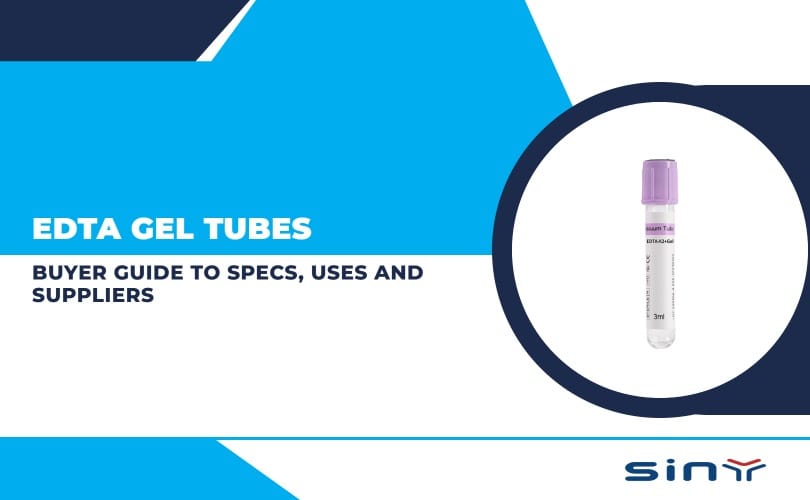
An EDTA gel tube contains two components. The first is K2 EDTA, which prevents clotting. The second is a separator gel, usually at the bottom of the tube. During centrifugation, the gel moves up and settles between the heavier cells and the lighter plasma.
The result is a stable barrier. Plasma stays on top, and cells stay below the gel. As a result, the lab can test plasma directly from the primary tube, or pour it off with less risk of disturbing the cells.
SINY’s EDTA K2 gel vacuum blood collection tube follows this design. K2 EDTA is sprayed evenly on the tube wall, and the gel forms a clear barrier after centrifugation. The tube comes in PET plastic or glass.
For a deeper technical explanation, see our article on EDTA tubes containing separator gel. This guide focuses on buying decisions.
Which Labs Use EDTA Gel Tubes
Molecular diagnostics labs are the main users. Many PCR-based tests run on plasma, and a gel barrier helps keep plasma separate from cells after spinning. SINY describes its gel tube for molecular diagnostics, virology tests and genetic studies.
Virology labs use EDTA gel tubes for plasma-based viral tests, where a clean separation and closed-tube handling are useful. In addition, some labs use them when samples must travel after centrifugation, because the gel keeps layers apart during transport.
Some special chemistry and research labs also use gel tubes when they need EDTA plasma for several tests from one draw. In these cases, the gel barrier lets staff take plasma aliquots at different times without disturbing the cell layer. Biobanks occasionally choose gel tubes for plasma collection for the same reason.
Routine haematology labs, by contrast, usually do not need gel. Blood counts use whole blood, so a standard lavender EDTA tube is enough.
EDTA gel tube vs standard EDTA tube
| Point | EDTA gel tube | Standard EDTA tube |
|---|---|---|
| Additives | K2 EDTA plus separator gel | K2 or K3 EDTA only |
| Sample used | Plasma after centrifugation | Whole blood (or plasma after manual transfer) |
| Typical labs | Molecular, virology, some special chemistry | Haematology, blood bank |
| Centrifugation | Required before testing | Not needed for whole blood tests |
| Relative price | Higher | Lower |
Technical Details to Check in an EDTA Gel Tube
Start with the gel. Ask how the gel behaves during centrifugation and storage. A good gel forms a complete, firm barrier and does not break up or float into the plasma. Request samples and spin them in your customers’ centrifuges.
Next, check centrifugation instructions. Every maker specifies speed, time and temperature for its gel tubes. These settings must match the equipment your customers use. If they do not, the barrier may not form properly.
Then check the additive and volume. Confirm the amount of K2 EDTA and the nominal draw volume. As with any EDTA tube, the fill volume should match the additive, because underfilled tubes change the ratio.
Material and cap matter too. PET tubes are light and resist breakage, while glass is still used in some settings. Cap colors for gel tubes vary between makers, so check that staff will recognise the tube. Finally, confirm the tube fits your customers’ racks, analysers and automated decappers.
Handling an EDTA Gel Tube Correctly
Handling starts at collection. After filling, staff mix the tube gently by inversion according to the maker’s instructions. This spreads the EDTA through the sample without damaging cells.
Next comes centrifugation. Labs spin the tube within the time their method allows, using the maker’s recommended settings. Afterwards, staff check that the gel barrier looks complete before testing.
Storage and transport follow the lab’s validated rules. Some molecular tests allow centrifuged gel tubes to travel, while others require plasma to be frozen. Our guide on how long blood can be stored in EDTA tubes gives useful background.
How to Compare EDTA Gel Tube Suppliers
Gel tubes are more technical than plain EDTA tubes, so supplier experience matters. Ask how long the factory has produced gel tubes and which markets it serves. In addition, ask whether customers use the tubes for the same tests your customers run.
Next, compare documents. Ask for CE and ISO 13485 documents and test reports against ISO 6710 for venous blood specimen containers. Then compare samples side by side in real centrifuges and analysers.
It also helps to visit the factory, or at least watch production footage, so you can see how gel filling and quality checks are done.
Finally, compare service. Gel tubes raise more technical questions, so fast answers from the supplier save your team time.
Questions to ask an EDTA gel tube supplier
- What centrifugation settings do you recommend for this tube?
- How does the gel perform after storage and transport?
- Which volumes, sizes and materials do you offer?
- Which tests do your current customers use the tube for?
- What is the MOQ, and can gel tubes combine with EDTA orders?
- Can you share CE, ISO 13485 and ISO 6710 documents?
How Labs Validate a New Gel Tube
Molecular labs treat a tube change as a method change. Before switching, they usually run a structured comparison. First, they collect paired samples in the current tube and the new tube from the same people. Next, they centrifuge both under their routine settings and inspect the barrier.
Then they run their tests on plasma from both tubes and compare the results. For example,a viral load lab compares measured values across a range of samples. In addition, staff record practical points, such as cap removal, label quality and fit on automated systems.
Some labs also store centrifuged tubes for the longest time their method allows, then test again. This shows whether the barrier holds and whether results stay stable. Suppliers that provide enough samples and quick technical answers make this process much easier.
Information to send with evaluation samples
- Additive amount and gel type
- Recommended centrifugation speed, time and temperature
- Draw volume, tube size and material
- Shelf life and storage conditions
- Lot number and expiry date of the samples
Gel Tubes in Automated Laboratories
Large labs often use track systems that decap, sample and recap tubes automatically. These systems read cap height, tube diameter and barcode position. Therefore, a new tube must match the system’s accepted formats, or it will trigger errors.
Before a switch, ask the lab for its system models and accepted tube sizes. Then run sample tubes through the full track, not just the analyser. Meanwhile, check whether the gel barrier stays intact after the tube moves along the track and through any recentrifugation steps.
Automated labs also care about label placement. A label that covers the viewing window can block sample level detection. As a result, label design deserves attention even for small orders.
Stocking Plan for Distributors
Gel tube demand comes mostly from molecular and virology labs, which order in steady but smaller volumes than haematology. Therefore, forecast gel tubes separately from lavender tubes. Ask key customers about new test launches, because a new molecular assay can raise demand quickly.
Keep one or two validated sizes in stock. Store cartons in cool, dry conditions, since heat can affect gel quality. Finally, rotate by expiry date and track lots by customer, so you can answer quality questions quickly.
Buying Guide: What Changes the Price
An EDTA gel tube costs more than a plain EDTA tube, because the gel adds material and process steps. Volume, material and packaging then shape the final price. Glass usually costs more to ship than PET.
Order size remains the biggest lever. Larger, regular orders earn better prices. Custom labels and private label packaging add set-up costs. In addition, compare quotes on the same trade terms, such as FOB or DDP, so the numbers are comparable.
Private Label and Packaging Options
Distributors who sell under their own brand can usually add their name to labels and boxes. However, gel tubes need clear handling text, including centrifugation guidance and storage conditions. Therefore, plan label artwork with enough space for these instructions.
Packaging also deserves care. Gel tubes should stay upright in trays during transport, and cartons should avoid hot containers where possible. In addition, smaller inner boxes help molecular labs that use fewer tubes per month. Agree on these details before the first order, so every delivery arrives ready to use.
Common Mistakes When Buying Gel Tubes
The first mistake is skipping the centrifuge test. A tube that works perfectly in one centrifuge may not form a clean barrier in another. Always test with your customers’ equipment.
The second mistake is buying gel tubes for tests that do not need them. Haematology customers pay more without any benefit. Match the tube to the test.
Finally, some buyers ignore storage conditions. Gel can be sensitive to heat, so store cartons away from warm areas and rotate stock by expiry. Our guide to EDTA tube shelf life and expiry covers the basics.
Why Source EDTA Gel Tubes from SINY
SINY was established in 2003 in Ningbo, China, and manufactures EDTA blood collection tubes in a 12,000 square metre factory with a capacity of up to 500,000 tubes per day. The company offers OEM manufacturing and custom design, and lists CE and ISO 13485 certification for its EDTA tubes.
Customers can combine gel tubes with standard K2 EDTA blood collection tubes in one order, which simplifies supply and documents.
Browse the full SINY EDTA tube range.
To see production, visit the SINY Medical YouTube channel.
FAQ: EDTA Gel Tube
What is an EDTA gel tube used for?
An EDTA gel tube is used when a laboratory needs plasma separated from cells, especially for molecular diagnostics and virology tests. K2 EDTA prevents clotting, and the gel forms a barrier between plasma and cells after centrifugation. This lets the lab sample plasma directly from the primary tube.
How does the gel in an EDTA tube work?
The separator gel has a density between plasma and blood cells. During centrifugation, it moves and settles between the two layers. The result is a stable barrier inside the EDTA gel tube, with plasma on top and cells below, which reduces the risk of mixing during handling or transport.
Do EDTA gel tubes need centrifugation?
Yes. The gel only forms its barrier after centrifugation at the settings the manufacturer recommends. Labs should spin each EDTA gel tube within the time their method allows, then check that the barrier looks complete before testing. Different centrifuges may need adjusted settings.
Is an EDTA gel tube the same as a lavender EDTA tube?
No. Both contain EDTA, but the EDTA gel tube also contains a separator gel and is used for plasma after centrifugation. A standard lavender EDTA tube is used for whole-blood tests such as blood counts. Cap colors for gel tubes vary by maker, so check the label.
Can I buy EDTA gel tubes in bulk from SINY?
Yes. SINY manufactures EDTA K2 gel vacuum tubes in PET or glass, with OEM and private label options. Ask for samples, recommended centrifugation settings, MOQ and documents. Testing each EDTA gel tube in your customers centrifuges before a full order is the best way to avoid surprises.
Summary
An EDTA gel tube combines K2 EDTA with a separator gel, so labs get clean plasma in the primary tube after centrifugation. It suits molecular, virology and some special tests, but routine haematology does not need it.
Buyers should test the gel in real centrifuges, check documents and match the tube to the test. To request samples or a quote, contact the SINY team.