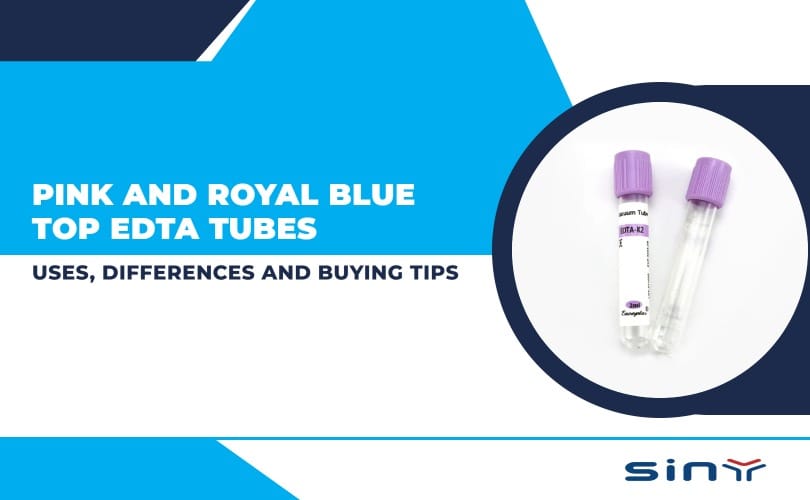
Navigating the global medical supply chain requires a keen eye for detail, especially when sourcing critical diagnostic components. For procurement managers and laboratory directors, finding reliable EDTA tube manufacturers in China is often a primary objective. China has evolved into a global hub for medical device production, offering a sophisticated balance of high-tech automation and cost-effective manufacturing. However, the sheer volume of suppliers can make the selection process feel overwhelming.
Selecting the right partner involves more than just comparing price lists. It requires a deep dive into manufacturing standards, additive precision, and international certifications. This guide provides a comprehensive framework for assessing quality when partnering with EDTA tube manufacturers in China, ensuring your laboratory or clinic receives products that guarantee diagnostic accuracy.
Why Source from EDTA Tube Manufacturers in China?
The landscape of medical manufacturing has shifted dramatically over the last decade. Today, EDTA tube manufacturers in China are at the forefront of vacuum blood collection technology. These facilities often utilize state-of-the-art injection molding and ultrasonic spraying systems to ensure that the EDTA anticoagulant—whether K2 or K3—is distributed evenly across the tube walls.
One of the primary reasons for the dominance of Chinese suppliers is their ability to scale production while maintaining rigorous quality control. Many of these companies have transitioned from simple assembly lines to fully integrated smart factories. When you explore EDTA tube products, you see the result of this evolution: high-clarity PET or glass tubes designed for seamless integration with modern automated analyzers.
Furthermore, the logistical infrastructure in China allows for rapid shipping to international markets. Whether you are looking for specific EDTA tube sizes like 2ml, 3ml, or 10ml, Chinese manufacturers typically hold large inventories or can pivot production lines quickly to meet custom demands.
Essential Certifications for Quality Assessment
When evaluating EDTA tube manufacturers in China, certifications act as the first line of defense against sub-par quality. You should never compromise on these global benchmarks. A reputable manufacturer must hold an ISO 13485 certification, which is the specific quality management system for medical devices.
Beyond ISO, look for the CE mark. This indicates that the products meet European Union safety, health, and environmental protection requirements. If you are importing to the United States, FDA registration is a non-negotiable requirement. Many leading suppliers, such as those listed on Siny Medical’s Made-in-China profile, maintain a comprehensive portfolio of these credentials to facilitate global trade.
It is also wise to verify these documents. Don’t simply take a PDF at face value; cross-reference certificate numbers with the issuing bodies. Genuine EDTA tube manufacturers in China will be transparent about their audits and will gladly provide recent test reports upon request.
Technical Specifications: Comparing K2 and K3 EDTA
A critical part of your quality assessment involves understanding the chemical nuances of the tubes being produced. Most EDTA tube manufacturers in China offer both K2 EDTA (dipotassium) and K3 EDTA (tripotassium). While they serve the same fundamental purpose—preventing blood coagulation by chelating calcium—their physical properties differ.
| Feature | K2 EDTA | K3 EDTA |
| Physical State | Spray-dried on tube walls | Liquid form (usually) |
| Effect on RBC | Minimal effect on cell volume | Can cause slight shrinkage of RBCs |
| Recommended Use | Molecular diagnostics and CBC | General hematology |
| PH Level | Slightly more acidic | Near neutral |
High-quality manufacturers ensure that the concentration of these additives is precise. For example, why choose 5ml K3 EDTA tubes often comes down to the specific requirements of the hematology analyzer being used. If the manufacturer lacks precision in the additive spraying process, it can lead to micro-clots, which compromise the integrity of theCBC testing process.
Evaluating the Vacuum and Seal Integrity
The “vacuum” in a vacuum blood collection tube is its most vital mechanical feature. If the vacuum is inconsistent, the tube will not draw the correct volume of blood. This leads to an incorrect blood-to-additive ratio, which is a leading cause of pre-analytical errors in the lab.
Top-tier EDTA tube manufacturers in China use high-precision vacuum control systems during the sealing process. During your assessment, ask about their “draw volume” tolerance levels. A standard tolerance should be within ±10%. If a manufacturer cannot guarantee this, the risk of inaccurate EDTA tube uses for CBC increases significantly.
The stopper quality is equally important. It should be made of high-quality butyl rubber that is easy to puncture but reseals perfectly. The color-coding (lavender or purple) must follow international standards, such as those outlined in the Wikipedia table of blood sampling tubes, to prevent errors during collection.
Material Quality: PET vs. Glass
Historically, glass was the standard for blood collection. However, modern EDTA tube manufacturers in China have largely moved toward PET (Polyethylene Terephthalate). PET is shatterproof, which significantly improves safety for laboratory personnel. It also handles high-speed centrifugation better than standard glass.
When assessing a manufacturer, check the clarity of their PET tubes. The plastic should be crystal clear, allowing for easy visual inspection of the sample for hemolysis or lipemia. Some specialized applications still require glass, particularly in blood banking environments, so ensure your chosen supplier can provide both materials if your facility has diverse needs.
You can learn more about the material differences and how they impact performance by reviewing a complete guide to EDTA tubes. Understanding these distinctions helps you make an informed decision when browsing the EDTA tube category.
Assessing Manufacturing Facilities and Automation
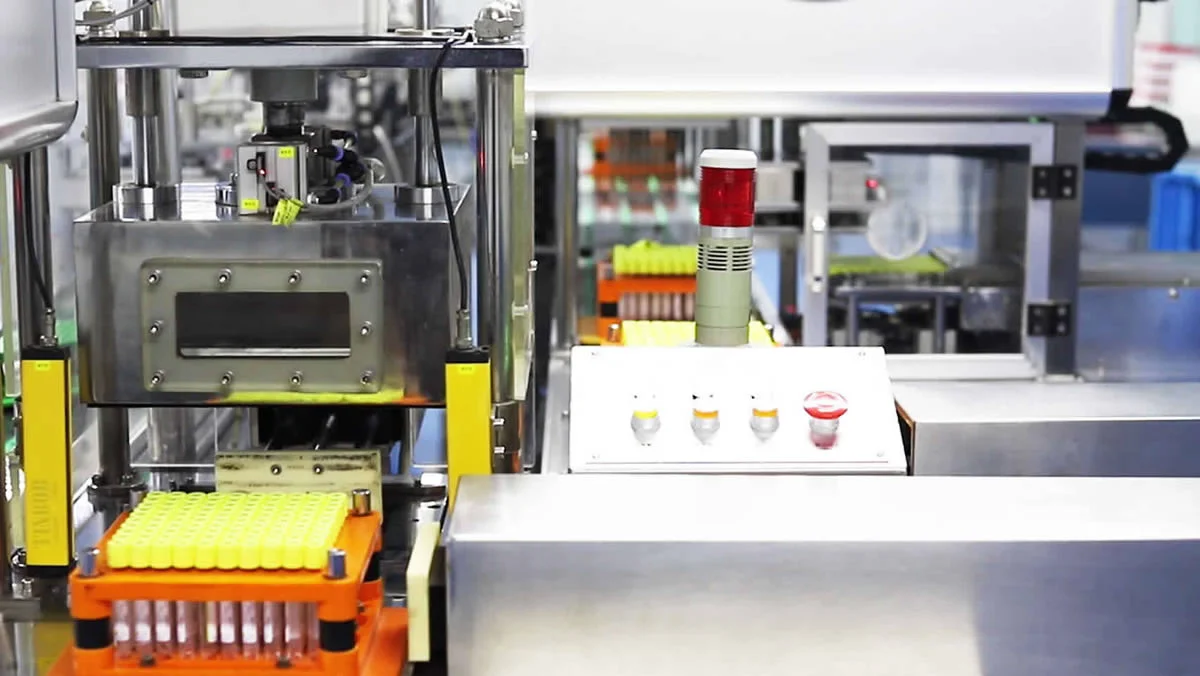
If possible, request a virtual tour or video footage of the production line. Reliable EDTA tube manufacturers in China invest heavily in cleanroom environments (usually Class 100,000 or higher). These cleanrooms prevent dust and microbial contamination that could interfere with sensitive blood tests.
Automation is a hallmark of quality. Automated systems handle everything from tube loading and additive dosing to vacuuming and labeling. This reduces human error and ensures that every tube in a batch of 100,000 is identical to the first. You can often see these high-tech processes in action on professional channels like the Siny Medical YouTube channel.
The Importance of the Blood-to-Additive Ratio
Accuracy in hematology relies heavily on the correct proportion of EDTA to blood. Most EDTA tube manufacturers in China calibrate their tubes to a ratio of 1.5 to 2.2 mg of EDTA per milliliter of blood. If the tube draws too little blood, the high concentration of EDTA can cause red blood cells to shrink, altering the Mean Corpuscular Volume (MCV) results.
Conversely, if the vacuum is too strong and draws too much blood, there won’t be enough anticoagulant to prevent clotting. Quality manufacturers conduct rigorous batch testing to ensure that the 3ml, 5ml, or 10ml sizes perform exactly as labeled.
Comparing Manufacturers: A Checklist for Procurement
When you begin contacting EDTA tube manufacturers in China, use the following checklist to compare your options:
-
Production Capacity: Can they handle your monthly volume without delays?
-
Lead Times: What is the typical duration from order placement to port delivery?
-
Customization: Do they offer OEM services for custom labeling or specific vacuum levels?
-
Sample Policy: Will they provide a batch of samples for independent lab testing?
-
Technical Support: Do they have a dedicated team to handle technical queries regarding shelf life or storage conditions?
Evaluating these factors helps you distinguish between a middleman and a genuine factory. A direct manufacturer will have deeper technical knowledge and more competitive pricing. For a direct comparison of how these tubes stack up against other varieties, refer to the EDTA tubes vs. other blood collection tubes guide.
Logistics and Packaging Standards
Shipping medical supplies internationally involves risks of temperature fluctuations and physical damage. High-quality EDTA tube manufacturers in China use robust packaging. Tubes should be organized in foam trays, then sealed in moisture-proof medical-grade bags, and finally packed into double-walled corrugated boxes.
Proper labeling is also a legal requirement for customs. Each box should clearly state the lot number, expiration date, and storage requirements (usually 4°C to 25°C). Ensuring these logistical details are handled correctly prevents delays at the border and ensures the product remains viable upon arrival at your facility.
Cost vs. Value: Finding the Sweet Spot
While the search for EDTA tube manufacturers in China is often driven by cost-saving goals, the cheapest option is rarely the best. A failed batch of tubes can cost a hospital thousands in re-testing fees and, more importantly, can lead to incorrect patient diagnoses.
Focus on “Value” rather than “Price.” Value is the combination of consistent quality, reliable delivery, and responsive customer service. By establishing a long-term relationship with a manufacturer like those found via the EDTA Tube official site, you can often negotiate better rates over time while maintaining a high standard of care.
Long-Term Partnership Benefits
Building a relationship with EDTA tube manufacturers in China offers significant advantages for clinical laboratories and distributors. Once a manufacturer understands your specific quality requirements and consumption patterns, they can optimize their production schedules to suit your needs.
Furthermore, being a preferred partner often gives you early access to new product innovations. As the medical field moves toward more specialized diagnostics, such as cell-free DNA testing, many manufacturers are developing specialized EDTA tubes with preservatives. Staying connected with your supplier ensures your inventory remains at the cutting edge of medical technology.
Analyzing the EDTA Additive Distribution
A subtle but vital quality marker is how the EDTA is applied inside the tube. In lower-quality production, you might see large droplets of liquid EDTA. This can lead to inadequate mixing. Premium EDTA tube manufacturers in China use ultrasonic atomization. This technology creates a fine mist that coats the entire inner surface of the tube.
When the blood enters the tube, this fine coating dissolves instantly. This ensures immediate anticoagulation. This is particularly important for EDTA tubes used in hematology, where the goal is to maintain the blood in a state as close to “in-vivo” as possible.
Reliability in High-Volume Environments
For large-scale diagnostic labs, the reliability of the tube’s physical dimensions is just as important as the chemistry. Automated decappers and sample probes are calibrated to specific millimeter measurements. If a batch of tubes from EDTA tube manufacturers in China varies in height or diameter by even a fraction, it can cause equipment jams or probe damage.
Leading manufacturers use “in-line” vision systems. These cameras scan every single tube on the conveyor belt to ensure the dimensions are perfect and the labels are straight. This level of detail is what separates a world-class manufacturer from a standard one.
Global Impact of Chinese Manufacturing
The role of EDTA tube manufacturers in China in the global healthcare system cannot be understated. During periods of global supply chain stress, Chinese factories have proven their ability to remain operational and fill gaps left by other regions. This resilience makes them an essential component of any diversified procurement strategy.
By adhering to the quality assessment steps outlined in this guide, you can confidently source products that meet the highest clinical standards. Whether you are conducting routine blood counts or complex genetic mapping, the quality of your EDTA tube is the foundation of your success.
Summary
In conclusion, selecting from EDTA tube manufacturers in China requires careful evaluation of quality, certifications, and processes. By prioritizing reliable suppliers like those highlighted here, you secure accurate diagnostics and efficient operations. This guide empowers you to navigate the market confidently, ensuring your choices support top-tier healthcare standards. For more details or to explore our range, visit our products page or contact us today
FAQs
Why are EDTA Tube Manufacturers in China trusted globally?
EDTA Tube Manufacturers in China are trusted because they combine large-scale production, ISO-certified quality systems, and competitive pricing while meeting international regulatory standards.
How can I verify the quality of EDTA Tube Manufacturers in China?
You can verify EDTA Tube Manufacturers in China by reviewing ISO certifications, requesting batch test reports, and conducting third-party factory audits.
Are Chinese EDTA tubes suitable for CBC testing?
Yes, EDTA Tube Manufacturers in China produce tubes specifically designed for CBC testing, ensuring accurate anticoagulant ratios and sample stability.
What is the difference between K2 and K3 EDTA tubes from Chinese manufacturers?
EDTA Tube Manufacturers in China offer both K2 and K3 EDTA tubes, with K2 preferred for reduced dilution effects and K3 used for specific analyzer requirements.
Do EDTA Tube Manufacturers in China support custom labeling?
Most established EDTA Tube Manufacturers in China provide OEM and private labeling services for international distributors and hospitals.