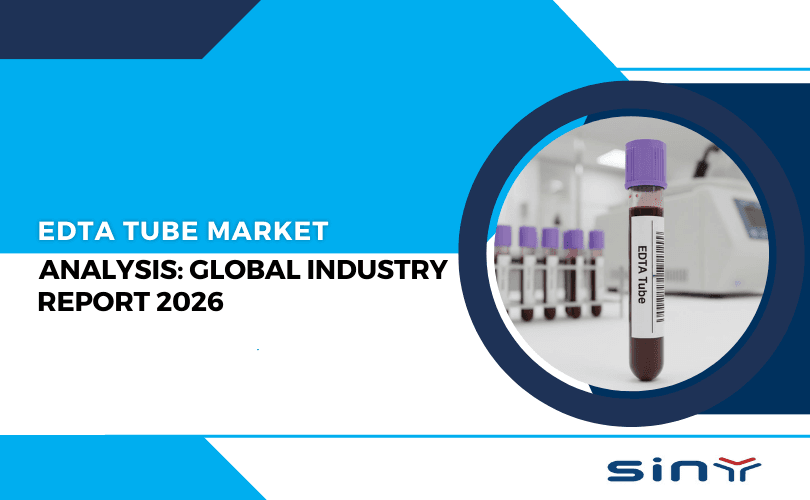
The medical diagnostics world is moving faster than ever, and at the heart of this evolution is the humble but essential blood collection tube. As we look toward the next year, the EDTA Tube Market Analysis reveals a landscape defined by rapid technological shifts, an aging global population, and a surging demand for precision in hematology. In 2026, the global demand for these purple-capped essentials is not just growing; it is transforming.
Clinicians and laboratory managers are no longer just looking for “a tube.” They are looking for high-performance vessels that integrate seamlessly with automated systems. Whether it is a routine checkup or complex molecular research, the choice of an EDTA tube can dictate the accuracy of a patient’s diagnosis. Understanding the current market dynamics is essential for any healthcare provider aiming to stay ahead of the curve.
EDTA Tubes in Modern Diagnostics
EDTA tubes are blood collection tubes coated with ethylenediaminetetraacetic acid, an anticoagulant that preserves blood cell morphology by preventing clot formation. These tubes are primarily used for hematology testing, including the widely performed Complete Blood Count (CBC).
Unlike serum or citrate tubes, EDTA tubes maintain cellular integrity for extended periods. This makes them indispensable for accurate blood cell analysis, differential counts, and related diagnostic evaluations. Laboratories worldwide rely on consistent EDTA tube quality to ensure reproducible test results.
For a deeper technical overview of EDTA tube composition and laboratory applications, this complete guide to EDTA tubes provides additional scientific insight.

Global EDTA Tube Market Overview (2024–2026)
The EDTA tube market has shown steady growth over the last decade, fueled by expanding diagnostic infrastructure and increased healthcare spending. According to industry estimates, the global blood collection tube market is projected to grow at a compound annual growth rate (CAGR) of approximately 6–7% through 2026, with EDTA tubes representing a significant share of this expansion.
This EDTA Tube Market Analysis highlights three major forces shaping market momentum. First, rising demand for routine blood testing due to chronic disease prevalence. Second, increased adoption of automated hematology analyzers requiring standardized consumables. Third, growing diagnostic access in emerging economies.
Hospitals and diagnostic laboratories remain the largest end users, but demand from home healthcare and mobile diagnostic services is increasing, especially after the global shift toward decentralized healthcare models.
Key Market Drivers Fueling EDTA Tube Demand
Growth in Hematology Testing Volume
Hematology remains one of the most frequently ordered diagnostic disciplines worldwide. Every CBC test requires an EDTA tube, making testing volume a direct driver of consumption. As preventive healthcare gains momentum, routine blood screening has become more common across age groups.
Detailed insights into hematology-specific applications can be found in this guide on EDTA tubes for hematology testing, which explains why EDTA remains the anticoagulant of choice.
Rising Global Burden of Chronic Diseases
Conditions such as diabetes, cardiovascular disease, cancer, and autoimmune disorders require ongoing blood monitoring. Each follow-up test contributes to recurring EDTA tube usage, reinforcing stable long-term demand.
Standardization and Quality Regulations
Laboratories now operate under stricter quality frameworks. Accreditation standards require consistency in consumables, pushing labs to source reliable EDTA tubes from trusted manufacturers. This trend favors suppliers with certified production processes and documented quality controls.
Market Segmentation by Tube Size and Volume
EDTA tubes are manufactured in various sizes to accommodate different testing requirements. Tube volume directly impacts blood-to-additive ratio, which is critical for accurate results.
| Tube Size | Common Use Case | Market Demand Trend |
|---|---|---|
| 2ml–3ml | Pediatric & low-volume tests | Steady growth |
| 4ml–5ml | Routine adult hematology | High demand |
| 6ml–10ml | Specialized or multiple tests | Moderate growth |
Laboratories often select tube sizes based on workflow efficiency and analyzer requirements. This EDTA tube size guide from 2ml to 10ml explains how volume selection influences test accuracy.
Further comparisons between common sizes are discussed in this analysis of 10ml EDTA tubes vs 5ml tubes.
Regional EDTA Tube Market Analysis
North America
North America continues to dominate global market share due to advanced laboratory infrastructure and high diagnostic testing rates. The United States, in particular, benefits from widespread preventive screening programs and strong regulatory oversight.
Europe
European markets emphasize quality compliance and environmental sustainability. Manufacturers supplying EDTA tubes in this region often focus on material innovation and eco-friendly packaging.
Asia-Pacific
Asia-Pacific is the fastest-growing region in this EDTA Tube Market Analysis. Expanding healthcare access, rising population density, and increased government investment in diagnostics are fueling demand. Countries such as China and India are major production and consumption hubs.
Platforms like Made-in-China medical marketplaces highlight how regional manufacturing capacity supports global supply chains.
Middle East & Africa
Although smaller in size, this market shows promising growth potential as diagnostic infrastructure improves and private healthcare expands.
Technological Trends Shaping the EDTA Tube Industry
Innovation within the EDTA tube market focuses on improving accuracy, safety, and usability. Manufacturers are investing in precision coating technologies to ensure uniform EDTA distribution inside tubes.
Vacuum stability improvements have reduced sample rejection rates, while color-coding standardization helps minimize handling errors. Automation compatibility is now a critical design factor, as laboratories increasingly rely on high-throughput analyzers.
Educational platforms such as the SINY Medical YouTube channel also play a role in spreading awareness about correct tube usage and handling.
Competitive Landscape and Supplier Dynamics
The EDTA tube market is moderately fragmented, with a mix of multinational brands and specialized regional manufacturers. Competition centers on product consistency, certification compliance, pricing, and logistics reliability.
Buyers increasingly evaluate suppliers based on technical support and educational resources, not just product availability. For laboratories and distributors seeking dependable sourcing, platforms like edtatube products provide centralized access to verified EDTA tube products and specifications.
Exploring the full EDTA tube product category helps buyers compare options based on volume, material, and application.
EDTA Tubes vs Other Blood Collection Tubes
While EDTA tubes dominate hematology, they are not universal for all tests. Serum, heparin, and citrate tubes serve different diagnostic needs. Understanding these distinctions prevents pre-analytical errors.
A detailed comparison is available in this guide on EDTA tubes vs other blood collection tubes, which explains why EDTA remains unmatched for cellular analysis.
Procurement Considerations for Laboratories
Choosing the right EDTA tube supplier involves more than price comparison. Laboratories must consider tube size compatibility, vacuum integrity, regulatory approvals, and shipping reliability.
Resources such as how to choose the right EDTA tube for your lab and guidance on selecting the correct EDTA tube size help decision-makers avoid costly errors.
Future Outlook: EDTA Tube Market Through 2026
This EDTA Tube Market Analysis projects sustained growth through 2026, supported by expanding diagnostics, aging populations, and technological integration. While pricing pressures and regulatory demands remain challenges, the market’s fundamentals are strong.
Manufacturers that invest in quality assurance, innovation, and global distribution networks are best positioned to thrive. Digital education and transparent product documentation will further differentiate leading suppliers.
Summary
This comprehensive EDTA Tube Market Analysis reveals a resilient and expanding global industry driven by diagnostic growth, technological innovation, and increasing healthcare demand. As laboratories seek accuracy and efficiency, EDTA tubes will remain an essential diagnostic consumable through 2026 and beyond.
For sourcing guidance, product specifications, or expert support, visit the EDTA Tube product platform to connect with industry specialists and contact us.
FAQs
What factors are driving the EDTA tube market growth?
Rising diagnostic testing volumes, chronic disease monitoring, and laboratory automation are the primary drivers identified in this EDTA Tube Market Analysis.
Which region shows the fastest growth in EDTA tube demand?
Asia-Pacific is the fastest-growing region according to current EDTA Tube Market Analysis data, driven by expanding healthcare access.
Why are EDTA tubes preferred for hematology testing?
EDTA preserves blood cell structure, making it ideal for accurate hematology results, a key insight from this EDTA Tube Market Analysis.
How does tube size affect test accuracy?
Correct tube volume ensures proper blood-to-EDTA ratio, a factor emphasized throughout this EDTA Tube Market Analysis.
What trends will shape the EDTA tube industry by 2026?
Automation compatibility, quality standardization, and emerging market expansion will shape the future, as outlined in this EDTA Tube Market Analysis.