Selecting the correct EDTA tube size is fundamental for accurate blood sample collection and laboratory testing. Whether you’re a medical professional, lab technician, or researcher, understanding the differences between 2ml, 3ml, 5ml, and 10ml EDTA tubes ensures proper sample handling and reliable test results. This guide explores EDTA tube uses, types, concentrations, and selection criteria to help you make informed decisions.
What is an EDTA Tube?
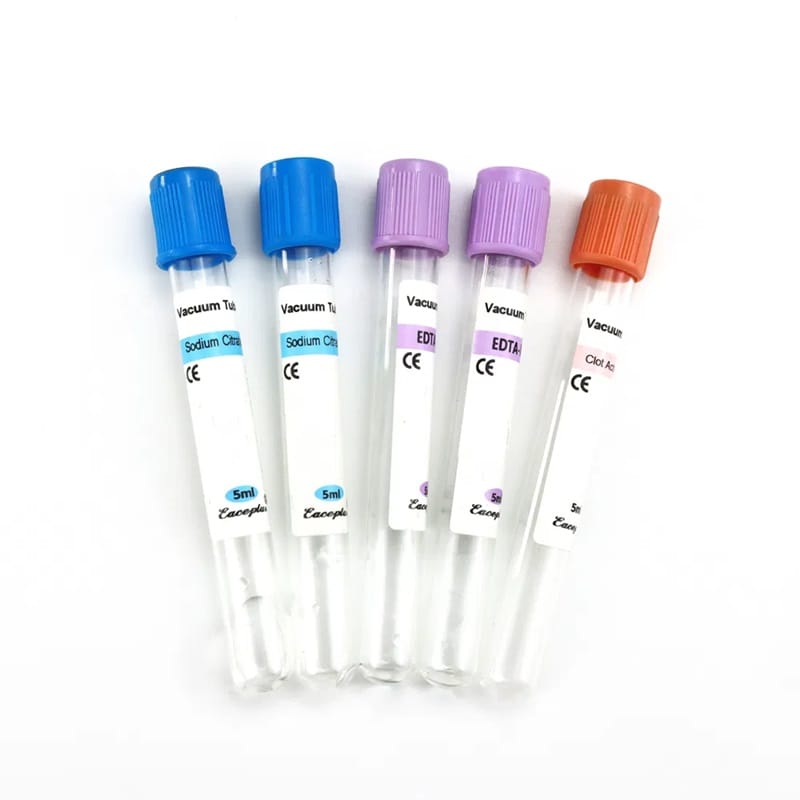
EDTA tubes are blood collection tubes containing Ethylenediaminetetraacetic acid (EDTA), an anticoagulant that prevents clotting by binding calcium ions. Recognizable by their purple or lavender caps, these tubes are essential for hematology tests, DNA analysis, and blood banking.
Why Use EDTA Tubes?
- Preserves blood cell morphology for accurate testing.
- Prevents coagulation, ensuring plasma remains stable.
- Compatible with automated analyzers, improving lab efficiency.
For more details, visit our EDTA Tube Uses page.
EDTA Tube Uses: Which Tests Require EDTA Tubes?
EDTA tubes are indispensable in medical diagnostics. Common tests include:
1. Complete Blood Count (CBC)
Measures red blood cells, white blood cells, hemoglobin, and platelets.
2. Blood Typing & Crossmatching
Determines blood group (A, B, AB, O) and Rh factor.
3. Hemoglobin A1c (HbA1c) Testing
Assesses long-term glucose control in diabetic patients.
4. Molecular Diagnostics & Genetic Testing
Used for DNA extraction in PCR and genetic studies.
5. Flow Cytometry & Immunology Studies
Analyzes cell populations for research and clinical diagnostics.
For a full list of applications, explore our EDTA Tube Product Category.
EDTA Tube Concentration and Anticoagulant Properties
The effectiveness of EDTA tubes depends on proper anticoagulant concentration:
- Standard concentration: 1.5–2.2 mg/mL of blood
- Excess EDTA can distort results (e.g., shrinking red blood cells).
K2 EDTA vs. K3 EDTA: What’s the Difference?
| Type | Form | Common Uses |
|---|---|---|
| K2 EDTA | Liquid or spray-dried | Preferred for automated hematology analyzers |
| K3 EDTA | Liquid form | Used in general lab testing |
For a deeper comparison, read K2 EDTA vs. K3 EDTA Tubes.
Types of EDTA Tubes
Different EDTA tube types cater to specific lab needs:
Standard EDTA Tubes
- Most common for CBC and routine tests.
- Available in 2ml, 3ml, 5ml, and 10ml sizes.
Plasma Separation Tubes (PST)
- Contains gel separator for plasma isolation.
- Used in chemistry and immunology tests.
Pediatric EDTA Tubes
- Smaller volume (1–2ml) for infants and children.
- Minimizes blood loss in vulnerable patients.
Browse our EDTA Tube Products for specifications.
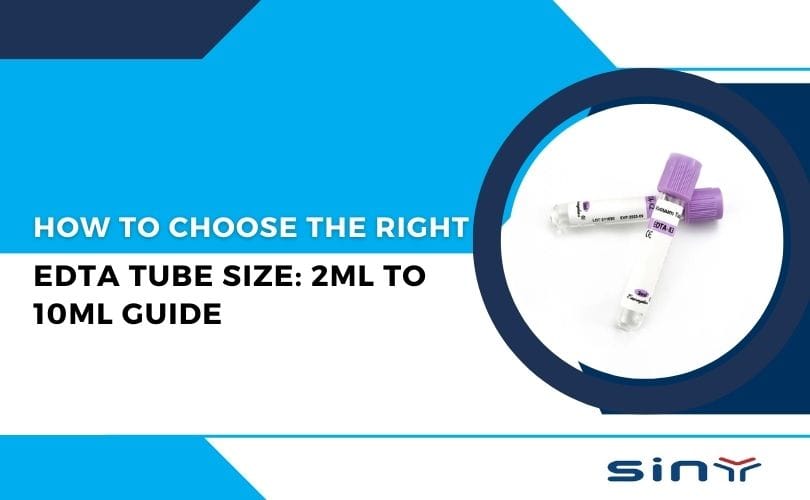
Choosing the Right EDTA Tube Size: 2ml to 10ml
The EDTA tube size depends on:
- Test requirements (small vs. large blood volume).
- Patient age (pediatric vs. adult samples).
- Lab protocols (single vs. multiple tests).
EDTA Tube Size Comparison
| Size | Volume | Best For |
|---|---|---|
| 2ml | 2 milliliters | Pediatric testing, small-volume assays |
| 3ml | 3 milliliters | Routine CBC, single blood tests |
| 5ml | 5 milliliters | Multiple tests, research studies |
| 10ml | 10 milliliters | Large-volume testing, blood banking |
For guidance on selecting the right size, see What Size EDTA Tube Should You Use?.
EDTA Tube Content and Components
Understanding what’s inside an EDTA tube ensures proper usage:
- EDTA anticoagulant (K2 or K3).
- Clot activator or gel separator (in specialized tubes).
- Plastic or glass tube material (ensures sample integrity).
For high-quality EDTA tubes, check 10ml EDTA Tube with Purple Top.
Final Thoughts
The final selection of the right EDTA tube size hinges on understanding the specific requirements of your laboratory tests, patient demographics, and testing protocols. Whether you’re working with 2ml, 3ml, 5ml, or 10ml EDTA tubes, each size serves a distinct purpose and is tailored to meet different testing needs. For pediatric patients, smaller tubes like 2ml minimize blood loss while ensuring accurate results. For routine tests such as Complete Blood Count (CBC), 3ml tubes are often sufficient. Larger tubes like 5ml and 10ml are ideal for comprehensive testing or research studies requiring larger blood volumes.
Choosing the correct EDTA tube size also involves considering the type of EDTA (K2 or K3) and the tube’s contents (e.g., gel separators or clot activators). For instance, K2 EDTA is preferred for its stability in automated analyzers, while K3 EDTA is commonly used in general lab settings. Additionally, understanding the concentration of EDTA (typically 1.5–2.2 mg/mL) ensures optimal anticoagulation without distorting test results.
Beyond size and type, it’s essential to follow proper blood collection protocols to maintain sample integrity. This includes ensuring the tube is filled to the correct volume, mixing the sample thoroughly to prevent clotting, and storing the sample at the appropriate temperature. Missteps in these areas can compromise test accuracy, leading to unreliable results.
For laboratories handling multiple tests or large sample volumes, investing in a variety of EDTA tube sizes can streamline workflows and improve efficiency. For example, having 5ml and 10ml tubes on hand allows for comprehensive testing without the need for multiple draws. Similarly, pediatric tubes ensure that younger patients are not subjected to unnecessary blood loss.
For further guidance on EDTA tube selection, explore our EDTA Tube Product Category or Contact Us for personalized assistance. Additionally, you can delve into the history and evolution of blood collection tubes by visiting Vacutainer History or watch expert tutorials on Sinymedical’s YouTube Channel.
FAQs
1. What is the full form of EDTA?
EDTA stands for Ethylenediaminetetraacetic acid, a chelating agent used to prevent blood clotting.
2. Can I use an EDTA tube for serum separation?
No, EDTA tubes are for plasma only. Use serum separator tubes (SST) for serum tests.
3. What is the difference between K2 EDTA and K3 EDTA?
K2 EDTA is more stable for automated testing, while K3 EDTA is commonly used in general labs.
4. How much blood is needed for a 5ml EDTA tube?
A 5ml EDTA tube requires 5ml of blood for accurate results.
5. Can I reuse an EDTA tube?
No, EDTA tubes are single-use to prevent contamination.
For further questions, Contact Us.