EDTA tubes play a central role in hematology, routine diagnostic testing, and sample preservation. Healthcare centers, diagnostic labs, manufacturers, and medical students constantly search for clear guidelines on EDTA tube sizes, the tests they support, how much blood each size holds, and how the concentration of EDTA affects sample stability.
This complete guide is designed for anyone who needs a reliable explanation of 2ml, 3ml, 4ml, 5ml, 6ml, and 10ml EDTA tube sizes. Every detail is explained in an easy format, with data-oriented descriptions, real-world use cases, and helpful references.
TA Tubes: Composition, Purpose, and Usage
The full form of EDTA is Ethylenediaminetetraacetic Acid, a chelating agent that binds calcium and prevents coagulation.
Laboratories rely on EDTA because it preserves:
Cell morphology
Blood components
White blood cell distribution
Platelet quality
These properties make the EDTA tube suitable for hematology and several molecular biology tests.
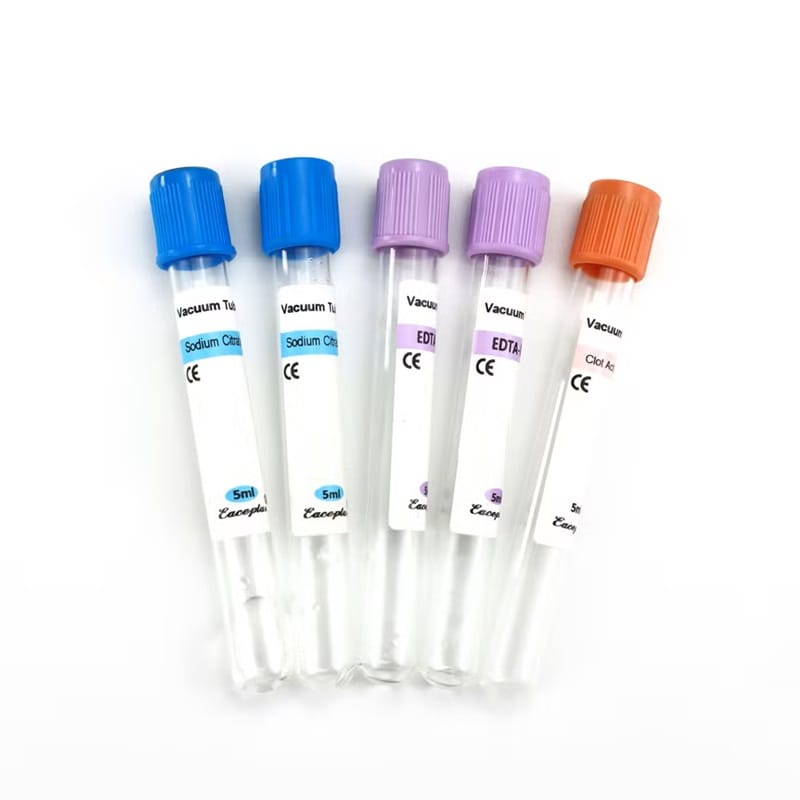
The EDTA tube color is traditionally purple or lavender, which is globally recognized in blood collection standards. Manufacturers may offer slight variations, but purple/lavender caps indicate the presence of K2EDTA or K3EDTA.
To know more about EDTA tubes and their applications, explore the internal resource:
→ Visit the EDTA Tube Uses Guide: What Are EDTA Tubes Used For?
K2 EDTA vs. K3 EDTA: The Role of Anticoagulant in Sample Stability
The anticoagulant inside the tube affects cell preservation. Both K2EDTA and K3EDTA prevent coagulation, but they behave differently.
K2 EDTA
Preferred for CBC and automated hematology analyzers
Maintains more accurate cell size (MCV)
Used widely in international diagnostic protocols
K3 EDTA
Converts EDTA into a liquid form
Still widely used for routine tests
Can slightly shrink RBCs in some cases
Cost-effective option for large-volume labs
Most modern manufacturers favor K2EDTA, especially in vacuum tubes.
For product information, explore:Visit EDTA Tube Category: EDTA Tubes Collection
EDTA Tube Sizes Explained (2ml, 3ml, 4ml, 5ml, 6ml, 10ml)
Different medical centers use different volumes depending on the test load, analyzer type, and sample requirement. Below is a full description of each size.
2 ml EDTA Tube
Best For:
Small sample tests, neonatal units, pediatric wards, and capillary collections.
Common Uses:
Basic CBC
Hemoglobin testing
Platelet counts
Small-volume genetic tests
Reason to Choose This Size:
Pediatric departments prefer 2 ml because infants cannot provide high blood volumes safely.
3 ml EDTA Tube
Best For:
Routine hematology testing in clinics and small labs.
Common Uses:
Complete blood count
ESR (if using automated methods)
Blood grouping screening
HbA1c (depending on analyzer)
Why Labs Use 3 ml:
It offers the right balance of volume without over-collection of blood.
To compare 3ml, 5ml, and 10ml sizes, refer to the internal guide:Which Size Should You Use?What Size EDTA Tube Should You Use?
4 ml EDTA Tube
Best For:
Labs handling moderate test requests using automated devices.
Common Uses:
CBC
Reticulocyte count
Sickle cell screening
Molecular tests requiring whole blood
This size provides enough sample for repeat tests or confirmation runs.
5 ml EDTA Tube
Best For:
Large laboratories and hospitals performing extended hematology testing.
Common Uses:
Complete blood count
Hemoglobin electrophoresis
PCR testing
HIV viral load
Flow cytometry
Cross-matching support
Why Many Labs Prefer 5 ml:
Larger volume allows multiple tests from a single draw, improving efficiency.
For a complete size breakdown, visit: EDTA Tube Size Guide:EDTA Tube Size Guide 2ml to 10ml
6 ml EDTA Tube
Best For:
Advanced hematology investigations and research labs.
Common Uses:
Extended CBC panels
Platelet functionality studies
DNA extraction
Genetic profiling
This size ensures enough sample for both clinical and research workflows.
10 ml EDTA Tube
Best For:
High-volume, multi-test environments where a single draw must support several procedures.
Common Uses:
Oncology testing
Immunohematology studies
High-volume DNA extraction
Specialized molecular diagnostics
Flow cytometry with multiple markers
10 ml EDTA tubes are also widely used in biotechnology and research institutions.
To understand specific use differences, explore: EDTA Tube Size and Uses Guide:EDTA Tube Sizes and Uses
Comparing EDTA Tube Sizes (Table Format)
| Tube Size | Typical Blood Volume Needed | Common Applications |
|---|---|---|
| 2 ml | 0.5–2 ml | Neonatal CBC, pediatrics |
| 3 ml | 1–3 ml | Basic hematology |
| 4 ml | 2–4 ml | Routine CBC + extra tests |
| 5 ml | 3–5 ml | Hospital-level diagnostics |
| 6 ml | 4–6 ml | Research + advanced testing |
| 10 ml | 6–10 ml | Molecular & oncology labs |
EDTA Tube Price Guide
Prices vary depending on the manufacturer, material, and whether the tube is manual or vacuum-based.
Local distributors may adjust costs depending on:
Transportation
Sterilization standards
Bulk order quantity
Plastic vs. PET material
For accurate pricing, contact the official support page:Contact EDTA Tube Team:Contact Us
Some international suppliers also publish public price catalogs:
EDTA Tube Concentration
The amount of EDTA anticoagulant inside a tube is precisely controlled. Concentrations are expressed as:
1.5–2 mg of EDTA per ml of blood
Spray-dried EDTA coating for uniform mixing
K2 or K3 type depending on tube design
Proper concentration ensures the blood remains unclotted without damaging cell morphology.
Plain Tube vs. EDTA Tube
Many new laboratory students ask about the difference.
Plain Tube
No anticoagulant
Used for serum-based tests
Examples: LFT, RFT, thyroid panels, electrolytes
EDTA Tube
Contains K2/K3 anticoagulant
Used for whole blood analysis
Best for CBC and molecular testing
To explore additional sample collection equipment, visit:EDTA Tube Products Page:Products
Sample Handling: Mixing, Storage, and Transport
The following details help maintain sample quality:
Mixing
EDTA tubes should be gently inverted 8–10 times to ensure anticoagulant distribution.
Storage
Keep at room temperature
Avoid direct sunlight
Use samples within 6 hours for most hematology analyzers
Transport
Use sealed bags
Keep upright to preserve plasma separation
Avoid shaking or rough handling
These practices align with international hematology safety standards.
Why the Correct EDTA Tube Size Matters
Choosing the right size improves:
Accuracy of CBC
Stability of hemoglobin
Platelet distribution quality
DNA integrity for genetic tests
Viral load testing performance
An incorrect size may lead to underfilling or overfilling, causing:
Dilution errors
Clot formation
Incorrect MCV results
To identify the best size for your workplace, study this internal guide:Choosing 3ml, 5ml or 10ml:What Size EDTA Tube Should You Use?
Real-World Applications of EDTA Tubes
EDTA tubes are essential across diverse settings:
Hospitals
Used every minute in emergency wards, ICUs, oncology units, and diagnostic floors.
Diagnostic Laboratories
CBC is one of the most requested tests daily, making EDTA tubes the most frequently used collection tool.
Research Centers
Used in DNA, RNA, and genome-focused studies.
Blood Banks
Used for infectious disease screening and blood component analysis.
For a deeper breakdown, refer to:EDTA Tube Main Use Guide:What Are EDTA Tubes Used For?
Summary
EDTA tubes remain the backbone of hematology and molecular diagnostic testing. Understanding the differences between 2ml, 3ml, 4ml, 5ml, 6ml, and 10ml EDTA tubes ensures proper sample handling, prevents clotting errors, and supports accurate laboratory results. Each size fits a specific purpose—whether pediatric, routine diagnostic, research-oriented, or high-volume molecular testing.
This guide has also provided internal and external references so readers can explore product ranges, technical details, and professional laboratory recommendations.
For more information or product inquiries, visit the official website:EDTA Tube – Premium Blood Collection Solutions
FAQs
EDTA tube is used for which test?
EDTA tubes are used mainly for CBC, hemoglobin, platelet count, WBC differential, reticulocyte count, blood grouping support, DNA testing, and molecular diagnostics.
What is the full form of EDTA?
Ethylenediaminetetraacetic Acid.
What is the color of EDTA tube?
The EDTA tube cap is purple or lavender.
Which is better: K2 EDTA or K3 EDTA?
For modern analyzers, K2 EDTA is preferred because it better preserves cell size and structure.
Which size EDTA tube should I use?
2–3 ml for children
3–5 ml for routine clinical tests
6–10 ml for molecular or oncology work
You may also refer to the official guide:EDTA Tube Size Guide 2ml–10mlClick Here
What is the anticoagulant in EDTA tubes?
Either K2EDTA or K3EDTA.
What is the difference between plain tube and EDTA tube?
Plain tube yields serum; EDTA tube preserves whole blood for hematology.
What is the cost of EDTA tubes?
Prices vary by manufacturer; check the official contact page for up-to-date details:Contact Us