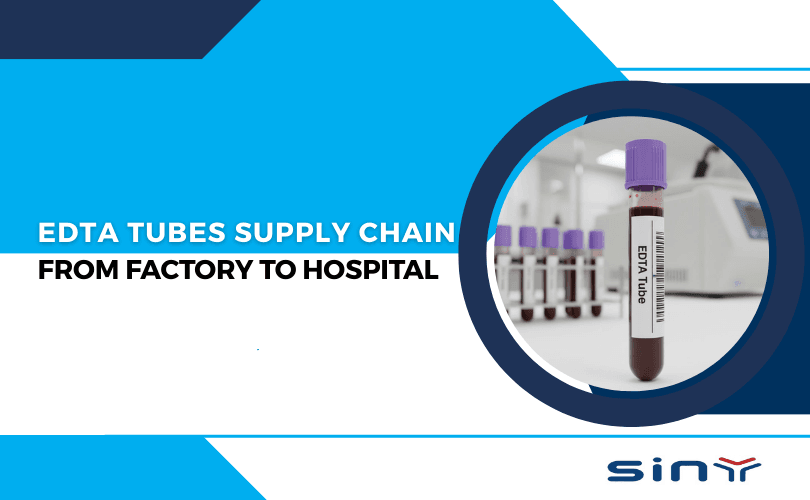
Behind every accurate blood test result lies a carefully managed medical supply chain. While clinicians focus on diagnosis and treatment, laboratories depend on a steady flow of high-quality consumables. Among these, EDTA tubes play a crucial role. Understanding the EDTA Tubes Supply Chain—from manufacturing floor to hospital ward—reveals how precision, regulation, logistics, and quality control work together to support modern healthcare.
This article explores how EDTA tubes are produced, stored, transported, and delivered to laboratories worldwide. More importantly, it explains why supply chain reliability directly impacts diagnostic accuracy, cost efficiency, and patient safety.
EDTA Tubes and Their Role in Diagnostics
EDTA tubes are blood collection tubes pretreated with Ethylenediaminetetraacetic acid, an anticoagulant that preserves blood cell morphology. These tubes are widely used for complete blood counts (CBC), hematology testing, and molecular diagnostics.
The widespread adoption of vacuum blood collection systems, often referred to as Vacutainers, has standardized sample handling across laboratories. According to the global overview of vacuum blood collection systems on Wikipedia, these systems significantly reduce contamination and sample variability when compared to older syringe-based methods
see background reference on Vacutainer systems.
However, even the most advanced diagnostic methods rely on a stable EDTA Tubes Supply Chain to ensure consistent tube quality, correct additive concentration, and timely availability.

Raw Materials: Where the EDTA Tubes Supply Chain Begins
Every EDTA tube starts with raw materials that must meet strict medical-grade standards. Manufacturers typically source high-quality plastic polymers, such as PET or polypropylene, chosen for durability, chemical stability, and transparency.
The EDTA additive itself must be pharmaceutical grade. Even small variations in purity or dosage can alter test outcomes. This is why reputable manufacturers follow international standards during raw material procurement.
Factories supplying platforms like EDTA Tube maintain rigorous vendor qualification systems. Each supplier is audited for consistency, compliance, and traceability. In a well-managed EDTA Tubes Supply Chain, raw material documentation is never optional—it is essential.
Manufacturing Process: Precision at Industrial Scale
Once raw materials enter the factory, production begins under controlled environments. Tube molding, additive dosing, vacuum calibration, and cap assembly must align precisely.
Modern production lines rely on automation to maintain consistency. Sensors monitor vacuum pressure, EDTA concentration, and tube dimensions in real time. Any deviation triggers immediate correction.
Manufacturers specializing in EDTA products, such as those showcased in the EDTA tube product category, often conduct inline quality checks every few seconds. This level of scrutiny ensures that each tube performs identically in clinical settings.
The manufacturing stage is where the EDTA Tubes Supply Chain either succeeds or fails. Poor process control leads to rejected batches, delayed shipments, and increased costs downstream.
Quality Control and Regulatory Compliance
Medical consumables operate in one of the most regulated industries worldwide. EDTA tubes must comply with ISO standards, CE marking, and country-specific medical device regulations.
Quality control teams test physical strength, vacuum retention, anticoagulant efficacy, and shelf life. Some manufacturers also perform compatibility testing with automated analyzers used in hospitals.
Educational resources such as the complete guide to EDTA tubes help laboratories understand why compliance matters at every stage.
In the EDTA Tubes Supply Chain, quality assurance does not end at the factory gate. It continues through packaging, warehousing, and delivery.
Packaging and Labeling: More Than Just Protection
Packaging plays a critical role in preserving product integrity during transit. EDTA tubes are typically packed in moisture-resistant trays, sealed cartons, and shock-absorbing outer packaging.
Labels include lot numbers, expiration dates, and regulatory symbols. These details support traceability, which is essential during audits or recalls.
Distributors sourcing from EDTA tube manufacturers rely on accurate labeling to manage inventory efficiently. A well-organized EDTA Tubes Supply Chain reduces waste and improves stock rotation.
Global Logistics and Distribution Networks
Once packaged, EDTA tubes enter the global logistics network. Depending on destination, shipments may travel by sea, air, or ground transport. Temperature control, humidity management, and handling protocols are carefully planned.
Distributors often maintain regional warehouses to shorten delivery times. This approach minimizes disruptions caused by customs delays or transportation bottlenecks.
Manufacturers featured on platforms such as
Made-in-China medical suppliers demonstrate how global distribution supports hospitals in emerging and developed markets alike.
Efficient logistics transform manufacturing excellence into clinical reliability within the EDTA Tubes Supply Chain.
Bulk Supply and Cost Optimization for Laboratories
Large hospitals and diagnostic chains consume EDTA tubes in high volumes. Bulk procurement allows these institutions to reduce per-unit costs while maintaining quality standards.
Articles like bulk EDTA tube supply cost saving for labs explain how strategic sourcing stabilizes budgets without compromising performance.
A transparent EDTA Tubes Supply Chain enables laboratories to forecast demand accurately, avoid shortages, and negotiate long-term supply contracts.
Comparing EDTA Tubes with Other Blood Collection Tubes
Not all blood collection tubes serve the same purpose. While EDTA tubes dominate hematology, other additives suit biochemistry or coagulation testing.
Comparative studies, including insights from
EDTA tubes vs other blood collection tubes, highlight why selecting the right tube matters.
A resilient EDTA Tubes Supply Chain ensures that laboratories receive the correct tube type consistently, reducing pre-analytical errors.
The Role of Education and Transparency
Manufacturers and suppliers increasingly invest in education to support end users. Video content from channels like
Siny Medical on YouTube helps laboratory staff understand proper tube usage and storage.
Transparency builds trust. When laboratories understand where products come from and how they are handled, confidence in the EDTA Tubes Supply Chain grows.
From Distributor to Hospital: The Final Mile
The last stage of the EDTA Tubes Supply Chain is often the most sensitive. Hospitals require timely deliveries, accurate quantities, and intact packaging.
Many healthcare providers prefer working directly with trusted suppliers through platforms like EDTA Tube official website or exploring the full product range.
Clear communication channels, including direct contact through Contact EDTA Tube, ensure rapid response to urgent needs.
Summary
The EDTA tubes supply chain spans from manufacturing to hospital use, ensuring safe and timely delivery of blood collection tubes. Factories produce EDTA tubes under strict quality standards, maintaining sterility and accurate anticoagulant levels. After production, tubes move through distribution centers, where inventory management and cold chain logistics preserve quality. Transportation companies handle shipping to hospitals, clinics, and laboratories, often under regulatory compliance to prevent contamination. Hospitals receive, store, and track the tubes before use in diagnostics. Efficient coordination among manufacturers, distributors, and healthcare facilities ensures that EDTA tubes are available when needed, supporting accurate and reliable patient testing. For inquiries or orders, contact us.
FAQs
How does the EDTA Tubes Supply Chain affect test accuracy?
The EDTA Tubes Supply Chain controls additive quality, vacuum stability, and storage conditions, all of which directly influence blood sample integrity.
Why is traceability important in the EDTA Tubes Supply Chain?
Traceability allows laboratories to track batch history, ensuring rapid response during quality investigations or recalls.
How can labs reduce costs within the EDTA Tubes Supply Chain?
By choosing reliable bulk suppliers and long-term contracts, labs can stabilize pricing within the EDTA Tubes Supply Chain.
What role do manufacturers play beyond production?
Manufacturers support education, logistics coordination, and compliance monitoring throughout the EDTA Tubes Supply Chain.
Are global suppliers reliable for EDTA tubes?
Yes, provided they follow international standards and maintain transparent EDTA Tubes Supply Chain practices.