In clinical laboratories, blood collection tubes play a vital role in ensuring accurate diagnostic results. Among the most widely used are EDTA tubes, heparin tubes, and citrate tubes. Each tube contains a different anticoagulant, which directly impacts the type of test it is suitable for. Understanding the differences between these tubes is essential for healthcare professionals, laboratory technicians, and researchers.
This article provides a complete comparison of EDTA vs heparin tube vs citrate tube, exploring their composition, applications, advantages, and limitations. By the end, you’ll know exactly which tube to choose for specific tests and why.
What Are EDTA Tubes?
An EDTA tube is a specialized blood collection tube used in clinical laboratories to prevent clotting and preserve blood samples for testing. EDTA stands for ethylenediaminetetraacetic acid, a chemical anticoagulant that works by binding calcium ions in the blood. Since calcium is essential for the clotting process, removing it ensures that the blood remains fluid and suitable for analysis.
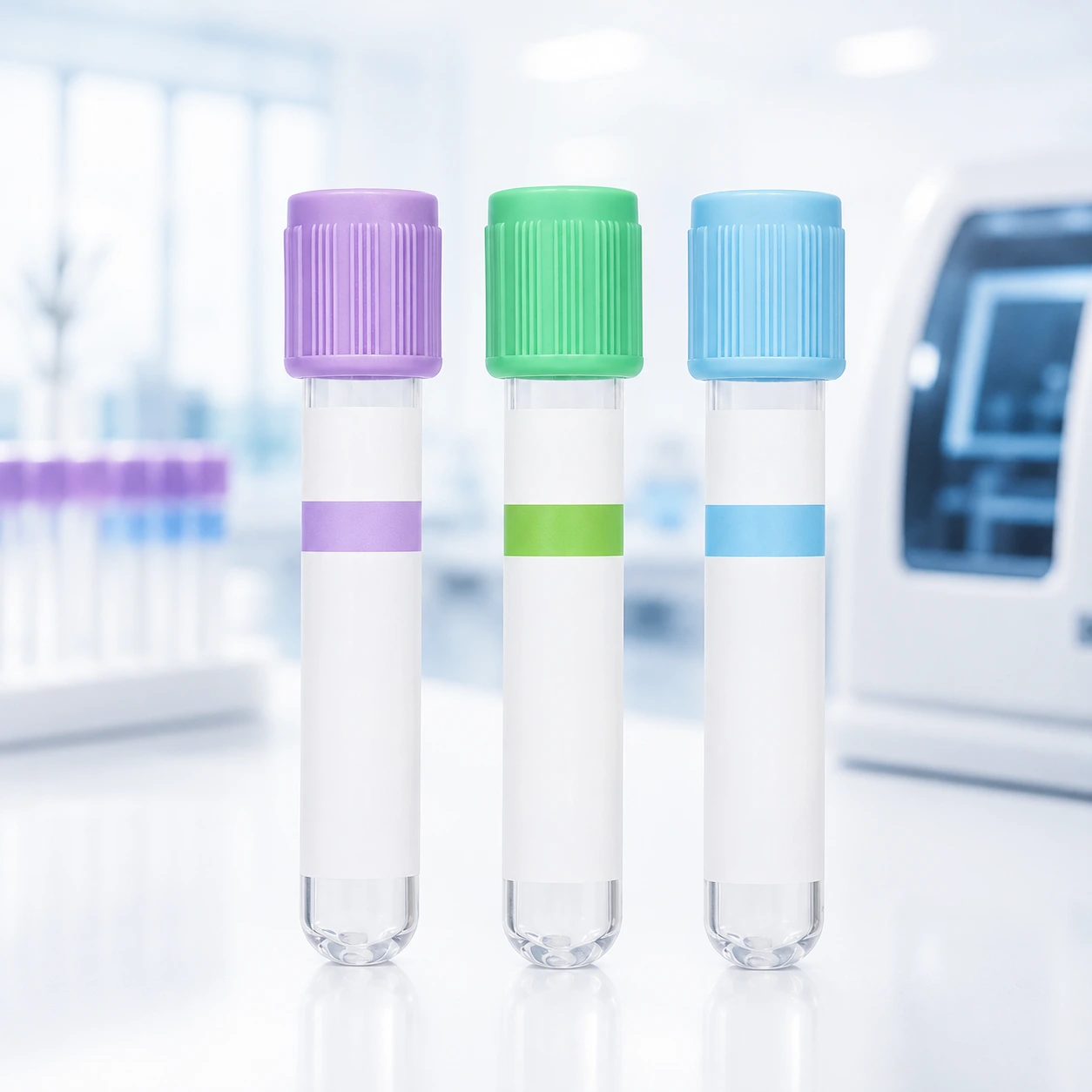
These tubes are typically identified by their purple or lavender-colored caps. They are widely used in hematology tests, including complete blood counts (CBC), blood smears, and molecular diagnostics. EDTA tubes are particularly valued because they maintain the morphology of blood cells, allowing accurate examination under a microscope.
Different sizes of EDTA tubes are available depending on the required sample volume. For example, laboratories may use 2ml to 10ml EDTA tubes depending on the test. The choice of tube size is important, as too much or too little anticoagulant can affect results.
What Are Heparin Tubes?
A heparin tube is a type of blood collection tube used in clinical laboratories to prevent clotting and preserve plasma for testing. These tubes contain lithium heparin or sodium heparin, anticoagulants that work by activating antithrombin, which in turn inhibits clotting factors. By preventing clot formation, heparin tubes allow laboratories to quickly separate plasma for analysis.
Heparin tubes are typically recognized by their green-colored caps. They are widely used in clinical chemistry tests, including electrolyte analysis, blood gas studies, and plasma-based assays. Because heparin acts rapidly, these tubes are especially useful when plasma is needed urgently, reducing turnaround time compared to other anticoagulants.
One of the main advantages of heparin tubes is that they minimize clotting without significantly altering plasma composition. However, they are not suitable for hematology tests like complete blood counts (CBC), as they can distort cell morphology. For those tests, EDTA tubes are preferred.
In summary, heparin tubes are essential for plasma chemistry and biochemical testing, offering speed, reliability, and accuracy. To explore more about blood collection tubes and their differences, visit EDTA Tubes vs Other Blood Collection Tubes or check the EDTA Tube website.
What Are Citrate Tubes?
A citrate tube is a blood collection tube designed specifically for coagulation studies. It contains sodium citrate as the anticoagulant, which works by binding calcium ions in the blood. Unlike EDTA, citrate binds calcium reversibly, meaning that clotting factors remain intact but inactive until testing. This property makes citrate tubes essential for accurate measurement of clotting times.
Citrate tubes are easily recognized by their light blue-colored caps. They are widely used in tests such as prothrombin time (PT), activated partial thromboplastin time (aPTT), and international normalized ratio (INR). These tests are critical for patients on anticoagulant therapy, those with bleeding disorders, or before surgical procedures.
One important feature of citrate tubes is the blood-to-additive ratio. Typically, a 9:1 ratio is required to ensure reliable results. If the tube is underfilled, the dilution effect can lead to inaccurate clotting times.
While citrate tubes are excellent for coagulation studies, they are not suitable for hematology or plasma chemistry tests. For those, EDTA tubes or heparin tubes are preferred.
In summary, citrate tubes are indispensable in hematology laboratories, ensuring precise evaluation of clotting function. To learn more about comparisons, see EDTA tubes vs other blood collection tubes or explore the EDTA Tube website.
Comparative Table: EDTA vs Heparin vs Citrate Tubes
| Feature | EDTA Tube | Heparin Tube | Citrate Tube |
|---|---|---|---|
| Anticoagulant | EDTA | Lithium/Sodium Heparin | Sodium Citrate |
| Tube Color | Purple/Lavender | Green | Light Blue |
| Main Use | CBC, hematology | Plasma chemistry | Coagulation studies |
| Mechanism | Chelates calcium | Activates antithrombin | Binds calcium reversibly |
| Advantages | Preserves cell morphology | Fast plasma prep | Accurate coagulation tests |
| Limitations | Not for coagulation | May interfere with PCR | Dilution effect |
For more comparisons, see EDTA tubes vs other blood collection tubes.
Why EDTA vs Heparin Tube Matters
The choice between an EDTA tube and a heparin tube is critical in laboratory medicine because each anticoagulant affects blood samples differently. EDTA works by chelating calcium ions, which prevents clotting and preserves the shape and structure of blood cells. This makes EDTA tubes the gold standard for hematology tests such as complete blood counts (CBC), blood smears, and molecular diagnostics. If a heparin tube were used instead, cell morphology could be distorted, leading to inaccurate results.
On the other hand, heparin tubes act by activating antithrombin, which inhibits clotting factors and allows plasma to be separated quickly. This makes them ideal for clinical chemistry tests, including electrolyte analysis and blood gas studies. However, heparin can interfere with certain molecular assays, which is why EDTA tubes are preferred for DNA or RNA-based testing.
Using the wrong tube can compromise diagnostic accuracy. For example, performing a CBC in a heparin tube may produce misleading cell counts, while running plasma chemistry in an EDTA tube could affect electrolyte measurements.
In short, understanding the differences between EDTA vs heparin tube ensures that laboratories select the right tube for the right test, safeguarding both patient care and reliable results. For more comparisons, see EDTA tubes vs other blood collection tubes or explore the EDTA Tube website.
Summary
The comparison of EDTA vs heparin tube vs citrate tube highlights the importance of selecting the right blood collection tube for accurate laboratory testing. EDTA tubes are ideal for hematology because they preserve cell morphology, making them essential for complete blood counts and molecular diagnostics. Heparin tubes are preferred for plasma chemistry and electrolyte analysis since they allow rapid plasma preparation. Citrate tubes are indispensable for coagulation studies, ensuring reliable PT, aPTT, and INR results.
Choosing the correct tube prevents diagnostic errors, safeguards patient care, and ensures reliable laboratory outcomes. For more resources, visit the EDTA Tube website or connect via Contact Us.
FAQs
Q: What is the difference between EDTA vs heparin tube?
EDTA tubes are used for hematology tests like CBC, while heparin tubes are used for plasma chemistry and electrolyte analysis.
Q: Can EDTA vs heparin tube be used interchangeably?
No. Using the wrong tube can lead to inaccurate results. EDTA preserves cell morphology, while heparin is better for plasma-based tests.
Q: Why are citrate tubes important compared to EDTA vs heparin tube?
Citrate tubes are essential for coagulation studies because they preserve clotting factors, unlike EDTA or heparin.
Q: What size EDTA tube should I use?
Tube size depends on the test volume required. See EDTA tube sizes explained for guidance.
Q:Where can I buy EDTA tubes?
You can explore EDTA tube products or visit Siny Medical for more options.