Blood testing has become one of the most important parts of modern healthcare. Doctors rely on laboratory reports every day to diagnose infections, monitor chronic diseases, evaluate anemia, and detect serious medical conditions early. Among all routine laboratory tests, the Complete Blood Count, commonly known as CBC, remains one of the most frequently requested procedures worldwide.
However, CBC accuracy does not begin inside the analyzer. It starts at the moment blood enters the collection tube. That is why healthcare professionals consistently choose Purple Top Tubes for hematology testing. These tubes preserve blood cells effectively, reduce clotting risks, and help laboratories generate reliable results.
Over the years, Purple Top Tubes have earned a strong reputation in hospitals, diagnostic centers, and research laboratories because of their excellent compatibility with CBC analyzers. Their EDTA additive protects blood cell structure during transportation and storage, which directly improves testing accuracy.
This article explains why purple top tubes are considered the gold standard for CBC testing, how EDTA works inside the tube, and why laboratories around the world continue depending on them for high-quality blood analysis.
What Are Purple Top Tubes?
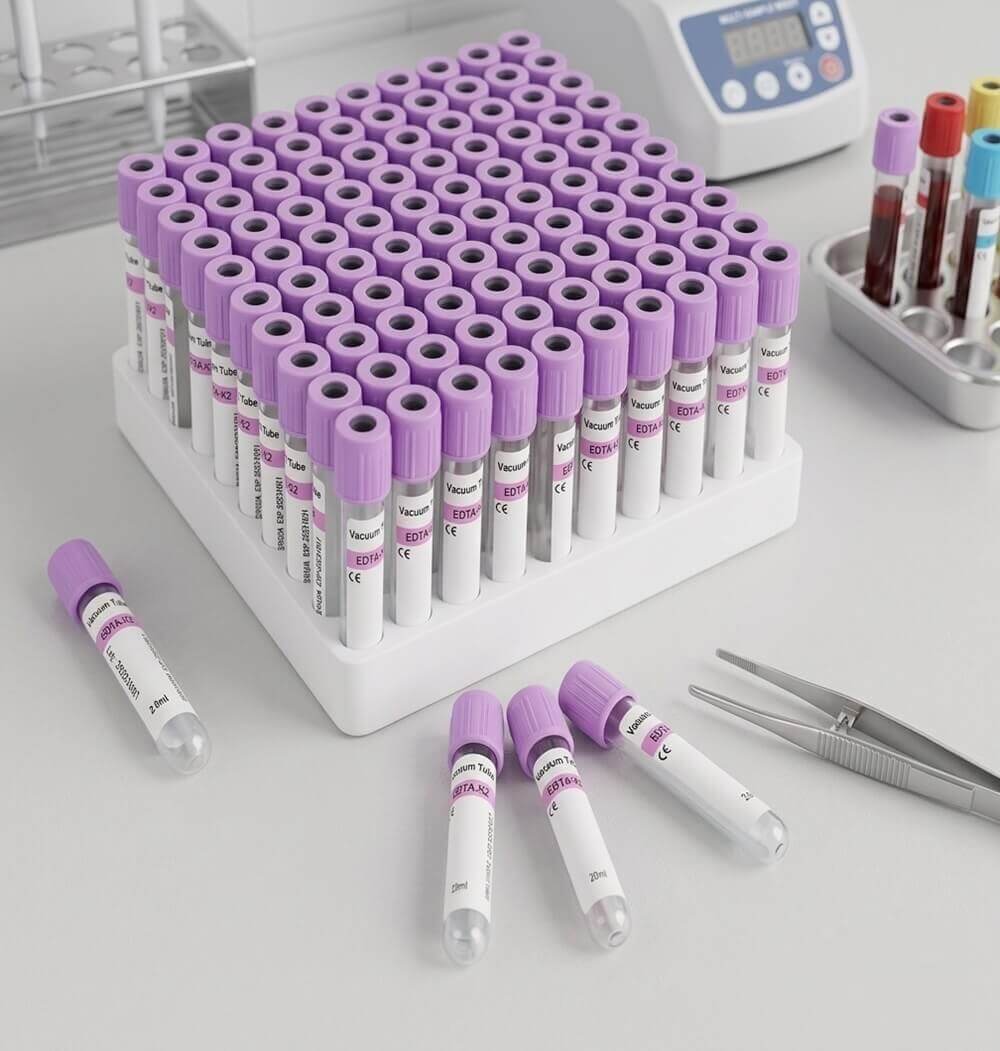
Purple Top Tubes are blood collection tubes that contain EDTA anticoagulants. Laboratories mainly use them for hematology testing because EDTA prevents blood clotting while preserving blood cell structure.
The purple cap helps healthcare professionals identify the tube quickly during blood collection procedures. In many laboratories, these tubes are also called lavender top tubes because manufacturers sometimes use slightly different cap shades.
Inside the tube, EDTA binds calcium ions in the blood sample. Since calcium is necessary for clotting, this process keeps the specimen stable for laboratory analysis.
CBC testing requires accurate measurement of blood cells. If blood clots form inside the sample, the analyzer cannot deliver reliable results. That is one major reason why Purple Top Tubes are so important in hematology laboratories.
Healthcare facilities looking for different EDTA collection products often explore the options available on EDTA Tube Product Collection.
Why CBC Testing Depends on High-Quality Blood Samples
A Complete Blood Count gives doctors important information about a patient’s overall health. It measures red blood cells, white blood cells, hemoglobin, hematocrit, and platelets.
Doctors commonly order CBC tests to:
- Detect infections
- Diagnose anemia
- Monitor immune disorders
- Evaluate inflammation
- Check treatment progress
According to Complete Blood Count Information, CBC testing remains one of the most widely used laboratory procedures because it provides fast and valuable clinical information.
Still, the accuracy of a CBC report depends heavily on specimen quality. Damaged blood cells may create incorrect platelet counts or abnormal white blood cell readings. Even slight clotting can affect analyzer performance.
Because of this, laboratories need blood collection systems that protect cell integrity from the moment the sample is collected.
That is exactly why Purple Top Tubes have become the standard choice in hematology.
How EDTA Makes Purple Top Tubes So Effective
The secret behind the effectiveness of Purple Top Tubes is EDTA, which stands for ethylenediaminetetraacetic acid.
Although the chemical name sounds complicated, its function is simple. EDTA prevents clot formation by binding calcium inside the blood sample.
Without calcium, the clotting process cannot begin.
This protection helps preserve:
- Red blood cell shape
- White blood cell structure
- Platelet distribution
- Hemoglobin stability
Because blood cells remain intact, automated hematology analyzers can measure them more accurately.
Other anticoagulants sometimes alter blood cell morphology during storage. EDTA, however, preserves cellular structure exceptionally well when used correctly.
Healthcare professionals interested in the science behind EDTA can learn more through Why EDTA Is Used as the Additive in Purple Top Tubes.
Detailed explanations about the anticoagulant mechanism are also available in How Does EDTA in Purple Top Tubes Work?.
Why Purple Top Tubes Are Better for CBC Testing
Many blood collection tubes exist in modern laboratories, but CBC testing requires very specific specimen conditions.
For example, serum tubes allow blood clotting before analysis. That works well for chemistry testing but creates problems for hematology analyzers.
Coagulation tubes use sodium citrate, which is ideal for clotting studies but not for preserving blood cell morphology.
Purple Top Tubes remain superior for CBC testing because they maintain stable blood cells throughout the testing process.
This stability helps laboratories reduce:
- Sample rejection
- Analyzer errors
- Repeat testing
- Delayed reporting
Reliable specimen quality also improves diagnostic confidence for physicians.
Additional comparisons between tube types are available in Purple Top vs Other Blood Collection Tubes.
Purple Top Tubes and Lavender Top Tubes: Are They Different?
Many people become confused when they hear the terms purple top tube and lavender top tube. In most laboratory environments, both names refer to the same EDTA blood collection product.
Manufacturers may use slightly different cap colors depending on branding or production standards, but the clinical purpose remains nearly identical.
Healthcare workers commonly use both terms interchangeably during blood collection procedures.
Laboratories looking for more clarification can review Purple Top vs Lavender Top Blood Tubes.
Why Laboratories Trust Purple Top Tubes
Modern laboratories process huge numbers of blood samples every day. A busy diagnostic center may analyze thousands of CBC tests within a single shift.
Under these conditions, reliability matters enormously.
Healthcare professionals trust Purple Top Tubes because they consistently deliver stable specimens. Their compatibility with automated analyzers helps laboratories maintain smooth workflows and reduce operational delays.
When specimen quality remains stable, laboratories spend less time handling errors or recollecting blood samples.
This also improves the patient experience because fewer repeat collections become necessary.
Laboratory managers often prioritize EDTA tubes because of their dependable performance in routine hematology applications.
The Importance of Proper Vacuum Pressure
One overlooked feature in blood collection systems is vacuum accuracy.
Medical-grade Purple Top Tubes contain carefully controlled vacuum pressure that pulls a precise blood volume into the tube during collection.
This matters because EDTA concentration must remain balanced with the blood sample volume.
If the tube contains too little blood, the additive concentration becomes too strong. This may affect blood cell measurements and create inaccurate results.
If the tube contains excessive blood, clotting may occur because the anticoagulant becomes diluted.
Reliable vacuum systems help laboratories maintain accurate CBC readings across large testing volumes.
Healthcare facilities often review tube size recommendations through EDTA Tube Sizes Explained.
Choosing the Correct Tube Size Matters
Different patients and laboratory procedures require different blood volumes.
For pediatric patients, smaller EDTA tubes often work better because they minimize blood loss during collection. Larger diagnostic panels may require higher sample volumes.
Selecting the correct tube size helps laboratories improve efficiency and maintain proper blood-to-additive balance.
Resources such as Choosing Between 2ml, 3ml, 4ml and 5ml EDTA Tubes and What Size EDTA Tube Should You Use? help healthcare professionals choose the most suitable collection volume.
Larger collection options are also discussed in 10ml EDTA Purple Top Tubes Guide.
Proper Handling Improves CBC Accuracy
Even high-quality Purple Top Tubes require correct handling procedures after blood collection.
Healthcare workers should gently invert the tube several times immediately after collection. This allows the EDTA additive to mix evenly with the blood sample.
Aggressive shaking may damage blood cells and affect hematology results. Inadequate mixing, however, may allow clot formation inside the specimen.
Temperature and storage conditions also influence sample stability.
Laboratories can improve specimen quality by following the recommendations in Proper Handling and Storage of EDTA Tubes.
Additional handling guidance is available in How to Use an EDTA Tube.
Shelf Life and Storage Stability
Blood collection tubes must remain stable throughout transportation and storage.
Medical-grade Purple Top Tubes undergo strict quality testing to ensure reliable vacuum performance and additive stability over time.
Expired tubes may lose vacuum pressure or anticoagulant effectiveness. This can create collection failures or inaccurate CBC reports.
Healthcare facilities should monitor expiration dates carefully and store tubes under proper conditions.
More details about storage recommendations are available in EDTA Blood Collection Tubes Expiration Shelf Life Guide.
Purple Top Tubes in Molecular and DNA Testing
Although CBC testing remains their primary application, Purple Top Tubes also support molecular diagnostics and DNA analysis.
Many genetic laboratories choose EDTA-preserved blood because it protects nucleic acid stability during transportation and storage.
This makes purple top tubes useful for:
- DNA extraction
- Genetic screening
- Molecular pathology
- Research applications
Additional information is available in Can EDTA Tubes Be Used for DNA Testing?.
Manufacturing Quality Makes a Difference
Not all blood collection tubes deliver the same level of performance.
Low-quality tubes may develop problems such as inconsistent vacuum pressure, weak cap sealing, poor additive distribution, or labeling issues.
These problems increase the risk of sample rejection and laboratory delays.
Reliable manufacturers use controlled production environments and strict quality assurance systems to improve consistency.
Healthcare providers evaluating blood collection products often review Siny Medical EDTA Tubes. Additional company information is available through Siny Medical Manufacturer Profile. Educational product demonstrations can also be viewed on the Siny Medical YouTube Channel.
The Future of Purple Top Tubes in Laboratory Medicine
Laboratory technology continues evolving rapidly. Modern healthcare systems demand faster testing, better automation, and higher accuracy.
As a result, manufacturers now focus on improving:
- Vacuum precision
- Tube sterility
- Analyzer compatibility
- Eco-friendly materials
- Smart labeling systems
These innovations will continue strengthening the role of Purple Top Tubes in hematology and molecular diagnostics.
Industry developments are discussed in Future of EDTA Blood Collection Tubes 2026.
Choosing Reliable Purple Top Tubes for Your Laboratory
Laboratories should always evaluate quality before selecting blood collection products.
Reliable Purple Top Tubes should provide stable EDTA performance, accurate vacuum pressure, secure sealing systems, and clear labeling.
Healthcare facilities can explore additional product information through EDTA Tube Main Product Page.
For direct product support, laboratories may also contact suppliers through EDTA Tube Contact Page.
Summary
Purple Top Tubes have become the gold standard for CBC testing because they preserve blood cell structure, prevent clotting, and support reliable hematology analysis. Their EDTA additive helps laboratories maintain stable specimens from collection through testing, improving both workflow efficiency and diagnostic accuracy.
As healthcare technology continues advancing, high-quality purple top tubes will remain essential for modern laboratories, hospitals, and diagnostic centers worldwide.
To explore more EDTA blood collection products and laboratory solutions, visit EDTA Tube Official Website.
FAQs
Q: What are Purple Top Tubes used for?
A: Purple Top Tubes are mainly used for CBC testing, hematology analysis, and blood cell evaluation because they prevent blood clotting effectively.
Q: Why are Purple Top Tubes important in CBC testing?
A: Laboratories rely on Purple Top Tubes because EDTA preserves blood cell structure and improves analyzer accuracy during CBC testing.
Q: Are Purple Top Tubes and lavender top tubes the same?
A: In most laboratory settings, Purple Top Tubes and lavender top tubes refer to the same EDTA blood collection tubes.
Q: Can Purple Top Tubes be used for DNA testing?
A: Yes. Many molecular laboratories use Purple Top Tubes because they help preserve DNA quality during transportation and storage.
Q: Why does EDTA matter in Purple Top Tubes?
A: EDTA prevents clot formation inside Purple Top Tubes, allowing laboratories to maintain accurate blood cell measurements.
Q:How should Purple Top Tubes be stored?
A: Healthcare facilities should store Purple Top Tubes according to manufacturer recommendations to maintain vacuum stability and additive effectiveness.