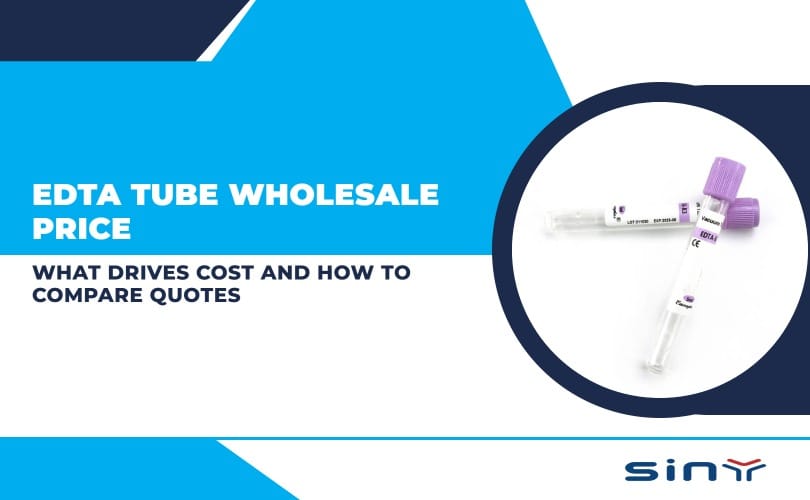
Every lab manager knows this frustration: you receive a batch of blood collection tubes, run your standard tests, and suddenly your hematology results don’t match up. Platelet clumping appears in samples. Cell counts seem off. You’re left wondering if the problem is your analyzer or something else entirely. More often than not, the culprit is poor-quality K3 EDTA blood collection tubes. When tubes fail, labs waste time troubleshooting, resampling patients, and dealing with delayed diagnoses. The solution? Learning exactly what separates reliable EDTA tubes from substandard ones before you place your next order.
Understanding K3 EDTA Blood Collection Tubes and Their Critical Role
K3 EDTA blood collection tubes contain potassium EDTA (ethylenediaminetetraacetic acid) as an anticoagulant. The “K3” refers to the tripotassium salt form of EDTA, which prevents blood from clotting by binding calcium ions. Labs rely on these purple-top tubes daily for complete blood counts, blood typing, and molecular diagnostics.
Why K3 EDTA Tubes Matter for Accurate Testing
The quality of your EDTA tubes directly impacts test accuracy. When EDTA concentration is off, you might see:
- Platelet satellitism or clumping
- Falsely low platelet counts
- Cell morphology changes
- Hemolysis in samples
- Unreliable DNA/RNA extraction
A single faulty tube can delay patient care and damage your lab’s reputation. That’s why procurement teams must evaluate suppliers carefully rather than simply choosing the lowest bidder.
Key Quality Indicators for K3 EDTA Blood Collection Tubes
Not all EDTA blood collection tubes meet the same standards. Here are the essential factors that separate quality products from questionable ones.
Manufacturing Standards and Certifications
Look for tubes manufactured under strict quality systems. ISO 13485 certification demonstrates a commitment to medical device quality management. CE marking indicates compliance with European health and safety standards. These aren’t just paperwork—they reflect systematic quality control throughout production.
When evaluating a manufacturer like Siny Medical, check their compliance documentation. Established suppliers maintain transparent certification records and regular audits. Since 2003, manufacturers with track records show they understand regulatory requirements and maintain consistent standards.
EDTA Concentration Accuracy
The most critical specification is EDTA concentration. K3 EDTA tubes should contain 1.5-2.2 mg of EDTA per milliliter of blood. Too little EDTA results in microclots. Too much causes cell shrinkage and morphology artifacts.
Quality manufacturers spray-dry EDTA onto tube walls in precise quantities. The coating should be uniform, fully dried, and properly adhered. Ask potential suppliers about their EDTA application process and batch testing protocols.
The Vital Role of K3 EDTA Blood Collection Tubes in Diagnostics
Blood collection tubes are more than just containers; they are sophisticated medical devices designed to preserve sample integrity from the moment of collection until analysis. Among the various types, the K3 EDTA blood collection tube stands out for its specific anticoagulant properties. EDTA (Ethylenediaminetetraacetic acid) acts by chelating calcium ions, which are essential for the blood clotting cascade. By binding to these ions, EDTA effectively prevents blood from clotting, thus preserving the cellular components and plasma for accurate hematological testing. This makes K3 EDTA tubes indispensable for a wide range of tests, including complete blood counts (CBC), blood typing, and various molecular diagnostics.

The “K3” refers to the potassium salt of EDTA, specifically tri-potassium EDTA. This form is widely used due to its high solubility and effectiveness as an anticoagulant. The proper concentration of K3 EDTA is crucial; too little and the blood may clot, too much and it could lead to cell shrinkage or dilution effects, both compromising test results. The precision in manufacturing these tubes ensures that the anticoagulant is uniformly coated on the inner surface, preventing micro-clot formation and ensuring homogenous mixing with the blood sample.
Choosing a quality K3 EDTA tube directly impacts the reliability of your lab results. Substandard tubes can lead to hemolysis, platelet clumping, or inaccurate anticoagulant-to-blood ratios, all of which necessitate re-draws and introduce potential errors. For professionals in procurement, lab management, and distribution, understanding these fundamentals is key to making informed decisions that safeguard diagnostic accuracy and operational efficiency.
Key Factors Defining Quality in K3 EDTA Tubes
When evaluating K3 EDTA Blood Collection Tubes, several critical factors differentiate a high-quality product from an unreliable one. These elements contribute directly to sample integrity, patient safety, and the accuracy of diagnostic results.

Material and Manufacturing Standards
The physical components of the tube itself are paramount. High-grade plastic (often PET or polypropylene) is essential for durability, chemical inertness, and gas barrier properties. The plastic must not leach substances that could interfere with blood samples or tests. Additionally, the stopper material—typically rubber or a synthetic polymer—must provide an airtight seal to maintain the vacuum and prevent sample evaporation or contamination, while also being easily penetrable by needles without coring.
Manufacturing occurs in highly controlled environments. ISO 9001 and ISO 13485 certifications are not just badges; they represent a commitment to stringent quality management systems specific to medical devices. These certifications ensure that every step, from raw material sourcing to final packaging, adheres to internationally recognized standards for safety, efficacy, and consistent production. Facilities that prioritize these standards demonstrate a dedication to producing reliable medical consumables. For instance, reputable manufacturers like Ningbo Siny Medical Technology Co., Ltd operate under these certifications, guaranteeing the consistent quality of their products, including their extensive range of EDTA tubes.
Anticoagulant Quality and Concentration
The K3 EDTA anticoagulant is the active ingredient, and its quality is non-negotiable. It must be of high purity to prevent any interference with diagnostic assays. The concentration of the anticoagulant is equally critical. International standards, such as those set by the Clinical and Laboratory Standards Institute (CLSI), recommend specific ratios of anticoagulant to blood volume (e.g., 1.5–2.2 mg of K2EDTA per mL of blood, or equivalent for K3EDTA). Deviations can lead to inaccurate results.
The method of anticoagulant application is also vital. Whether it’s spray-dried or liquid, it must be uniformly coated on the interior surface of the tube to ensure rapid and complete mixing with the blood sample immediately upon collection. This uniform distribution prevents localized clotting and preserves the sample’s cellular morphology.
Vacuum Consistency and Shelf Life
The vacuum in a blood collection tube is not just for drawing blood; it’s a carefully calibrated feature that ensures a precise volume of blood is collected. A consistent vacuum level across all tubes in a batch guarantees accurate blood-to-anticoagulant ratios. Inconsistent vacuum can lead to under-filling or over-filling, both of which compromise sample integrity and test accuracy. Manufacturers must employ rigorous testing to ensure vacuum stability throughout the product’s shelf life.
Speaking of shelf life, the stability of the K3 EDTA anticoagulant and the integrity of the tube’s components over time are crucial. A well-manufactured tube will maintain its vacuum, sterility, and anticoagulant efficacy until its expiration date, ensuring that labs receive reliable performance from every tube. This reliability is a hallmark of quality and a key consideration for bulk buyers and distributors. You can learn more about different types, including EDTA K2 and EDTA K3 disposable vacuum blood collection tube needle system by visiting our product pages.
Sterility and Packaging
Given their use in medical procedures, K3 EDTA tubes must be sterile. Sterilization methods, such as gamma irradiation, must be effective without compromising the integrity of the tube materials or the anticoagulant. Packaging plays a critical role in maintaining this sterility. Individual tubes or packs must be sealed properly to prevent contamination during transit and storage. Clear labeling with lot numbers, expiration dates, and product specifications is also essential for traceability and proper inventory management.
The Difference Between K2 EDTA and K3 EDTA
While both K2 EDTA and K3 EDTA are widely used anticoagulants in blood collection tubes, understanding their subtle differences is important for specific laboratory applications. Both prevent blood clotting by binding calcium ions, but the form of the potassium salt can slightly influence certain parameters.
| Feature | K2 EDTA | K3 EDTA |
| Chemical Form | Di-potassium EDTA (dipotassium salt) | Tri-potassium EDTA (tripotassium salt) |
| Concentration | Typically 1.8 mg/mL blood | Typically 1.8 mg/mL blood |
| Effect on Cells | Minimal cell shrinkage | Slightly more cell shrinkage (approx. 1-2%) |
| Dilution Effect | Less dilution due to less added volume | Slightly more dilution due to higher volume |
| Red Blood Cell Size | Maintained more accurately | Slightly decreased Mean Cell Volume (MCV) |
| Usage | Preferred by CLSI for hematology standards | Widely used, but some labs prefer K2 for CBC |
| Mechanism | Chelates calcium, prevents clotting | Chelates calcium, prevents clotting |
| Appearance | Often spray-dried as a salt on tube wall | Often spray-dried or liquid solution |
Impact on Test Results
The primary difference often cited is the slight effect on red blood cell morphology. K3 EDTA, being a tri-potassium salt, introduces a slightly higher concentration of potassium and can lead to a marginal degree of red blood cell shrinkage compared to K2 EDTA. This shrinkage can manifest as a slightly lower Mean Cell Volume (MCV) in complete blood count (CBC) results. While this difference is often clinically insignificant, some laboratories and regulatory bodies, such as the Clinical and Laboratory Standards Institute (CLSI), have historically shown a preference for K2 EDTA due to its minimal impact on cell volume and less dilutional effect.
However, many modern automated hematology analyzers are calibrated to accommodate both K2 and K3 EDTA, making the choice often dependent on laboratory preference, existing protocols, and specific analyzer compatibility. Both types effectively preserve blood components for accurate testing. It’s crucial for labs to standardize their choice and ensure their analyzers are calibrated for the specific EDTA type they use. Siny Medical offers both EDTA K2 and EDTA K3 vacuum blood collection tubes to meet diverse laboratory requirements.
Selecting a Trusted Supplier for K3 EDTA Tubes
The choice of supplier for your K3 EDTA Blood Collection Tubes is as critical as the tubes themselves. A reliable supplier acts as a partner, ensuring consistent quality, timely delivery, and responsive support. For labs, distributors, and procurement specialists, vetting a manufacturer involves looking beyond just price.
Reputation and Experience
Experience matters. A company with a long history in manufacturing medical consumables has likely refined its processes, navigated industry challenges, and established robust quality control systems. For instance, Ningbo Siny Medical Technology Co., Ltd, a subsidiary of Anhui Siny Laboratory Medicine Technology Co., Ltd, has been a key player in medical device manufacturing since 2003. This extensive experience translates into deep product knowledge and a commitment to sustained excellence. You can learn more about their journey and commitment to quality on their about us page.
Look for manufacturers known for their ethical practices, transparency, and a track record of customer satisfaction. Online reviews, industry testimonials, and direct references can provide valuable insights into a supplier’s reputation.
Certifications and Compliance
As discussed, international certifications like ISO 9001 and ISO 13485 are non-negotiable. These certifications demonstrate adherence to global standards for quality management systems in medical device manufacturing. Additionally, CE marking is essential for products distributed within the European Economic Area, signifying compliance with European health, safety, and environmental protection standards. These certifications aren’t just for show; they assure buyers that the products meet rigorous safety and performance benchmarks. Siny Medical proudly holds these certifications, ensuring that every product, including their purple top blood collection tubes, meets global regulatory requirements.
Production Capabilities and Customization
A top-tier manufacturer should possess significant production capabilities to meet demand without compromising quality. This includes a modern factory with high-end equipment, like Siny Medical’s 12,000 square meter facility, which ensures efficient and precise manufacturing.
Furthermore, the ability to offer customization can be a significant advantage, particularly for large distributors or specialized labs. This might include custom labeling, specific packaging configurations, or even slight variations in tube dimensions or anticoagulant concentrations (within safety limits and standards). A flexible manufacturer can adapt to unique requirements, providing tailored solutions that optimize operations for their clients. Learn more about the specific features of our K3 EDTA Blood Collection Tubes on their dedicated product page.
Customer Support and After-Sales Service
Exceptional customer support is a hallmark of a reliable supplier. This includes responsive communication, clear ordering processes, and efficient logistics. What happens if there’s a problem or a query? A strong after-sales service team can quickly address concerns, provide technical assistance, and handle any issues that may arise, minimizing disruptions to your operations. Building a relationship with a supplier that prioritizes client satisfaction ensures a smoother, more reliable procurement experience. Feel free to contact us for any inquiries or support.
Practical Considerations for Using K3 EDTA Tubes
Even the highest quality K3 EDTA Blood Collection Tubes require proper handling and usage to ensure accurate diagnostic results. Lab professionals and phlebotomists play a crucial role in maintaining sample integrity from collection to analysis.
Proper Collection Technique
The venipuncture technique is fundamental. A clean venipuncture, avoiding hemolysis, is the first step. The tube should be inverted gently 8-10 times immediately after collection. This ensures the K3 EDTA anticoagulant thoroughly mixes with the blood, preventing micro-clot formation without damaging blood cells. Vigorous shaking can lead to hemolysis, making the sample unsuitable for certain tests. The correct fill volume is also critical; under-filling or over-filling can distort the anticoagulant-to-blood ratio, leading to inaccurate results. Most EDTA tubes for blood collection come with clear fill lines to guide users.
Storage and Handling
Proper storage of K3 EDTA tubes before use is essential. Tubes should be stored at room temperature, away from direct sunlight and extreme temperature fluctuations. Always check the expiration date before use; expired tubes may have compromised vacuum integrity or anticoagulant efficacy. After blood collection, samples should be transported to the laboratory swiftly and handled according to specific test requirements, which may include refrigeration or prompt processing.
Avoiding Common Errors
Several common errors can compromise samples collected in K3 EDTA tubes:
- Incorrect Order of Draw: If multiple tubes are collected, EDTA tubes should be drawn after sterile culture tubes and tubes for coagulation studies, but before tubes with clot activators or gel separators. This prevents cross-contamination of additives.
- Insufficient Mixing: As mentioned, gentle but thorough inversion is key. Inadequate mixing is a frequent cause of micro-clots, leading to erroneous cell counts.
- Hemolysis: Caused by difficult venipuncture, vigorous shaking, or using too small a needle gauge, hemolysis can invalidate many hematology tests.
- Under- or Over-filling: Not adhering to the indicated fill volume will alter the anticoagulant concentration relative to the blood, affecting results.
Adhering to best practices in blood collection and sample handling, combined with the use of high-quality K3 EDTA Blood Collection Tubes from a trusted manufacturer like Siny Medical, ensures that every sample provides the most accurate and reliable diagnostic information possible. Explore our full range of products at edtatube.com/products.
The Future of K3 EDTA Blood Collection Technology
The field of medical diagnostics is constantly evolving, and K3 EDTA Blood Collection Tubes are no exception. Manufacturers are continuously researching and developing innovations aimed at improving sample integrity, enhancing user safety, and streamlining laboratory workflows.
One area of ongoing development involves advanced tube materials. Researchers are exploring new polymers that offer even better barrier properties, reducing gas exchange and extending sample stability. There’s also a focus on materials that further minimize the risk of adsorption of analytes, ensuring that the blood sample remains as pristine as possible for a wider range of tests, including highly sensitive molecular diagnostics.
Another significant trend is the integration of “smart” features. While still in early stages, concepts like tubes with built-in indicators for proper mixing or fill volume, or even RFID tags for enhanced sample tracking, could revolutionize how samples are managed. These innovations aim to reduce human error and improve overall lab efficiency.
Moreover, there’s a continuous drive towards more sustainable and environmentally friendly manufacturing processes and materials. As medical waste becomes a growing concern, manufacturers are investigating biodegradable plastics or more easily recyclable components for their blood collection tubes, aligning with global efforts for greater ecological responsibility.
Ultimately, the future of K3 EDTA blood collection technology is geared towards making diagnostic processes even more reliable, safer, and efficient. By choosing a manufacturer that invests in research and development, labs and distributors can ensure they are equipped with the most advanced and dependable tools for their critical work. Keep up-to-date with industry advancements and quality products by visiting the main site at edtatube.com.
Conclusion
Choosing the right K3 EDTA Blood Collection Tubes is a decision that profoundly impacts diagnostic accuracy, operational efficiency, and ultimately, patient care. It’s not merely about purchasing a commodity; it’s about investing in reliability, precision, and trust. By understanding the critical factors that define tube quality—from manufacturing standards and anticoagulant efficacy to vacuum consistency and sterility—you empower your organization to make informed choices.
Partnering with an experienced and reputable manufacturer that adheres to stringent international certifications like ISO 9001, ISO 13485, and CE marking is paramount. A supplier like Ningbo Siny Medical Technology Co., Ltd, with its robust manufacturing capabilities, commitment to quality, and extensive industry experience since 2003, stands as a reliable choice for your blood collection needs. We are dedicated to providing products that meet the highest global standards, ensuring that every tube contributes to accurate diagnostics.
Our unwavering commitment as an original manufacturer means we control every aspect of production, guaranteeing consistency and superior performance. Elevate your laboratory’s standards and ensure the integrity of your diagnostic processes.
Call to Action: Discover the difference quality makes. As an original manufacturer with over two decades of experience, Ningbo Siny Medical Technology Co., Ltd is your trusted partner for high-quality K3 EDTA Blood Collection Tubes. Contact us today to discuss your specific requirements and explore our comprehensive range of certified medical consumables.
FAQs
What certifications should we prioritize when sourcing K3 EDTA Blood Collection Tubes for bulk procurement?
For bulk procurement, prioritize suppliers with ISO 9001 and ISO 13485 certifications, as these confirm adherence to international quality management systems for medical devices. CE marking is also crucial for distribution in specific regions.
What measures does your company take to ensure the vacuum consistency and anticoagulant stability across large batches of K3 EDTA tubes?
Our company employs state-of-the-art manufacturing processes in our ISO-certified 12,000 square meter facility. We conduct multi-stage quality control checks, including automated vacuum testing for every tube and rigorous anticoagulant purity and coating consistency assessments.
Can we request customized labeling or packaging options for K3 EDTA tubes to align with our branding or specific distribution requirements?
Yes, as an original manufacturer, we offer flexibility for customization. We can discuss options for custom labeling, specific packaging configurations, and other tailored requirements to align with your brand identity or streamline your distribution logistics, provided they meet regulatory guidelines and our production capabilities. Please contact our sales team to explore these possibilities.