Right EDTA Tube Size is a small decision that carries enormous weight in laboratory diagnostics. From routine hematology tests to complex multi-parameter panels, the tube size you choose directly affects sample integrity, anticoagulant balance, and ultimately, the accuracy of test results.
Yet, many laboratories still treat EDTA tube selection as a routine habit rather than a calculated choice. This often leads to underfilled or overfilled tubes, compromised samples, repeated collections, and frustrated clinicians and patients alike.
In this in-depth guide, we will walk through everything you need to know about choosing the Right EDTA Tube Size for your test panel—practically, scientifically, and confidently. Whether you manage a high-volume diagnostic lab or perform specialized hematology testing, this article is designed to help you make informed, reliable decisions.
Understanding EDTA Tubes and Their Role in Blood Testing
EDTA tubes are blood collection tubes coated with Ethylenediaminetetraacetic acid, an anticoagulant that binds calcium ions. By preventing clot formation, EDTA preserves blood cell morphology and ensures stable test results.
Because of this property, EDTA tubes are widely used for hematology testing, including Complete Blood Count (CBC), blood film analysis, hemoglobin evaluation, and other cell-based diagnostics. According to the definition of a Complete Blood Count, maintaining cellular integrity is critical, which is exactly where EDTA performs best.
However, EDTA works effectively only when the blood-to-additive ratio is correct. That ratio depends heavily on tube size.
Why Choosing the Right EDTA Tube Size Matters
Choosing the Right EDTA Tube Size is not simply about volume convenience. It directly affects analytical accuracy and laboratory efficiency.
When a tube is underfilled, excess EDTA can cause cell shrinkage, altered hematocrit values, and falsely low platelet counts. On the other hand, overfilling may lead to insufficient anticoagulation, resulting in microclots and unreliable readings.
Clinical studies consistently show that pre-analytical errors—many related to incorrect tube filling—account for up to 60% of laboratory inaccuracies. Tube size selection is a major contributor to these avoidable errors.
For a foundational understanding of EDTA tube composition and performance, you may explore this complete guide to EDTA tubes, types, uses, and benefits.
EDTA Tube Sizes and Their Typical Uses
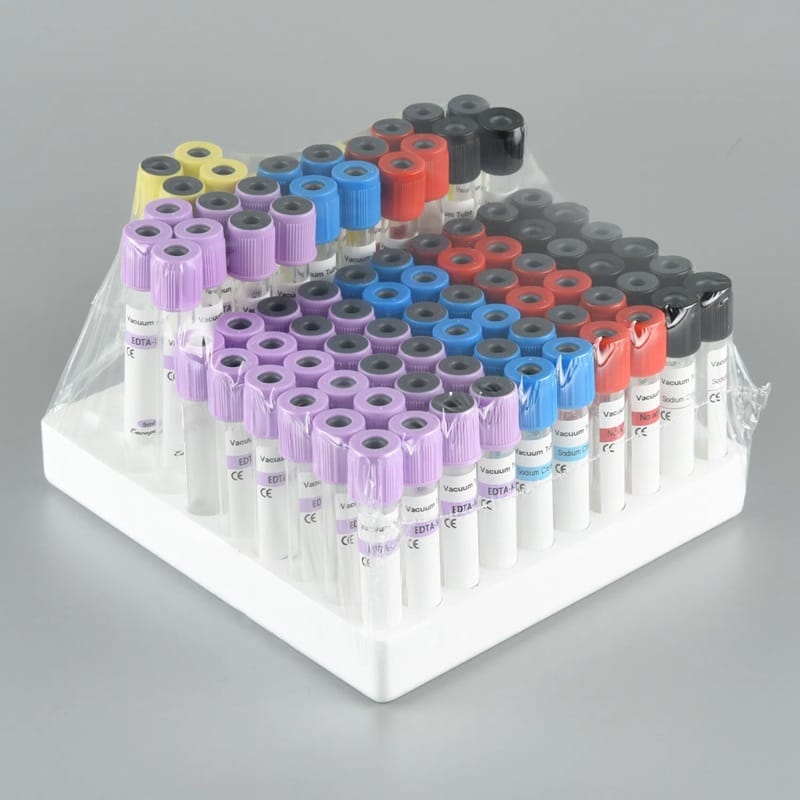
EDTA tubes are manufactured in multiple volumes to support different testing requirements. Understanding the practical application of each size helps ensure you always select the Right EDTA Tube Size.
2ml to 3ml EDTA Tubes
Smaller volumes are commonly used in pediatric testing, neonatal screening, and cases where blood volume is limited. These tubes are ideal for basic CBC testing when only minimal sample volume is required.
4ml to 5ml EDTA Tubes
This is the most widely used range in routine diagnostic laboratories. It supports standard CBC, differential counts, and peripheral smear preparation. Many labs consider this range the default Right EDTA Tube Size for adult hematology panels.
6ml to 10ml EDTA Tubes
Larger tubes are used for extended panels, repeat testing from a single draw, or when additional analyses are anticipated. A detailed comparison is available in this guide on 10ml EDTA tubes vs 5ml tubes.
For a full breakdown, this EDTA tube size guide from 2ml to 10ml offers practical insights for laboratory professionals.
How Test Panels Influence the Right EDTA Tube Size
Different test panels require different blood volumes, making test selection a critical factor in choosing the Right EDTA Tube Size.
A single CBC generally requires less than 2ml of whole blood. However, panels that include ESR, reticulocyte counts, or advanced hematology markers may require more volume. If multiple tests are ordered simultaneously, a larger EDTA tube reduces the need for redraws.
Laboratories that process high-throughput samples often standardize tube sizes for efficiency. Still, customization based on test panel requirements remains the best practice.
You can explore detailed guidance on this topic in How to choose the right EDTA tube for your lab.
Blood-to-Additive Ratio: The Science Behind Tube Size
The effectiveness of EDTA depends on maintaining the correct anticoagulant concentration. Each EDTA tube is designed for a specific fill volume, ensuring an optimal blood-to-additive ratio.
When the Right EDTA Tube Size is selected and filled correctly, red blood cells retain their shape, white blood cells remain intact, and platelets do not aggregate. This balance is essential for accurate cell counts and morphology analysis.
Incorrect tube size selection disrupts this ratio and can compromise results even before the sample reaches the analyzer.
Patient Type and Collection Conditions
Patient demographics play a major role in tube size selection. Pediatric, geriatric, and critically ill patients often have limited venous access, making smaller EDTA tubes more appropriate.
In contrast, adult outpatient or inpatient testing usually allows for standard 5ml or larger tubes. Selecting the Right EDTA Tube Size in these cases minimizes patient discomfort while ensuring sufficient sample volume.
Environmental factors, such as collection technique and transport time, also influence tube performance. Larger volumes tend to be more stable during extended transport.
Comparing EDTA Tubes with Other Blood Collection Tubes
EDTA tubes are not interchangeable with citrate, heparin, or serum tubes. Each additive serves a different diagnostic purpose.
For hematology, EDTA remains the gold standard due to its superior preservation of cellular components. A detailed comparison can be found in EDTA tubes vs other blood collection tubes, which clearly explains why EDTA is preferred for blood cell analysis.
Choosing the Right EDTA Tube Size ensures you gain the full benefit of this anticoagulant advantage.
Quality Standards and Regulatory Considerations
Modern EDTA tubes must meet international quality standards, including ISO and CE certifications. Tube size accuracy, vacuum integrity, and additive consistency are tightly regulated.
Reputable manufacturers, such as those highlighted in this EDTA tube overview, follow strict quality control protocols to ensure reliable performance across all sizes.
Using certified products is essential when selecting the Right EDTA Tube Size for clinical diagnostics.
Mistakes Labs Make When Choosing EDTA Tube Size
Many laboratories default to a single tube size for all tests. While this may simplify inventory management, it often leads to sample rejection or compromised accuracy.
Another frequent mistake is ignoring test expansion. A test panel may evolve over time, requiring additional volume. Planning ahead by choosing a slightly larger tube can prevent unnecessary recollection.
Avoiding these pitfalls starts with understanding how to select the Right EDTA Tube Size for both current and future needs.
Practical Selection Guide for Laboratories
Laboratories aiming for consistency and accuracy often develop internal guidelines for EDTA tube usage. These guidelines consider test menus, patient demographics, and analyzer requirements.
For example, routine CBC testing may standardize on 5ml tubes, while specialized panels default to 10ml tubes. Pediatric testing may rely on 2ml or 3ml tubes.
For more clarity, this article on what size EDTA tube should you use: 3ml, 5ml, or 10ml provides a practical decision framework.
Trusted Resources and Product Selection
When sourcing EDTA tubes, working with specialized suppliers ensures consistency and technical support. Browsing a dedicated EDTA tube product category allows laboratories to compare sizes, specifications, and certifications in one place.
You can also explore verified educational resources through Sinymedical’s official YouTube channel or manufacturer listings on Made-in-China for industry insights.
For direct consultation, laboratories can always reach out via the contact page for expert guidance on selecting the Right EDTA Tube Size.
Summary
Selecting the Right EDTA Tube Size is critical for accurate diagnostics, patient safety, and laboratory efficiency. From 2ml pediatric tubes to 10ml molecular biology tubes, each size serves a unique purpose. By aligning tube size with test requirements, patient demographics, and analyzer compatibility, labs can ensure reliable results and streamlined workflows.
For more guidance, explore EDTA Tube Products or reach out via Contact Us.
FAQs
What is the most commonly used EDTA tube size in laboratories?
The most commonly used option is 5ml, as it often represents the Right EDTA Tube Size for routine CBC and standard hematology panels.
Can using the wrong EDTA tube size affect test accuracy?
Yes, incorrect volume alters the blood-to-additive ratio, which means the Right EDTA Tube Size is essential for reliable results.
Which EDTA tube size is best for pediatric patients?
Smaller volumes such as 2ml or 3ml are often considered the Right EDTA Tube Size for pediatric and neonatal testing.
Is a larger EDTA tube always better?
Not always. While larger tubes offer flexibility, the Right EDTA Tube Size depends on test requirements and patient factors.
How do I choose the right EDTA tube size for multiple tests?
When multiple tests are ordered, selecting a larger option is usually the Right EDTA Tube Size to avoid repeat collections.