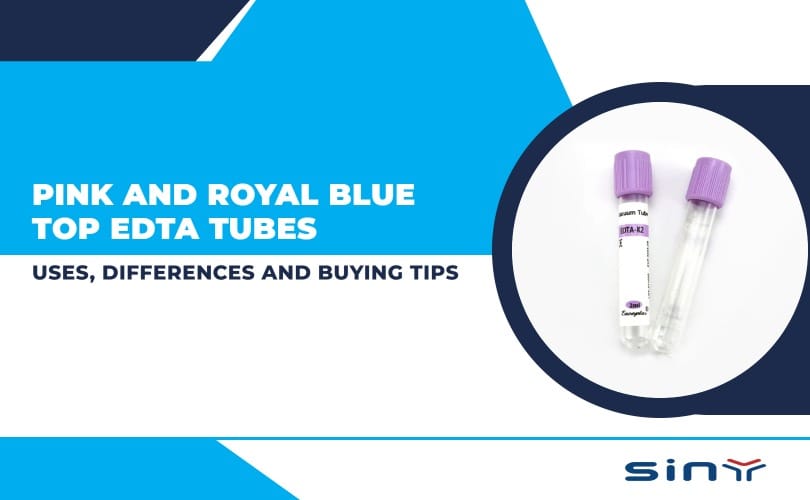
A pink top EDTA tube looks almost identical to the lavender tube on the same rack. However, labs use it for a different job, and mixing the two up can slow down a blood bank. The same is true for the royal blue top, which many buyers have never ordered at all.
This guide explains what each cap colour means, which departments use them, and what to check before you buy. We wrote it for lab managers, purchasing teams and distributors who want the right EDTA tubes on the shelf. Along the way, we show how SINY, an EDTA tube manufacturer, helps buyers match tubes to each use.
[Image: lavender, pink and royal blue capped tubes side by side in a rack]
What Is a Pink Top EDTA Tube?
A pink top EDTA tube is a blood collection tube that contains K2 EDTA as its anticoagulant. In that sense, it works just like a lavender tube. EDTA binds calcium in the sample, so the blood stays liquid for testing.
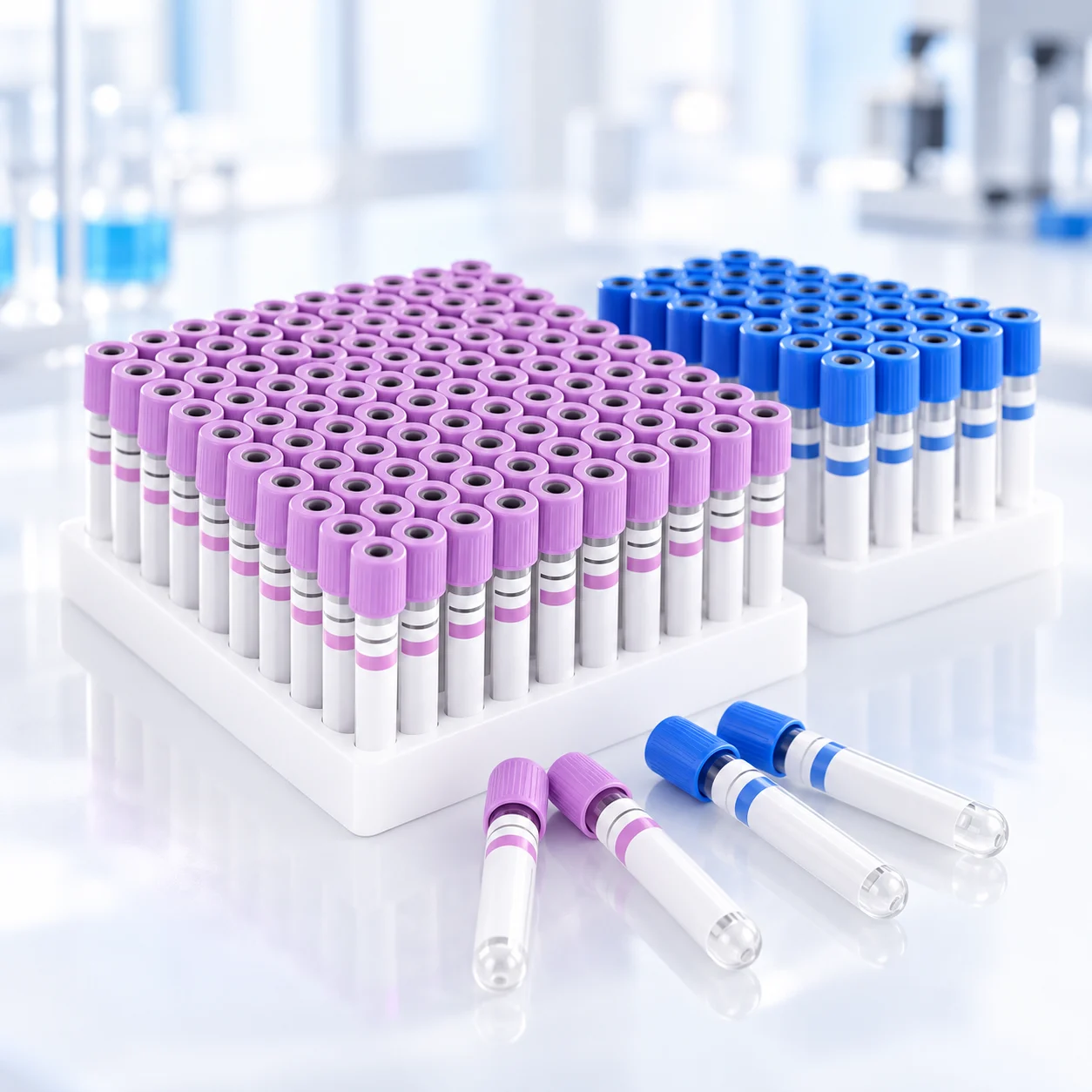
The difference is the department. Many hospital laboratories reserve pink tubes for the blood bank. For example, the OSF HealthCare specimen collection guide lists the pink top with EDTA for “blood bank for type and cross-match”, while the lavender top serves haematology.
Why use a separate colour for the same additive? Because colour makes sorting faster. When a pink top EDTA tube arrives in the lab, staff route it to transfusion services straight away. As a result, crossmatch samples do not sit in the haematology queue.
Pink top EDTA tube vs lavender top tube
Chemically, both tubes usually hold K2 EDTA. Practically, they follow different paths. The lavender tube goes to cell counts, while the pink tube goes to blood typing and compatibility work. Some blood banks also require special labelling on pink tubes, so the label area matters more.
If you want a deeper look at lavender and purple caps, our guide on purple top vs lavender top blood tubes explains how those two names overlap.
What Is a Royal Blue Top EDTA Tube?
The royal blue top is the trace element tube. Labs use it when they measure metals and elements at very low levels. In this case, the tube and stopper materials must not add contamination to the sample.
Royal blue tubes come in more than one version. Some contain K2 EDTA for whole blood or plasma testing, and others contain no additive for serum testing. The OSF guide above, for instance, lists a navy blue tube with EDTA for “trace element determinations, heavy metals”. Therefore, buyers must check the label colour band and additive, not just the cap.
When you source royal blue tubes, ask the supplier how it controls trace element levels in the tube wall, stopper and additive. A clear answer, ideally with test data for the elements your customers measure, tells you the product was designed for this job. If the supplier cannot answer, treat the tube as a general EDTA tube and do not sell it for trace metal work. In practice, this one question filters out many unsuitable offers.
Because the use is specialised, volumes are smaller than for lavender tubes. Even so, hospitals that run toxicology or nutrition testing need a steady supply. A supplier that can explain the difference between versions saves you from costly returns.
Other EDTA Cap Colours You Should Know
Pink and royal blue are not the only EDTA tubes. A tan top tube with EDTA is used for lead testing in many labs. Meanwhile, some systems use pearl or white caps for EDTA tubes with a gel separator.
Cap colours can vary slightly between brands. That is why every lab should confirm colours against its own test catalogue. For distributors, it means keeping clear product sheets for each colour you sell.
| Cap colour | Additive | Typical department | Common use (lab guide example) |
|---|---|---|---|
| Lavender / purple | K2 or K3 EDTA | Haematology | Whole blood counts |
| Pink | K2 EDTA | Blood bank | Type and crossmatch |
| Royal / navy blue | K2 EDTA or no additive | Chemistry / toxicology | Trace elements and heavy metals |
| Tan | K2 EDTA | Toxicology | Lead testing |
| Pearl / white | EDTA with gel | Molecular testing | Plasma separation |
[Image: close-up of cap colours with labels showing additive names]
Technical Details for Pink Top EDTA Tube Orders
Once you know the use, the next step is the specification. Most EDTA tubes share the same building blocks. Still, small differences change how a tube performs on your analysers and racks.
First, check the tube material. PET plastic is light and shatter-resistant, so most labs now prefer it. Glass is still used in some trace element work. Next, check the size. Common formats include 13×75 mm and 13×100 mm, with draw volumes from 2 mL to 6 mL in many blood bank settings.
Then, confirm vacuum or non-vacuum design. Vacuum tubes fill to a set volume, which keeps the blood-to-EDTA ratio correct. Finally, confirm the label. A good pink top EDTA tube label leaves enough space for blood bank identification bands and handwritten details.
SINY supplies K2 EDTA blood collection tubes in several sizes, with PET or glass options. These cover the core specification most blood banks expect from an EDTA tube.
Handling Points That Matter to Labs
Good tubes still need good handling. Recognised collection guides place EDTA tubes after citrate, serum and heparin tubes in the order of draw. In the OSF sequence, lavender, pink and navy blue EDTA tubes follow one another near the end.
After filling, staff mix EDTA tubes gently by inversion, following the tube maker’s instructions. Shaking is avoided, because it can damage cells. In addition, labs follow local rules on labelling, especially for blood bank samples, where identification errors carry serious risk.
Storage before use also matters. Keep tubes within their labelled shelf life and away from heat. Our article on cross-matching blood with EDTA covers how blood bank samples move through the lab.
How Labs Avoid Mix-Ups Between Pink, Lavender and Royal Blue Tubes
Colour coding only works when everyone follows it. In busy wards, a phlebotomist may grab a lavender tube when the request calls for pink. Most of the time, the sample still gets tested. However, the blood bank may reject it if its policy requires a dedicated tube, and the patient then needs a second draw.
Labs reduce this risk in a few simple ways. First, they print the tube colour next to each test in the request system. Second, they stock pink and lavender tubes in separate, clearly marked bins. Third, they train new staff with a printed colour chart at every collection point. Our guide to EDTA tube cap colours is a useful starting point for that training.
Suppliers can help too. For example, a distinct label band, a printed “blood bank” field, or a different carton colour makes the pink top EDTA tube easy to spot in the store room. These details cost little at the ordering stage, yet they prevent confusion later.
Stocking Tips for Distributors and Hospital Buyers
Lavender tubes move fast, so most buyers reorder them every month. Pink and royal blue tubes move more slowly. As a result, they are more likely to expire on the shelf if you overstock them.
A practical approach is to forecast each colour separately. Look at the last six to twelve months of usage by department. Then set reorder points that match real demand rather than the lavender pattern. In addition, ask your supplier whether you can combine colours in one production run to reach the MOQ without overbuying a single colour.
Finally, keep one product sheet per colour. It should show the additive, size, draw volume, shelf life and storage conditions. When a hospital customer asks why a pink top EDTA tube costs a little more than lavender, that sheet gives your sales team a clear, honest answer.
Buying Guide: What Changes the Price of a Pink Top EDTA Tube
Pink and royal blue tubes are lower-volume items than lavender tubes. As a result, unit prices can be slightly higher, and minimum order quantities may differ by colour. That said, the main price drivers are the same for every EDTA tube.
Material comes first, since glass usually costs more to make and ship than PET. Size and draw volume follow. Order volume matters too, because larger runs spread set-up costs. Custom labels, cap colours and packaging add cost but help you match local requirements.
Questions to ask before you order a pink top EDTA tube
Use these questions in your first enquiry. Clear answers show that the supplier understands blood bank and specialty tubes.
- Which cap colours do you produce for K2 EDTA tubes?
- What is the MOQ per colour and per size?
- Can you share CE and ISO 13485 documents for these products?
- Can the label include our language, lot format and blood bank fields?
- What is the lead time for a new cap colour?
Why Source Specialty EDTA Tubes from a Manufacturer
Specialty colours are where trading companies often struggle. They may not know whether a royal blue tube is the EDTA or the plain version. By contrast, a manufacturer controls the additive, the cap and the label in one place.
SINY runs a 12,000 square metre factory with a capacity of up to 500,000 tubes per day. The company offers OEM manufacturing and custom design, and it lists CE and ISO 13485 certification for its EDTA tubes. SINY also produces EDTA K2 and K3 tubes with coloured caps, which helps buyers who need more than lavender.
To see how production works, you can watch the factory videos on the SINY Medical YouTube channel.
When you are ready to compare options, browse the full SINY EDTA tube range and note the sizes your departments use.
FAQ: Pink Top EDTA Tube
What is a pink top EDTA tube used for?
Many hospital laboratories use a pink top EDTA tube for blood bank work, such as blood typing and crossmatch testing. The tube contains K2 EDTA, which keeps the sample from clotting. The pink colour helps staff route the sample to transfusion services instead of haematology. Always confirm the exact use with your own laboratory test catalogue, because practice can vary between hospitals.
Is a pink top tube the same as a lavender top tube?
Both tubes usually contain K2 EDTA, so the additive is often the same. The difference is how labs use them. Lavender tubes typically go to haematology for blood counts, while a pink top EDTA tube is commonly reserved for the blood bank. Separate colours reduce sorting errors and help each department find its samples quickly.
What is a royal blue top tube with EDTA?
A royal blue top tube is designed for trace element and heavy metal testing. Some versions contain K2 EDTA, while others contain no additive for serum. Unlike a pink top EDTA tube, it is made with materials chosen to avoid adding trace elements to the sample. Check the label band and additive before ordering, because both versions use a similar cap.
Can I order pink top EDTA tubes in bulk from China?
Yes. Many manufacturers in China produce EDTA tubes with different cap colours for export. When you buy a pink top EDTA tube in bulk, ask for the MOQ per colour, CE and ISO 13485 documents, and label options. Request samples first, so your blood bank can check fit, labels and performance before you place a full order.
What sizes do pink top EDTA tubes come in?
Common formats include 13×75 mm and 13×100 mm tubes with draw volumes from about 2 mL to 6 mL, although ranges vary by maker. The right pink top EDTA tube size depends on the analysers, racks and sample volumes your blood bank uses. Ask your supplier for a size chart and confirm compatibility with your equipment.
Summary
Pink, royal blue and lavender tubes may share EDTA, but they serve different departments. A pink top EDTA tube usually goes to the blood bank, while a royal blue tube supports trace element testing. Clear colour coding helps labs route samples faster and avoid mix-ups.
For buyers, the key is to match additive, size, material and label to each use. SINY brings EDTA tube production, coloured cap options and OEM labelling together under one roof. Share your colour list and volumes, and contact the SINY team for a quote.