Purple Top vs Lavender Top Blood Tubes: Blood collection tubes are essential tools in medical diagnostics, each designed for specific tests and analyses. Among these, purple top and lavender top tubes are often discussed, but are they truly different? This blog explores their purposes, uses, and how they fit into the broader spectrum of blood collection tubes. Whether you’re a healthcare professional or simply curious, this guide will provide a detailed understanding of these tubes and their roles in medical testing.
Purple Top Blood Tube
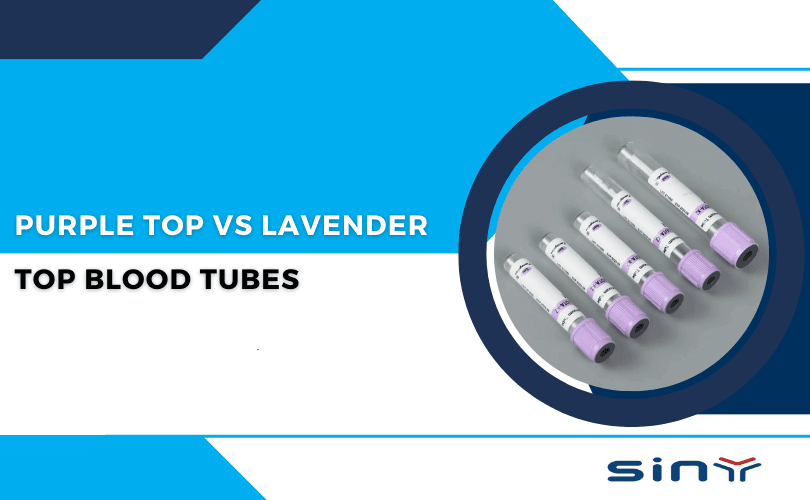
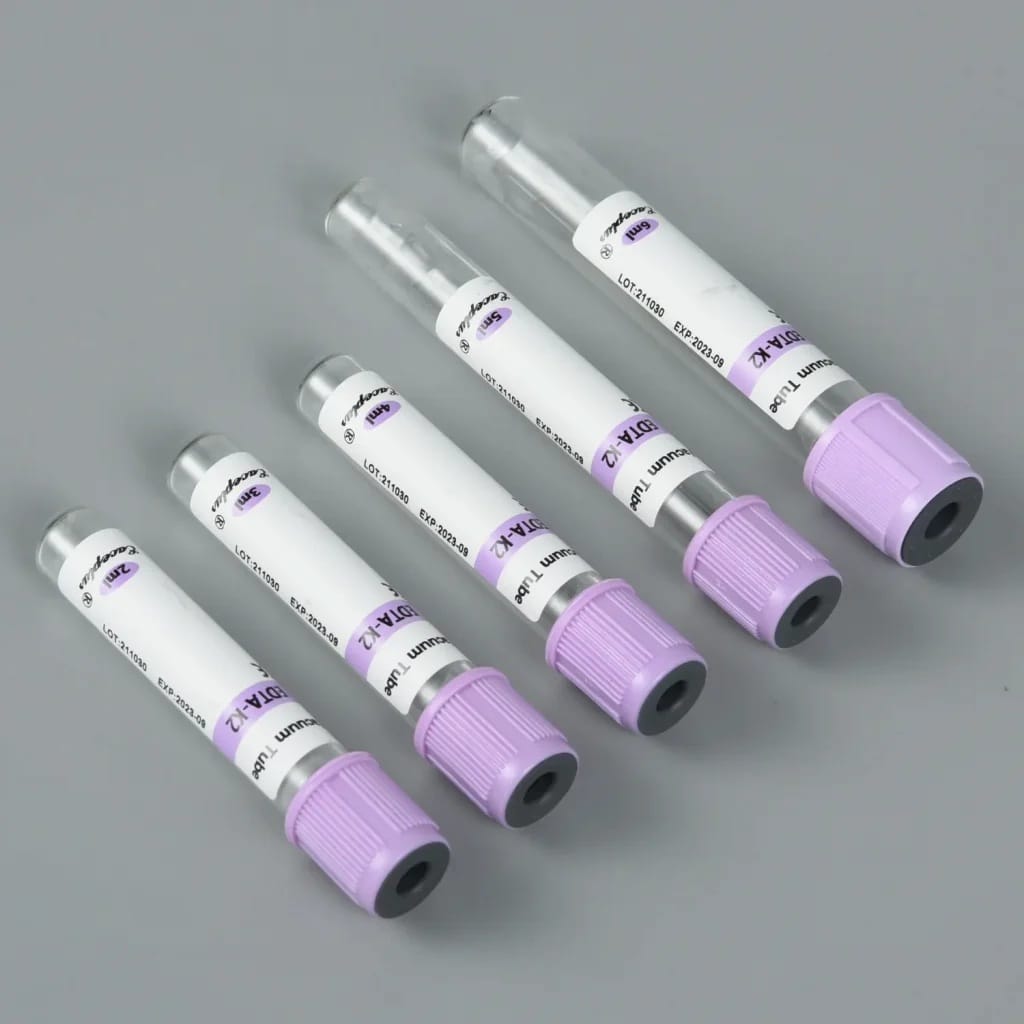
A Purple Top Blood Tube is a vacuum-sealed blood collection container with a purple-colored rubber stopper. The defining characteristic of this tube is the presence of the anticoagulant K2EDTA (Dipotassium Ethylenediaminetetraacetic acid) or, less commonly, K3EDTA (Tripotassium EDTA). EDTA functions by chelating (binding) calcium ions in the blood, which are essential for the coagulation cascade. By removing calcium, it effectively prevents the blood sample from clotting.
Primary Use: The tube is exclusively designed for hematological tests that require whole blood or plasma. Its key purpose is to preserve the morphology and integrity of blood cells for analysis. Common tests include:
- Complete Blood Count (CBC)
- Blood Smears for microscopic examination
- Hemoglobin A1c
- Erythrocyte Sedimentation Rate (ESR)
- Molecular Diagnostics (e.g., PCR)
- Blood Typing and Crossmatching

Purple Top EDTA Tubes
Lavender Top Blood Tube
A Lavender Top Blood Tube is functionally identical to a purple top tube. It is a vacuum-sealed blood collection container distinguished by a lavender or light purple-colored rubber stopper. The critical additive in this tube is also the anticoagulant K2EDTA or K3EDTA.
Primary Use: The lavender top tube serves the exact same purpose as the purple top tube. It is used for hematological tests requiring whole blood or plasma where the preservation of cellular morphology is paramount. The tests it is used for are identical to those listed for the purple top tube.
The Difference (or Lack Thereof)
The difference between a purple top and a lavender top tube is primarily cosmetic and related to manufacturer branding, not chemistry or function.
- Different Shades, Same Additive: Both tubes contain the same concentration of EDTA anticoagulant. The variation in cap color (a deeper purple vs. a lighter lavender) is a choice made by different manufacturers (e.g., Becton Dickinson, Terumo, Greiner Bio-One) for product differentiation and identification.
- Interchangeability: In clinical and laboratory practice, these tubes are used interchangeably. The crucial factor is the presence of EDTA, not the specific shade of purple on the cap. A laboratory’s standard operating procedures will specify “EDTA tubes,” which encompass both purple and lavender tops.
Purple Top Blood Tubes: Purpose and Uses
The purple top tube is one of the most commonly used blood collection tubes. It contains EDTA (Ethylenediaminetetraacetic acid), an anticoagulant that prevents blood clotting by binding calcium ions. This tube is primarily used for hematology tests, which analyze blood cells and their components.
Key Tests Performed with Purple Top Tubes
- Complete Blood Count (CBC): Measures red blood cells, white blood cells, hemoglobin, hematocrit, and platelets. This test is essential for diagnosing conditions like anemia, infections, and blood disorders.
- Blood Smear: Used to examine the shape and structure of blood cells under a microscope. This test helps identify abnormalities in cell morphology.
- Hemoglobin Electrophoresis: Identifies abnormal hemoglobin types, such as those found in sickle cell anemia and thalassemia.
Advantages of EDTA in Purple Top Tubes
- Prevents Clotting: EDTA ensures that blood remains in its liquid state, allowing for accurate cell counts and analyses.
- Preserves Cell Morphology: EDTA maintains the integrity of blood cells, ensuring that they retain their shape and structure during testing.
- Wide Range of Applications: Purple top tubes are versatile and can be used for a variety of hematology tests.
For more details on EDTA tubes, visit our page on EDTA Tubes.
Lavender Top Blood Tubes: Purpose and Uses
The lavender top tube is often confused with the purple top tube, but they are essentially the same. Both tubes contain EDTA and are used for the same types of tests. The difference lies in the shade of the tube cap, which can vary slightly depending on the manufacturer.
Key Tests Performed with Lavender Top Tubes
- Flow Cytometry: Analyzes cell populations and their characteristics. This test is used in immunology and oncology to identify and quantify specific cell types.
- Immunophenotyping: Identifies specific cell markers in immune system disorders. This test is crucial for diagnosing conditions like leukemia and lymphoma.
Why the Color Variation?
The color variation between purple and lavender top tubes is primarily due to differences in manufacturing processes and branding. Some manufacturers may use a slightly different shade to distinguish their products, but the functionality remains the same.
For a comprehensive comparison of purple top tubes with other blood collection tubes, check out our guide on Purple Top vs Other Blood Collection Tubes.
Other Blood Tube Colors and Their Uses
Blood collection tubes come in various colors, each designed for specific tests. Here’s a detailed overview:
Red Top Tube
- Additive: None (plain tube).
- Uses: Serum tests, such as cholesterol, hormone levels, and serology tests.
- Key Features: The blood is allowed to clot, and the serum is separated for testing.
Green Top Tube
- Additive: Heparin.
- Uses: Plasma tests, such as electrolytes, blood gases, and ammonia levels.
- Key Features: Heparin prevents clotting by inhibiting thrombin formation.
Blue Top Tube
- Additive: Sodium citrate.
- Uses: Coagulation tests, such as PT (Prothrombin Time) and APTT (Activated Partial Thromboplastin Time).
- Key Features: Sodium citrate binds calcium ions to prevent clotting.
Gray Top Tube
- Additive: Potassium oxalate and sodium fluoride.
- Uses: Glucose and lactate tests.
- Key Features: Sodium fluoride inhibits glycolysis, preserving glucose levels in the sample.
For a detailed breakdown of all blood tube colors and their uses, refer to this informative article on Blood Collection Tubes.
Purple Top vs Lavender Top: Key Differences
While purple top and lavender top tubes are functionally identical, there are minor differences:
- Color Variation: The shade of the tube cap may differ based on the manufacturer.
- Labeling: Some laboratories may use one term over the other for consistency.
- Availability: Depending on the supplier, one color may be more readily available than the other.
Despite these differences, both tubes are interchangeable in practice. For more insights, visit our Products Page.
Choosing the Right Blood Collection Tube
Selecting the correct blood collection tube is crucial for accurate test results. Here are some tips:
- Understand the Test Requirements: Know which additive is needed for the specific test.
- Follow Laboratory Protocols: Adhere to the guidelines provided by your laboratory or healthcare facility.
- Check Expiry Dates: Ensure the tubes are within their expiration date to maintain sample integrity.
For high-quality blood collection tubes, explore our range at EDTA Tube.
Summary
Understanding the differences between purple top and lavender top blood tubes is essential for accurate medical testing. While they are functionally the same, slight variations in color and labeling exist. Both tubes contain EDTA and are used for hematology tests, making them indispensable in diagnosing blood disorders and infections. For more information on blood collection tubes and their uses, visit EDTA Tube.
For any further inquiries or to explore our products, feel free to Contact Us.
FAQs
Can I use a purple top tube instead of a lavender top tube?
Yes, both tubes contain EDTA and are used for the same tests. The difference is primarily in the color of the cap.
What is the purpose of EDTA in blood tubes?
EDTA prevents blood clotting by binding calcium ions, ensuring accurate hematology test results.
Are all blood collection tubes the same?
No, each tube color indicates a specific additive and is designed for particular tests.
Where can I purchase high-quality blood collection tubes?
You can find a wide range of blood collection tubes on our Products Page.