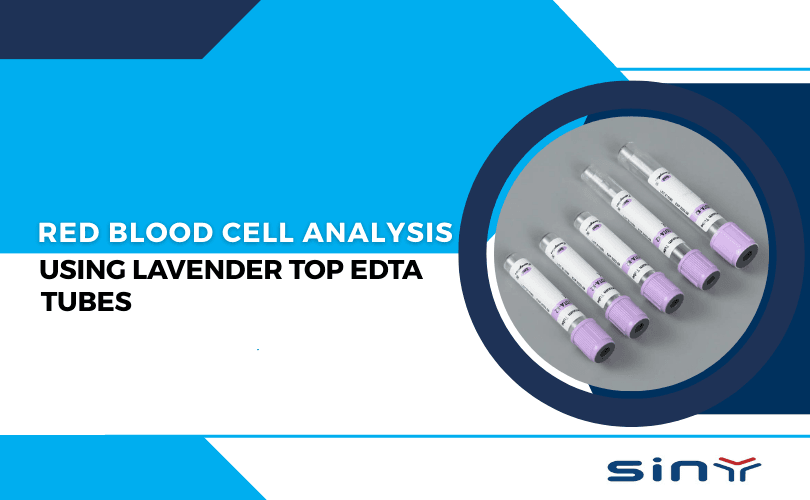
In modern clinical diagnostics, few tests are as routinely ordered—or as critically important—as red blood cell analysis. From detecting anemia to monitoring chronic disease, the reliability of red blood cell (RBC) results depends on one foundational factor that often gets overlooked: the blood collection tube itself.
Among all anticoagulant tubes used in hematology, Lavender Top EDTA Tubes have become the global standard for accurate RBC analysis. Their role extends far beyond simple blood storage. They actively preserve cellular morphology, prevent clotting, and ensure consistent, reproducible laboratory results across automated analyzers and manual microscopy.
Understanding why lavender top EDTA tubes are used, how they function at a cellular level, and how to choose the correct specification is essential for laboratories that prioritize accuracy, efficiency, and patient safety.
This comprehensive guide explores the science, standards, and real-world applications of Lavender Top EDTA Tubes in red blood cell analysis—helping laboratories make informed decisions at every step of the pre-analytical process.
What Are Lavender Top EDTA Tubes?
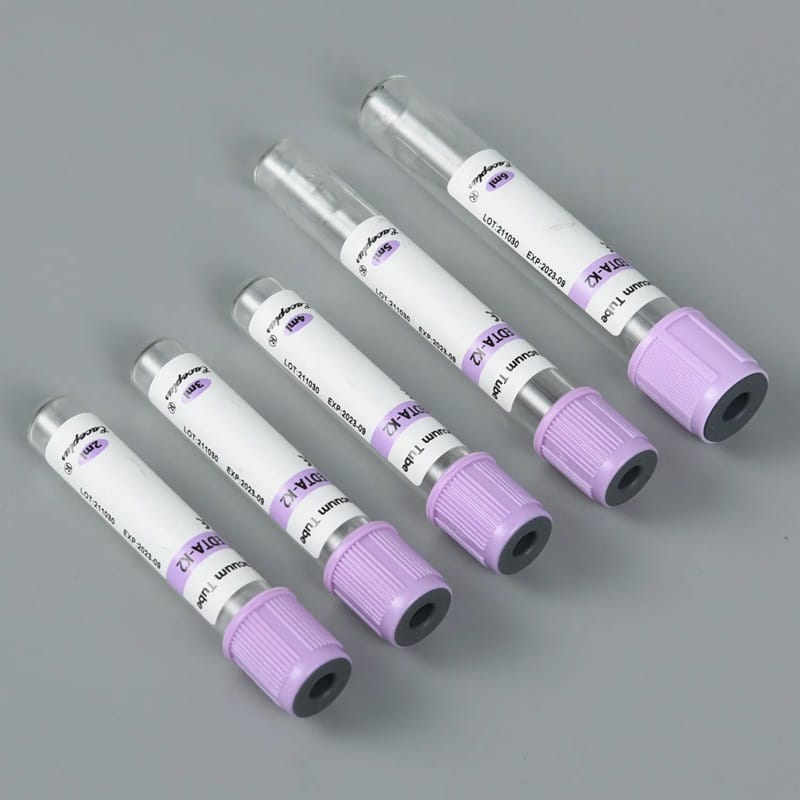
Lavender top EDTA tubes are evacuated blood collection tubes coated with ethylenediaminetetraacetic acid (EDTA), an anticoagulant that binds calcium ions in blood. Calcium is required for the clotting cascade, and by chelating it, EDTA effectively prevents coagulation without damaging cellular components.
These tubes are instantly recognizable by their lavender or purple caps, a standardized color code used worldwide. If you are new to EDTA tubes or want a deeper breakdown of their purpose, the article EDTA in a Lavender Top Tube: Purpose explains their role in detail.
What sets lavender top EDTA tubes apart is their unmatched ability to preserve red blood cell size, shape, and internal structure, making them indispensable for hematology testing.
Why EDTA Is Essential for Red Blood Cell Analysis
Red blood cells are highly sensitive to environmental changes. Improper anticoagulants or delayed processing can cause swelling, shrinkage, or hemolysis, all of which compromise test accuracy.
EDTA works differently from heparin or citrate. Instead of interfering with enzymes, it stabilizes blood by locking away calcium. This mechanism ensures that RBCs remain intact and unchanged for several hours after collection.
According to hematology guidelines summarized in this complete EDTA tube guide, EDTA maintains cellular morphology better than any other anticoagulant currently in use. That is why Lavender Top EDTA Tubes are recommended for complete blood counts, peripheral smears, and RBC indices.
How Lavender Top EDTA Tubes Preserve RBC Morphology
Accurate red blood cell analysis depends on stable cell morphology. Any distortion directly affects diagnostic interpretation.
When blood is collected in Lavender Top EDTA Tubes, several protective mechanisms activate immediately. EDTA prevents fibrin formation, which would otherwise trap RBCs. It also stops platelet aggregation, ensuring a uniform sample.
Studies referenced in hematology literature show that EDTA preserves RBC diameter and volume, allowing precise calculation of MCV, MCH, and MCHC values. These parameters are critical in differentiating between microcytic, normocytic, and macrocytic anemias.
Without EDTA, red blood cells begin to degrade within minutes. With EDTA, samples remain stable long enough for accurate automated and manual analysis.
Key Red Blood Cell Parameters Measured Using Lavender Top EDTA Tubes
Most laboratories rely on Lavender Top EDTA Tubes to measure a comprehensive set of RBC parameters. These include RBC count, hemoglobin concentration, hematocrit, and red cell distribution width (RDW).
Automated analyzers require unclotted, uniformly mixed blood. EDTA provides that consistency. It also ensures that red cells do not clump, which would falsely lower RBC counts.
Peripheral blood smears prepared from EDTA samples show superior staining quality and cellular definition. This is one reason why hematologists prefer EDTA tubes for morphological evaluation.
EDTA Concentration and Its Impact on RBC Accuracy
Not all EDTA tubes are the same. The concentration and type of EDTA used—typically K2 EDTA or K3 EDTA—can subtly influence test results.
K2 EDTA, commonly used in modern vacuum tubes, causes minimal dilution and maintains RBC integrity. This makes it ideal for precise RBC measurements. Products like the Lavender Cap EDTA K2 Vacuum Blood Collection Tube are specifically designed for this purpose.
Excess EDTA, however, can cause red blood cell shrinkage. This highlights the importance of selecting the correct tube size and ensuring proper fill volume, topics explored in the EDTA Tube Size Guide.
Choosing the Right Lavender Top EDTA Tube Size for RBC Testing
Tube size plays a bigger role in RBC accuracy than many assume. Underfilling a tube increases the EDTA-to-blood ratio, which can distort RBC indices.
Most routine CBC tests use 3 ml or 5 ml tubes, while specialized testing may require 10 ml volumes. Comparative insights can be found in 10ml EDTA Tubes vs 5ml Tubes.
Laboratories performing high-throughput testing benefit from standardized tube volumes to reduce variability. Selecting the correct tube size ensures consistent RBC morphology across all samples.
Lavender Top vs Purple Top: Does It Matter for RBC Analysis?
The terms “lavender” and “purple” are often used interchangeably, which can cause confusion. While both typically contain EDTA, manufacturing standards may differ slightly.
A clear comparison is available in Purple Top vs Lavender Top Blood Tubes. For RBC analysis, what matters most is EDTA type, concentration, and tube quality—not the shade of the cap.
High-quality Lavender Top EDTA Tubes from reputable manufacturers offer consistent performance across analyzers and testing platforms.
Pre-Analytical Best Practices for RBC Testing with EDTA Tubes
Even the best tube cannot compensate for poor handling. After collection, Lavender Top EDTA Tubes should be gently inverted 8–10 times to ensure proper mixing.
Excessive shaking damages RBC membranes, while insufficient mixing leads to microclots. Time also matters. Most RBC analyses should be performed within 6–8 hours of collection when stored at recommended temperatures.
Following standardized protocols ensures that the benefits of EDTA preservation are fully realized.
Clinical Applications Where Lavender Top EDTA Tubes Are Critical
Lavender Top EDTA Tubes are indispensable in diagnosing anemia, leukemia, and other hematologic disorders. They are also used for monitoring chemotherapy patients and evaluating nutritional deficiencies.
In pediatric and geriatric care, where blood volume is limited, EDTA tubes provide reliable results even with smaller samples. This versatility makes them essential across clinical settings.
Healthcare facilities sourcing high-quality options often rely on products like the Lavender Top EDTA Vacuum Blood Collection Tube by Siny Medical for consistent outcomes.
Quality Standards and Regulatory Compliance
Reputable Lavender Top EDTA Tubes comply with ISO and CE standards. They are manufactured under controlled conditions to ensure sterility, vacuum integrity, and accurate additive dosing.
Global standards for vacuum blood collection systems are discussed in the Vacutainer overview, which explains why tube quality directly affects diagnostic reliability.
Laboratories seeking guidance on tube selection can refer to How to Choose the Right EDTA Tube for Your Lab for practical insights.
Comparing EDTA Tubes with Other Blood Collection Tubes
While serum and citrate tubes have their place, they are unsuitable for RBC analysis. Serum tubes allow clotting, which traps red cells. Citrate tubes dilute samples, altering RBC counts.
A detailed comparison is available in EDTA Tubes vs Other Blood Collection Tubes, clearly showing why EDTA remains the gold standard for hematology.
Future Trends in RBC Analysis and EDTA Tubes
Automation and digital hematology continue to evolve, but the need for stable, anticoagulated samples remains unchanged. As analyzers become more sensitive, the quality of Lavender Top EDTA Tubes will matter even more.
Manufacturers like Siny Medical continue to refine tube materials and additives to support next-generation diagnostics.
Educational content and demonstrations can also be found on Siny Medical’s YouTube channel, which offers insights into modern blood collection practices.
Summary
Accurate red blood cell analysis begins long before a sample reaches the analyzer. Lavender Top EDTA Tubes play a decisive role in preserving cell integrity, ensuring reliable results, and supporting clinical decision-making.
From routine CBC testing to advanced hematologic evaluations, choosing the right EDTA tube safeguards accuracy, efficiency, and patient outcomes. Laboratories that invest in high-quality Lavender Top EDTA Tubes invest directly in diagnostic excellence.
For expert guidance or product inquiries, visit edtatube or contact us.
FAQs
Why are Lavender Top EDTA Tubes preferred for red blood cell analysis?
Lavender Top EDTA Tubes preserve red blood cell morphology and prevent clotting, ensuring accurate RBC counts and indices.
Can Lavender Top EDTA Tubes be used for all hematology tests?
Most hematology tests rely on Lavender Top EDTA Tubes because EDTA stabilizes blood cells without affecting measurements.
What happens if an EDTA tube is underfilled?
Underfilling Lavender Top EDTA Tubes increases EDTA concentration, which can shrink red blood cells and skew results.
Are K2 and K3 EDTA tubes equally suitable for RBC analysis?
K2 EDTA Lavender Top EDTA Tubes are generally preferred due to minimal dilution and better RBC preservation.
How long are RBC samples stable in EDTA tubes?
When handled correctly, Lavender Top EDTA Tubes maintain RBC stability for up to 8 hours at proper storage temperatures.