Glucose results depend on more than the analyser. Once blood leaves the body, cells keep using glucose, so the value can fall before the test runs. A sodium fluoride EDTA tube is designed to slow that loss and keep the sample usable for glucose testing.
This buyer guide explains how these grey-top tubes work, where they fit, what their limits are and what to check before ordering in bulk. It is written for lab managers, hospital buyers and distributors. SINY manufactures sodium fluoride and EDTA K2 tubes, so we also share practical sourcing tips from the factory side.
What Is a Sodium Fluoride EDTA Tube?
A sodium fluoride EDTA tube contains two additives with two jobs. EDTA bind calcium, so the blood does not clot. Sodium fluoride acts as a glycolysis inhibitor, which slows the use of glucose by blood cells after collection.
Most labs recognise these tubes by their grey cap. For example, the OSF HealthCare specimen collection guide lists the grey top tube for glucose screening. Some grey tubes pair fluoride with potassium oxalate instead of EDTA, so always check the label.
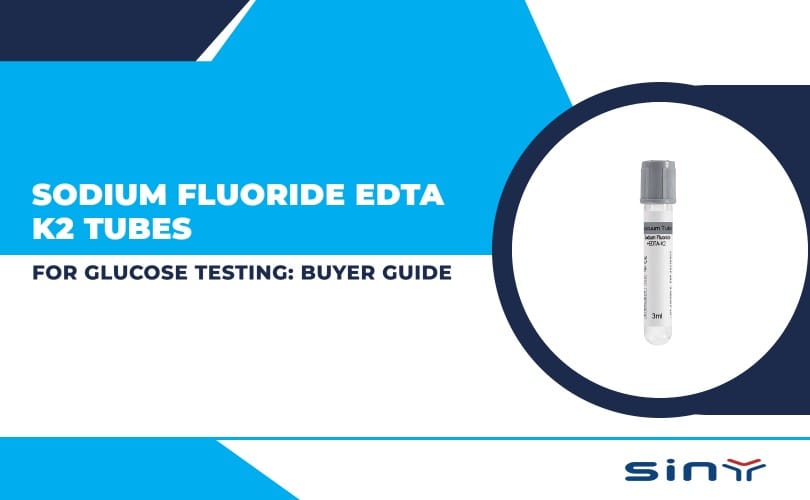
SINY makes a 2 mL sodium fluoride and EDTA K2 tube. It is a sterile, evacuated tube with a grey cap and a precise 2 mL draw volume, designed for glucose and related metabolic tests.
Why Glucose Needs a Special Tube
Red and white blood cells continue to consume glucose after collection. If a plain tube waits on a bench, the glucose value can drop. As a result, the lab may report a lower value than the patient really had.
Labs manage this risk in two ways. Either they separate plasma from cells quickly, or they use a tube with an additive that slows glycolysis. In busy hospitals and outreach clinics, quick separation is not always possible. Therefore, fluoride tubes remain common for glucose testing.
The limit of a sodium fluoride EDTA tube
Fluoride is helpful, but it is not instant. A 2016 multicentre study in Biochemia Medica notes that sodium fluoride acts on enolase, an enzyme at a later step of glycolysis. Because of this, glucose can still fall in the period before fluoride takes full effect.
The same paper describes two approaches recommended for accurate glucose: placing the tube in an ice-water slurry and separating plasma within 30 minutes, or using a tube with a rapid glycolysis inhibitor such as a citrate buffer. Labs decide which approach fits their workflow and guidelines. For buyers, the point is simple: ask your lab customers which tube type their protocol requires before you stock it.
Where Sodium Fluoride EDTA Tubes Are Used
Hospitals, diagnostic labs and health screening centres use these tubes for glucose and related tests. Outpatient clinics that send samples to a central lab often rely on them, because transport adds delay. In addition, glucose tolerance testing involves several timed samples, which can wait before processing.
Paediatric and outreach settings add their own needs. Small 2 mL tubes suit children, because they reduce the blood volume taken. Meanwhile, mobile screening teams value sturdy PET tubes that travel well in cool boxes. In each case, the sodium fluoride EDTA tube must still fit the receiving lab’s analysers and racks. If you also supply standard haematology tubes, our EDTA tube size guide helps match volumes across both lines.
Some labs also use fluoride tubes for lactate testing, since lactate can also change after collection. As always, the lab’s own test catalogue decides which tube suits which test.
| Feature | Sodium fluoride + EDTA K2 | Sodium fluoride + potassium oxalate | Lavender EDTA K2 |
|---|---|---|---|
| Cap color | Grey | Grey | Lavender / purple |
| Anticoagulant | K2 EDTA | Potassium oxalate | K2 EDTA |
| Glycolysis inhibitor | Sodium fluoride | Sodium fluoride | None |
| Typical use | Glucose and related analytes | Glucose and related analytes | Haematology (CBC) |
| Sample type | Plasma | Plasma | Whole blood |
Technical Details to Check Before Ordering
Start with the additive combination and amounts. The label should name both sodium fluoride and EDTA K2. Ask the supplier for the additive specification, so your lab customers can compare it with their current tubes.
Next, check the draw volume and tube size. Small 2 mL tubes suit routine glucose tests and paediatric use. Larger volumes may be needed if one tube serves several tests. In addition, confirm the tube fits your customers’ racks and analysers.
Then check vacuum and shelf life. Evacuated tubes fill to a set volume only within their labelled shelf life. Ask how long the tubes last and how the supplier protects vacuum during shipping. Our guide to EDTA tube shelf life and expiry explains the main factors.
Finally, check documents. Ask for CE and ISO 13485 documents and test reports against ISO 6710 for venous blood specimen containers.
Handling Points for Glucose Samples
Handling affects glucose more than most tests. After filling, staff mix the tube gently by inversion, following the maker’s instructions. Then they send it to the lab within the time the lab specifies.
Order of draw also matters. In common sequences, the grey fluoride tube comes after EDTA tubes, near the end of the draw. Labs train staff on their own written order, because additives can carry over between tubes.
Temperature and time complete the picture. If your customers cannot separate plasma quickly, they should follow their lab’s guidance on cooling or tube choice. As a supplier, you can help by providing clear storage and handling instructions with every order.
How Labs Validate a New Sodium Fluoride EDTA Tube
Labs rarely switch glucose tubes without testing. Glucose results guide diabetes diagnosis and monitoring, so a lab wants proof that a new tube gives results in line with the current one. As a supplier, it helps to know what that validation involves.
First, the lab collects paired samples from volunteers or patients, one in the current tube and one in the new tube. Next, it processes both under the same conditions and compares the glucose results. Then it repeats the comparison at different waiting times, because glucose stability is the whole point of the tube.
The lab also checks practical points. For example, staff look at fill accuracy, cap removal, label quality and fit on the analyser. In addition, they confirm that plasma separates cleanly after centrifugation.
Suppliers can make this easier. Provide free samples of every size, a product sheet with the additive details, and copies of certificates and test reports. Moreover, respond quickly to technical questions during the trial. A smooth validation often decides who wins the contract.
Information to include with sodium fluoride EDTA tube samples
- Additive names and amounts per tube
- Draw volume, tube size and material
- Shelf life and storage conditions
- Lot number and expiry date of the samples
- Instructions for mixing and recommended handling
Stocking Plan for Distributors
Grey tubes follow glucose testing patterns. Demand often rises with diabetes screening campaigns and health check seasons. Therefore, ask your largest customers about planned campaigns before you place orders.
Keep at least one standard size in stock at all times, usually the size most labs validated. Add other sizes only when a customer commits to regular volumes. In practice, a narrow range of sodium fluoride EDTA tube sizes keeps stock fresh and reduces write-offs.
It also helps to share usage data with your supplier every quarter, so the factory can plan production before campaign peaks.
Finally, rotate stock carefully. Evacuated tubes depend on vacuum and additive stability, so the earliest expiry should always leave first.
Who Buys Sodium Fluoride EDTA Tubes
Hospital labs, private diagnostic chains and diabetes clinics are the main buyers. Health screening programmes also order large volumes, because they test many people in one session and samples often travel to a central lab.
Distributors serving these customers usually stock grey tubes alongside lavender EDTA tubes. However, grey tubes move at a different pace. Therefore, forecast them separately, based on glucose test volumes rather than total blood draws.
Buying Guide: What Changes the Price
The price of a sodium fluoride EDTA tube depends on the additive combination, volume, material, vacuum design and packaging. Dual-additive tubes involve more process steps than plain EDTA tubes, so expect a modest difference in unit price.
Volume remains the biggest lever. Larger orders earn better price breaks. Custom labels and private label packaging add set-up costs. In addition, trade terms such as FOB or DDP change what the quote includes, so compare offers on the same basis.
Questions to ask a supplier
- Which additives and amounts does the tube contain?
- Which volumes and sizes do you offer?
- Is the tube evacuated, and what is its shelf life?
- Can you share CE, ISO 13485 and ISO 6710 documents?
- What is the MOQ per size, and can it combine with EDTA orders?
- Can you print our brand and language on labels and boxes?
Common Mistakes with Fluoride Tubes
The first mistake is assuming fluoride works instantly. As the Biochemia Medica paper explains, fluoride acts at a later step of glycolysis. Therefore, labs still need sensible handling and timing.
The second mistake is mixing up grey tube types. Some contain EDTA, others potassium oxalate. If a lab validated one type, switching without telling them can create questions. Always confirm the exact additive with your customer.
Finally, some buyers overstock. Grey tubes sell slower than lavender tubes in many markets. As a result, excess stock can expire. Order in line with real glucose test volumes.
Why Source from SINY
SINY was established in 2003 in Ningbo, China, and manufactures EDTA blood collection tubes in a 12,000 square metre factory. The factory can produce up to 500,000 tubes per day. SINY offers OEM manufacturing and custom design, and lists CE and ISO 13485 certification for its EDTA tubes.
Besides grey fluoride tubes, SINY supplies lavender K2 EDTA blood collection tubes, so distributors can source both lines from one factory.
Browse the full SINY EDTA tube range.
You can also watch production on the SINY Medical YouTube channel.
FAQ: Sodium Fluoride EDTA Tube
What is a sodium fluoride EDTA tube used for?
Laboratories mainly use a sodium fluoride EDTA tube for glucose testing and related metabolic tests. EDTA prevents clotting, while sodium fluoride slows glycolysis, so glucose falls less after collection than in a plain tube. The exact tests depend on each laboratory catalogue, so buyers should confirm the intended use with their lab customers.
What color is a sodium fluoride tube?
Sodium fluoride tubes usually have a grey cap. Some grey tubes combine fluoride with EDTA, while others use potassium oxalate as the anticoagulant. Before ordering a sodium fluoride EDTA tube, check the label and product sheet, so the additive matches what your customers have validated on their analysers.
Does sodium fluoride stop glycolysis immediately?
No. Research published in Biochemia Medica explains that fluoride acts on enolase, a later step in glycolysis, so glucose can still fall soon after collection. Labs therefore combine a sodium fluoride EDTA tube with good handling, or choose tubes with faster inhibitors such as citrate buffer, depending on their protocol.
Where does the grey tube go in the order of draw?
In common sequences, the grey fluoride tube comes after EDTA tubes, near the end of the draw. Labs follow their own written order of draw to limit additive carry-over between tubes. Staff using a sodium fluoride EDTA tube should always check the procedure used by their own laboratory.
Can I order sodium fluoride EDTA tubes with my own brand?
Yes. SINY offers OEM and private label options for labels and boxes. Ask for the MOQ per size and design, and approve real samples before production. Combining a sodium fluoride EDTA tube order with lavender EDTA tubes from the same factory can also help you reach volume targets.
Summary
A sodium fluoride EDTA tube combines an anticoagulant with a glycolysis inhibitor, so labs can preserve glucose better than in a plain tube. Its effect is not instant, so handling, timing and the lab’s own protocol still matter.
For buyers, the key checks are the additive combination, volume, shelf life, documents and fit with your customers’ workflow. To request samples or a quote, contact the SINY team.