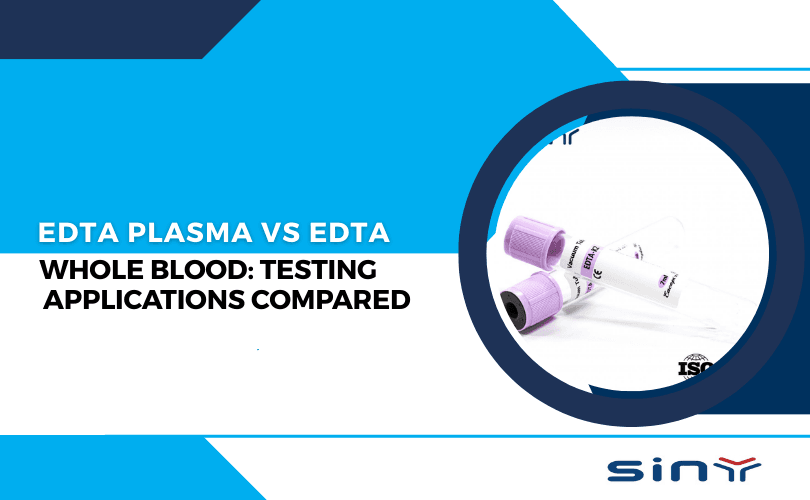
In modern diagnostic laboratories, accuracy starts long before a sample reaches an analyzer. One of the most misunderstood yet critical decisions in hematology and clinical pathology is choosing between EDTA plasma vs EDTA whole blood. Although both specimens are collected using EDTA tubes, their testing applications, stability, and diagnostic value differ significantly.
Laboratory professionals, phlebotomists, and clinicians often ask which sample type delivers the most reliable results for specific tests. The answer is not universal. It depends on the analyte, testing method, storage time, and clinical objective.
This in-depth guide compares EDTA plasma vs EDTA whole blood in real laboratory scenarios. It explains how each sample behaves, where each performs best, and how correct tube selection directly impacts diagnostic confidence. If you work with EDTA tubes daily, this comparison will help refine your testing workflow and reduce pre-analytical errors.
EDTA and Its Role in Blood Collection
Before comparing EDTA plasma vs EDTA whole blood, it is essential to understand what EDTA does. Ethylenediaminetetraacetic acid, commonly known as EDTA, is an anticoagulant that binds calcium ions in blood. By removing free calcium, EDTA prevents clot formation while preserving cellular morphology.
Because of this property, EDTA tubes are widely used in hematology, blood banking, and molecular diagnostics. Many laboratories source these tubes from trusted manufacturers such as those listed on edtatube, where different EDTA formats and sizes are available for routine and specialized testing.
Unlike serum tubes, EDTA tubes maintain blood in an unclotted state. This characteristic allows laboratories to analyze either the entire blood matrix or the plasma fraction after centrifugation.

What Is EDTA Whole Blood?
EDTA whole blood refers to a blood sample collected in an EDTA tube that has not been centrifuged. All blood components remain present, including red blood cells, white blood cells, platelets, and plasma.
This sample type is foundational in hematology. Tests that require intact cells depend heavily on EDTA whole blood. The anticoagulant preserves cell shape and prevents aggregation, which is critical for accurate cell counting.
Whole blood EDTA samples are routinely used in complete blood counts, differential counts, and blood morphology studies. Many labs rely on consistent tube quality, such as those described in SINY CBC testing with EDTA tubes, to ensure analyzer precision.
What Is EDTA Plasma?
EDTA plasma is obtained after centrifuging an EDTA whole blood sample. During centrifugation, blood cells settle at the bottom, while plasma remains as the clear supernatant.
Unlike serum, plasma still contains clotting factors, except calcium-dependent ones. According to blood plasma definitions, plasma represents approximately 55% of total blood volume and serves as a transport medium for proteins, hormones, and metabolites.
EDTA plasma is commonly used in clinical chemistry, molecular diagnostics, and some immunoassays. Its cell-free nature allows for more stable biochemical measurements in many assays.
EDTA Plasma vs EDTA Whole Blood: Core Differences
When comparing EDTA plasma vs EDTA whole blood, the primary distinction lies in cellular presence. Whole blood includes intact cells, while plasma does not. This difference directly impacts testing suitability.
Whole blood preserves cellular integrity. Plasma enhances analyte stability and clarity. Each offers advantages depending on laboratory goals.
The table below highlights the essential differences.
| Feature | EDTA Whole Blood | EDTA Plasma |
|---|---|---|
| Cellular content | Present | Removed |
| Centrifugation required | No | Yes |
| Common use | Hematology | Chemistry, molecular tests |
| Stability | Shorter | Longer |
| Analyzer compatibility | Cell counters | Biochemical analyzers |
This comparison helps labs decide which sample type fits their diagnostic workflow best.
Hematology Testing: Why EDTA Whole Blood Dominates
In hematology, EDTA plasma vs EDTA whole blood is not a debate. Whole blood is the clear choice. Tests such as CBC, hemoglobin concentration, hematocrit, and platelet count require intact cells.
Using plasma for these tests would invalidate results. Cell lysis or removal eliminates critical parameters. That is why EDTA whole blood remains the gold standard for hematological analysis.
Blood banks also rely on EDTA whole blood for compatibility testing and donor screening. Detailed insights into this application are available in why EDTA tubes are preferred in blood banking.
Biochemistry and Immunoassays: The Strength of EDTA Plasma
EDTA plasma offers advantages when cellular interference must be eliminated. Many enzymes, hormones, and biomarkers remain more stable in plasma than in whole blood.
For example, plasma reduces metabolic activity from blood cells, which can otherwise alter glucose or lactate levels. This stability makes EDTA plasma suitable for time-sensitive biochemical assays.
Laboratories that perform high-throughput testing often prefer plasma due to faster processing. Plasma separation eliminates clotting delays associated with serum.
Molecular Diagnostics and PCR Testing
Molecular assays highlight a critical difference between EDTA plasma vs EDTA whole blood. Whole blood contains intracellular DNA, while plasma contains cell-free nucleic acids.
For genetic testing, EDTA whole blood is ideal. It preserves white blood cells, the primary DNA source. For viral load testing or liquid biopsy studies, EDTA plasma is often preferred.
Manufacturers such as SINY Medical provide EDTA tubes optimized for nucleic acid stability, supporting both sample types effectively.
Pre-Analytical Factors That Influence Sample Choice
Choosing between EDTA plasma vs EDTA whole blood also depends on pre-analytical handling. Factors such as mixing technique, fill volume, and storage temperature directly affect results.
Improper mixing can cause microclots. Incorrect volume alters EDTA concentration, affecting calcium binding. Guidance on correct usage is detailed in how to use EDTA blood collection tubes properly in 2025.
Tube size selection also matters. Smaller volumes suit pediatric testing, while larger volumes support multiple assays. Comprehensive size recommendations are outlined in EDTA tube size guide 2ml to 10ml.
Vacuum vs Non-Vacuum Tubes and Their Impact
The debate around EDTA plasma vs EDTA whole blood extends into tube design. Vacuum tubes ensure standardized fill volumes, reducing variability. Non-vacuum tubes offer flexibility in low-volume collections.
Understanding this distinction improves sample integrity. Learn more from between a vacuum tube and a non-vacuum tube and what is an EDTA non-vacuum blood collection tube.
Choosing the Right EDTA Tube for Your Application
Sample type alone does not guarantee accuracy. Tube quality and manufacturing standards also matter. Laboratories sourcing from reliable suppliers listed under EDTA tube manufacturers in China benefit from consistent performance.
Product selection guidance is available at how to choose the right EDTA tube for your lab, ensuring compatibility with both plasma and whole blood testing.
EDTA Plasma vs EDTA Whole Blood in Routine Labs
Routine labs often use both sample types daily. Whole blood supports hematology workflows. Plasma supports chemistry panels and specialized diagnostics.
Laboratories offering comprehensive services must stock multiple EDTA tube sizes and designs. Options can be explored via EDTA tube products and EDTA tube category.
Future Trends in EDTA Sample Processing
Automation continues to reshape laboratory medicine. Automated centrifugation and plasma separation systems reduce handling errors. As testing complexity increases, understanding EDTA plasma vs EDTA whole blood will remain essential.
Educational resources and manufacturer insights, such as those shared on SINY Medical’s YouTube channel, help labs stay updated on evolving best practices.
Summary
Understanding EDTA plasma vs EDTA whole blood is fundamental for reliable laboratory diagnostics. Whole blood excels in hematology and cellular analysis. Plasma performs best in biochemical and molecular assays. Selecting the correct sample type, tube design, and handling method ensures accurate results and efficient workflows.
Laboratories that align sample choice with test purpose reduce errors, improve turnaround time, and enhance patient care. For expert guidance or product inquiries, laboratories can always contact us for tailored support.
FAQs
What is the main difference between EDTA plasma vs EDTA whole blood?
The main difference in EDTA plasma vs EDTA whole blood is cellular content. Whole blood contains intact cells, while plasma is cell-free after centrifugation.
Which tests require EDTA whole blood specifically?
Tests such as CBC, platelet count, and blood morphology require EDTA plasma vs EDTA whole blood evaluation, with whole blood being mandatory for accuracy.
Can EDTA plasma replace EDTA whole blood for hematology tests?
No. In EDTA plasma vs EDTA whole blood comparisons, plasma cannot replace whole blood for hematology because cells are required.
Why is EDTA plasma preferred in some biochemical tests?
EDTA plasma vs EDTA whole blood comparisons show plasma offers better analyte stability and reduced cellular interference.
Does tube size affect EDTA plasma vs EDTA whole blood results?
Yes. Incorrect tube size alters anticoagulant ratios, impacting both EDTA plasma vs EDTA whole blood test accuracy.