Blood sample quality defines laboratory accuracy. Even the most advanced analyzer cannot correct a poorly handled specimen. Among common pre-analytical errors, Hemolysis in an EDTA Tube remains one of the most frequent and costly problems in clinical diagnostics.
Hemolysis does not just alter one value. It can distort multiple hematology parameters, compromise patient diagnosis, and force repeat collections. For phlebotomists and laboratory professionals, understanding Hemolysis in an EDTA Tube is essential for maintaining result reliability and patient safety.
In this comprehensive guide, we explore the causes, consequences, and evidence-based prevention methods. Whether you work in a hospital, diagnostic laboratory, or private clinic, this handbook will help you reduce errors and improve specimen integrity.
What Is Hemolysis in an EDTA Tube?
Hemolysis in an EDTA Tube occurs when red blood cells rupture after collection, releasing intracellular components such as hemoglobin, potassium, and enzymes into the plasma.
EDTA (Ethylenediaminetetraacetic Acid) prevents clotting by binding calcium. However, it does not prevent mechanical or thermal damage to red blood cells. When physical stress, improper technique, or storage errors occur, red cells break apart.
According to the explanation of a Complete Blood Count, CBC testing depends on intact cellular structures. When hemolysis occurs, analyzers may report inaccurate hemoglobin, hematocrit, MCV, or platelet counts.
Studies suggest that pre-analytical errors account for up to 70% of laboratory testing issues. Hemolysis represents one of the leading contributors.

Why Hemolysis in an EDTA Tube Matters
At first glance, mild hemolysis may appear harmless. Yet even slight red cell destruction can significantly alter laboratory results.
Hemolysis in an EDTA Tube may cause:
Distorted potassium levels
False elevation of LDH
Altered RBC morphology
Erroneous platelet counts
Interference with automated analyzers
In hematology, accurate cell preservation is critical. That is why high-quality tubes, such as those available in the EDTA Tube product category, focus on optimized coating and vacuum stability.
When hemolysis occurs, laboratories often reject the sample. This leads to repeat venipuncture, delayed diagnosis, and reduced patient satisfaction.
Causes of Hemolysis in an EDTA Tube
Understanding the root causes helps prevent recurrence. Hemolysis rarely results from one factor alone. Instead, it typically stems from a combination of technique and handling errors.
Improper Venipuncture Technique
Using a needle that is too small increases shear force. High suction pressure damages red blood cells.
Drawing blood too quickly can also create turbulence. That turbulence contributes to Hemolysis in an EDTA Tube.
Excessive Tube Shaking
EDTA tubes require gentle inversion. Vigorous shaking breaks fragile red cell membranes.
Phlebotomists should invert the tube 8–10 times slowly. For detailed instructions, see this guide on how to use an EDTA tube.
Incorrect Fill Volume
Underfilling disrupts the anticoagulant-to-blood ratio. Overfilling can reduce EDTA effectiveness.
Choosing the right size matters. Resources such as EDTA tube sizes explained help professionals match tube capacity to patient needs.
Temperature Extremes
Heat accelerates cell breakdown. Freezing causes cell rupture.
Proper storage between 2–8°C reduces the risk of Hemolysis in an EDTA Tube.
Prolonged Tourniquet Time
Extended venous stasis increases cellular stress. Release the tourniquet as soon as blood flow begins.
Visual Indicators of Hemolysis in an EDTA Tube
Hemolysis often becomes visible after centrifugation. Plasma may appear pink or red instead of clear straw color.
Laboratories sometimes classify hemolysis visually:
| Hemolysis Level | Plasma Appearance | Risk Impact |
|---|---|---|
| Mild | Slight pink tint | Minor distortion |
| Moderate | Red coloration | Significant parameter shifts |
| Severe | Dark red plasma | Sample rejection |
Even mild Hemolysis in an EDTA Tube can alter potassium by 0.3–1.0 mmol/L. That change may influence clinical decisions.
How Hemolysis Affects CBC Results
A CBC relies on intact red and white blood cells. When hemolysis occurs, parameters shift unpredictably.
Hemoglobin may falsely increase. RBC counts may decrease. Platelets may fragment, leading to inaccurate readings.
Detailed insights into CBC processes are available in the guide on CBC testing with EDTA tubes.
For clinics performing high volumes, even a 2% hemolysis rejection rate can increase operational costs significantly.
Equipment Quality and Hemolysis Risk
Not all tubes perform equally. Manufacturing standards influence coating consistency and vacuum pressure.
High-quality products, such as those listed on the official EDTATube, emphasize precision engineering.
For global product comparisons, you may review technical specifications from reputable suppliers like Siny Medical’s EDTA tube overview.
Quality manufacturing reduces the likelihood of Hemolysis in an EDTA Tube caused by improper additive distribution.
Step-by-Step Prevention of Hemolysis in an EDTA Tube
Preventing hemolysis requires discipline and consistency. Small adjustments make a significant difference.
Use an appropriately sized needle.
Avoid excessive suction pressure.
Fill the tube to the indicated line.
Gently invert the tube immediately after collection.
Transport samples upright.
If you want a focused prevention guide, this article on how to prevent hemolysis in EDTA purple tubes offers practical solutions.
Tube Size Selection and Its Impact
Tube size influences blood flow dynamics. Pediatric collections require smaller volumes.
Selecting the proper size reduces stress on red blood cells. You can compare options through this detailed article on choosing between 2ml, 3ml, 4ml, and 5ml EDTA tubes.
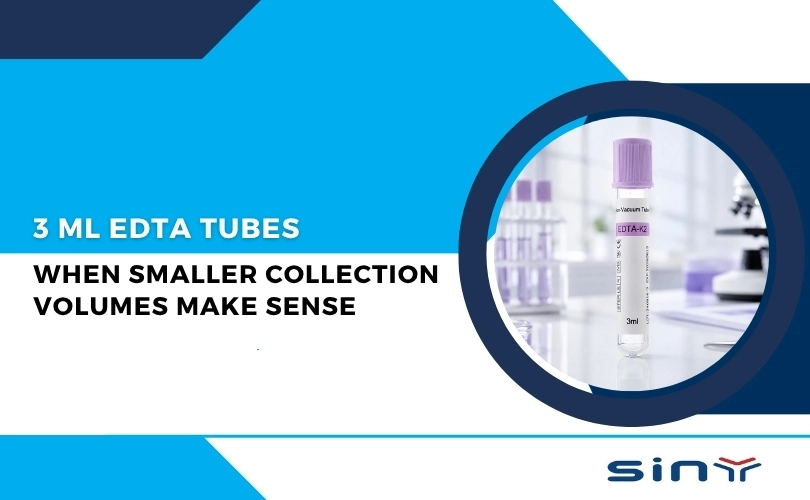
For outpatient labs, the 3ml Lavender Top EDTA Tubes provide balanced capacity and minimal turbulence.
Improper sizing increases the risk of Hemolysis in an EDTA Tube, especially during pediatric draws.
The Cost of Hemolysis in Clinical Settings
Hemolysis does not only affect results. It increases operational costs.
Repeat collections require additional staff time. Patients experience discomfort. Laboratories face delayed turnaround.
Research indicates that hemolyzed samples represent up to 3% of all collected specimens in busy hospital environments.
Reducing Hemolysis in an EDTA Tube improves workflow efficiency and patient satisfaction.
Laboratory Processing and Storage Best Practices
Processing time affects cell integrity. Analyze samples within 4–6 hours whenever possible.
Avoid exposure to extreme heat. Keep samples at recommended temperatures.
Automation trends also influence specimen handling. The article on the future of EDTA blood collection tubes 2026 highlights innovations designed to reduce pre-analytical errors.
When to Reject a Hemolyzed EDTA Sample
Not every hemolyzed sample requires rejection. Laboratories often follow internal hemolysis index thresholds.
Severe Hemolysis in an EDTA Tube typically demands recollection. Moderate hemolysis may require clinician consultation.
Clear communication between laboratory and clinical staff ensures patient safety.
Summary
Hemolysis in an EDTA Tube remains one of the most common yet preventable laboratory errors. It compromises hematology accuracy, increases operational costs, and delays patient care.
Fortunately, careful technique, proper tube selection, and strict handling protocols significantly reduce risk. By focusing on education and quality control, laboratories can maintain high diagnostic standards.
If you need assistance selecting the right EDTA tubes for your facility, visit the official Products page or reach out through the Contact Us page. Prevent Hemolysis in an EDTA Tube, and you protect both laboratory integrity and patient trust.
FAQs
What is the main cause of Hemolysis in an EDTA Tube?
The main cause of Hemolysis in an EDTA Tube is improper collection technique, especially excessive suction or vigorous shaking after blood draw.
Does Hemolysis in an EDTA Tube affect potassium levels?
Yes. Hemolysis in an EDTA Tube releases intracellular potassium, which may falsely elevate laboratory results.
Can storage temperature cause Hemolysis in an EDTA Tube?
Extreme heat or freezing can trigger Hemolysis in an EDTA Tube by damaging red blood cell membranes.
How can phlebotomists reduce Hemolysis in an EDTA Tube?
Phlebotomists can reduce Hemolysis in an EDTA Tube by using correct needle size, gentle inversion, proper fill volume, and timely processing.
Should a severely hemolyzed EDTA sample be rejected?
Severe Hemolysis in an EDTA Tube usually requires sample rejection and recollection to ensure accurate diagnostic results.