The EDTA tube manufacturing process is one of the most critical aspects of modern medical diagnostics. These lavender or purple-capped tubes are indispensable in hematology, ensuring accurate blood analysis by preventing clotting. Understanding how EDTA tubes are made—from raw materials to final packaging—provides insight into why they are trusted worldwide in hospitals, laboratories, and research centers.
For anyone curious about the science and engineering behind these tubes, this article offers a comprehensive look at the step-by-step process, quality standards, and why EDTA tubes remain the gold standard in blood collection.
What Are EDTA Tubes?
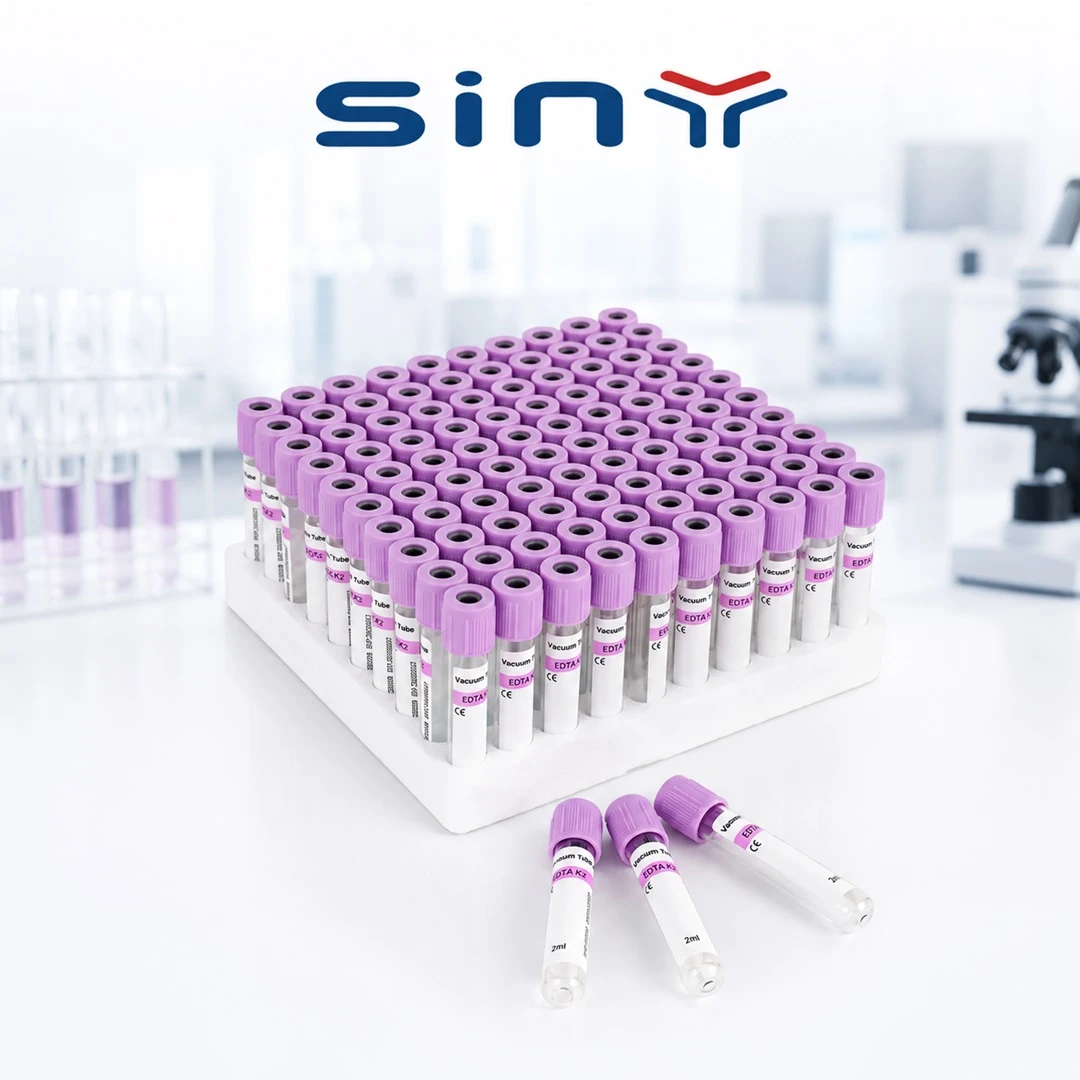
EDTA tubes are specialized medical containers used primarily in laboratories to collect and preserve whole blood samples for hematological testing. Easily recognized by their distinctive lavender or purple-colored tops, these tubes contain an additive called Ethylenediaminetetraacetic acid (EDTA).
EDTA functions as a powerful anticoagulant by binding to calcium ions in the blood sample through a chemical process called chelation. Because calcium is a vital component required for the blood’s natural clotting cascade, removing it completely stops the blood from clotting. This preservation keeps the blood sample in a fluid, stable, and well-mixed state that mimics how it flows inside the human body. To find the right container volume for your specific laboratory diagnostic needs, you can review our EDTA tube size guide 2ml to 10ml.
Medical laboratories rely on EDTA tubes because they preserve the structural integrity and physical shape of blood cells exceptionally well. This makes them the absolute gold standard for routine tests like a Complete Blood Count (CBC), blood typing, cross-matching, and hemoglobin A1c monitoring. By preventing microscopic clots without altering red blood cells, white blood cells, or platelets, these precision-engineered components ensure automated laboratory analyzers can deliver highly accurate diagnostic data. To source high-performance, clinical-grade options for your medical facility, please explore our full collection on the EdtaTube products page.
Step-by-Step EDTA Tube Manufacturing Process
1. Raw Material Selection
The journey begins with medical-grade PET plastic or glass tubes. PET is preferred for its durability, transparency, and lightweight properties. Other components include:
- Butyl rubber stoppers for airtight sealing
- Color-coded caps (lavender/purple for EDTA)
- Potassium EDTA anticoagulant (K₂EDTA or K₃EDTA)
Learn more about EDTA tube materials.
2. Tube Formation
Plastic tubes are formed using injection molding, while glass tubes rely on precision glass-blowing. This ensures:
- Uniform thickness
- Smooth interiors to prevent hemolysis
- Accurate volume markings
3. EDTA Coating
The inner walls are coated with EDTA anticoagulant:
- K2 EDTA: Liquid sprayed and dried inside the tube
- K3 EDTA: Spray-dried powder evenly distributed
This step is crucial—too little EDTA causes clotting, while too much distorts test results.
4. Quality Control & Sterilization
Every batch undergoes rigorous testing:
- Volume accuracy
- EDTA concentration assays
- Sterility checks via irradiation or autoclaving
Explore EDTA tube quality control.
5. Assembly & Packaging
Finally, tubes are capped, labeled, and packaged under sterile conditions. Packaging ensures tubes remain contamination-free until use.
Why Quality Matters in EDTA Tube Manufacturing
In medical diagnostics, any flaw in the EDTA tube manufacturing process can directly compromise patient care. If a factory’s micro-spray coating system applies too little anticoagulant, microscopic clots will form in the blood sample. These micro-clots can skew test results or clog expensive automated hematology analyzers, causing critical diagnostic delays. Conversely, an excess of the chemical additive alters the physical structure of red blood cells, which directly distorts blood count data.
Furthermore, precision-calibrated vacuum levels are vital. If the internal negative pressure is inaccurate, the tube will under-fill or over-fill. This alters the strict blood-to-additive ratio, which can artificially drop hematocrit values and misguide clinical decisions. To ensure consistent laboratory outcomes, facilities must rely on strict production protocols. You can read more about how these safety benchmarks are maintained in our guide to EDTA coated tubes manufacturing quality control.
Ultimately, high-quality manufacturing prevents sample rejection, saves valuable laboratory time, and guarantees that physicians receive highly accurate diagnostic information to treat patients effectively. For medical organizations searching for reliably engineered consumables, browsing premium selections like the Siny Medical EDTA tube line ensures total clinical compliance.
Comparison: EDTA Tube Sizes
Different tests require different tube sizes.
| Tube Size | Common Use | Notes |
|---|---|---|
| 2ml | Pediatric samples | Small volume collection |
| 3ml–5ml | Routine CBC tests | Most common |
| 10ml | Specialized studies | Larger sample volume |
Global Standards in EDTA Tube Manufacturing
Global standardization is the cornerstone of the EDTA tube manufacturing process, ensuring that a blood collection tube produced in one corner of the world performs identically in any clinical laboratory globally. Because accurate medical diagnostics rely heavily on uniform equipment, factories must align their operations with stringent international benchmarks to maintain patient safety.
The primary regulatory framework governing these devices is ISO 6710, which explicitly outlines the specifications, dimensions, and strict color-coding requirements for single-use venous blood specimen containers. To complement this, global production lines must adhere to ISO 13485 standards, a specialized quality management framework specifically tailored for medical devices. These rules dictate everything from cleanroom cleanliness to the precision of internal negative atmospheric pressures. For procurement teams looking to verify how a facility operates under these universal benchmarks, exploring a certified manufacturer profile like the Siny Medical Made-in-China profile offers full transparency into global regulatory documentation and quality assurance logs.
By strictly standardizing raw materials, physical sizes, and chemical additives, the global healthcare network guarantees that tubes fit seamlessly into automated analysis systems without jamming or failing. To review premium standard-compliant collections designed for immediate laboratory integration, you can check out the options on our EdtaTube EDTA tube category page.
Summary
The EDTA tube manufacturing process combines precision automation with strict chemical calibration to guarantee accurate laboratory results. Sourcing high-quality, standard-compliant consumables minimizes sample errors and avoids critical diagnostic delays. To secure reliable blood collection supplies for your medical facility, explore our extensive inventory on the EdtaTube products page.
For bulk shipping options, custom specifications, or technical inquiries, contact our team directly through the EdtaTube contact page.
FAQs
Q: What is the EDTA tube manufacturing process?
A: The EDTA tube manufacturing process involves raw material selection, tube formation, EDTA coating, quality control, and sterile packaging.
Q: Why are EDTA tubes purple?
A: The purple cap indicates the presence of EDTA anticoagulant, distinguishing them from other blood collection tubes.
Q: How long can blood remain stable in EDTA tubes?
A: Blood samples remain stable for 24–48 hours, depending on storage conditions.
Q: What is the difference between K2 and K3 EDTA tubes?
A: K2 EDTA uses liquid coating, while K3 EDTA uses spray-dried powder. Both prevent clotting but may differ slightly in test outcomes.
Q: Which EDTA tube size should I use?
A: Routine tests typically use 3ml–5ml tubes, while specialized studies may require 10ml tubes.