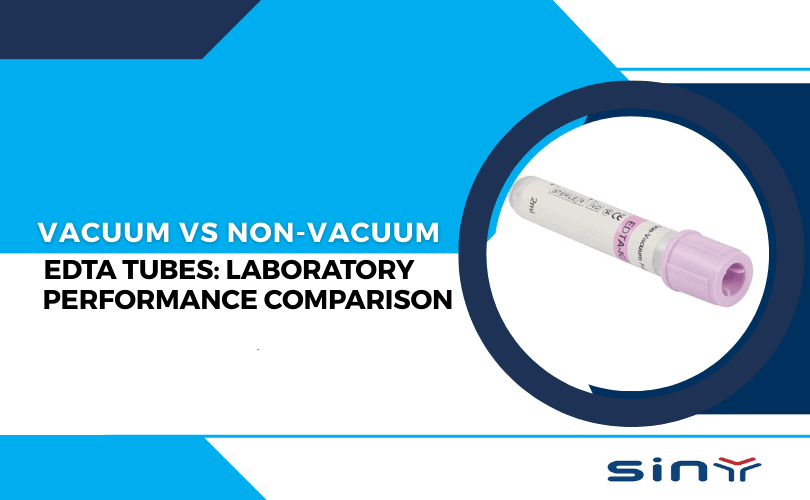
Blood collection forms the cornerstone of accurate laboratory diagnostics, and choosing the right blood collection tube ensures precise results. This guide on Vacuum vs Non-Vacuum EDTA Tubes provides a detailed comparison, helping laboratories select the optimal tube for their needs.
What Are Vacuum Blood Collection Tubes?
Vacuum blood collection tubes are pre-evacuated tubes that contain a specific volume of anticoagulant, such as EDTA, designed to draw blood automatically through negative pressure. These tubes minimize handling errors and improve workflow efficiency in clinical laboratories.
The key feature of vacuum tubes lies in their pre-set vacuum, which ensures accurate blood-to-anticoagulant ratios. EDTA, or Ethylenediaminetetraacetic acid, is commonly coated inside these tubes to prevent coagulation and preserve the cellular components of blood for complete blood count (CBC) and other hematology tests.
Advantages of vacuum tubes include faster blood draw, reduced contamination risk, and precise volume collection. They are widely used in high-volume laboratories and hospitals, allowing technicians to collect multiple samples efficiently using multi-draw adapters.
For more details on EDTA tube products, visit the official EDTA Tube product page.
What Are Non-Vacuum Blood Collection Tubes?
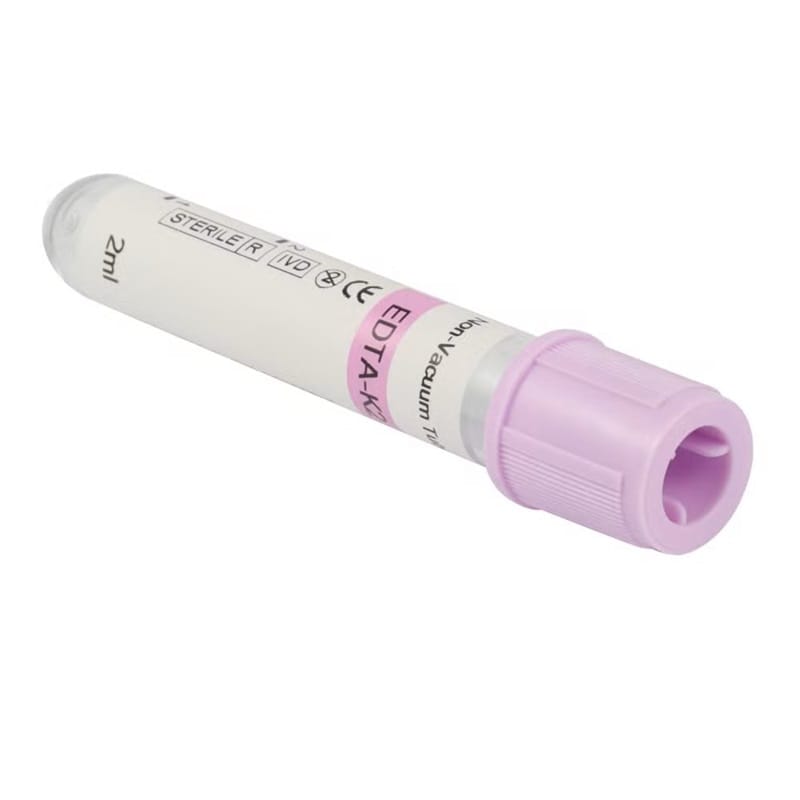
Non-vacuum blood collection tubes require manual blood filling, typically using a syringe. Unlike vacuum tubes, these tubes do not contain a pre-set vacuum, so the blood volume drawn depends entirely on the operator’s technique.
Non-vacuum tubes are often preferred for small-volume collections, pediatric samples, or when dealing with fragile veins where vacuum pressure may cause hemolysis. They are versatile but demand precise handling to ensure the correct blood-to-anticoagulant ratio.
The use of EDTA in non-vacuum tubes ensures that collected blood remains anticoagulated, making them suitable for hematology tests, platelet counts, and specialized research applications. They also offer the flexibility of adjusting the volume based on specific laboratory needs.
For an in-depth explanation, refer to Siny Medical’s guide on EDTA non-vacuum tubes.
Key Differences Between Vacuum and Non-Vacuum Blood Collection Tubes
Understanding the distinctions between vacuum and non-vacuum tubes helps laboratories maintain accuracy and efficiency. Here’s a detailed comparison:
| Feature | Vacuum EDTA Tubes | Non-Vacuum EDTA Tubes |
|---|---|---|
| Blood Collection Method | Automatic via negative pressure | Manual via syringe |
| Volume Accuracy | High, pre-calibrated | Operator-dependent |
| Ease of Use | Requires minimal handling | Requires skillful handling |
| Contamination Risk | Low | Moderate if mishandled |
| Preferred Applications | High-volume labs, routine CBC | Pediatric, small-volume, fragile veins |
| Cost | Slightly higher | Lower |
For more detailed comparisons, visit EDTA Tube’s article on vacuum vs non-vacuum tubes.
Vacuum tubes streamline sample processing, while non-vacuum tubes offer flexibility. Selecting the appropriate tube depends on laboratory workflow, patient population, and the type of tests conducted.
Choosing the Right Blood Collection Tube
Selecting the correct EDTA tube involves considering sample volume, patient condition, and laboratory efficiency. Follow these guidelines:
1. Consider Sample Volume and Tube Size:
EDTA tubes come in multiple sizes, such as 2ml, 3ml, 4ml, 5ml, and 10ml. Choose a size that ensures sufficient sample for testing while minimizing patient discomfort. Pediatric patients often require smaller tubes, while high-throughput labs benefit from larger vacuum tubes.
2. Determine Collection Method:
Vacuum tubes are ideal for automated or multi-sample collection, reducing operator errors. Non-vacuum tubes suit manual draws from difficult veins or when smaller, precise volumes are required. For more guidance, see how to choose the right EDTA tube for your lab.
3. Evaluate Laboratory Workflow and Equipment Compatibility:
Vacuum tubes integrate seamlessly with automated analyzers and multi-draw adapters, improving laboratory throughput. Non-vacuum tubes require more hands-on effort but provide flexibility for specialized procedures.
4. Check Tube Quality and Manufacturer Standards:
Selecting tubes from reputable manufacturers ensures consistency in anticoagulant coating, sterility, and tube material. Explore EDTA tube manufacturers in China for reliable options.
5. Understand Test Requirements:
EDTA tubes are preferred for hematology tests due to their ability to preserve cellular integrity. For guidance on proper usage, refer to how to use EDTA blood collection tubes properly.
By assessing these factors, laboratories can choose a tube that maximizes accuracy, safety, and efficiency.
Performance and Laboratory Applications
Vacuum EDTA tubes excel in laboratories requiring high sample throughput. Their pre-calibrated vacuum ensures accurate blood volume and reduces hemolysis risk. This consistency is vital for CBC tests, differential counts, and molecular studies where precise ratios matter.
Non-vacuum EDTA tubes are useful when handling pediatric or geriatric patients, or when veins are fragile. Manual filling allows careful control of blood draw, reducing vein collapse and discomfort.
For hematology-focused studies, explore Siny CBC testing with EDTA tubes to understand their role in complete blood analyses.
Additionally, EDTA tubes outperform other anticoagulant tubes in preserving cellular morphology. Compare with other blood collection tubes to understand why EDTA remains the laboratory standard.
Advantages of Using EDTA Tubes
EDTA tubes are widely preferred due to their ability to bind calcium ions, effectively preventing coagulation. This property preserves blood cells for accurate testing. Benefits include:
- Stable preservation of white blood cells, red blood cells, and platelets.
- Compatibility with automated analyzers.
- Reduction of pre-analytical errors.
- Versatility for hematology, immunology, and molecular diagnostics.
Learn why EDTA tubes are preferred in blood banking for reliable sample preservation.
Handling and Best Practices
Proper handling of both vacuum and non-vacuum EDTA tubes ensures accuracy and safety:
1. Mixing: Gently invert tubes 8-10 times immediately after collection to mix blood with EDTA. Avoid shaking to prevent hemolysis.
2. Labeling: Clearly label each tube with patient information, collection time, and test type.
3. Storage: Store at recommended temperatures, avoiding prolonged exposure to heat or direct sunlight.
4. Transport: Use secure racks and padded containers to prevent tube breakage during transport.
For detailed protocols, visit how to use EDTA blood collection tubes properly.
Summary
Choosing between vacuum and non-vacuum EDTA tubes affects laboratory efficiency, patient comfort, and test accuracy. Vacuum tubes streamline collection, ensure volume consistency, and reduce contamination, making them ideal for high-volume labs. Non-vacuum tubes provide flexibility, especially in pediatric, geriatric, or challenging venipunctures. Selecting the appropriate tube involves considering blood volume, patient condition, lab workflow, and tube quality. Utilizing high-quality EDTA tubes preserves blood integrity, supports accurate hematology testing, and ensures reliable laboratory outcomes.
For high-quality EDTA tubes, explore EDTA Tube’s products.
FAQs
Can I use non-vacuum EDTA tubes for all blood tests?
Non-vacuum EDTA tubes are suitable for most hematology tests but may require careful volume management. For high-throughput labs, vacuum tubes offer consistency.
How do I know which tube size to use?
Refer to the EDTA tube size guide to select an appropriate size based on patient age, blood volume, and test requirements.
Are EDTA tubes compatible with automated analyzers?
Yes, both vacuum and non-vacuum EDTA tubes are compatible, though vacuum tubes integrate more efficiently in automated workflows.
How should EDTA tubes be stored before use?
Store at room temperature in a dry place away from sunlight. Avoid freezing or excessive heat.
Where can I purchase high-quality EDTA tubes?
You can explore EDTA tube manufacturers in China or EDTA Tube’s official store.
What is the difference between EDTA tubes and other anticoagulant tubes?
EDTA tubes preserve cellular integrity, while other anticoagulants like citrate or heparin may affect cell morphology. Learn more at EDTA tubes vs other blood collection tubes.Contact for Orders and For more details, visit EDTA Tube contact page.