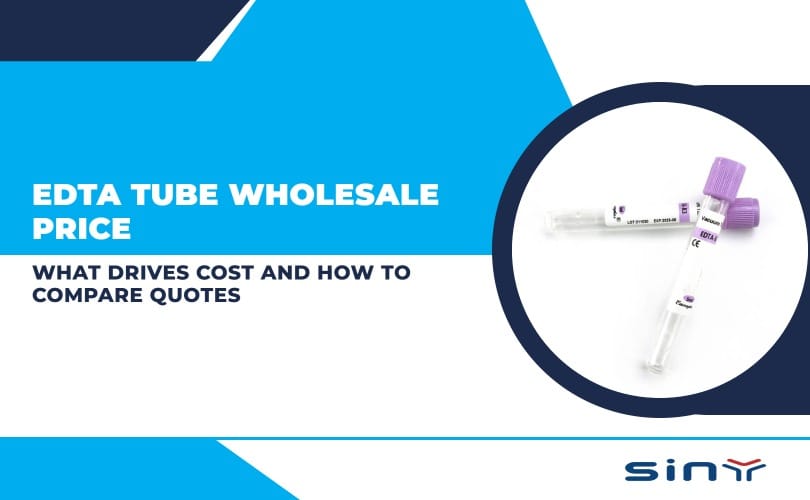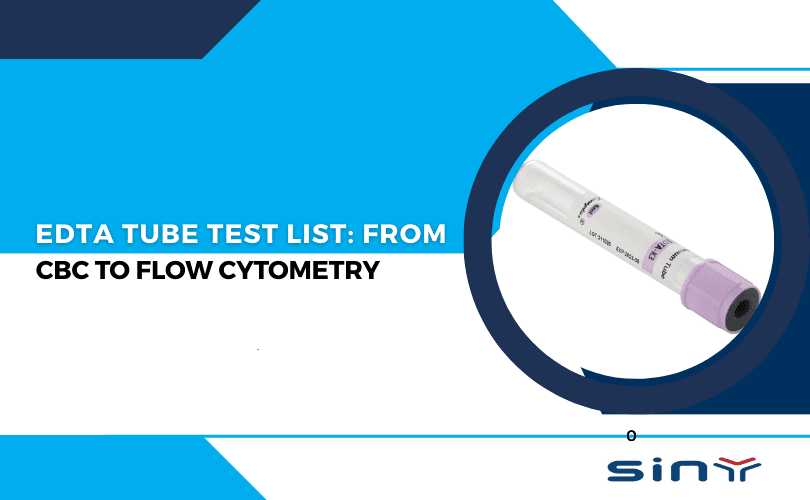
Blood testing remains the backbone of modern diagnostics. Every day, hospitals and laboratories process millions of blood samples to detect infections, monitor chronic diseases, and guide treatment decisions. Among all blood collection systems, the EDTA Tube Test plays a central role in hematology and advanced cellular analysis.
If you work in a laboratory, manage a hospital procurement department, or simply want to understand how blood tests work, this comprehensive guide will walk you through everything — from routine Complete Blood Count (CBC) testing to sophisticated flow cytometry applications.
We will also explain how to select the right EDTA tube size, compare anticoagulants, and ensure accurate sample handling. For detailed product specifications and technical insights, you can explore the official EDTA Tube collection page.
What Is an EDTA Tube Test?
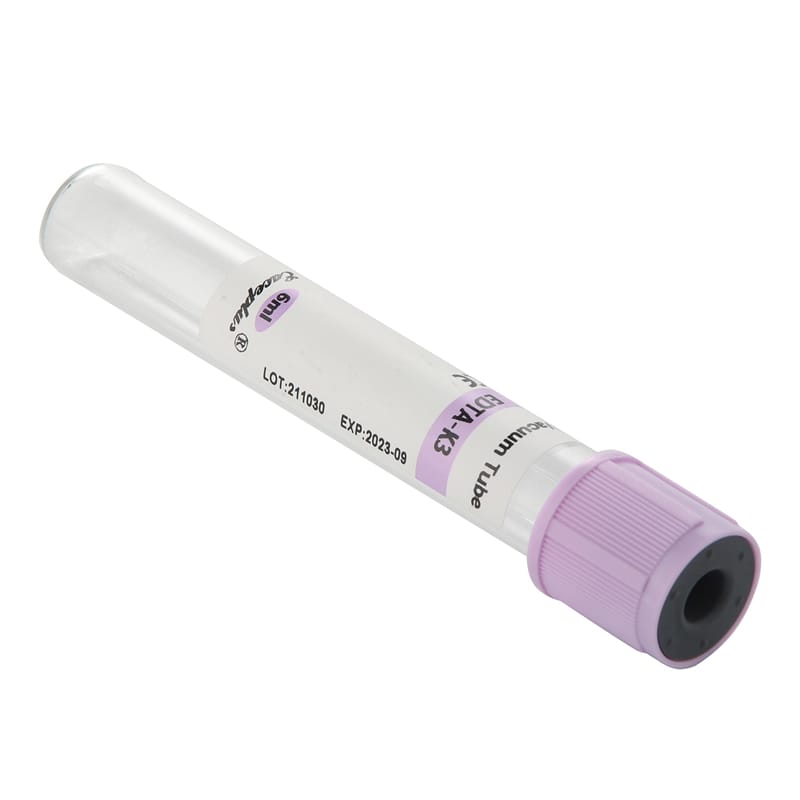
An EDTA Tube Test refers to any blood analysis performed using a collection tube containing Ethylenediaminetetraacetic acid (EDTA) as an anticoagulant. EDTA prevents blood from clotting by binding calcium ions, which are essential for the coagulation process.
This anticoagulant preserves cellular components in their natural shape. That makes EDTA tubes the gold standard for hematology testing.
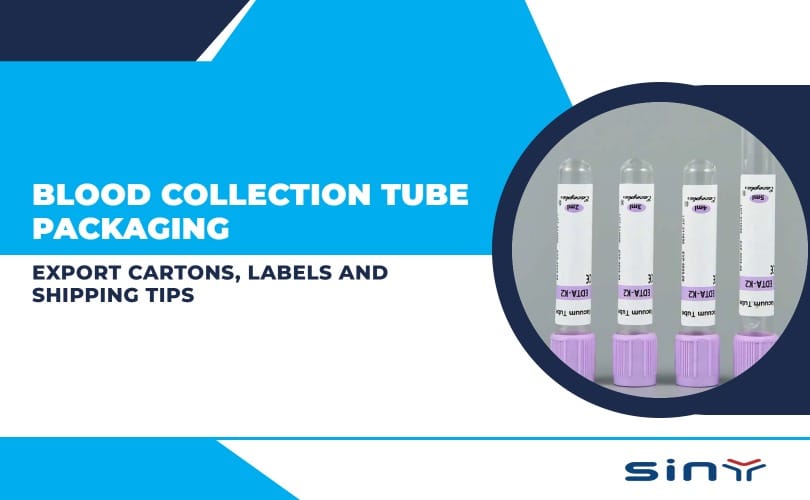
Most EDTA tubes come with lavender or purple caps. These are commonly called lavender-top tubes in laboratories worldwide.
To understand the structure and application of EDTA tubes, you can review the manufacturer overview at EDTA Tube Official Website.
Why EDTA Is Preferred for Hematology
EDTA has several advantages over other anticoagulants:
It preserves red blood cell morphology.
It maintains white blood cell integrity.
It prevents platelet clumping.
It ensures reliable hemoglobin measurement.
According to the descriptive explanation of Complete Blood Count on Wikipedia’s Complete Blood Count page, accurate cell preservation directly affects diagnostic reliability.
Because of this stability, the EDTA Tube Test remains the first choice for CBC, peripheral smear analysis, and platelet counts.
EDTA Tube Test List: From Routine to Advanced Diagnostics
Let’s now explore the complete EDTA Tube Test list, from basic hematology panels to advanced immunophenotyping.
1. Complete Blood Count (CBC)
The most common EDTA Tube Test is the Complete Blood Count (CBC). It measures:
Red Blood Cell (RBC) count
White Blood Cell (WBC) count
Hemoglobin concentration
Hematocrit level
Platelet count
Mean corpuscular values (MCV, MCH, MCHC)
Globally, CBC remains one of the top five ordered laboratory tests. Hospitals rely on CBC to detect anemia, infection, leukemia, and inflammatory disorders.
For a detailed breakdown of CBC methodology using EDTA tubes, visit CBC Testing with EDTA Tubes.
Recommended Tube Sizes for CBC
The 3ml and 6ml tubes are the most commonly used sizes.
You can explore product specifications for:
3ml lavender-top tubes
6ml EDTA tubes for higher volume testing
Choosing the right volume prevents dilution errors and ensures optimal anticoagulant-to-blood ratio.
2. Peripheral Blood Smear
A peripheral smear is another essential EDTA Tube Test. After collection, laboratory professionals prepare a thin film of blood on a slide and examine it under a microscope.
This test detects:
Malaria parasites
Abnormal RBC shapes
Leukemia cells
Platelet disorders
Because EDTA preserves cell morphology, it ensures accurate microscopic evaluation.
3. Reticulocyte Count
Reticulocyte testing evaluates bone marrow function. Physicians order it when diagnosing anemia or monitoring recovery after treatment.
The EDTA Tube Test ensures reticulocytes remain intact for accurate staining and counting.
4. Hemoglobin A1c (HbA1c)
HbA1c testing helps monitor long-term glucose control in diabetic patients. Many laboratories collect samples in EDTA tubes for this analysis.
The EDTA Tube Test provides stability for glycated hemoglobin measurement, particularly in automated analyzers.
5. Erythrocyte Sedimentation Rate (Modified Methods)
Although citrate tubes are traditional for ESR, some modified methods allow ESR measurement using EDTA samples. However, professionals must understand the differences between anticoagulants.
For comparison guidance, read EDTA vs Citrate Tubes – Best Anticoagulant.
6. Blood Typing and Crossmatching
In transfusion medicine, EDTA tubes help preserve red cells for blood grouping and compatibility testing.
The EDTA Tube Test prevents clot formation, ensuring reliable antigen detection.
7. Molecular Diagnostics
Modern laboratories increasingly use EDTA-collected blood for:
DNA extraction
PCR testing
Genetic mutation analysis
EDTA inhibits nucleases, which helps preserve DNA integrity.
8. Flow Cytometry
Flow cytometry represents one of the most advanced applications of the EDTA Tube Test.
This technique analyzes cell surface markers using fluorescent antibodies. It plays a critical role in diagnosing:
Leukemia
Lymphoma
Immune deficiencies
HIV progression
EDTA prevents clotting without damaging cell membrane markers. That makes it ideal for immunophenotyping.
According to international clinical guidelines, EDTA-anticoagulated blood is recommended for most flow cytometry panels.
Choosing the Right Tube Size for Accurate EDTA Tube Test Results
Incorrect tube volume can lead to inaccurate results. The anticoagulant-to-blood ratio must remain precise.
For size comparison, consult:
How to select the right EDTA tube size
Choosing between 2ml, 3ml, 4ml, and 5ml EDTA
EDTA tube sizes explained
For example: 2ml tubes work well for pediatric samples.
3ml tubes suit routine CBC testing.
6ml tubes support multiple tests from one sample.
Volume accuracy directly impacts EDTA Tube Test reliability.
Proper Collection Technique for EDTA Tube Test
Even the best tube cannot compensate for poor collection technique.
Follow these essential steps:
Use sterile venipuncture.
Fill the tube to the indicated mark.
Invert gently 8–10 times.
Avoid shaking vigorously.
Improper mixing may cause clot formation, leading to rejected samples.
For detailed procedural instructions, see:
How to use an EDTA tube
EDTA Tube Test vs Other Anticoagulant Tests
Different anticoagulants serve different purposes.
EDTA – Best for hematology
Citrate – Coagulation studies
Heparin – Chemistry testing
If you need a side-by-side comparison, read the anticoagulant comparison guide mentioned earlier.
Choosing incorrectly can alter test accuracy. Therefore, laboratory procurement teams must align testing protocols with appropriate tubes.
Quality Standards and Manufacturing Considerations
When selecting EDTA tubes, quality matters.
Reliable manufacturers ensure:
Precise EDTA coating
Sterile packaging
Accurate vacuum pressure
Consistent additive distribution
For an industry overview of EDTA tube manufacturing standards, you may review insights from Siny Medical at:
Siny Medical EDTA Tube, Siny Medical YouTube Channel, Siny Medical Made-in-China Profile
Additionally, the official Products page offers detailed quality information and compliance data.
Future Trends in EDTA Tube Test Technology
The global blood collection market continues to grow. Industry projections estimate steady expansion through 2026 and beyond.
Automation, barcode integration, and vacuum precision improvements are shaping the future.
For forward-looking insights, read: Future of EDTA Blood Collection Tubes 2026
Laboratories now demand tubes compatible with high-speed analyzers and digital tracking systems.
The EDTA Tube Test remains central to this transformation.
Summary
The EDTA Tube Test forms the foundation of hematology and advanced blood analysis. From CBC and peripheral smear testing to molecular diagnostics and flow cytometry, EDTA tubes preserve blood cells with unmatched stability.
Accurate tube selection, proper handling, and high-quality manufacturing standards ensure reliable results. As laboratory automation continues to evolve, the EDTA Tube Test will remain indispensable in both routine and specialized diagnostics.
For product specifications, guidance, or bulk inquiries, visit the official EDTA Tube website or contact the team directly via the contact page.
FAQs
What is an EDTA Tube Test mainly used for?
An EDTA Tube Test is primarily used for hematology investigations such as Complete Blood Count, platelet count, and flow cytometry analysis because EDTA preserves cellular morphology.
Why is EDTA preferred over heparin for CBC?
The EDTA Tube Test ensures red and white blood cells maintain their structure, which allows accurate counting and differential analysis in CBC testing.
Can EDTA tubes be used for molecular diagnostics?
Yes, the EDTA Tube Test supports DNA extraction and PCR analysis because EDTA protects nucleic acids from degradation.
How do I choose the correct tube size for an EDTA Tube Test?
Selecting the correct size ensures the right anticoagulant-to-blood ratio. For example, 3ml tubes are commonly used for routine EDTA Tube Test procedures.
What happens if the EDTA Tube Test sample clots?
Clotting invalidates most hematology results. Therefore, proper mixing immediately after blood collection is essential for accurate EDTA Tube Test outcomes.