Glossary of EDTA Tubes: Modern laboratory diagnostics begin with one critical step: proper blood collection. Even the most advanced hematology analyzer cannot correct errors caused by the wrong anticoagulant tube. That is why this Complete Glossary of EDTA Tube exists — to provide laboratories, distributors, and healthcare professionals with a clear, practical, and technically accurate explanation of K2, K3, and lavender-top EDTA tubes.
At EDTA Tube Official Website, laboratories can explore a wide range of certified EDTA blood collection solutions designed for hematology, blood banking, and clinical testing. However, before selecting a product, understanding the science behind EDTA tubes is essential.
This in-depth guide will walk you through anticoagulant chemistry, tube variations, manufacturing standards, tube sizes, clinical applications, and future innovations — all structured as a Complete Glossary of EDTA Tube for modern laboratories.
What Is an EDTA Tube? – Core Concept in This Complete Glossary of EDTA Tube
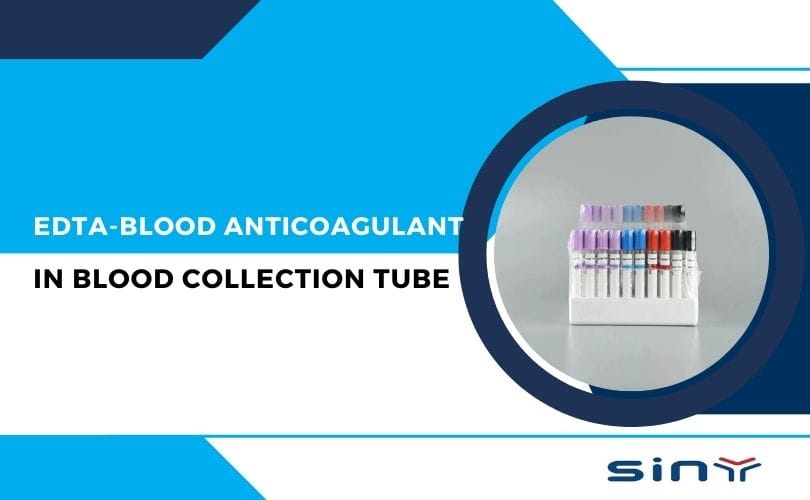
An EDTA tube is a vacuum blood collection tube that contains Ethylenediaminetetraacetic Acid (EDTA) as an anticoagulant. EDTA works by binding calcium ions in blood. Since calcium is required for clotting, removing it prevents coagulation.
Because EDTA preserves blood cells effectively, laboratories widely use it for hematology testing. The most common application is the Complete Blood Count (CBC). According to the medical overview on the Complete Blood Count explanation on Wikipedia, CBC is one of the most frequently ordered diagnostic tests worldwide.
That global reliance on CBC testing makes this Complete Glossary of EDTA Tube highly relevant for healthcare systems.
Why EDTA Is the Preferred Anticoagulant
EDTA offers several clinical advantages. It preserves red blood cell morphology. It maintains platelet integrity. It minimizes clot formation when properly mixed.
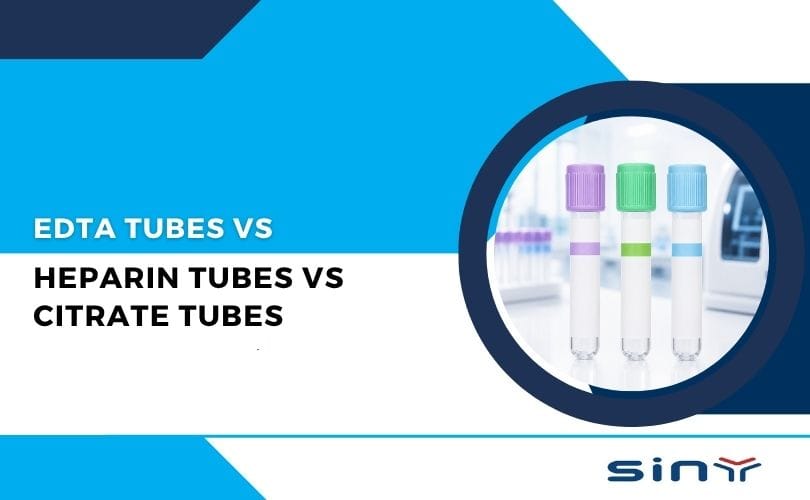
Unlike heparin or citrate, EDTA produces fewer interferences in hematology analyzers. Therefore, many laboratories consider it the gold standard anticoagulant for routine blood counts.
For a deeper explanation of anticoagulant selection, see the detailed guide on What Is the Purpose of Using K2 or K3 EDTA in Blood Collection Tubes.
This scientific background forms the foundation of any Complete Glossary of EDTA Tube.
Types of EDTA Tubes Explained in This Complete Glossary of EDTA Tube
K2 EDTA Tubes
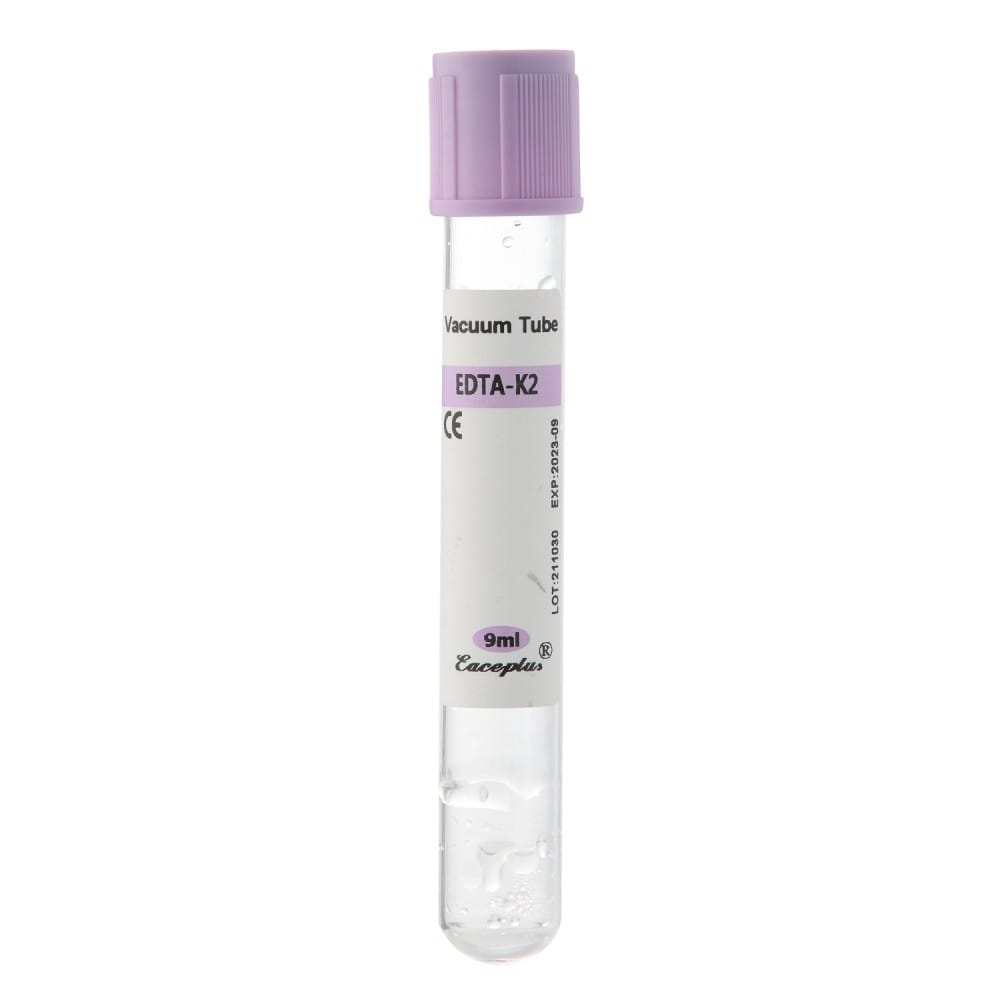
K2 EDTA tubes contain dipotassium EDTA, typically spray-dried on the interior wall of the tube. Because the anticoagulant is dry, it does not dilute the blood sample.
This feature improves analytical precision. Many hematology laboratories prefer K2 EDTA for automated cell counting.
Examples include the Sterile 2ml Vacuum Tube with EDTA K2 and the Siny Factory EDTA K2 Blood Collection Tube.
K2 EDTA is widely used in CBC testing and blood banking procedures.
K3 EDTA Tubes
K3 EDTA tubes contain tripotassium EDTA, usually in liquid form. Because it is liquid, it may cause minimal dilution of the blood sample.
Although still highly reliable, some laboratories prefer K2 EDTA when maximum cell preservation is required.
For an in-depth technical comparison, review the article on EDTA K2 vs EDTA K3 Blood Tubes.
Additionally, the guide titled What Is an EDTA K3 Tube? A Complete Guide explains the specific use cases for K3 EDTA.
Lavender Top EDTA Tubes
Lavender-top tubes follow international color-coding standards. The lavender cap indicates the presence of EDTA anticoagulant.
A commonly used example is the Siny Medical Lavender EDTA Vacuum Blood Collection Tube.
Because of standardized color coding, clinicians quickly identify the correct tube during blood collection.
K2 vs K3 EDTA – Comparison Table
| Feature | K2 EDTA | K3 EDTA |
|---|---|---|
| Anticoagulant Form | Spray-dried | Liquid |
| Risk of Sample Dilution | None | Slight |
| CBC Stability | Excellent | Very Good |
| Blood Banking Use | Common | Used in specific protocols |
| Cost Variation | Moderate | Moderate |
Understanding these distinctions is essential in any Complete Glossary of EDTA Tube because laboratory accuracy depends on correct tube selection.
Clinical Applications Covered in This Complete Glossary of EDTA Tube
EDTA tubes serve multiple medical purposes beyond CBC testing. They are used in:
Hematology diagnostics.
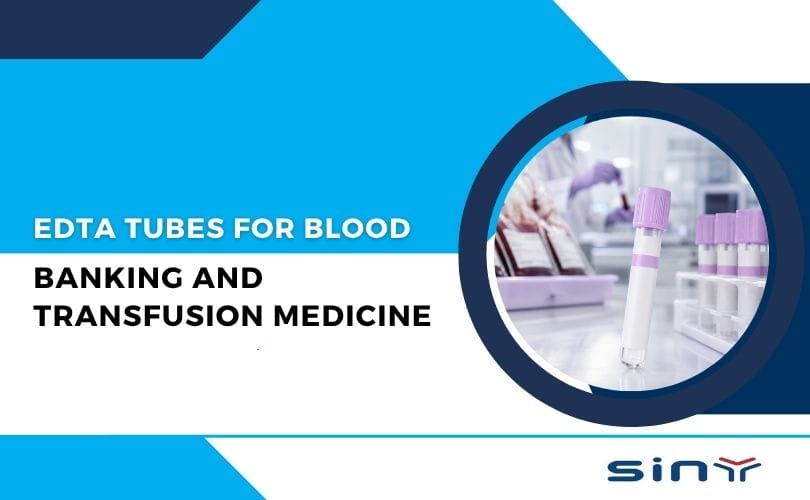
Blood grouping and cross-matching.
Platelet count monitoring.
Molecular diagnostic procedures.
Research laboratory testing.
The detailed article on Siny CBC Testing with EDTA Tubes Complete Blood provides practical insights for laboratory technicians.
Blood banking applications are further explained in the guide on Blood Banking with EDTA Tubes.
How to Choose the Right EDTA Tube for Your Laboratory
Selecting the correct tube involves evaluating test type, sample volume, and analyzer compatibility.
The resource on How to Choose the Right EDTA Tube for Your Lab offers step-by-step guidance.
Choosing correctly reduces pre-analytical errors, which account for nearly 60% of laboratory testing mistakes according to international diagnostic studies.
EDTA Tube Sizes Explained
Tube volume affects the blood-to-anticoagulant ratio. Common sizes include 2ml, 3ml, 4ml, 5ml, 6ml, and 10ml.
Detailed volume comparison guides are available here: Choosing Between 2ml 3ml 4ml and 5ml EDTA
EDTA Tube Sizes Explained 2ml 3ml 4ml 5ml 6ml 10ml
Underfilling increases anticoagulant concentration. Overfilling reduces anticoagulant effectiveness. Both situations compromise CBC accuracy.
Proper Usage Instructions
Correct handling preserves sample integrity.
After collection, gently invert the tube eight to ten times. Do not shake aggressively. Vigorous shaking damages cells and creates foam.
For complete handling instructions, review How to Use an EDTA Tube.
Proper mixing is a critical step emphasized in every Complete Glossary of EDTA Tube.
Manufacturing Standards and Quality Assurance
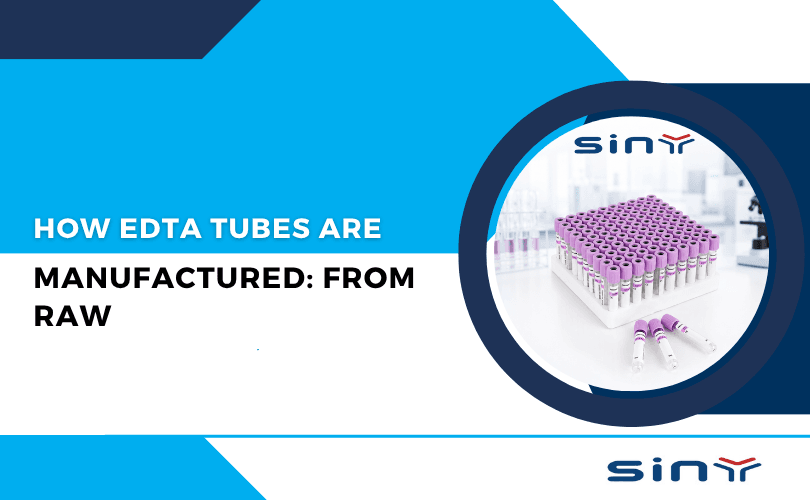
Reliable EDTA tubes require strict production control. Manufacturing steps include medical-grade plastic molding, anticoagulant coating, vacuum calibration, sterilization, and packaging.
The technical production process is explained at EDTA Tubes Manufacturing Process.
You can also explore broader product specifications at Siny Medical EDTA Tube Overview.
Industrial certifications and export listings are visible at Siny Medical Made-in-China Profile.
Educational demonstrations and training materials are available through their official channel at Siny Medical YouTube Channel.
Future of EDTA Tubes – Innovation in 2026
Diagnostic laboratories are rapidly automating workflows. Therefore, tube precision must increase.
The article on Future of EDTA Blood Collection Tubes 2026 outlines improvements in vacuum consistency, anticoagulant coating technology, and packaging sterilization.
As healthcare systems expand globally, the demand for standardized EDTA tubes continues to grow.
Why Laboratories Trust EDTA Tube
The full product catalog is available at the EDTA Tube Products Page and the dedicated EDTA Tube Product Category.
Laboratories benefit from consistent manufacturing standards, global export capability, and technical support.
For direct consultation or distributor inquiries, contact the team through the Official Contact Page.
Summary
This Complete Glossary of EDTA Tube provides a structured understanding of K2 EDTA, K3 EDTA, lavender-top identification, manufacturing standards, tube sizes, and clinical applications. Selecting the correct EDTA tube ensures reliable hematology results, safe blood banking procedures, and accurate diagnostic outcomes. For laboratories worldwide, proper EDTA tube selection directly impacts patient care quality and testing efficiency.
FAQs
What does a Complete Glossary of EDTA Tube include?
A Complete Glossary of EDTA Tube explains K2, K3, lavender caps, anticoagulant chemistry, manufacturing standards, and laboratory applications to ensure correct usage.
Why do laboratories prefer K2 EDTA?
In any Complete Glossary of EDTA Tube, K2 EDTA stands out because it avoids sample dilution and preserves blood cell morphology more effectively.
Can EDTA tubes be used in blood banking?
Yes. A Complete Glossary of EDTA Tube confirms that EDTA tubes are commonly used in blood grouping and compatibility testing procedures.
What happens if the tube is not filled correctly?
A Complete Glossary of EDTA Tube explains that improper fill volume disrupts the blood-to-anticoagulant ratio and affects CBC accuracy.
Are lavender-top tubes always EDTA?
Within a Complete Glossary of EDTA Tube, lavender tops indicate EDTA anticoagulant, usually K2 or K3 formulations.