Blood collection is one of the most routine procedures in modern healthcare, yet the materials behind it are rarely discussed outside technical circles. Among those materials, PET plastic in EDTA tubes plays a far more critical role than most clinicians or patients realize. From ensuring sample stability to protecting laboratory accuracy, PET plastic directly influences the reliability of diagnostic results.
As laboratories worldwide continue to shift away from glass and toward plastic blood collection systems, understanding why PET plastic has become the preferred material is no longer optional. It is essential knowledge for procurement managers, lab technicians, healthcare professionals, and manufacturers alike.
This article explores the material science behind PET plastic in EDTA tubes, how it interacts with blood samples, and why it meets modern safety and regulatory standards. Along the way, we will examine performance data, compare PET with alternative materials, and explain how tube design supports accurate Complete Blood Count (CBC) testing.
EDTA Tubes in Clinical Diagnostics
EDTA tubes are widely used for hematology testing, particularly for Complete Blood Count analysis, which evaluates red blood cells, white blood cells, hemoglobin, and platelets. According to clinical standards described in the Complete Blood Count overview, even minor sample degradation can skew results and affect clinical decisions.
The function of EDTA inside these tubes is straightforward. Ethylenediaminetetraacetic acid binds calcium ions, preventing blood clotting while preserving cellular morphology. However, the tube material itself plays an equally important role in protecting the sample during collection, transport, centrifugation, and storage.
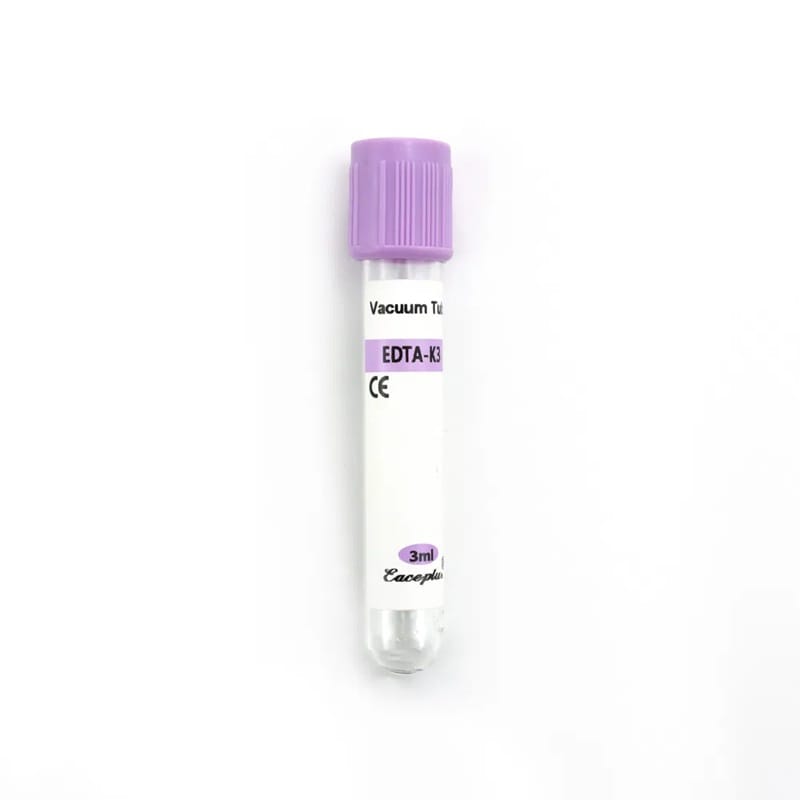
Modern manufacturers, including those featured on edtatube, have increasingly standardized PET plastic for EDTA tubes because it offers consistency, safety, and chemical stability that glass and alternative plastics struggle to match.
What Is PET Plastic and Why It Matters in Medical Devices
Polyethylene terephthalate, commonly known as PET, is a thermoplastic polymer belonging to the polyester family. Most people associate PET with beverage bottles, but medical-grade PET is engineered to meet far stricter purity and performance standards.
From a materials science perspective, PET plastic exhibits a unique balance of strength, transparency, chemical resistance, and dimensional stability. These properties explain why PET plastic in EDTA tubes has become an industry standard rather than a temporary trend.
For a general understanding of plastics and polymer behavior, this reference on plastic materials provides helpful background, though medical-grade PET undergoes additional processing and quality control.
The Material Science Behind PET Plastic in EDTA Tubes
Molecular Stability and Chemical Inertness
PET plastic has a tightly bonded molecular structure that resists chemical interaction with blood components and anticoagulants. This inert behavior ensures that EDTA does not react with the tube wall, maintaining accurate anticoagulant concentration throughout the tube’s shelf life.
Unlike some lower-grade plastics, PET does not leach plasticizers or additives into blood samples. This characteristic is critical for maintaining consistent hematological parameters, especially platelet volume and red cell morphology.
Optical Clarity for Visual Inspection
Laboratory professionals rely on visual cues to assess fill volume, clotting, hemolysis, or contamination. PET plastic offers high optical clarity, allowing technicians to detect abnormalities quickly without opening the tube.
This transparency also supports automated analyzers that rely on optical sensors, further improving workflow efficiency.
Mechanical Strength and Pressure Resistance
Vacuum blood collection systems require tubes that can maintain internal pressure without deformation. PET plastic maintains dimensional stability under vacuum conditions, ensuring predictable blood draw volumes.
When compared with glass, PET offers superior impact resistance, reducing breakage during transport and handling. This advantage directly improves workplace safety and reduces biohazard exposure.
Why PET Plastic Is Safer Than Glass EDTA Tubes
The transition from glass to plastic EDTA tubes did not happen overnight. It followed decades of injury reports, regulatory pressure, and performance evaluations.
Glass tubes pose several risks. They can shatter during centrifugation or accidental drops, creating sharp fragments contaminated with blood. PET plastic eliminates this hazard entirely.
The safety comparison between materials is explained in depth in glass and plastic EDTA tubes, where modern laboratory safety standards strongly favor plastic systems.
Additionally, PET plastic aligns with global healthcare safety initiatives aimed at reducing sharps injuries and occupational exposure.
How PET Plastic Supports EDTA Performance
Preserving Anticoagulant Efficiency
The effectiveness of EDTA depends on maintaining precise concentration ratios between anticoagulant and blood volume. PET plastic does not absorb EDTA or alter its chemical structure, ensuring reliable anticoagulation.
This stability is particularly important for smaller volume tubes, such as 2 ml and 3 ml formats, where minor variations can have outsized effects on results.
Maintaining Cellular Integrity
Blood cells are sensitive to environmental changes. PET plastic provides a smooth, non-reactive internal surface that minimizes mechanical stress on cells during transport and mixing.
This benefit directly improves result accuracy for hematology tests that measure cell size and shape.
Manufacturing Standards for PET EDTA Tubes
The performance of PET plastic in EDTA tubes depends heavily on manufacturing precision. Medical-grade PET must meet strict ISO and regulatory requirements related to purity, sterility, and dimensional accuracy.
An overview of how EDTA tubes are produced can be found in this detailed manufacturing process guide, which explains molding, vacuum calibration, additive dosing, and quality inspection steps.
Manufacturers featured on products adhere to these standards to ensure consistent performance across large production volumes.
PET Plastic EDTA Tubes vs Other Plastic Materials
Not all plastics perform equally in medical applications. Polypropylene and polystyrene have been used in laboratory containers, but they lack the balanced properties required for vacuum blood collection.
| Property | PET Plastic | Polypropylene | Polystyrene |
|---|---|---|---|
| Impact Resistance | High | Moderate | Low |
| Optical Clarity | Excellent | Moderate | Excellent |
| Chemical Inertness | Excellent | Good | Moderate |
| Vacuum Stability | Excellent | Limited | Poor |
| Medical Adoption | Widespread | Limited | Declining |
This comparison highlights why PET plastic in EDTA tubes has become the dominant choice for modern hematology workflows.
Tube Size, PET Material, and Sample Accuracy
Tube volume directly affects EDTA-to-blood ratios. PET plastic’s dimensional stability allows manufacturers to produce consistent tube sizes with tight tolerances.
Choosing the correct tube size is essential, as explained in choosing between 2ml, 3ml, 4ml, and 5ml EDTA tubes and the more detailed EDTA tube sizes explained guide.
PET plastic ensures that each size performs as expected under vacuum conditions, reducing the risk of underfilling or overfilling.
Environmental Considerations and PET Plastic Disposal
Sustainability is an increasing concern in healthcare. PET plastic is recyclable under controlled conditions, making it more environmentally responsible than glass in many disposal scenarios.
Proper disposal methods for blood collection tubes are outlined in this authoritative disposal guide, which emphasizes safety, segregation, and regulatory compliance.
While biohazard regulations limit recycling options, PET still offers a lower environmental impact over its lifecycle compared to glass.
Regulatory Compliance and Global Acceptance
PET plastic EDTA tubes meet regulatory standards set by organizations such as ISO, CE, and FDA-equivalent bodies worldwide. This global acceptance simplifies procurement and standardization across international laboratories.
Manufacturers supplying EDTA tubes and detailed application guides such as the complete guide to EDTA tubes consistently emphasize PET plastic for compliance and performance reasons.
Educational Resources and Industry Transparency
Transparency in manufacturing and education helps laboratories make informed decisions. Many manufacturers now provide behind-the-scenes content, including instructional videos on platforms like Sinymedical’s YouTube channel and supplier profiles on Made-in-China medical listings.
These resources reinforce trust in PET plastic EDTA tube systems.
Summary
The widespread adoption of PET plastic in EDTA tubes reflects decades of material science innovation, safety improvements, and clinical validation. PET offers the ideal combination of strength, clarity, chemical inertness, and regulatory compliance required for modern blood collection. For laboratories seeking accuracy, safety, and efficiency, PET plastic EDTA tubes are not just an alternative to glass—they are the standard. For product specifications, technical resources, or professional consultation, visit edtatube or reach out directly through the contact page.
FAQs
Why is PET plastic in EDTA tubes preferred over glass?
PET plastic in EDTA tubes offers superior safety, impact resistance, and chemical stability while maintaining sample integrity during collection and transport.
Does PET plastic affect blood test accuracy?
When manufactured correctly, PET plastic in EDTA tubes does not interfere with blood chemistry or cellular morphology, supporting accurate laboratory results.
Are PET EDTA tubes safe for long-term storage?
PET plastic in EDTA tubes maintains vacuum stability and chemical inertness during recommended storage periods under proper conditions.
Can PET plastic EDTA tubes be recycled?
While biohazard rules apply, PET plastic in EDTA tubes has a lower environmental footprint than glass and supports safer disposal practices.
Do different tube sizes change PET performance?
PET plastic in EDTA tubes performs consistently across sizes, provided the correct volume is selected for the test.